Santa Cruz, Torres Vedras: Raw Surf and Atlantic Grit
North of Ericeira, the Atlantic drops the pretense and shows its true power. Skip the manicured surf camps and head to Santa Cruz to see why Torres Vedras is the choice for those who prefer heavy swells and bean pastries over acai bowls.
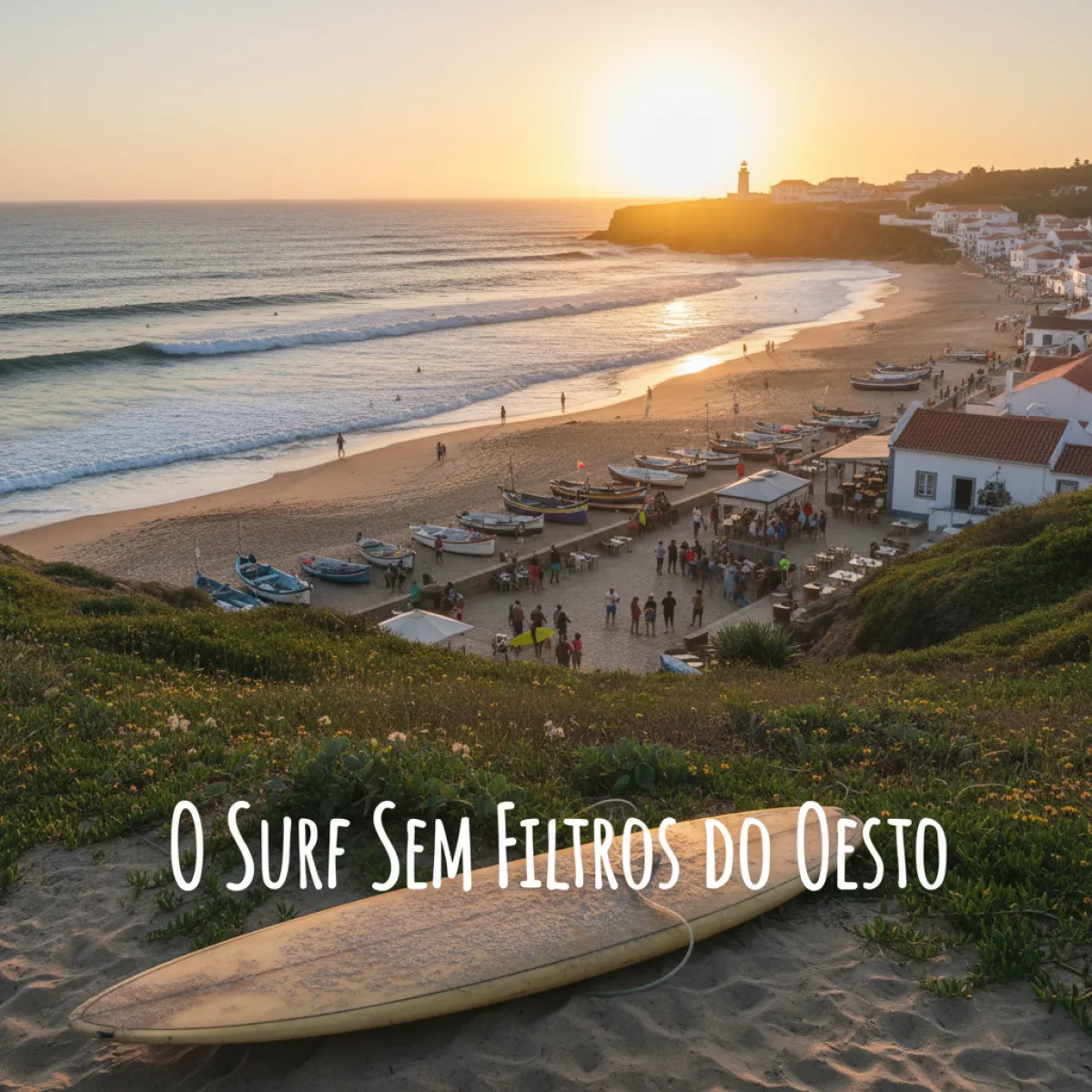
Where the Atlantic Loses Its Manners
If you're looking for the manicured palms of Cascais or the Instagram-ready acai bowls of Ericeira, you missed your exit on the A8. Torres Vedras, and specifically the coastal enclave of Santa Cruz, is not here to cater to your whims. Here, the sea isn't a backdrop; it’s a temperamental boss that decides whether your day will be one of glory or one of sand in your ears. The West (Oeste) is a land of winds that ruin hairstyles and cliffs that gaze at the ocean with millennial arrogance. This is where surfing drops the pretension and earns the respect of raw power.
The drive from Lisbon takes just over 45 minutes if you have a lead foot, but the change in atmosphere is absolute. As soon as you pass the turn-off for the city of Torres Vedras and start smelling the eucalyptus mixed with heavy iodine, you realize you've entered a different Portugal. While local culture in Lisbon is often lost in fado and narrow alleys, the Oeste is defined by its rugged coastline and a stubborn resistance to over-gentrification. Santa Cruz retains the look of a 70s summer resort, with its functional apartment blocks and the iconic Hotel Santa Cruz guarding the Penedo do Guincho, but with a surf energy simmering just beneath the surface.
The Breaks: Física, Navio, and Vigia
For those looking to surf, the center of the universe is Praia da Física. This is the main stage, where the sandbanks are usually most generous and the waves most consistent. Don’t expect the mechanical perfection of Supertubos in Peniche, but count on an impact force that will have you sleeping like an angel at night. Física is for everyone, provided they know what they’re doing. In summer, the Ocean Spirit festival brings competition and music, turning the sand into an amphitheater of neoprene and fiberglass.
If Física is too crowded (and it will be on July weekends), walk north to Praia do Navio. It’s a ten-minute trek across the sand or along the cliff tops that’s worth every step. Navio offers lefts that, on the right days, seem to go on forever. It’s a wilder beach, where the ochre-toned cliffs offer a bit more protection from the "nortada", the notorious north wind that is simultaneously the blessing and the curse of Torres Vedras. To the south, Praia da Vigia is for the days when the swell is massive and the rest of the coast is unrideable. It’s the refuge of locals who prefer isolation over public spectacle.
Learning in the Oeste: A Saltwater Baptism
Learning to surf here isn't like learning in the Algarve. It’s a crash course in humility. Schools like the one at Noah Surf House or the small local setups near Praia do Mirante do an excellent job, but the Santa Cruz sea demands constant attention to currents. If it’s your first time, listen to the instructor. The rips here can be treacherous, and the seafloor changes with every winter storm. A one-day course costs around €30 to €45, including suit and board, and I guarantee you’ll leave the water with a hunger that only a bean pastry can solve.
For those who prefer not to tangle with fins and leashes, watching is a fine art in Santa Cruz. The Penedo do Guincho, that massive rock formation piercing the waves, is the ultimate observation point. When the sea is big, the waves crash against the stone with a choreographed violence that is hypnotizing. It’s the ideal spot to grasp the scale of the Atlantic without getting your feet wet.
Beyond the Waves: River and Path
This stretch of coast isn't just for surfers. If the sea is too rough for boards, which happens often, there are alternatives that allow you to maintain a connection with the water without taking a set to the head. Kayaking the Sizandro River in Torres Vedras is the perfect counterpoint to the adrenaline of the surf. The Sizandro flows out right here, between Santa Cruz and Praia Azul, and paddling its calm waters is a way to see birds and riverside vegetation that most tourists ignore. It’s an ideal activity for families or for those days when your arms just can’t take another paddle out through the breakers.
For hikers, the area is crossed by a route of faith and sweat. The West Coast Camino passes through these cliffs, connecting Torres Vedras to Peniche and Caldas da Rainha. It’s a pilgrimage that swaps the green fields of the interior for the infinite blue of the ocean. Seeing pilgrims climbing the slopes of Santa Cruz with shells hanging from their backpacks is a reminder that this coast has been a place of passage for centuries. Compared to the best day trips from Cascais, which tend to focus more on palaces and ice cream, coming to Torres Vedras requires a different mindset: it’s a trip of direct contact with the elements.
The Gastronomic Ritual: From O Navio to the Pastel
No one survives the surf in Santa Cruz without eating properly. O Navio, perched right above the beach of the same name, is an institution. It’s not cheap, but the spider crab and the seafood rice are the fuel needed for any surfer. If you prefer something more laid back, the central area of Santa Cruz is full of small kiosks where a bifana and a local craft beer taste like a banquet. In summer, the terraces on Rua José Pedro Lopes are packed, but the wait is worth it for the atmosphere of people who just stepped out of the ocean.
And then there’s the Pastel de Feijão of Torres Vedras. Forget the Pastel de Belém for a moment. The bean pastry is dense, sweet, with a crispy crust and an interior that defies caloric logic. It’s the best souvenir you can take. Go to Fábrica Coroa or Pastelaria Brasão and buy a box. Or two. They are the perfect accompaniment for an afternoon coffee as you watch the sun sink behind the Berlengas islands on the horizon.
Expert Advice
- When to go: September and October are the golden months. The sea calms down, the north wind relents, and the water is (slightly) less freezing.
- Transport: Come by car. The West Line (train) is picturesque, but the stations are miles from the coast. If you don’t have a car, the Barraqueiro buses from Campo Grande in Lisbon are your best bet.
- What to avoid: August. Parking in Santa Cruz becomes an exercise in divine patience, and the sand disappears under a blanket of colorful umbrellas.
- Costs: A fresh fish lunch will run you about €25-€35. A beer is around €2. The surfing is free; the salt on your skin is too.
If you want fairytale hills, the Sintra neighborhood guide will serve you better. But if what you seek is the roar of the Atlantic and a community that doesn't care about photo filters, Santa Cruz is waiting for you. It’s the Oeste in its purest state: windy, salty, and absolutely addictive.
