Vila Nova de Milfontes Off-Season: October to March
Forget August's chaos: Vila Nova de Milfontes off-season is when the town becomes itself again, with rooms at a third of the price, empty restaurants, and the Mira estuary in slow mode. An opinionated guide for travellers between October and March.
In August, Vila Nova de Milfontes is a battlefield. A queue of cars on the bridge over the Mira, towels overlapping on Praia do Farol, forty minute waits for any table with a view of the estuary. People pay 180 euros a night for a double room and call it a holiday. I call it a calendar mistake.
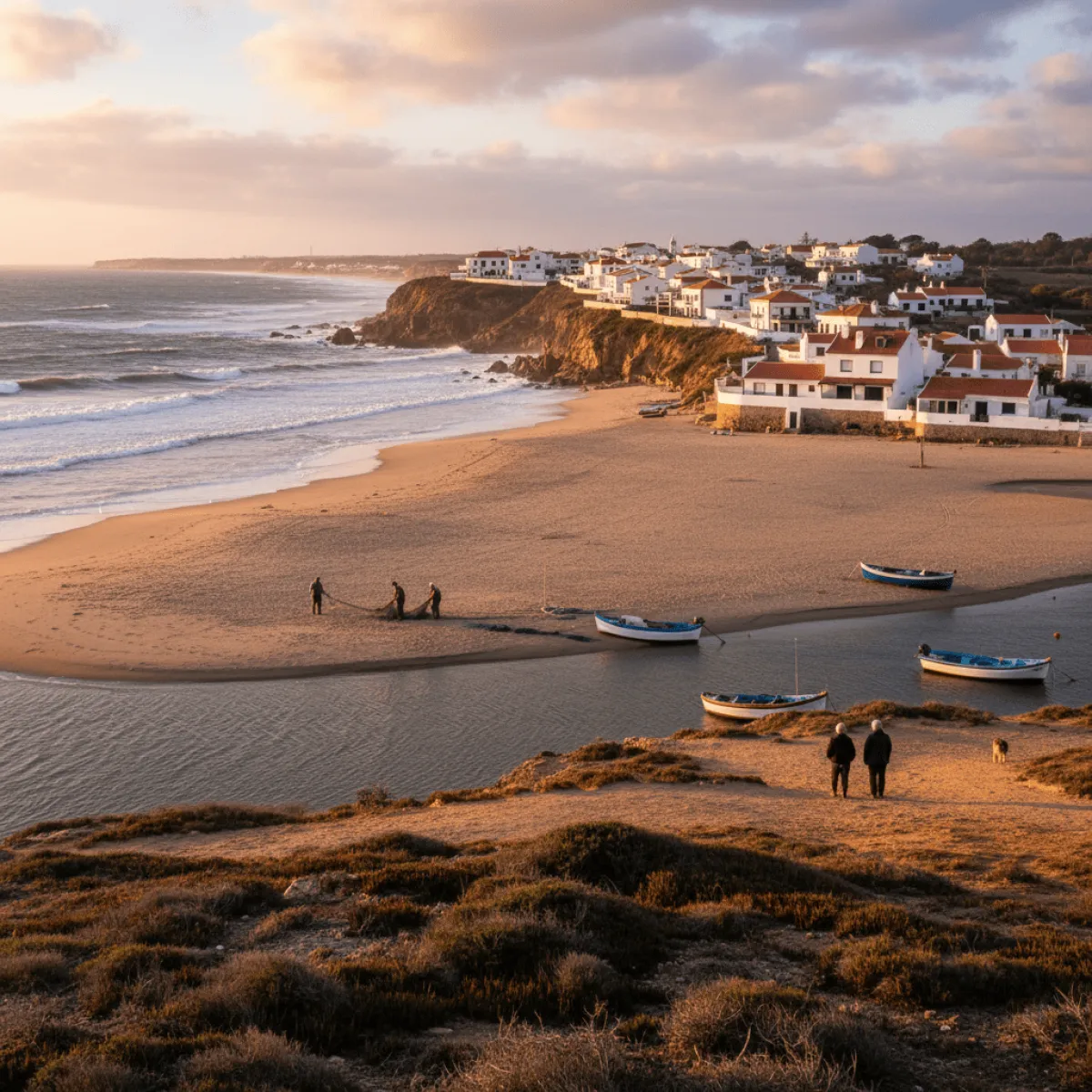
Come in November. Or February. Come when the Atlantic wind still cuts your face but the two o'clock sun warms the stone benches by the fort. That is when this town reveals itself, not in rhetoric, but in details: the fisherman mending nets at the dock, the woman selling oranges from her smallholding on the corner of Rua Sarmento Beires, the smell of wood smoke rising from chimneys at dusk. Everything summer hides under traffic and German tourists in swimsuits.
Why the low season is the right season
First, the numbers. A double room that costs 150 to 200 euros in August drops to 55 to 80 euros between November and March. Restaurants that demand three days notice in summer have a table for you whenever you want. Praia do Malhão, which at peak has 400 people spread over three kilometres of sand, in January has 12, and half of them are local surfers.
Second, the weather. Yes, it rains. But not like in Lisbon. The Alentejo coast averages 230 days of sun a year, and even in January there are whole weeks of clear sky and daytime temperatures of 16 to 18 degrees. The sea is never quite inviting, but that is a technical detail: nobody comes to Milfontes in February to swim. You come to walk, to eat, to drink Alentejo wines at half the Lisbon price, and to sleep with the sound of wind on the window.
Third, and this is what nobody tells you: the town becomes itself again. In August, Milfontes is an inflated, cosmetic version of itself, assembled for a fortnight of consumption. In February, it is a place of 5,000 people where everyone knows everyone, where the café on the square serves espressos at 0.80 euros, and where the restaurant owner sits at your table to explain where the fish came from. That has no price tag. Curiously, it is also where you spend less.
Where to sleep without regret
Forget the tourist apartments. In the low season, it makes more sense to look at one of the small guesthouses in town or a country house in the surroundings. The price difference is absurd. In August, a two bedroom apartment can run to 200 euros a night. In January, you can find rural tourism cottages with a fireplace, a garden and chickens in the yard for 70 euros, breakfast included.
What I recommend: stay in a house outside the centre, three or four kilometres from the town. You get space, quiet, and the short drive into breakfast is part of the charm. The roads are empty, mist rises off the Mira at dawn, and when you pull into the centre at ten o'clock the town is starting slowly, in no hurry, as if it is waking up with you.
The breakfast ritual
One thing changes completely off-season: time. Breakfast, which in summer is a logistical exercise between traffic and parking, in January becomes a civic act. Go to one of the pastry shops in the centre, order a galão and a slice of toast with butter, and take an hour to eat it. Watch the town wake up. Watch the postman do his round. Watch three fishermen argue about whether it is worth heading out past the bar today.
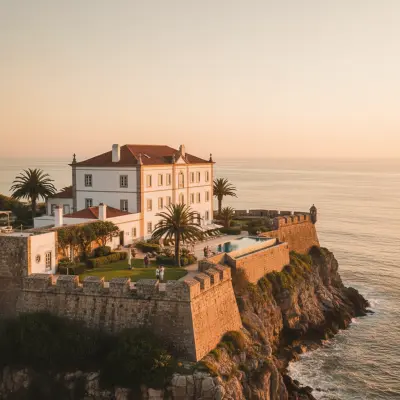
Then walk up to the Forte de São Clemente. It is a small 17th century bastion, built to defend the mouth of the Mira from Berber pirates, and off-season it is practically yours alone. The stones are damp with dew, wind snaps at the flag, and from the top you see the whole estuary, the mouth, Praia das Furnas on the far side. In summer there is a queue for photos. In February, you can sit there for an hour and see nothing but a single fisherman walking past with his rod.
Eating off-season
This is where Milfontes really shines. In summer, the tourist restaurants fill up and quality drops. In low season, the good ones stay open for locals, and the level goes up. The fish is fresher because there is less turnover, the cooks have time, and winter menus include dishes that make no sense in August: caldeirada (fish stew), lamb ensopado, migas with pork, sopa de cação (dogfish soup).
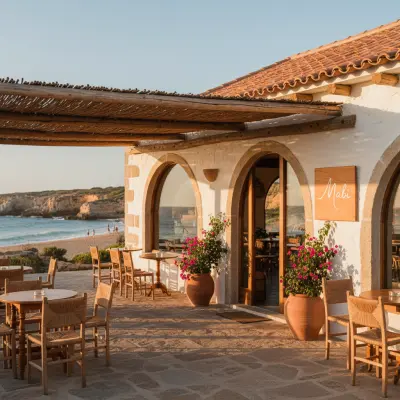
Do me a favour: go to Mabi. It is not the most expensive restaurant in town nor the one with the most Tripadvisor stars, but it is one of those places where you eat what you should be eating that day, without flourishes. Order the fish of the day grilled and a bottle of house Alentejo red. Do not try to be sophisticated. In Milfontes, sophistication is the opposite of good food.
Dishes to chase between October and March
- Caldeirada of monkfish or wreckfish: the winter dish, slow, deep, made for windy days.
- Sopa de cação: an Alentejo classic, with coriander and bread. Not to be confused with generic fish soup.
- Ensopado de borrego (lamb stew): not always easy to find, but if you see it on the menu, order it.
- Percebes (gooseneck barnacles): the season runs from October to May. Expensive, but real. I wrote in more depth about how the percebes in Odemira are harvested, and you will understand the price.
- Bola de Berlim from the local bakery: yes, they are better in February. Fewer tourists, fresher batches, without that sugary pastry cream you find in summer spots.
What to do between showers
The great myth of the low season is that there is nothing to do. False. There is more to do, you just have to accept the rhythm is different. You walk more. You talk more. You go places with no destination.
The Mira estuary on slow mode
In summer, kayaking on the Mira is a manoeuvre between motorboats and jet skis. In October or March, it is one of the best experiences on the Alentejo coast. The water is calm, the wind usually comes from the southwest and pushes you up the estuary, and the reedbeds are full of migratory birds. There are local operators who keep running guided trips even off-season, with more schedule flexibility. The sunset kayak on the Mira estuary in November has a quality of light that August simply cannot deliver: oblique, gold, the kind of light that is just about to switch itself off.
For those who look at the sky
This is the season of birds. Between October and March, the Mira estuary and the salt pans further south turn into one of the richest birdwatching grounds in Portugal. Flamingos, spoonbills, herons, avocets, godwits. For anyone who has never lifted a pair of binoculars, this is the right moment to start. For those who already do, there is the option of a full day at the Castro Marim salt pans, the other great wetland of the south. The birdwatching trip to Castro Marim from Milfontes runs in small groups with guides who know the birds by name.
Walking the Rota Vicentina
The great coastal hiking trail of the southwest passes through here. Between October and March is when it makes sense to do it. In summer, with 35 degrees and no shade, the Rota Vicentina is a slow form of dying. In February, with 17 degrees, an Atlantic breeze and the first wildflowers starting to appear, it is one of the most beautiful walks in Europe. The stage between Vila Nova de Milfontes and Almograve, eight kilometres along clifftops, takes three hours with stops included, and you can have lunch in Almograve before catching the bus back.
Day trips from Milfontes
Use Milfontes as a base. Half an hour by car gets you to Porto Covo, which off-season is another place entirely. Most terraces are closed, but the best fish restaurants stay open for locals. I wrote about this in some detail in Porto Covo and the fish that still tastes of sea. Go on a weekday at lunch, order a grilled sea bass, and you will understand why comparisons with the Côte d'Azur are always unfavourable to the Côte d'Azur.
For the stubborn, there are also the natural pools near Porto Covo. Off-season nobody goes there, the water is obviously cold, but the landscape gains another dimension without people. Bring rubber boots, go at low tide, and descend the paths carefully. Autumn and winter tides are the liveliest of the year.
The northern flank: Sines, Santiago do Cacém
Sines has a bad reputation because of the industrial port, but the historic centre is a surprise, and off-season you can park wherever you like. Go to Santiago do Cacém to see the castle and the cloister of the Convento de São Francisco. You will eat better there than in plenty of Algarve spots.
The southern flank: Zambujeira, Odeceixe, Aljezur
Half an hour south opens up the proper Costa Vicentina. Zambujeira do Mar in February has five people on the beach, which is the right number. Odeceixe has that shell shaped beach where the river meets the sea, and off-season you can eat lunch at the only restaurant that matters without booking. Aljezur, further inland, has the Moorish castle, the best bread on the coast, and the famous Aljezur sweet potato (PGI protected) is in season from October to December.
Logistics: getting there, moving around, surviving
From Lisbon, drive. It is two and a half hours if there is no traffic (and off-season there never is). The alternative is Rede Expressos, with daily coach connections to Milfontes in two hours and forty minutes. The bus costs around 17 euros one way.
In Milfontes itself, you walk. Everything that matters is within ten minutes. For the further beaches, like Malhão or Furnas, you need a car or a good hour and a half hike. There is one local taxi, but call ahead.
What to pack: warm clothes in layers, a rain shell, boots that can handle mud, and a notebook if you are that kind of person. Nights are cold, especially close to the water. Days, almost always, turn out better than expected.
What not to do
Do not come expecting the glamour of Cascais or the action of Lagos. Milfontes in low season is a quiet, almost drowsy town, where things close early and where the main entertainment is the sky. If that sounds boring, stay in Lisbon. If it sounds like everything the rest of the year denies you, book for March.
Do not try to do everything. This is not a town for listicles. Pick two or three things a day, do them slowly, and let time fill the rest. That is the trick: relearning how to waste time without guilt, in a place where it is still possible.
And do not forget the umbrella. But if it rains, even better. A rainy afternoon in Milfontes, with a coffee in a bar overlooking the estuary and a book you have been meaning to read for months, is one of the best reasons to come.