Birdwatching at Castro Marim from Vila Nova de Milfontes
There is no commercial tour running from Milfontes to Sapal de Castro Marim, it is a 220 km drive each way. Here is how to do this trip properly, with Quinta da Fornalha as a verified base in Castro Marim and the Mira estuary as a closer alternative.
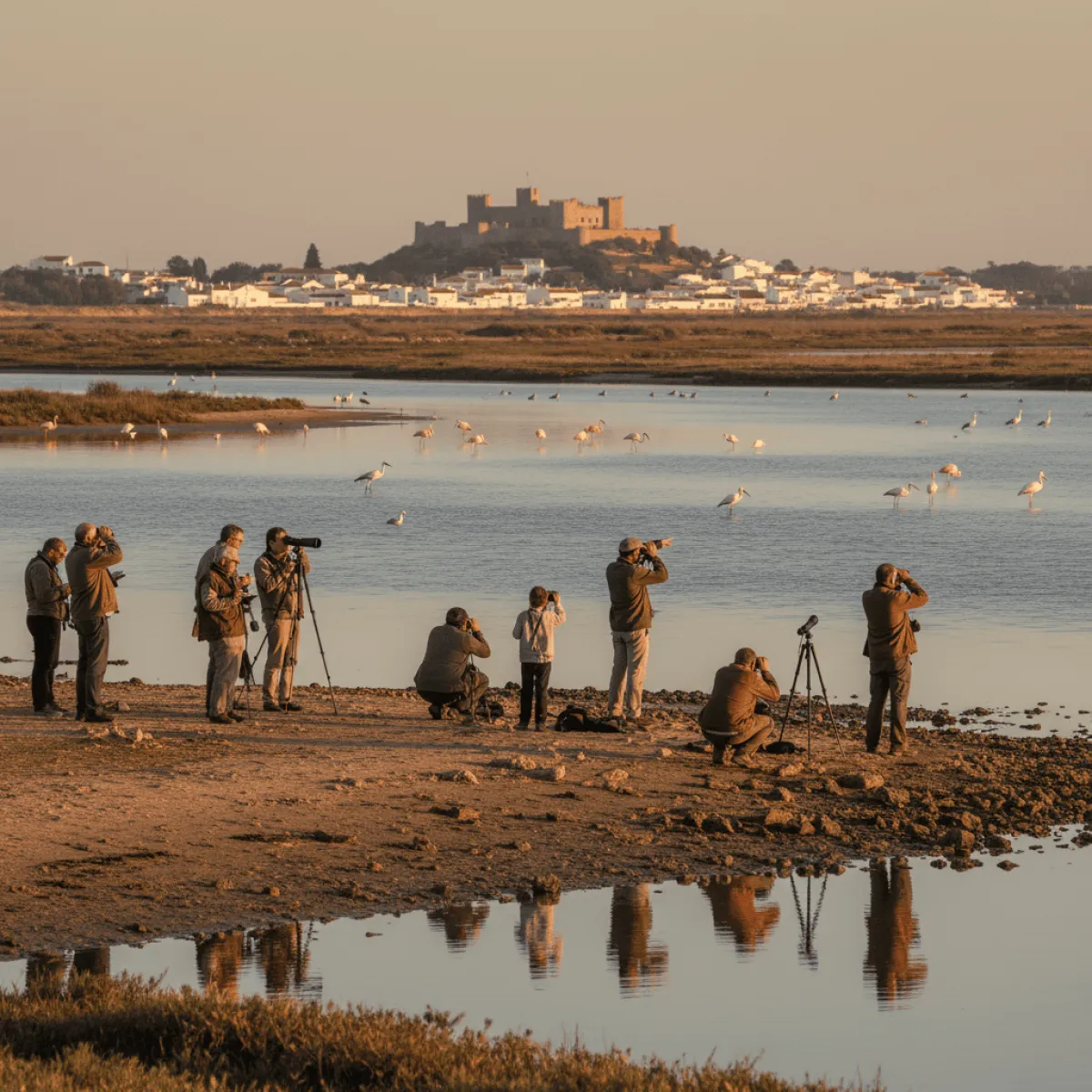
Let me be straight with you: there is no commercial tour that runs from Vila Nova de Milfontes to Sapal de Castro Marim. The two places are about 220 km apart, more than two and a half hours by car along the A2 and A22. Anyone selling you a 'Milfontes to Castro Marim in half a day' package is selling a fantasy. What I will explain here is how to actually do this trip: use Milfontes as a base, drive to the reserve, and use a verified contact who works the ground in Castro Marim.
Why this detour is worth it
Sapal de Castro Marim is the oldest Nature Reserve in Portugal (1975), covering more than 2,000 hectares of working salt pans, salt marsh and islets in the Guadiana estuary. This is where you see flamingos in dense flocks, spoonbills, avocets, black-winged stilts, and during migration, thousands of waders. If you are based in Milfontes and you actually care about birds, it is worth a full day: leave at dawn, hit the salt pans mid-morning, drive back at dusk.
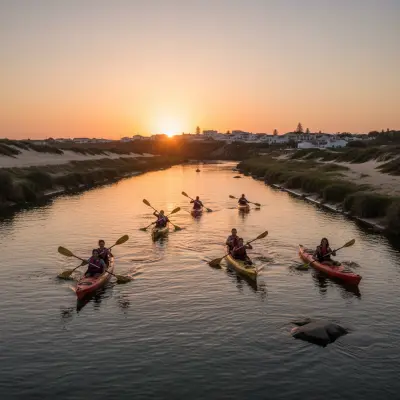
The alternative, if you want to stay close to Milfontes, is to work the Mira estuary itself, which is also excellent for birds (egrets, kingfishers, ospreys in winter). For that, see our photographer's guide to the Mira estuary, which covers the best observation points and light times.
The verified operator in Castro Marim: Quinta da Fornalha
The real operator, with land bordering the Reserve, is Quinta da Fornalha, Santuário Agroecológico. It is an organic farm in Castro Marim that runs accommodation and, more importantly, has direct access to the salt marsh trails and arranges birdwatching outings for guests and visitors. It is not a slick agency: it is a family who know the ground and walk it with you.
- Website: https://www.quinta-da-fornalha.com
- Email: geral@quinta-da-fornalha.com
- Phone: +351 917 107 147 or +351 281 541 733
- Price: confirm directly with the provider, varies by group size and duration
Quinta also points birders who want a professional ornithologist guide towards Walk Algarve, which runs guided outings through the Nature Reserve with binoculars included. For a more specialised experience with species lists and proper hides, contact them before your trip.
How to plan the day: practical route
Leaving Milfontes
Leave before 6 am if you want first light on the salt pans. The route is A26 to Sines, A2 south, A22 from Mossiços to Castro Marim. Allow 2h30 to 2h45 with a quick stop. Do not try the coastal road: you lose an hour and gain nothing.
Arriving at the reserve
Park at the Marim Environmental Education Centre in Castro Marim. It opens at 9.30 am and closes at 3.30 pm (check seasonal hours). Pick up a map of the Venta Moinhos trail, which is the best for first-timers: a 4 km circular along a dyke, with salt pans on one side and salt marsh on the other. In two hours you will see flamingos, spoonbills, egrets, and with luck, black-winged stilts and avocets.
The best window
The question I get most: 'When is the best time?' Honest answer: October to March. In summer the salt pans are working, there is heavy traffic from gourmet salt tours, and the flamingos disperse. In winter the flocks gather, the light is low and golden, and you have the marsh almost to yourself. September and October migration is also spectacular for waders.
What to bring
- 8x42 or 10x42 binoculars: non-negotiable. Without these you will see pink dots in the distance and nothing else.
- Layers: dawn is cool even in the Algarve, midday warms up. Long trousers for salt-marsh mosquitoes.
- Closed shoes: the dykes are loose stone. Sandals and flip-flops are a bad idea.
- Hat, water, sunscreen: there is no shade on the salt pans. None.
- Phone with Merlin Bird ID or eBird app: useful for identifying calls when you cannot see the bird.
What not to do
Do not leave the trail. The salt pans are private property and the marsh is fragile, plus you will sink to your knee. Do not play recordings to call birds in: it ruins the observation for everyone else who is standing there in silence. And do not bother with Forte de São Sebastião before midday, the light against the estuary is harsh for photography, save it for the way back.
Where to eat
The best lunch is in Cacela Velha, 15 minutes from Castro Marim. Fresh seafood, view over the Ria Formosa, no tourists photographing every plate. In Castro Marim itself the food is more limited and tourist-oriented.
Back to Milfontes at end of day
If you are doing this in a single day, leave the reserve around 4 pm to reach Milfontes by sunset. For the evening I suggest starting with a drink at Forte de São Clemente watching the Mira estuary, then a late dinner. For a longer stay focused on local birds, sleeping at Mabi puts you minutes from the best stretches of the estuary.
The smarter alternative: stay one night in Castro Marim
My honest recommendation, if you really care about birds, is not to do this as a same-day return. Sleep one night at Quinta da Fornalha (confirm prices directly with the provider), do the dawn outing, and drive back to Milfontes at the end of the next day. You see twice the species, with half the fatigue, and you catch the golden light over the salt pans twice instead of once.
If your trip falls in June, pay attention: SPEA (the Portuguese Society for the Study of Birds) runs a Bird Festival in Vila Nova de Milfontes, with free or low-cost guided outings on the Mira estuary. Depending on your schedule, that may beat driving 220 km each way.

Similar Experiences

Vila Nova de Milfontes: Surf Lesson, Then River Life
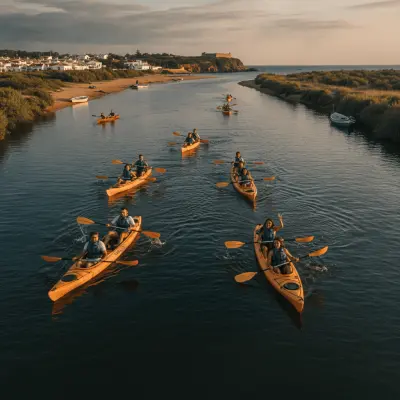
Kayaking the Mira Estuary in Vila Nova de Milfontes