Porto Covo's Fresh Fish: From Fishing Boat to Plate
In Porto Covo, fish travels from boat to plate in a matter of hours. Underrated sargo, winter octopus, and proper caldeirada, a guide to ordering right and arriving early.
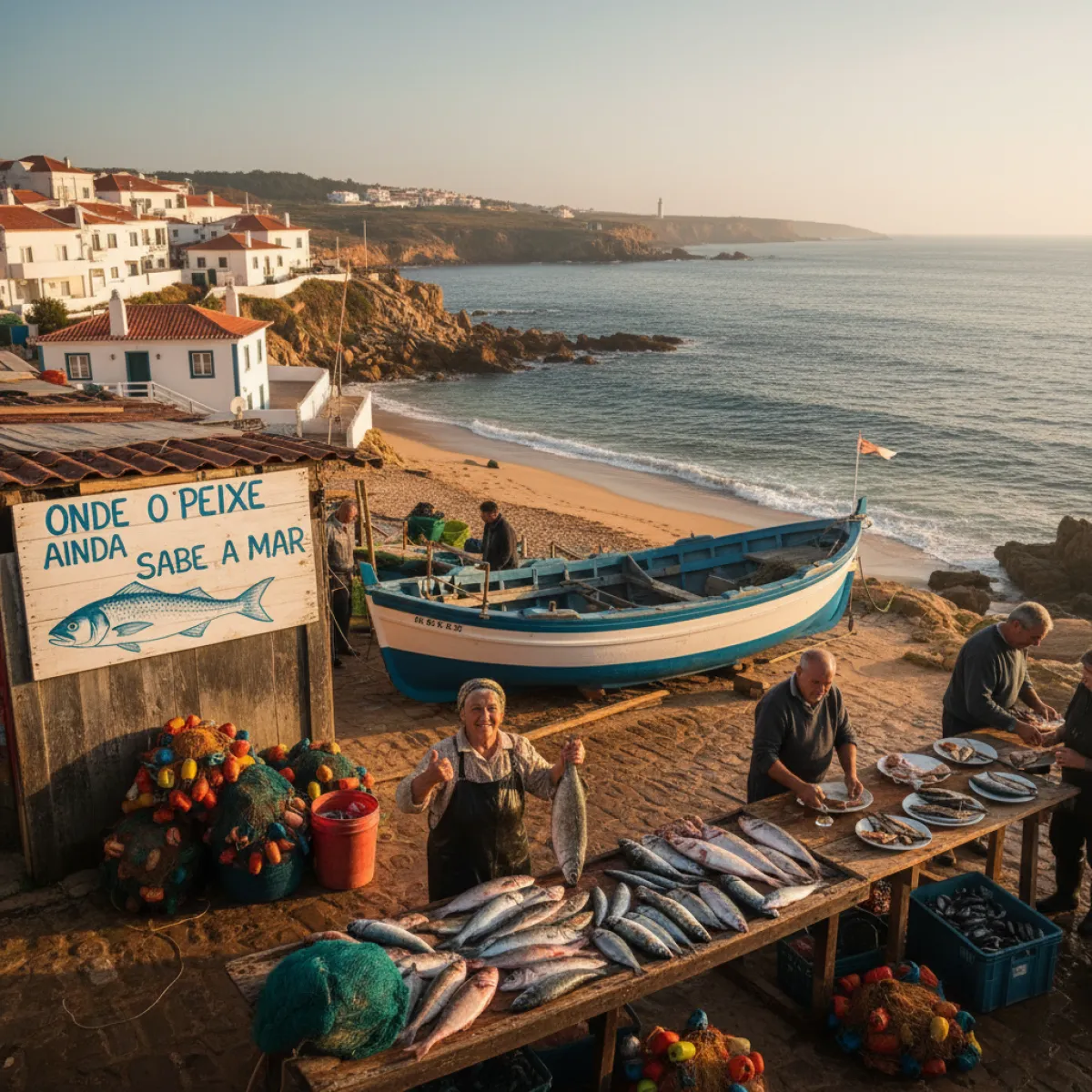
There's a simple test for any coastal village in Portugal: the fish. Not fish as a menu item, fish as a way of life. Porto Covo, a small settlement on the Alentejo coast wedged between dramatic cliffs and the Atlantic, passes this test with flying colours. The fishing port is modest, the boats are few, and the distance between the morning catch and your lunch plate is measured in metres, not supply chains.
This isn't the Algarve, where tourist-facing restaurants serve identikit grilled sea bream to sunburned crowds. Porto Covo's fish economy runs on a smaller, more honest scale. A handful of artisanal fishermen work the waters with lines and gill nets, and what they bring back determines what you eat. No frozen imports disguised as catch of the day, no elaborate sauces hiding mediocre ingredients. Just good fish, well grilled, simply served. It sounds easy. It's not.
The port: where it starts
Porto Covo's fishing port isn't much to look at in the postcardable sense. It's a working space, nets drying on concrete, stacked plastic crates, the smell of brine and diesel. But if you show up between 8am and 10am, you'll see the boats come in, and that's where the story of your lunch begins.
The fishermen here work mostly with hook-and-line and small nets. It's selective, not industrial, which means the species change with the seasons. Sea bass and sea bream dominate in winter and spring. Sea bream (sargo) and red bream (pargo) show up year-round. Mackerel and horse mackerel peak in summer. Cuttlefish appears in the colder months. Octopus is available throughout the year, though the fishermen will tell you winter octopus is firmer and more flavourful. They're right.
To understand the culture behind this fishing tradition, it's worth exploring the authentic life in Porto Covo's Fishermen's Quarter, where the daily rhythms of the sea aren't a tourist attraction but a living reality.
What to order (and what to skip)
The golden rule in Porto Covo: ask what came in today. Not what's on the menu, what's fresh. If the waiter can't answer, or answers with a vague "everything is fresh," treat that as a red flag and consider walking to the next place.
Grilled fish is the undisputed star. Whole grilled sea bream (dourada) with crispy skin and flesh that falls clean off the bone, seasoned with nothing but coarse salt, olive oil, and a crushed garlic clove. Sea bass (robalo) on the charcoal, which in Porto Covo tends to come in generous portions. And sargo, possibly the most underrated fish on the Portuguese coast. Firm flesh, clean flavour, fair price. Order it.
Fish stew (caldeirada) is another local classic. Not the watered-down highway-restaurant version, but a thick, layered affair with potato, onion, peppers, and two or three types of fish, slow-cooked until the flavours merge. Some places serve it with açorda folded in, Alentejo bread soaked in the broth with coriander and a poached egg. It's fisherman's food, unpretentious and deeply satisfying.
Octopus deserves special mention. Polvo à lagareiro, oven-roasted with smashed potatoes and copious olive oil, is one of the great dishes of the Alentejo coast. But the version that convinces me most here is simply grilled octopus, cut in thick pieces, the outside lightly charred, the inside tender. Paired with a black-eyed pea salad and red onion, it's a perfect lunch.
What to skip? Frozen shellfish passing as fresh (always ask), fish dishes with fussy sauces that mask the quality of the main ingredient, and, this will be controversial, cataplana, which is rarely done as well here as in the Algarve. If you want cataplana, go to the Algarve. Here, stick to the grill.
When to go and what to expect
The best time for Porto Covo's fresh fish circuit is March through June, and again in September and October. Peak summer brings crowds, and the quality doesn't always hold when restaurants are serving triple their normal capacity. Off-season, you eat better, pay less, and get a table without booking.
A grilled fish lunch with a starter, main, house wine, and coffee runs roughly €15-25 per person at local restaurants, depending on the species and size of the fish. Sea bass and sea bream tend to be pricier; horse mackerel and sargo are more wallet-friendly. Octopus varies, but the quality-to-price ratio rarely disappoints.
Arrive early for lunch, around 12:30. The smaller restaurants have limited capacity and the fish of the day genuinely runs out. This isn't a figure of speech. Show up at 2pm and you risk hearing "we only have steaks left."
After the meal
The best way to work off a Porto Covo fish lunch is on foot. The Fisherman's Trail section of the Rota Vicentina passes right through here, and there are coastal stretches you can walk in an hour or two, with cliff-top views that justify every calorie consumed. The relationship between the sea that feeds the village and the landscape that surrounds it makes more sense on foot than from any other vantage point.
The Alentejo coast also has a particular photogenic quality in the late afternoon. If you carry a camera, our photographer's guide to the Mira Estuary captures the specific light of this coastline beautifully.
And if Porto Covo whets your appetite for more coast, it will, Zambujeira do Mar lies to the south, with a different character but equal authenticity. Our guide to Zambujeira's architecture of slate and salt is a good starting point for continuing the exploration.
The truth about fresh fish
There's an easy romanticism around artisanal fishing that needs tempering with reality. Porto Covo's fishermen aren't characters in a nostalgic documentary. They're professionals working in tough conditions, with uncertain incomes and bureaucracy that doesn't always help. The fleet is shrinking. Most fishermen's children have chosen different paths.
Eating fresh fish here is, therefore, more than a gastronomic pleasure. It's a way of keeping alive a local economy that depends on people who still go out to sea. Every grilled sea bream eaten at a restaurant that buys directly from the fisherman is a small act of sustainability that doesn't need a label or a certification, it just needs customers who can taste the difference between fresh and defrosted.
Porto Covo isn't the only place in Portugal where you can eat great fish. But it's one of the few where the circuit between the sea and the plate is still short enough to see, smell, and taste the difference. And that, in a country where the coastline is filling up with resorts and sushi-fusion restaurants, is worth more every year.
Go. Ask for the fish of the day. Don't ask for the set menu. And if the waiter recommends the sargo, trust him.
