Zambujeira do Mar: The Architecture of Slate and Salt
Explore the austere beauty of Zambujeira do Mar, where slate cliffs and wild beaches define an untamed Alentejo. A practical guide to the most secret coves and the Atlantic gastronomy of the Vicentine Coast.
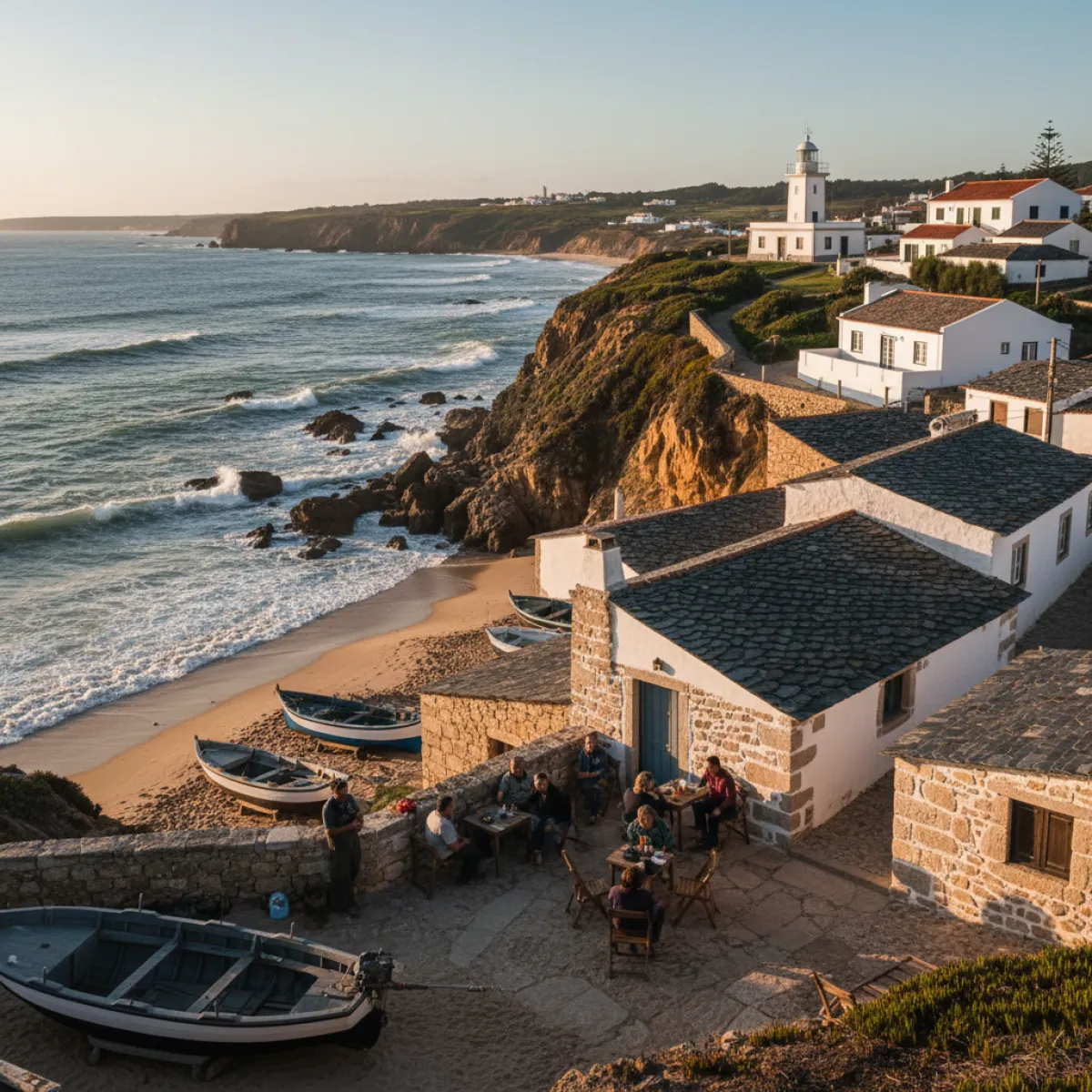
The Raw Edge of the Alentejo
There is a specific quality to the light on the Alentejo coast that defies easy description. It is not the soft, hazy glow of the Mediterranean, but a sharp, Atlantic clarity, honed by the wind and salt, that defines the contours of Zambujeira do Mar. This village, perched precariously on slate cliffs that read like an open book of geological history, serves as the gravitational point for those seeking a Portugal that refuses to be tamed. Here, luxury is not measured by five-star resorts or numbered beach loungers, but by the monumental scale of the cliffs and the purity of the water crashing against golden sand.
Zambujeira do Mar is not a destination for the hurried traveler. Its geography demands physical exertion, steep descents down wooden staircases, treks through loose sand, and a stoic endurance of the 'nortada' winds that blow vigorously even in the height of July. This natural barrier of entry is what preserves the region's integrity. While other stretches of the Portuguese coastline have succumbed to uninspired urbanism, Zambujeira maintains a human scale, where the white-washed houses contrast with the deep blue of the ocean and the rusty browns of the rocks.
The Geometry of the Cliffs: From Alteirinhos to Nossa Senhora
To truly understand the essence of this stretch of the Costa Vicentina, one must abandon the village center and head south. Praia dos Alteirinhos is a masterclass in the region's natural architecture. Access, via a generous but demanding staircase, reveals a wide bay where formations of slate and quartzite create pockets of absolute privacy. During low tide, natural pools and freshwater waterfalls emerge from the cliffs, a rare phenomenon that makes this beach a unique ecosystem. It is a place where geology becomes tangible; layers of rock, folded and pressed by millennia of tectonic activity, form hypnotic patterns that serve as the backdrop for a day of contemplative isolation.
Heading north, Praia de Nossa Senhora offers a compelling contrast. More protected from the prevailing winds, this small cove is the preferred refuge for locals when the Atlantic decides to show its more turbulent face. The name comes from the small chapel that watches over the coast, a reminder of the deep and often perilous relationship this community maintains with the sea. For those who appreciate the visual documentation of these landscapes, it is impossible not to draw a parallel with the detailed work in The Blue Hour: A Photographer's Guide to the Mira Estuary, which captures the transition of light over the calmer waters of Vila Nova de Milfontes, just a few kilometers away.
Tonel and Cabo Sardão: Where the Land Ends
If you seek a more radical isolation, Praia do Tonel is the obvious choice. The access is not for everyone; the trail is narrow and the descent requires agility. However, what awaits at the bottom is one of the wildest stretches of sand in Europe. There are no bars, no lifeguards in the off-season, and mobile reception is intermittent at best. It is the ideal spot to observe the raw power of the ocean, where winter swells have carved caves and natural arches into the dark rock. Here, the silence is filled only by the rhythmic roar of the sea and the occasional cry of a seagull.
A few kilometers away, Cabo Sardão offers an aerial perspective of this coastal drama. It is the only place in the world where white storks nest on sea cliffs, defying gravity and the salt spray. Watching these majestic birds soar over the abyss, with the Sardão lighthouse marking the rhythm of the night, is an experience that defines the singularity of the Costa Vicentina. This is the Alentejo of the fishermen who descend the cliffs on ropes to harvest the best goose barnacles (percebes), a task requiring a level of courage that the average tourist can barely fathom. To better understand this culture of resilience and the intimate connection to the ocean, it is worth consulting Beyond the Postcard: Authentic Coastal Life in Porto Covo's Fishermen's Quarter, which explores the daily lives of these communities further north.
Practicalities and Logistics
The best time to visit Zambujeira do Mar is during the shoulder seasons: May, June, or September. In August, the village transforms with the arrival of the Sudoeste Festival, and the tranquility that defines the region temporarily dissipates. In the autumn, the light becomes softer, ideal for photography, and the water temperature is, surprisingly, more pleasant than in the spring.
Regarding gastronomy, the rule is simple: seek what the sea provided that day. 'A Barca', in the nearby village of Cavaleiro, is an institution. Order the 'percebes' (gooseneck barnacles), but be prepared for the market price, which can range from €60 to €90 per kilo depending on the difficulty of the harvest. A lunch of grilled fish, sea bream or sea bass, accompanied by a local Alentejo white wine (yes, the Alentejo also produces exceptional, mineral whites near the coast) should cost between €30 and €45 per person. A daily budget for a traveler who values comfort and fine dining should be around €120, excluding accommodation.
Zambujeira do Mar is not a destination to be consumed; it is a place to be inhabited with respect. The cliffs are unstable, and the Rota Vicentina trails should be followed with caution. At the end of the day, when the sun sets directly into the sea, tinting the slate in shades of purple and orange, one realizes that this is not just a beach guide, but a guide to spiritual survival in an increasingly formatted world.
