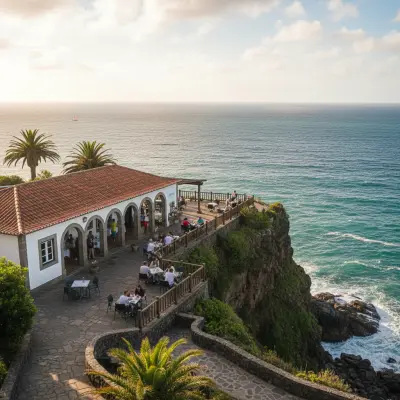
Vila do Porto: Wine, Petiscos, and a Proper Azorean Evening
On Santa Maria, vinho de cheiro is made from a grape banned for commercial production in the EU and exists only for home consumption. Pair it with grilled limpets, fried alheira, and a night walk along Vila do Porto's harbour for a proper Azorean evening.
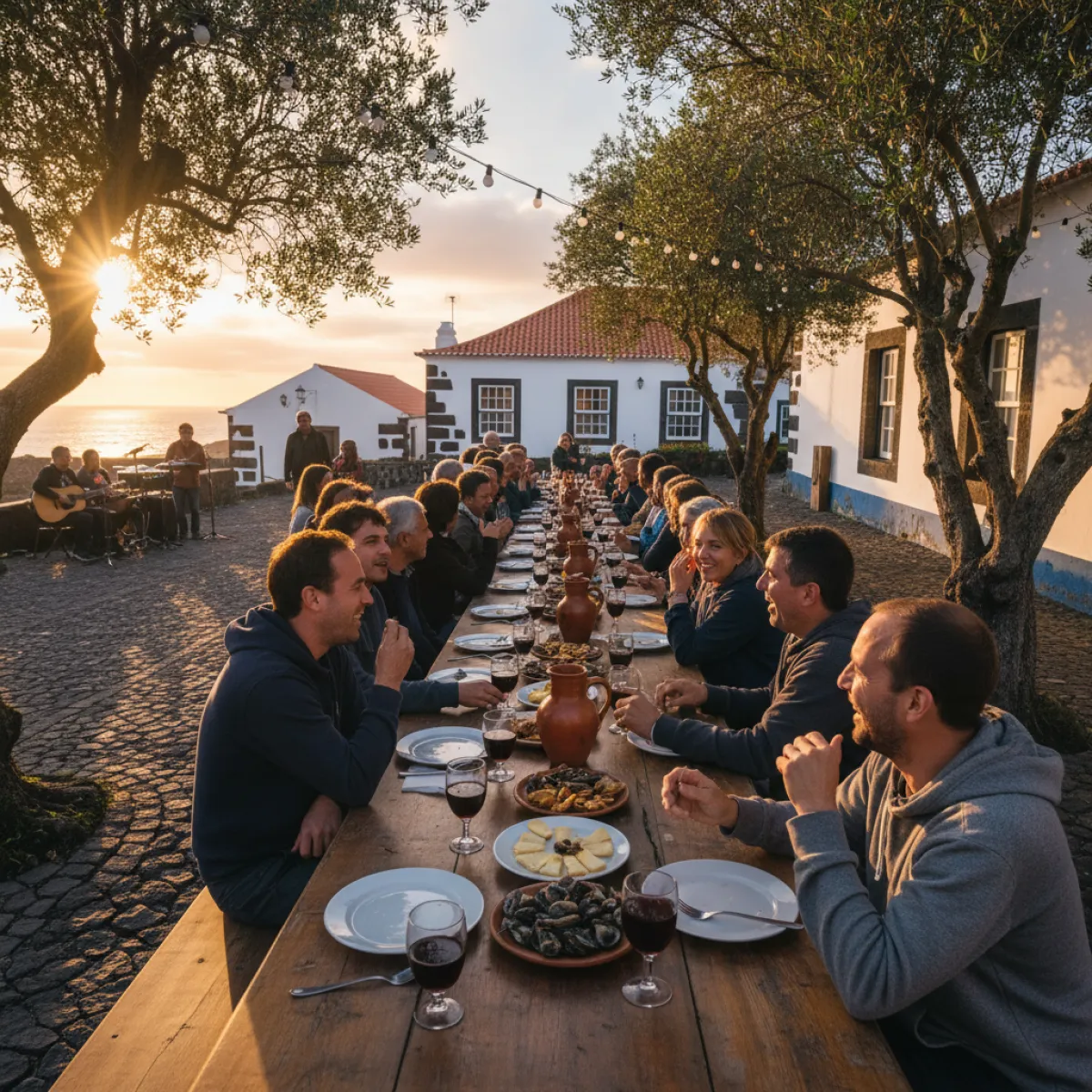
Santa Maria is the warmest island in the Azores, the driest, and the one that gets the fewest tourists. Which is precisely why eating and drinking here feels different. There are no menus translated into five languages, no Instagrammable terraces selling cocktails for 14 euros. What you get is honest petiscos, wine you literally cannot find anywhere else on the planet, and people who sit down to eat as though urgency were never invented.
This isn't an exhaustive guide. It's one evening. One well-spent evening in and around Vila do Porto, with stops for eating, drinking, and staring at the Atlantic with a glass in your hand.
Start before dinner: the sunset you've earned
If you're dedicating the evening to food, dedicate the late afternoon to landscape. Miradouro da Macela is the spot. It sits at the highest point on the island, roughly 590 metres up, and from there you can see the entire outline of Santa Maria, ocean in every direction, and on clear days even São Miguel in the distance. There's no café or gift shop. It's a viewpoint and nothing more, which is exactly what you need before an evening of controlled gastronomic excess.
Aim for around 6:30pm in summer (earlier in winter, check locally for sunset times). Bring a jacket. Even on the warmest island in the Azores, 590 metres of altitude and Atlantic wind will remind you where you are.
The wine that doesn't officially exist
Before we talk restaurants, we need to talk about vinho de cheiro. It's Santa Maria's wine, made from the Isabella grape, an American variety that produces an aromatic, fruity, slightly sweet wine with low alcohol. Here's what makes it genuinely special: commercial production is banned in the European Union, because Isabella isn't an authorised grape for commercial winemaking. So vinho de cheiro is made for home consumption, shared between neighbours, poured at local festivals, and if you're lucky, you'll find it at a tasca or restaurant on the island.
Don't expect something elegant or complex. Expect something that tastes like grapes, drinks like juice, and goes down dangerously fast on a warm afternoon. It's a genuine oenological curiosity, not a marketing gimmick.
The prettiest vineyards are around São Lourenço, on the eastern side of the island, sheltered by volcanic stone walls called "currais", similar to those on Pico. If you're driving past during the day, stop and look at the viticultural landscape.
When to go for vinho de cheiro
The best time is early September, during the Grape Harvest Festival in São Lourenço. That's when the wine flows freely. Outside that period, ask at local restaurants. Mesa d'Oito and Clube Naval typically stock local options, including island aguardente and vinho abafado.
Act one: petiscos in downtown Vila do Porto
Vila do Porto is not exactly a metropolis. The main street has the essentials: a few cafés, some grocery shops, the town hall. But from about 7pm, tables start appearing on the pavements and the smell of grilled food drifts from kitchen windows.
Central Pub is a local institution with over 50 years of history. Don't let the name fool you: this is not a British pub. It's Vila do Porto's gathering point, where locals and visitors mix freely. Come here for simple petiscos, a cold beer, and to feel the rhythm of the island. It's not sophisticated, and it doesn't try to be.
For petiscos specifically, look for lapas grelhadas (grilled limpets with garlic butter). Santa Maria has some of the best limpets in the Azores, served at nearly every restaurant and bar on the island. Also order cracas (local barnacles) if available, and alheira frita com ovo, a Santa Maria classic you won't find prepared quite like this on the mainland. The alheira here is pork and chicken sausage, served with chips and a fried egg on top. Simple, caloric, perfect.
Act two: a proper dinner
For the main event, you have two good options with different philosophies.
Mesa d'Oito
Located on Rua Teófilo de Braga, inside Hotel Charming Blue, but open to non-guests. This is probably the most polished restaurant in Vila do Porto, with a modern Azorean kitchen that isn't afraid of vegetables (a genuine rarity in the Azores, let's be honest). The desserts are the highlight. If you want a more refined evening with less noise, this is your place.
Clube Naval de Santa Maria
Down by the harbour with sea views, Clube Naval is the pick for shellfish. Limpets, whelks, grilled catch of the day. Nothing complicated, everything fresh. It's the kind of place where the menu depends on what the ocean provided that morning. Order whatever the waiter recommends and you won't go wrong.
At either restaurant, ask about local wine. Even if they don't have vinho de cheiro (rare outside the domestic circuit), they'll likely have vinho abafado or licor de amor, a sweet digestif typical of the island.
Act three: dessert is a walk
After dinner, the temptation is to head back to the hotel. Resist. Walk down to the harbour of Vila do Porto. At night, with the quay lights reflected in the water, it's one of the most beautiful spots on the island, and there's nobody around. If you hit the viewpoint in the afternoon and ate well at dinner, this nighttime stroll is the perfect closing act.
For actual dessert, look for biscoitos de orelha at a local bakery or grocery shop. They're dry biscuits shaped like ears (hence the name), typical of Santa Maria, good with coffee or a small glass of liqueur. Cavacas are also worth trying: light, crisp little cakes dusted with sugar.
Beyond the evening: what to do the next day
If this night of petiscos whetted your appetite to explore more of Santa Maria, two suggestions. For those who want to see the island on foot and discover its beaches, the Santa Maria trails and beaches with SMATUR are the best way to see what lies beyond Vila do Porto. The routes pass through landscapes that justify the trip to the Azores on their own.
And if you're keen to continue the gastronomic exploration on other islands, our guide to the food scene in Ponta Delgada is a solid starting point for São Miguel. If you're heading to Faial, read up on how to spend 24 hours in Horta, where the dining scene is surprisingly cosmopolitan for such a small city. And for drinks with a view, our guide to the best rooftops and panoramic views in Horta pairs nicely with this Santa Maria evening.
Practical information
Vila do Porto is small. Everything in this itinerary is either walking distance or a short drive away. For São Lourenço, you'll need a car. There's no Uber on Santa Maria, but taxis exist and you can rent a car at the airport.
Restaurants on Santa Maria are not expensive by Portuguese standards. A full dinner with wine at Mesa d'Oito or Clube Naval typically comes in under 30 euros per person, but check locally as prices fluctuate with seafood seasonality.
Reservations: in summer and especially during the MARÉ de Agosto music festival, book ahead. The rest of the year, just show up.
The best season for this itinerary is June through September, when days are longest and last year's vinho de cheiro is still circulating. But Santa Maria is pleasant year-round, with milder winters than any other Azorean island.
One final note: don't come to Santa Maria expecting a sophisticated food scene. Come expecting honest cooking, ingredients that travelled zero kilometres, and a wine that technically shouldn't exist. That, combined with the quiet of an island where everyone knows everyone, is more than enough for a memorable night.