The White February: Almond Blossom Trails and Granite Landscapes in Mogadouro
Experience the stark beauty of Mogadouro during the almond blossom season, where the granite landscapes of Trás-os-Montes meet a sea of white petals. A deep dive into the best walking trails of the Douro International and the region's robust culinary traditions.
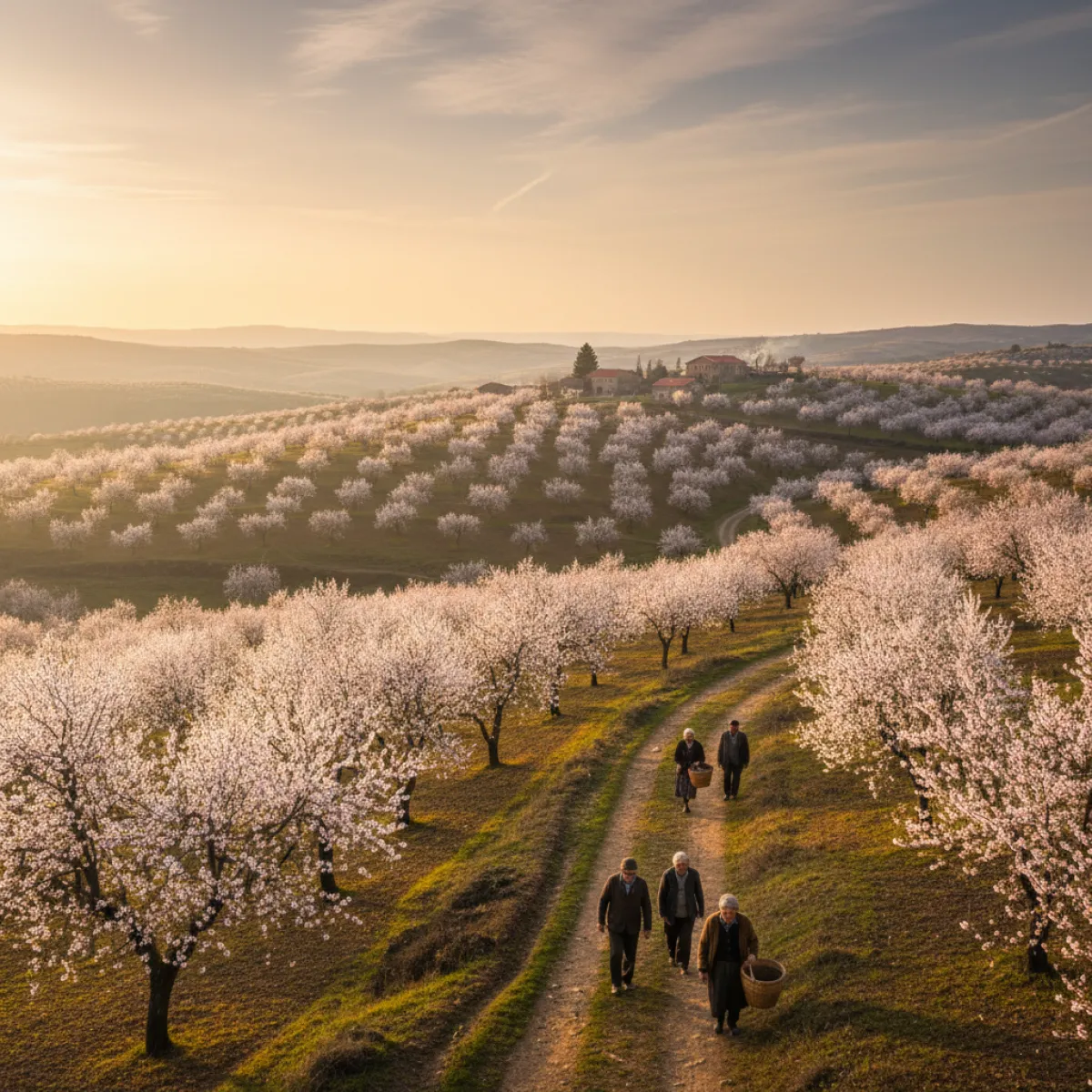
The Ephemeral Bloom of the High Plateau
There is a fleeting window in late February when the harsh, granitic landscape of Trás-os-Montes undergoes a surreal transformation. In Mogadouro, the arrival of the almond blossoms is not merely a change in the weather; it is a sensory takeover. While the crowds migrate to the southern coast, the Planalto Mirandês offers a starker, more architectural beauty. Here, the white and pink petals do not compete with golf courses, but with Romanesque ruins and the deep, silent canyons of the Douro International Natural Park.
Walking these trails requires a certain appreciation for the raw and the unrefined. This is a region of "terra quente" (hot land) and "terra fria" (cold land), where the almond tree, a resilient survivor, acts as the first herald of spring. The air is crisp, often carrying the scent of woodsmoke and damp earth, providing a clarity of light that photographers and hikers find addictive.
The Almond Trail (PR1 MGD): Granite and Petals
The definitive route for blossom hunters is the PR1 MGD, a circular trail starting from the medieval shadow of Mogadouro Castle. Spanning approximately 11 kilometers, the path descends into the river valleys where the microclimate allows the almond trees to thrive. Unlike the manicured orchards of more commercial regions, the trees here are scattered among ancient olive groves and cork oaks, held in place by low stone walls that have stood for centuries.
As you move through the village of Vilar de Rei, the silence is profound. It is a stillness that echoes the remote beauty described in The Silence of Montesinho: A Winter Retreat in the Last Frontier of Portugal. However, while Montesinho is defined by its deep forests and wolves, Mogadouro is defined by its openness and the dramatic scale of the Douro cliffs nearby.
The Douro Arribas: A Vertical Landscape
For those seeking more dramatic vistas, the area around Bemposta offers access to the "arribas", the sheer cliffs that drop into the Douro River. The Monóptero Trail, near Castro Vicente, leads hikers to a bizarre 18th-century baroque rotunda sitting unexpectedly in a field. It serves as a perfect vantage point to survey the white-capped valley, with the mountains of Zamora, Spain, visible across the gorge.
The architecture in these border villages reflects a history of defense and self-sufficiency. Heavy granitic structures with wooden balconies characterize the local style, built to withstand the biting winds of the plateau. Walking through these hamlets, one understands that the almond was never just an ornament; its fruit provided essential protein and oil for a population living on the edge of the frontier.
The Gastronomy of the High Plateau
Post-walk rewards in Mogadouro revolve around fire and meat. The local star is the Posta Mirandesa, a thick, tender steak from the indigenous Mirandesa cattle. Best enjoyed at a local "tasca" where the grill is always hot, the meat is seasoned only with coarse salt, allowing the quality of the pasture-fed beef to shine. It is a dish that demands a robust red wine from the Douro Superior.
Beyond the beef, the region’s charcuterie is a point of pride. The sausages here have a distinct smokiness, often using sourdough bread as a base, much like the traditions found in Beyond the Alheira: Mirandela’s Culinary Resilience. In Mogadouro, look for the "butelo," a heavy, bone-in sausage typically served with "casulas" (dried bean pods), a rustic winter staple that warms the soul after a day in the wind.
Recovery: From the Cold Wind to the Thermal Spring
The transition from the wind-swept plateau to a place of restoration is a quintessential northern Portuguese experience. After days spent navigating the rugged trails of the Douro International, many travelers head west to soak their weary limbs. The ancient Roman practice of thermal bathing is still very much alive here, a history explored in The Roman Legions' Legacy: Exploring the Ancient Thermal Springs of Chaves. The contrast between the cold February air and the 70°C volcanic waters of Chaves is the perfect conclusion to a trekking itinerary.
Practicalities: Planning Your Visit
- Timing: The bloom is unpredictable, usually peaking between mid-February and early March. A cold snap can delay it, while an early warm spell can cause the petals to drop within a week.
- Logistics: You will need a car. The drive from Porto is roughly 2.5 hours via the A4 highway, a spectacular route that cuts through the Marão mountains.
- Budget: Mogadouro is remarkably affordable. A high-end meal for two will rarely exceed €60, and charming rural guesthouses (Turismo Rural) typically range from €75 to €100 per night.
- Gear: Dress in layers. The temperature can swing from -2°C at dawn to 17°C by mid-afternoon. Sturdy hiking boots are essential as the granite paths can be uneven and occasionally muddy from the winter rains.
To visit Mogadouro during the almond blossom season is to witness a quiet awakening. It is a destination for the traveler who prefers the sound of a distant goat bell to a tourist trap, and the sight of a single, ancient tree in bloom to a crowded promenade. It is Portugal at its most honest and unadorned.
