Mogadouro's Calendar Was Never Built for Tourists
In Mogadouro, the year revolves around two dates: the Easter Monday of the clay cantarinhas and the August nights that keep Via Dupla Bar packed till dawn. Between them, a quiet plateau worth knowing without any festival at all.
A calendar nobody wrote with tourists in mind
In Mogadouro, the year isn't measured in tourist seasons. It's measured by Easter, by summer, and by the cold that arrives in November and forces everyone to light the fireplace. If you come looking for a festival staged for photographs, you'll be disappointed. If you come willing to understand why half the district drives home for a single Monday in spring, you'll learn more about the Miranda plateau than any brochure could tell you.
Mogadouro's calendar has two clear peaks, a smaller third one, and a generous stretch of productive silence in between. That silence, in fact, is exactly what makes the peaks worth it.
Feira das Cantarinhas: the Easter that brings everyone home
If there's one day a year when Mogadouro can barely contain itself, it's Easter Monday. The Feira das Cantarinhas is one of the oldest and most talked-about fairs in the northeastern Trás-os-Montes region, and the name comes from the object that defines it: small glazed clay jugs, cantarinhas, which young men traditionally bought for their girlfriends as a token of commitment. The tradition has softened over time, today people buy a cantarinha out of taste, family memory, or because it looks good in the kitchen, but the gesture still carries across generations.
The fair fills the town with stalls, livestock, farm tools, regional sweets, and a crowd that includes plenty of people from the diaspora, especially from France, who plan their Easter holidays entirely around this Monday. Arrive early, before 10am, because after noon the roads into the centre get tight and parking becomes an improvisation exercise. Bring cash, most stalls don't take card.
Anyone planning to stretch the weekend beyond just the fair day should know that A Casa do Gi usually books up fast around this time precisely because Easter in Mogadouro gets reserved months, not days, in advance. Worth taking seriously if you're coming on purpose.
What to eat on fair day
This is not a day for diets. It's a day for linguiça sausage, sweet and savoury folares from home-baking stalls, and locals stocking up on the year's cheese and honey. If you'd rather sit down than eat standing in the street, Bacus Bar tends to handle the fair-day crowd well without dropping the quality of the plate, which in a town this size on this busy a day is no small feat.
August: the town festivities and the nights that only exist in summer
If Easter is the quiet homecoming, August is the loud one. Mogadouro's Festas do Concelho take place around the middle of the month, typically near the Assumption holiday, with a programme built around an open-air fair ground, brass bands, fireworks, and a procession that still carries weight locally, even for people who haven't set foot in church in years. Always confirm exact dates locally, since the calendar shifts slightly year to year depending on which day of the week August 15th falls on.
It's when the town fills with emigrants home on holiday, cars with French or Swiss plates parked wherever they'll fit, and nights that stretch far past any official schedule. It's also the only time of year when it's genuinely worth going out after dinner in Mogadouro. Outside the festivities, nightlife here is modest and honest, which isn't a flaw, it's simply what it is: an inland town, not a district capital.
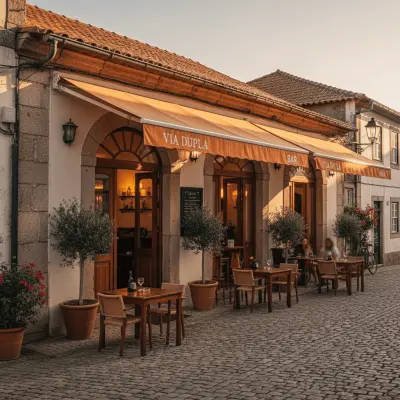
Via Dupla Bar is where things actually happen during the festivities, packed late into the night with an energy that simply doesn't exist in the town at other times of year. If you're after the version of Mogadouro with live music and conversations that run until three in the morning, this is it, and it's now, in August, not in February.
Where to stay if you're coming for the festivities
Book seriously in advance, not a week out. Besides A Casa do Gi, Casa das Águas Férreas tends to be the calmer option for people who want to enjoy the festivities by day and actually sleep without the town square noise at night, which in the middle of August isn't a luxury, it's survival.
What to do in the months without a festival
Most of the year in Mogadouro has no festival at all, and that's exactly when the town shows itself as it really is: dry plateau, hard light, slow life. Those are the months, especially between May and September when water levels on the Sabor river reservoirs allow it, when it's worth setting aside a morning for kayaking on the Lagos do Sabor. This isn't a festival activity, it's the opposite: it's the antidote for when the town empties out after Easter or before August and it feels like there's nothing to do.
If the goal is understanding the territory beyond the festival calendar, a late afternoon on the plateau justifies the trip on its own, and for that you don't need to wait for any particular date: just follow our guide to Mogadouro's sunset viewpoints, built exactly for the months when the town is quiet and the light does all the work by itself.
A note on the rest of the year
Between Easter and August, and then between August and the following Easter, there's a smaller but real Mogadouro: a modest street carnival in February, São Martinho chestnut roasts in November that bring family around the fire with roasted chestnuts and água-pé, and the dry, cold plateau winter that empties the town by seven in the evening. None of these moments were designed for any visitor, and that's exactly why they're worth catching. Seeing Mogadouro outside the festival calendar might be the most honest way to understand how the town lives when nobody's watching.
Quick planning notes
- Easter Monday: Feira das Cantarinhas, book accommodation months ahead
- Mid-August: Festas do Concelho, confirm exact dates locally
- May to September: best window for kayaking on the Lagos do Sabor
- November: chestnut roasts and the start of the Trás-os-Montes winter, the town turns inward
- Year-round: the plateau's viewpoints, no need to time them around any festival
If you're planning a trip around one of these dates, it's always worth confirming locally, with the town council or parish office, since both the Feira das Cantarinhas and the Festas do Concelho adjust programme details year to year. What doesn't change is the essential rhythm: Mogadouro has two moments a year when it fully opens up, and the rest of the time it's plateau, silence, and the low hum of people who live there the whole year round, not just on festival days.