Summer Surf from Braga: Beginner Spots This July
Thirty-five minutes from Braga to Ofir, a 3/2 wetsuit, lessons at 40 euros, and the brutal secret: waves only work until 11am. Where to learn to surf in July without pretending you're at Nazaré, and where to eat when you get back hungry as an elephant.

There's a joke they tell in Braga, usually over beers near Campo das Hortas, that goes like this: Portugal's most Catholic city sits forty minutes from the beach, but the bracarenses prefer to go to mass. It's unfair, of course. In July, the truth is different. The Esposende car park at 8am is packed with Braga-plated cars, boards strapped to roofs with suspect ropes, people pulling on 3/2 wetsuits that still smell of June.
This is a guide for anyone living in Braga, or visiting in July, who wants to do what the bracarenses pretend they don't: catch a wave. We're not sending you to Peniche. We're not romanticising Nazaré. This is the honest beginner surf circuit west of Braga, with how much it costs, what time to show up, and where to eat when you come back soaked and hungry as a horse.
Why July, why beginners
July in northern Portugal is when the ocean finally gives in. Water temperature climbs to 17 or 18 degrees, perfectly bearable for two hours in a 3/2. The winter swells, those that break boards and egos at Praia do Norte, are gone. What you get in July is what instructors call, with that professional optimism that misleads beginners, "learning waves": half a metre to a metre and a half, short periods, a thermal northerly wind that picks up mid-morning and ruins everything by 11am.
Practical translation: if you want to learn to surf in July, you're up at 6.30am, or you accept that the afternoon session will be a fight against wind. There's no other way. Honest instructors will tell you this. The others put you in the water at noon and charge the same.
The spots: three beaches, three personalities
Praia de Ofir, Esposende
Thirty-five minutes west of Braga on the A11, Ofir is the most obvious beginner spot in the north. Wide sand beach, sandy bottom (no hidden rocks to break your toes on), waves that break gently and give you time to stand up. There are four or five schools operating on the beach, all running group lessons at 35 to 45 euros for two hours, board and wetsuit included.
The secret of Ofir isn't the beach itself, it's the parking. In July, after 10am, it's a nightmare. Arrive before 9.30am or park in Apúlia and walk ten minutes along the boardwalk. Bring coins: the parking kiosk only takes change and the nearest ATM is in Fão.
Praia de Moledo, Caminha
An hour north of Braga, already looking across the Minho river at Spain, Moledo is the spot nobody will recommend because the local surfers want it to stay that way. The wave is more consistent than Ofir, the atmosphere is calmer, and Mount Santa Tecla across the river gives you one of the best views you can have while underwater swallowing saltwater.
Fewer schools serve it. One or two operate in July, but you should book ahead. If you already have the basics (catching the foam lying down, standing up, staying up for three seconds), Moledo is the place for your second phase of learning.
Praia do Cabedelo, Viana do Castelo
Fifty minutes from Braga. Cabedelo is the technical spot of the north, with currents that catch the unprepared and a wave faster than it looks from the sand. It's not for your first lesson. It's for your third, fourth, fifth. Local instructors know how to read the Lima river tides, and that makes all the difference. If you go to Cabedelo, go with a lesson. Don't make the mistake of paddling out alone thinking you mastered everything at Ofir.
Gear: buy or rent
In July, renting is smarter than buying. A softboard rental runs 15 to 20 euros a day. A 3/2 wetsuit, 10 to 15. Buying everything new, even in sales, hands you a 400 euro invoice for gear that will gather dust nine months of the year. For most people, renting makes sense through your first two or three summers.
If you decide to buy, there's a shop in Esposende near Avenida Marginal that takes consignment used boards. The boards that end up there in September, after a summer of lessons, are often the best beginner options: they already have dings, you won't cry over the first scratch, and they cost half the price of new.
The good day: a realistic schedule
- 6.30am: leave Braga. Bring coffee in a thermos, because at 6.30am nothing is open.
- 7.15am: arrive at Ofir. Easy parking. Change into your suit in the car park, everyone does it.
- 8am to 10am: lesson or free session. Two hours is the ceiling when you're learning, after that your arms stop responding.
- 10.15am: cold shower on the beach (yes, cold, in July nobody bothers with heating).
- 11am: drive back to Braga, or grab a late breakfast in Esposende.
- 1pm: arrive in Braga, hungry as an elephant.
Where to eat when you get back: the important part
Surfing gives you a hunger that isn't normal. It's the hunger of someone who has burned three thousand calories trying to stand up on a board. Beer, carbs, protein, salt. The good news is Braga knows how to feed hungry people.
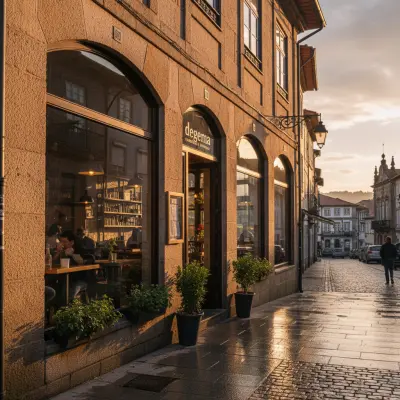
For a proper lunch after the beach, DeGema Hamburgueria Artesanal is the obvious call. Burger, fries, beer, conversation about the waves you caught (and the ones you didn't, which are always more). It's honest, it's fast, it's exactly what the body is asking for.
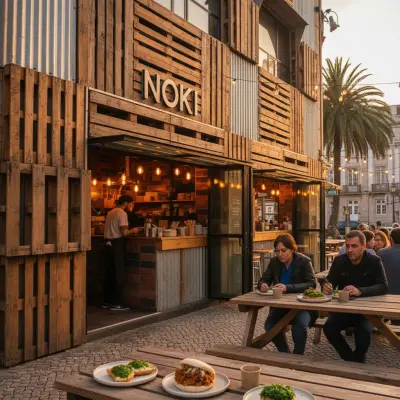
If you want something more adventurous, NOKI street food fusion does an Asian fusion thing that works surprisingly well when you've just swallowed half a litre of seawater. Something with noodles, spicy, restorative. Don't go expecting traditional Portuguese food: go precisely because you don't want another plate of bacalhau on a day when the body is calling for umami.
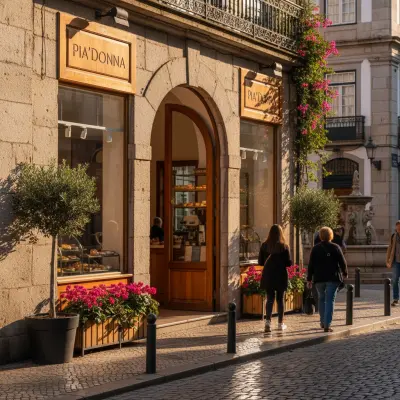
For a calmer dinner, after the shower and the obligatory nap, Pia'Donna does serious Italian-style pizza, thin crust, ingredients that respect each other. One pizza, a bottle of house wine, and the sense that your body has earned this after two hours getting slapped around by cold water.
What to do with the rest of the day (and when wind kills the afternoon)
The thermal wind that ruins the waves from 11am to 5pm also frees up your afternoon. That's where Braga wins. If the morning was surf, the afternoon can be culture, and the city has more to offer than what fits in a weekend.
For anyone who hasn't read about Braga seriously, I'd start with our full guide to Braga: it has the context that's missing for visitors arriving here thinking this is a city of churches and nothing else. It isn't. It's a city of churches, yes, but also of students, beer halls, and a certain quiet pride that takes time to understand.
For your actual afternoon: head up to the Miradouro do Monte do Picoto. Five minutes from the centre by car, free parking, a view of the city that justifies the three cents of petrol. Bring water. In July, at midday, even at the viewpoint, it's hot.
If you want indoor activity, and if it rains (it happens, even in July, especially early morning when the wind hasn't decided which way to blow), there are two good hands-on options in Braga. The pottery classes at Ateliê Cobalto are one of those experiences that look touristy but aren't: the people working there are serious ceramicists, and you leave with a piece that won't embarrass you. If you'd rather try tiles, there's also the option of painting tiles at the same studio, and the truth is a tile you painted yourself, however crooked, is a more honest souvenir than a fridge magnet.
Side trips: using Braga as a base
If you're staying a week in Braga and want to vary the rhythm, Porto is forty minutes away by train. Our guide to the best day trips from Porto works perfectly as inspiration in reverse: many of the places we suggest visiting from Porto are equally easy from Braga, and in some cases closer.
And maybe you'll come back in April. Yes, I know, this is a July guide. But if you're the type who fell in love with Braga during a week of surf, it's fair to warn you: the city in April, during Holy Week, is something you won't see anywhere else in Portugal. Midnight processions, streets taken over by melted wax, a silence that has nothing to do with stones, just people breathing together. Mark the calendar.
Final advice, no flourishes
- Buy a pair of 3 euro rubber flip-flops. Your car mats will thank you.
- Bring a change of dry clothes. Driving 40km wet is miserable.
- Don't take lessons on red flag days. Instructors shouldn't accept them, but some do.
- At Ofir on Saturdays, there are more students than waves. Book Tuesdays or Thursdays.
- Hydrate. Surfing dehydrates you like a hot-weather sport: salt water, sun, exertion. Bring two litres of water, even for a two-hour session.
- Learn to paddle before you learn to stand. Most beginners spend half the lesson trying to stand up on a wave they didn't catch properly. Catch the wave first, the rest follows.
Good waves. And when you come back to Braga at lunchtime, hair smelling of sea and seriously hungry, remember: DeGema is open.