Holy Week in Braga 2026: The Essential Guide
Braga's Holy Week is Portugal's largest religious celebration, hooded, barefoot farricocos carry torches through darkened streets in processions dating back centuries. A practical guide covering 2026 dates, where to watch, what to eat, and how to get there.
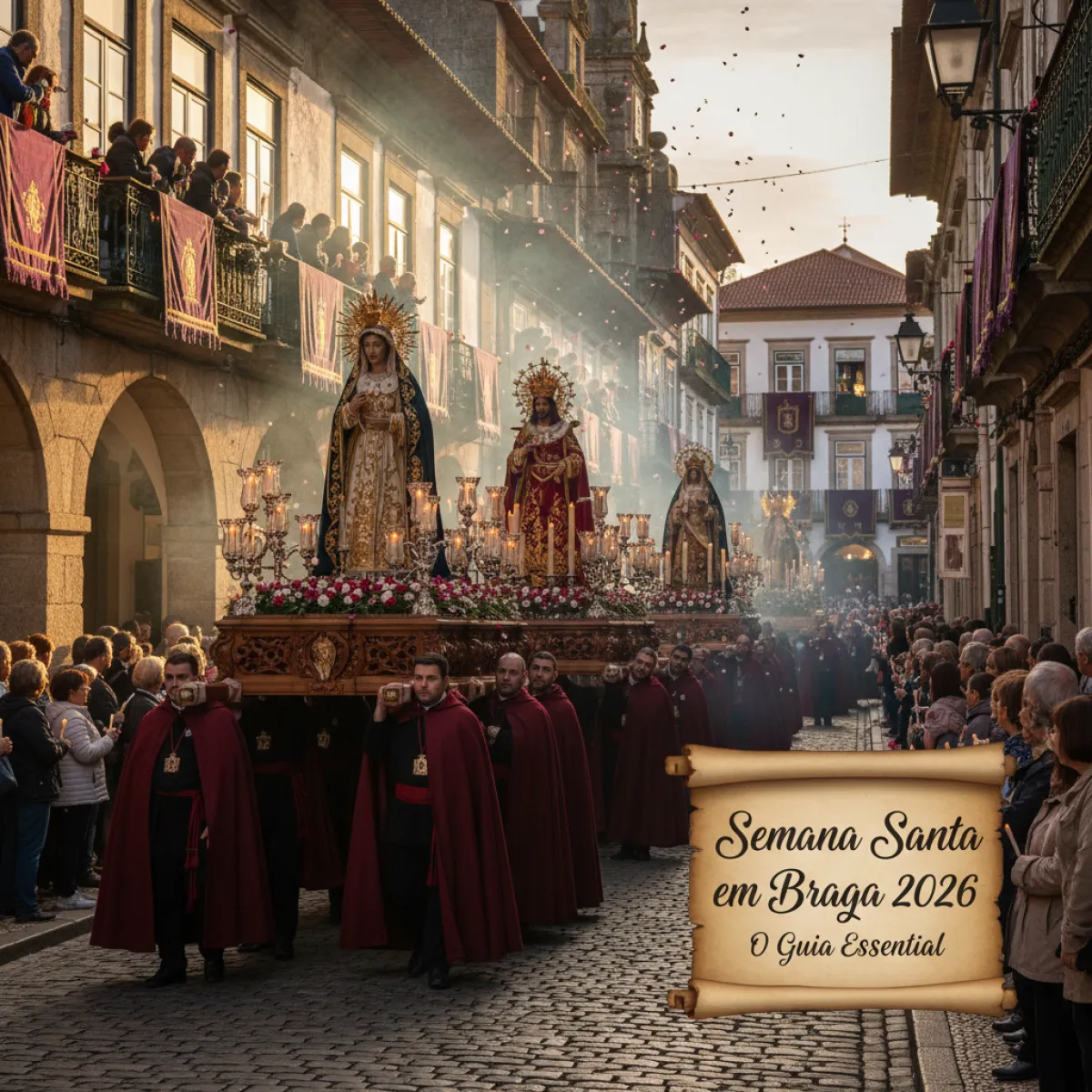
They say Braga's Holy Week is the biggest religious celebration on the Iberian Peninsula. That might be Minho pride talking, but there's no denying it: for one week every spring, this northern Portuguese city of 200,000 transforms into something you won't find the other 51 weeks of the year. The streets of the old town fill with thousands of people, the smell of melted wax mixes with fresh flowers, and processions dating back to the 17th century take over from Thursday night through Easter Sunday.
If you've never experienced Braga's Semana Santa, 2026 is a fine year to fix that.
What to Expect: Dates and Schedule
In 2026, Easter Sunday falls on April 5th. That means celebrations begin on Palm Sunday (March 29th) and peak between Holy Thursday (April 2nd) and Easter morning. The official programme is published by the Comissão da Semana Santa de Braga, usually from February onwards, check their website or the local tourist office for exact times and routes.
The general structure, though, has been the same for centuries:
- Palm Sunday: Blessing of the Palms and a procession through the old town to the Sé Catedral (cathedral).
- Holy Thursday: The big one. The "Ecce Homo" procession goes out at night, featuring the famous farricocos, hooded, barefoot penitent figures in purple or black robes carrying torches through the darkened streets. It's an image you won't forget.
- Good Friday: The Burial procession. The city goes quiet. Shops close, restaurants serve cod.
- Holy Saturday: Easter Vigil. The longest night.
- Easter Sunday: Solemn Mass at the Sé, and in Braga households across the city, the folar pascal (Easter bread) finally hits the table.
The Farricocos: What They Are and Why They're Unsettling
Google "Semana Santa Braga" and the first thing you'll see is the farricocos. Hooded figures in long robes, carrying flaming torches through the night. They look like something out of a Kubrick film, but they're a tradition going back centuries. They represent penitents, men who, historically, performed public penance during Holy Week. Today, participants' identities remain secret, and they walk barefoot on granite cobblestones in late March temperatures (which in Braga means cold).
At night, with the streets lit only by torches and candles placed in windows by residents, the effect is genuinely striking. This isn't a show put on for tourists, it's an entire city participating in a tradition it takes seriously.
Where to Watch the Processions (Without Getting Crushed)
Braga's centre isn't large. Processions generally depart from the cathedral area and wind through streets like Rua do Souto, Rua Dom Diogo de Sousa, and Avenida da Liberdade. Crowds concentrate along these routes, and on Thursday night the centre gets genuinely packed.
Some practical tips:
- Arrive early. On Thursday night, if you want a good spot along the route, be in the centre at least an hour before the procession starts.
- Praça da República (locals call it "the Arcada") is a good reference point but fills up fast.
- Side streets off the main route can offer less obstructed views. Rua de São Marcos, for instance, or the small lanes connecting to Rua do Souto.
- If you have small children or limited mobility, Good Friday is more manageable, the procession is slower and the crowd, while large, is more contained.
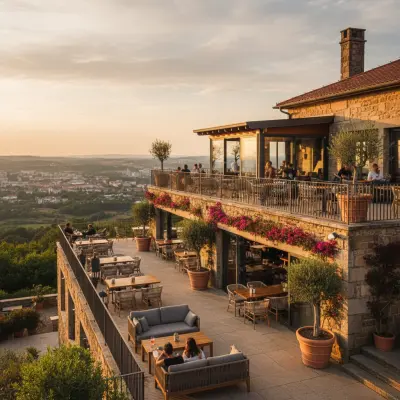
For a completely different perspective on the city during the day, head up to Miradouro do Monte do Picoto. It's not the place to watch processions (it's above the city), but it's the best spot to appreciate Braga's scale, tucked between green hills, and to escape the crowds for a few hours.
What to Eat During Holy Week
Holy Week eating in Braga is as codified as the liturgy. There are rules, and locals take them seriously.
On Good Friday, you eat bacalhau (salt cod). Full stop. The classic options are bacalhau cozido com todos (boiled cod with potato, egg, chickpeas, and cabbage) or bacalhau à Braga (oven-baked with potato and onion). Most restaurants in the centre serve perfectly competent versions, you don't need to spend big to eat well.
Folar pascal is the compulsory Easter sweet. In Braga, folar is typically the sweet version, a soft dough with cinnamon, aniseed, and sometimes a boiled egg baked inside. You'll find it in every bakery from mid-March. The bakeries around Rua do Souto and Rua de São João tend to have good ones.
Convent sweets are another deep Braga tradition. The city was for centuries a place of convents and seminaries, and that left a legacy of egg-and-sugar confections. Look for pudim Abade de Priscos (a dense flan pudding with pork lard, trust the process), toucinho do céu, and fidalguinhas.
For specific restaurant recommendations, our full Braga guide covers places that hold up year-round, Holy Week included.
The Sé Catedral: The Centre of Everything
You can't talk about Holy Week in Braga without talking about the Sé. It's the oldest cathedral in Portugal, construction started in the 11th century, and during this week it functions as the beating heart of all celebrations. The main services happen here, and processions begin or end in its vicinity.
Even outside liturgical celebrations, it's worth stepping inside. The interior mixes styles from practically every era of Portuguese architecture, from Romanesque to Baroque. The upper choir, the Baroque organs, and the side chapels all deserve attention. Entry to the cathedral is free; the treasury museum and chapels charge a fee (check at the door, usually around €3-5).
Bom Jesus do Monte: The Obligatory Staircase
About 5 km from central Braga, the Sanctuary of Bom Jesus do Monte is probably the most photographed monument in northern Portugal. The Baroque stairway with its Via Sacra chapels has an obvious Holy Week connection, it literally represents the Stations of the Passion.
You can climb the 577 steps on foot (about 20-25 minutes, worth the effort) or take the hydraulic funicular, operating since 1882 and the oldest on the Iberian Peninsula. Urban buses run from central Braga (line 2, check TUB for schedules).
During Holy Week, the sanctuary holds its own celebrations and tends to be busier than usual. If you prefer a quieter visit, go early morning.
Logistics: Getting There and Where to Stay
Braga is about 55 km from Porto. By train, CP's urban line makes the journey in roughly an hour, with frequent departures from São Bento or Campanhã stations. Tickets cost under €4. If you're based in Porto, it's perfectly doable as a day trip from Porto, but to properly experience Holy Week, at least one overnight stay is better.
Accommodation: Book ahead. Holy Week is the biggest event on Braga's calendar, and city-centre hotels fill fast, especially for Thursday and Friday nights. There are options for every budget, from hostels in the old town to more comfortable hotels on the outskirts. If Braga is fully booked, Guimarães is just 25 minutes by train and makes an excellent base, with the bonus of seeing two cities in one weekend.
Parking: If you're driving, forget about the centre during processions. Streets are closed to traffic and parking nearby is essentially impossible. Use peripheral car parks and walk, Braga's centre is easily covered on foot.
Tips They Don't Put in the Brochure
- Dress in layers. Late March/early April nights in Braga are cold, often below 10°C. Processions last hours. Bring a warm coat and something waterproof. Always.
- Bring cash. Many street food stalls, folar vendors, and small chapels asking for donations don't take cards.
- Keep your phone charged, but resist the urge to watch everything through a screen. The farricocos procession at night, with torches lighting up granite facades, is one of those things you experience better with your eyes than your camera.
- Respect the silence. The processions are religious ceremonies, not performances. Locals take this seriously. Keep your voice low during processions and don't use flash.
- If you have extra time, combine the trip with a day in Guimarães. Two cities with very different personalities, but they complement each other beautifully, and the train connection is quick and cheap.
Is It Worth It?
No hedging: yes. Braga's Holy Week is one of those events that justifies the trip, even if you're not religious. It's an entire city operating in a different register, slower, quieter, more intense. The nighttime processions, in particular, are a visual and emotional experience without parallel in Portugal.
And then, of course, there's the cod, the folar, and the convent sweets. In Braga, even penance ends well at the table.