Braga's Beaches: Where Locals Actually Swim
Braga has no beach, yet every local has their spot. The trick is choosing between the River Cávado at Adaúfe and the Atlantic at Apúlia, and above all knowing what time to arrive. An honest guide to dodging the crowds.
Let us get one thing straight before we go any further: Braga has no beach. Stare at the map as long as you like, but there will always be a good forty minutes of road between the city and the Atlantic. And yet, ask any local in July where they swim and they will answer without hesitation. Everyone here has their beach. The difference between a tourist and a Braga native is not knowing the city is inland. It is knowing where the water is good, what time to arrive, and when it makes more sense to stay by the river than to fight for a parking space in Ofir.
This is not a list of pretty beaches with drone photos. It is a guide to dodging the crowds, written by someone who has made every possible mistake: arriving in Esposende at noon on a Saturday in August, spending two hours hunting for parking, and driving home in a foul mood with sand in my shoes. There are better ways to do this.
First, the river beaches (and why they usually win)
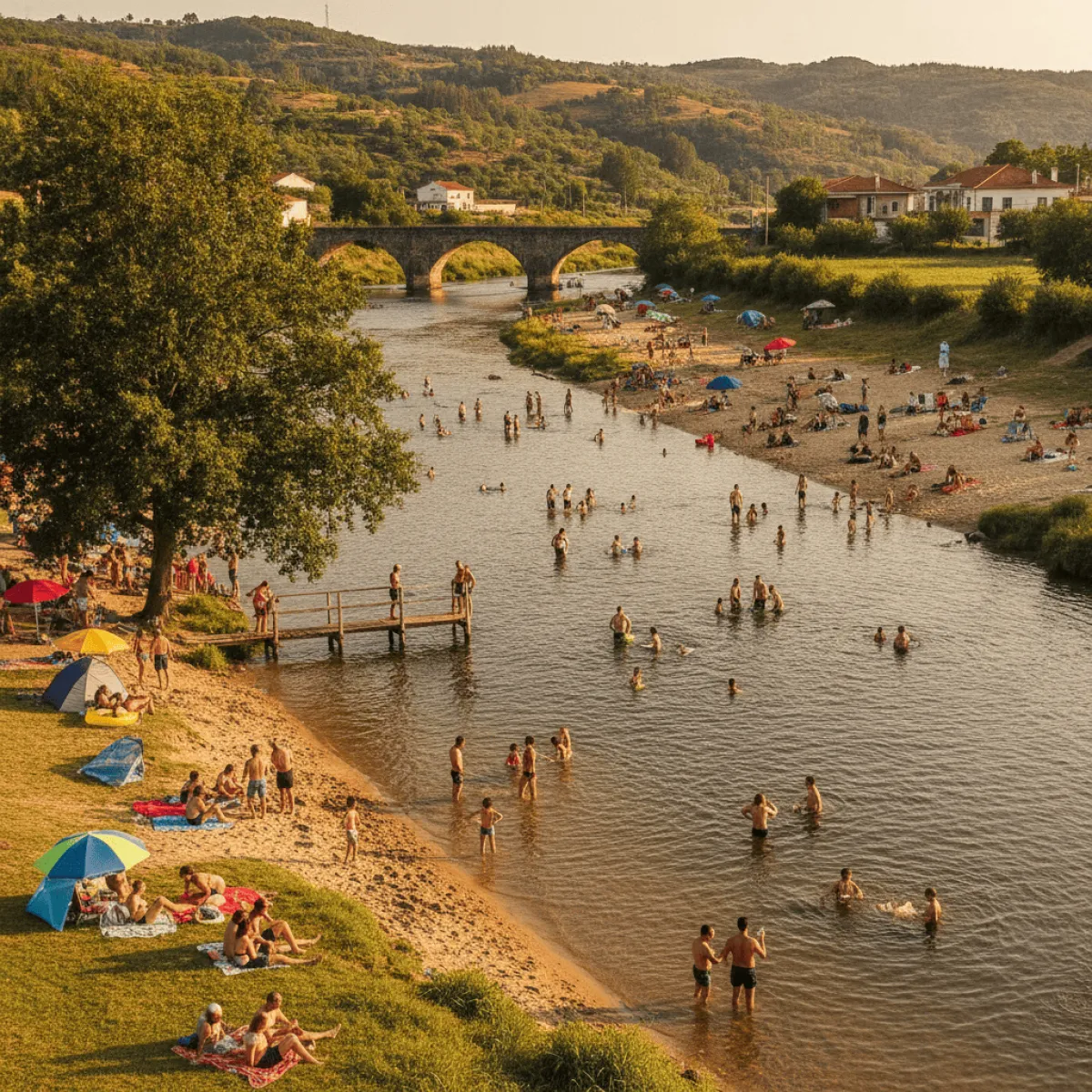
The secret the people of Braga keep is no secret at all: it is the River Cávado. The Adaúfe river beach sits about six kilometres from the centre, on a bend in the river where the water runs clean and cold, with grass, tree shade and a wooden boardwalk. It holds a blue flag, which for a river beach is no small thing. This is where Braga families spend hot afternoons without paying absurd parking fees or fighting over a square metre of sand.
The great advantage of the river beaches is the air temperature. When Braga hits 35 degrees and the granite of the old town throws the heat back at you like an oven, the banks of the Cávado are always a few degrees cooler, and the tree shade does the rest. The water is cold, yes. Properly cold for the first few strokes. But that shock is exactly what you are chasing in August.
The practical tip: go in the morning, between ten and noon. The grass is still fresh, there is shade to claim, and by one o'clock you are eating lunch while everyone else is arriving in a sweat looking for space. Bring your own food, because what is available on site is limited and not always open. On a weekend, forget the afternoon: from three onwards the place fills up.
The Atlantic: Esposende, Ofir and Apúlia
When you want real sea, with waves and a horizon, the coast lies roughly 35 to 40 kilometres west, around Esposende. This is where the Braga local goes when they want salt on their skin. And this is where the biggest planning mistakes get made.
Ofir: pine forest, dunes and the parking rule
Ofir is the prettiest of the bunch, with a dense pine forest behind the dunes and the mouth of the Cávado spilling out alongside. It is also the one that fills up fastest. The golden rule is simple and almost nobody follows it: arrive before ten in the morning or after four in the afternoon. Noon on an August Saturday in Ofir is an exercise in patience I would not wish on anyone. Get there early and you claim a spot in the shade of the pines, which is where you want to be when the sun really bites.
Apúlia: the windmills and the seaweed tradition
If one beach deserves more attention than it gets, it is Apúlia. It is known for the white windmills scattered across the dunes and for the old tradition of harvesting sargaço, the seaweed that farmers once gathered to fertilise their fields. It is a beach of open sea and wind, less manicured than Ofir, and quieter precisely because of that. Walk north or south from the main access point and within five minutes you have the beach almost to yourself. It is my pick when I want sea without the crowds.
Esposende town: the smart plan B
The town of Esposende itself, on the riverbank, has the advantage of offering somewhere to eat and somewhere to park more easily than the exposed beaches. If you arrive late and find everything full, retreat to the town, have a relaxed lunch, and return to the beach in the late afternoon once half the crowd has gone home. The end of the day on the Minho coast, with the sun dropping over the Atlantic, is when these beaches are at their best and nearly empty.
Getting there without the drama
By car, Braga to Esposende takes about 35 to 40 minutes via the A11 or the national road. Parking is the real enemy, not the distance. So timing matters more than the route: arriving early solves half the problems of a beach day in this corner of the Minho.
Without a car, things get trickier. There are bus connections between Braga and Esposende, but confirm the timetables locally before relying on them, especially at weekends and outside high season when they thin out. For the Adaúfe river beach, a taxi or ride app from the centre costs little and is, honestly, the simplest option for an afternoon by the river.
The perfect day: beach in the morning, Braga in the afternoon
Here is what I tell visitors who do not want to waste a whole day melting on the sand. Do the beach early, in the morning, and save the afternoon and evening for the city. Braga in high summer, after five, as the heat eases, is a different and far better city.
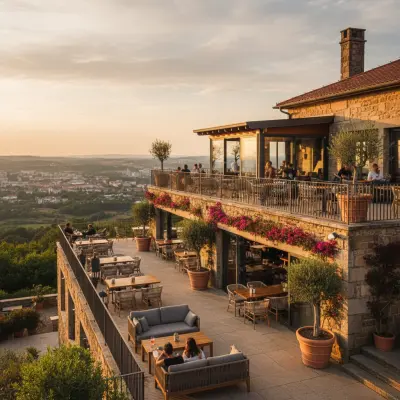
End the day by climbing to the Miradouro do Monte do Picoto, the highest point with a view over Braga. At dusk you watch the whole city light up, and on clear days you can even make out the line of the coast where you swam that morning. It is the best place to understand the geography of all this: the city in the valley, the hills around it, the sea in the distance.
To get a sense of the Braga that exists beyond the beach, it is worth reading our full guide to the city before you come. It tells you where to get coffee, which streets to walk and what to see at an unhurried pace.
Where to eat after the sand
Coming back from the beach hungry, with the smell of sea on your skin, is half the fun. Braga answers well.
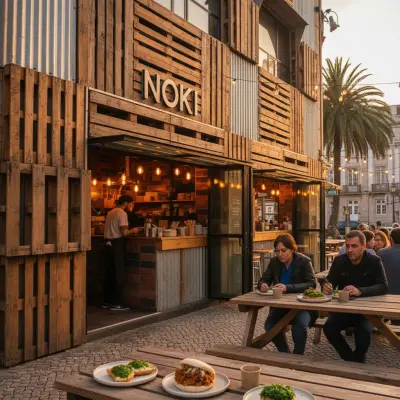
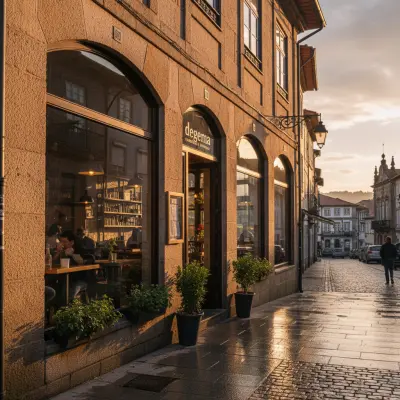
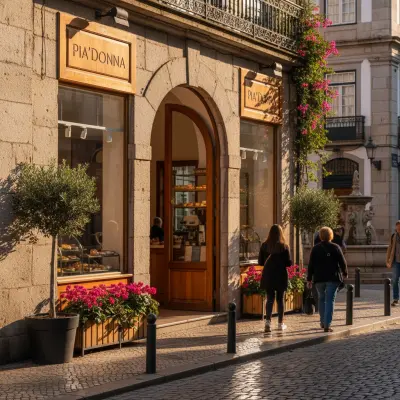
If you want a serious burger after a day in the sun, DeGema Hamburgueria Artesanal makes the kind of handmade burger that kills that specific late-afternoon beach hunger. For something more adventurous, with flavours off the usual track, NOKI street food fusion blends street food with Asian fusion and is the right call when the group cannot agree on what to eat. And if the craving is fresh pasta and an honest pizza, Pia'Donna does the job without fuss.
A word from someone who has been there: after a beach day nobody wants a long, complicated dinner. Eat early, eat well, and leave the night for a stroll through the centre, which stays lively until late in summer.
When the weather turns: the grey-day plan
The Minho is green for a reason: it rains. Even in summer there are days of heavy skies and rough seas when the beach is not worth it. That is no reason to ruin the trip. It is the ideal day to do what you usually put off.
One of the best things to do in Braga on a day like that is to get your hands in the clay. The pottery classes at Ateliê Cobalto are a genuine way to spend a morning, and you leave with a piece you made yourself. If you prefer painting, the experience of painting tiles at the same studio connects you to one of the most Portuguese traditions there is. These are indoor activities, perfect for the days when the Atlantic is in a bad temper.
A note on the seasons
The crowds on the Minho coast concentrate in July and August, peaking on the weekend around mid-August. June and September are the smart months: the water is already, or still, bearable, the sun shows up, and the beaches breathe. September in particular is a quiet little marvel, with warmer sea than June and half the people.
Come outside summer and the beach changes purpose: it becomes a place to walk, not to swim, and gains a calm that is impossible at the height of the season. And there are people who come to Braga at other times of year for reasons that have nothing to do with the sea. Holy Week in Braga, in spring, is one of the city's most intense experiences, but that is an entirely different kind of trip.
Braga as a base, not a one-stop destination
One of the best reasons to use Braga as a starting point is its location. It is close to everything that matters in the northwest: the sea to the west, the hills to the east, and Porto to the south, less than an hour away. Anyone passing through the region and counting their time would do well to look at the best day trips from Porto, where Braga and the Minho coast appear with very good reason.
In the end, the lesson is this. Braga has no sea, but it has a clever relationship with water: the river on its doorstep for weekdays and lazy afternoons, the Atlantic forty minutes away for when you want real waves. The tourist heads to the most obvious beach at the worst hour. The local goes to Adaúfe in the morning, eats lunch at home, and in the afternoon climbs up to Picoto to watch the sun set over the whole lot. Do as the people of Braga do, and you will never look at the sand the same way again.