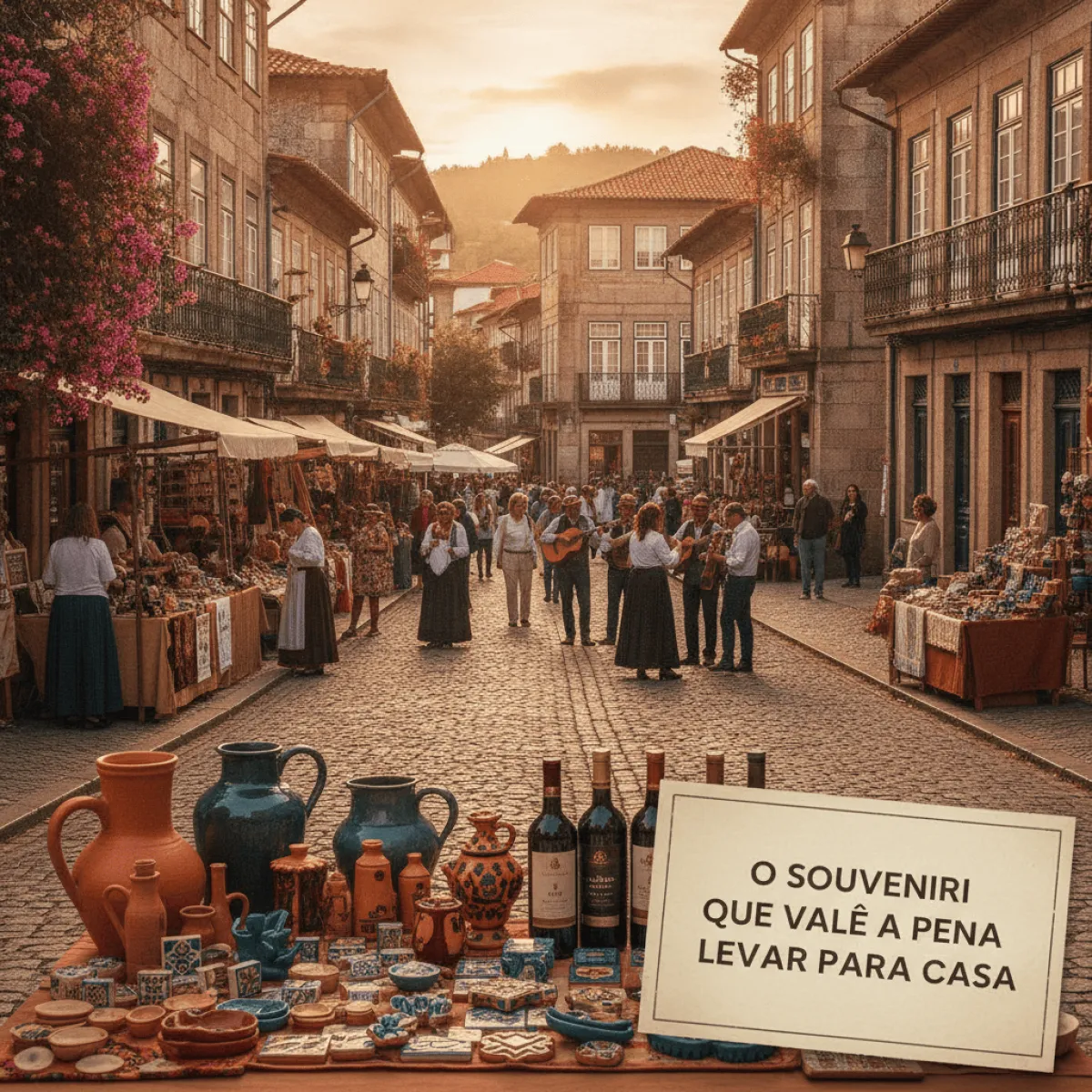
Braga: The Only Souvenir Worth Packing
Almost everything in the gift shops by the cathedral was made thousands of kilometres away. In Braga, the best souvenir might not be something you buy at all: it is the bowl you throw at Ateliê Cobalto and the bottle of vinho verde from a small producer.
There is an uncomfortable truth about the gift shops next to Braga's cathedral: almost everything inside was made thousands of kilometres away. The resin rooster of Barcelos, the fridge magnet of Bom Jesus, the miniature port bottle with the tourist label. You buy it on impulse, stuff it in a drawer, and lose it during your next house move. If you have come all the way to the Minho, the granite heart of Portugal's north, you deserve to take home something better. Something with a story, something that survives the years, and ideally something that carries the memory of a morning well spent.
This guide is not really about what to buy. It is about how to choose. And in Braga's case, the best souvenir might not be something you buy in a shop at all. It might be something you make with your own hands.
The problem with most souvenirs
Let us be honest. The souvenir industry runs on two tricks: anticipated nostalgia and laziness. You buy the object not because you want it, but because you feel you should take "something" home. The result is an entire economy of clutter that nobody uses.
A good souvenir meets at least one of three conditions. Either it is genuinely local, made by regional hands with regional materials. Or it is useful, something that enters your daily life and reminds you of the trip without hogging shelf space. Or it is consumable, because sometimes the best keepsake is a bottle you open at a dinner months later, one that hands you back, for an instant, the smell of a city.
Braga, happily, delivers on all three fronts. The Minho has a serious craft tradition, from ceramics to linen, from embroidery to filigree. And it has a kitchen. But the most interesting part, the thing that separates a forgettable trinket from a real memory, is the moment you stop being a buyer and become a maker.
Make your own: ceramics and tiles
If there is one thing I recommend to anyone spending more than a day in Braga, it is trading an afternoon of shopping for an afternoon of clay. The pottery classes at Ateliê Cobalto are exactly the kind of souvenir that lasts: you do not just take home a piece, you take home the process. The lopsided bowl you threw, the thick-walled mug that came out too heavy, the little plate that wobbles on the table. They are imperfect, and that is precisely why they beat anything made in a factory.
There is a stubborn satisfaction in sitting at a potter's wheel for the first time, watching the clay escape between your fingers, and realising that what looked easy demands patience and steady hands. At the end, the piece is yours. Fired, glazed, with your mistake baked right into it. No fridge magnet competes with that.
If you prefer colour to form, the alternative is just as Braga: painting tiles at the same studio. The azulejo is probably the most Portuguese object there is. It covers church facades, train stations, grandmothers' kitchens. Painting your own, even with a shaky hand, means stepping into that tradition rather than watching it from the outside. And a single tile, wrapped in paper, travels far better in a suitcase than a clay platter.
Practical advice
Book ahead, especially if you are travelling in a group or in high season. Clay work involves drying and firing time, so ask at the start whether you take your piece the same day or receive it later. Wear clothes you do not mind staining. And do not expect masterpieces: the point is the gesture, not the gallery result.
The souvenir you can eat (and drink)
If your luggage has no room for clay, there is the oldest strategy in the world: buy food. And here Braga and the Minho do not mess around. The region's vinho verde is the obvious liquid souvenir, crisp, lightly fizzy, made for warm weather. A bottle from a small producer costs little and says more about the north than any postcard. Look in traditional grocers and wine shops in the centre, not in airport outlets.
Then there is the sweet stuff. Braga's convent pastry tradition is an institution: the pudim Abade de Priscos, dense and perfumed with pork fat and port wine, is one of the most serious desserts in the country. It does not travel especially well, but boxed cake slices and dry sweets survive the trip home. Ask in the pastelarias of the old town.
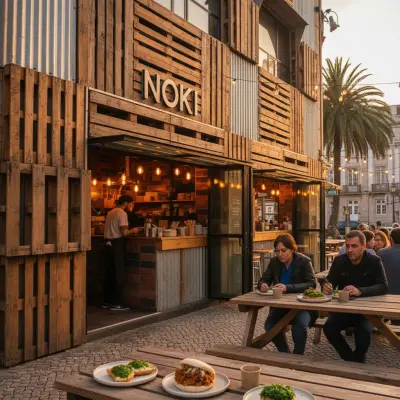
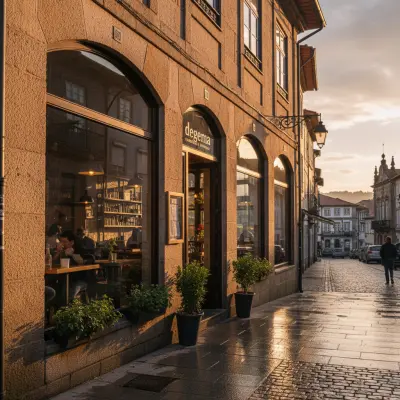
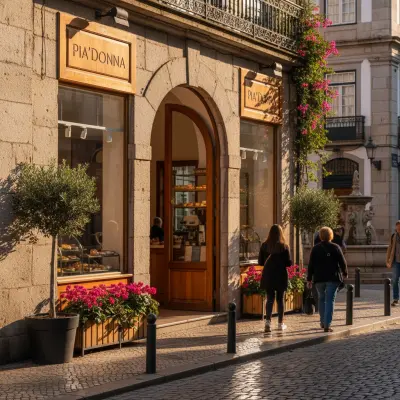
And if you would rather give an experience than an object, take someone out to eat. It is not a souvenir in the literal sense, but the memory of a good meal is what actually sticks. For a relaxed lunch, NOKI street food fusion shows the newer, easier-going side of the city, far from tourist menus. Anyone travelling with teenagers, or just wanting a burger done properly, will find comfort at DeGema Hamburgueria Artesanal. And for a well-worked dough pizza, Pia'Donna settles dinner without drama. None of these places is "traditional Minho", and that is exactly the point: Braga is a young university city, and its everyday food does not live on salt cod alone.
Where to hunt real craft
The Minho has a tradition of handwork worth respecting. Look for linen, embroidery, pewter, and if the budget allows, filigree, the goldsmithing in fine threads of gold or silver that is one of the north's finest arts. The filigree heart is a classic that, unlike the resin rooster, is actually made here and lasts generations.
The golden rule is simple: always ask where it was made. A good craftsperson is proud of the answer. If the seller hesitates or changes the subject, you are probably looking at disguised imports. Fairs and markets, when you catch them, are the best place to talk directly with the maker. In the old town, drift away from the first few metres around the cathedral, where prices swell and quality drops, and turn into the side streets.
Timing matters
If your visit falls around Easter, brace yourself for a different Braga. The city lives Holy Week with an intensity few places in Portugal can match, and it is also when the most religious and seasonal craft appears. It is a beautiful time to visit, but book everything well in advance: lodging, restaurants, experiences.
Take a break: the viewpoint that resets you
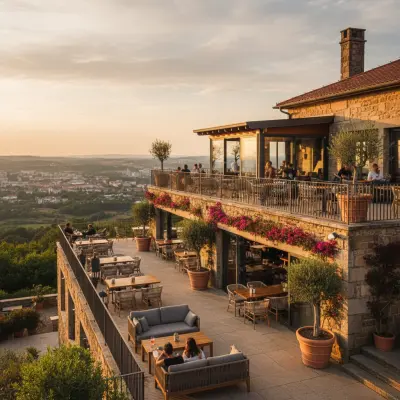
Buying well requires a cool head, and Braga has the right place to clear yours. Climb up to the Miradouro do Monte do Picoto in the late afternoon. From there you see the whole city spread across the valley, the cathedral at the centre, the rooftops trailing off into the hills. It is the kind of view that reminds you why you came and what is worth keeping from a trip: not the clutter, but the moment.
It is also a good spot to ask the honest question before you spend money: "a year from now, will I still like this?". If the answer is no, leave it on the shelf.
How to plan the day
Braga is compact and walkable. If you are coming from outside, it is one of the easiest stops in the north and rightly features among the best day trips from Porto: roughly an hour by urban train, with frequent departures from São Bento and Campanhã. For anyone who wants to go deeper, from what to see to what to eat, the full guide to Braga fills in the rest.
My ideal plan for a day of shopping with purpose: morning for the old town and the craft, taking it slow with that shelf question always at hand. A relaxed lunch at one of the spots above. Early afternoon at the studio, hands in clay or holding a brush. And the end of the day at Picoto, watching the light drop over the city while your piece dries somewhere, waiting for you.
The final rule
A souvenir does not have to be expensive or large. It has to be true. A bottle of vinho verde from a producer you met, a tile you painted with a shaky hand, a filigree heart made a few kilometres from where you bought it. These are the things that, years later, make you pause and say "this, I brought back from Braga". Everything else is just weight in your suitcase.