Santiago do Cacém: Day Trips Worth the Detour
Santiago do Cacém is the perfect base for exploring the Alentejo coast without the crowds. From Lagoa de Santo André to Porto Covo's cliffs, the Roman ruins of Miróbriga, and the start of the Rota Vicentina, how to get to each spot and what not to miss.
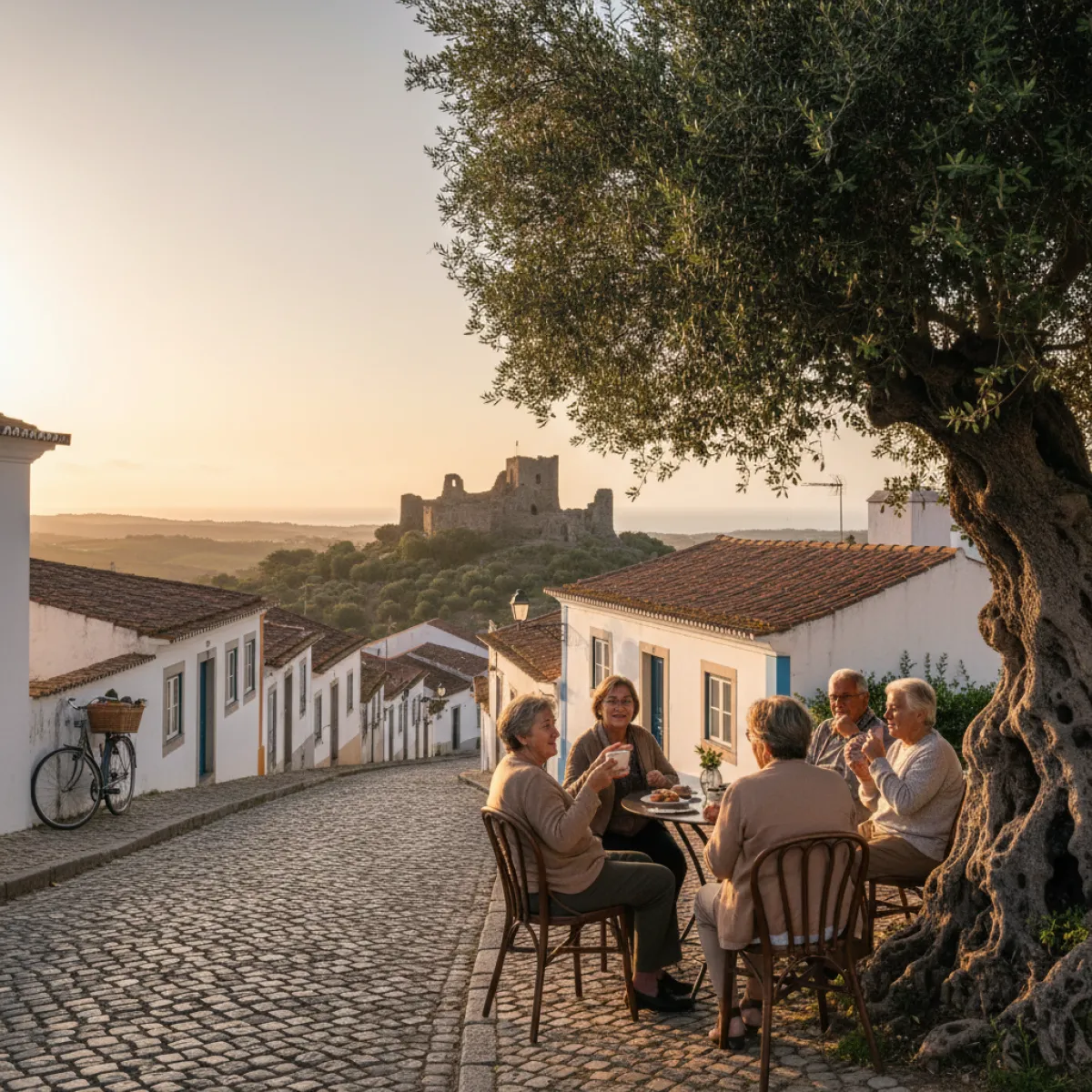
Santiago do Cacém works better as a base than as a final destination. Don't get me wrong, the medieval castle, the old town, and the Roman ruins of Miróbriga (less than a kilometre from the centre) all deserve your time. But Santiago's real strength is its position: you're thirty minutes from the sea, twenty minutes from one of Europe's largest coastal lagoons, and at the starting point of the Rota Vicentina trail network. All this without the tourist chaos of the Algarve.
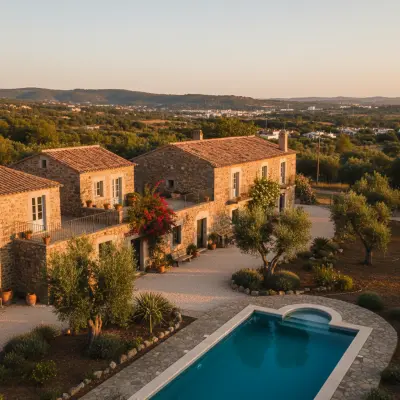
If you're staying at Casas da Moagem, a rural tourism property that keeps the Alentejo rhythm without skimping on comfort, you've got the perfect base for three or four days of excursions. Here are the ones actually worth doing, and how to reach each without headaches.
Lagoa de Santo André: The Antidote to Crowded Beaches
If there's one essential day trip from Santiago do Cacém, this is it. Lagoa de Santo André sits about 15 kilometres west of town, a twenty-minute drive. It's the largest coastal lagoon in the Alentejo, 500 hectares of fresh and brackish water separated from the Atlantic by a strip of golden dunes.
The best time to go is early morning, between May and September. Park near Praia da Costa de Santo André and walk north along the sand. On a Tuesday morning in June, I counted seven people across a full kilometre of beach. Seven. Try pulling that off at Costa da Caparica.
The lagoon belongs to the Reserva Natural das Lagoas de Santo André e da Sancha, which means the area is protected and development is controlled. For birdwatchers, this is serious territory: the red-crested pochard, common coot, and Eurasian reed warbler (the reserve's symbol) appear in numbers you won't find anywhere else in Portugal.
There's no reliable public transport from Santiago to the lagoon, you'll need a car or bicycle. The road is flat, and the cycle is perfectly doable. Bring water, sunscreen, and a packed lunch. There's very little in the way of food options near the lagoon, and that's part of the charm.
Sines: Vasco da Gama and Fresh Fish
Sines is about 20 kilometres southwest of Santiago do Cacém. By car, it's 25 minutes. Rede Expressos runs a bus connecting the two cities in roughly 30 minutes, departing every four hours, but check schedules locally, because weekends and holidays can mean no service at all.
Sines is first and foremost a port and industrial town. Don't expect a picture-postcard village. But the historic centre makes up for it. The Castle of Sines, perched above the Atlantic, is where Vasco da Gama was born. Inside the walls, the Municipal Museum covers the navigator's life and the Age of Discoveries. The ticket is cheap, check the current price at the door.
After the museum, walk down to the fishing port. The restaurants around the marina serve grilled fish with a directness that's missing from too many tourist spots. Order whatever's fresh that day, usually sardines, sea bass, or sea bream, and don't bother with anything elaborate. Grilled fish with boiled potatoes and salad is all you need here.
In July, Sines transforms for the Festival Músicas do Mundo, with concerts at the castle and across town. If you're around, it's worth checking the programme.
São Torpes Beach
If Sines is your day's destination, make a detour to Praia de São Torpes, a few kilometres south. It's the starting point of the Rota Vicentina's Fishermen's Trail, and has a curious feature: natural hot springs that warm the sand in certain spots. Surfers know it well. It's not the prettiest beach on the coast, but it has character.
Porto Covo: The Alentejo Coast Unfiltered
Porto Covo is the most photogenic day trip from Santiago do Cacém. It's about 30 kilometres away, roughly 35 minutes by car. There's a bus from Sines to Porto Covo (11 minutes, three departures on weekdays), but a direct connection from Santiago is essentially nonexistent.
The village itself is small, a central square, white houses, and not much else. But the beaches are another story. Praia Grande de Porto Covo, sheltered by cliffs, is one of the most beautiful on the Alentejo coast. To the south, Praia da Ilha do Pessegueiro offers views of the island and its unfinished 17th-century fort, a project that was abandoned before completion.
For lunch, the restaurants on the central square serve fresh fish at reasonable prices. Avoid the ones with photos of dishes in the window and look for the ones with Alentejanos eating, a rule that works everywhere. The cação (dogfish) soup with coriander, when available, is a regional classic worth trying here.
If you have time and energy for a walk, the Rota Vicentina's Fishermen's Trail has spectacular stretches in this area. The Porto Covo to Vila Nova de Milfontes section (about 20km) is one of the most popular for good reason: cliffs, secluded beaches, and an almost total absence of construction along the route.
Miróbriga: The Ruins on Your Doorstep
Technically, this isn't a day trip, Miróbriga is one kilometre from Santiago do Cacém's centre. But it deserves mention because it's one of Portugal's most underrated Roman archaeological sites.
The site includes temples, Roman baths with a hypocaust heating system, a commercial zone, and, the highlight, a hippodrome with capacity for 25,000 spectators, one of the few identified on the Iberian Peninsula. The settlement dates from the Late Bronze Age (6th–1st centuries BC) through to the 4th century AD.
It's open Tuesday to Sunday, 9am–12:30pm and 2pm–5:30pm (closed Mondays, January 1, Easter Sunday, May 1, and December 25). The Interpretation Centre at the entrance provides enough context to make the visit worthwhile even without a guide. Allow about ninety minutes to see everything properly.
The Rota Vicentina: Day-Sized Stages
Santiago do Cacém is officially the starting point of the Rota Vicentina's Historical Way, a 400km trail network stretching to Cabo de São Vicente. You don't need to walk the whole thing to enjoy it. There are circular half-day routes (never more than 16km) that start and end at the same point.
The first stage of the Historical Way, from Santiago do Cacém to Vale Seco, covers about 22km through the Alentejo interior, cork oak groves, dirt tracks, and villages where time seems to move differently. If 22km sounds like too much, walk half and turn back. Nobody's keeping score.
The essentials: bring enough water (minimum 2 litres in summer), a hat, and start early. After 11am in summer, the Alentejo heat is unforgiving.
Grândola and the Interior
Grândola sits 30 kilometres north of Santiago do Cacém and is better known for Zeca Afonso's revolutionary anthem than for tourism. But it has a quiet appeal: the Serra de Grândola offers pleasant hikes among cork oaks, and the town centre has a couple of tascas serving honest Alentejo lunches, migas with pork, lamb stew, açordas.
For families with children, Badoca Safari Park lies on the IC33 between Santiago and Sines. It has over 500 animals of 50 species in semi-freedom. It's not a beach day, but it's a solid alternative when the coastal wind blows hard, and on the Alentejo coast, that happens more often than you'd think.
Beyond the Coast: The Alentejo Interior
If you're in Santiago do Cacém for more than three days and want to explore the Alentejo beyond the coastline, consider a trip to the Upper Alentejo. Portalegre, near the Spanish border, is a city that deserves a full weekend, we have a guide to a real weekend in Portalegre that cuts through the tourist noise. If you go, make sure to explore the neighborhoods on foot and eat where the locals actually eat. It's about two and a half hours by car, so it works better as a stop on a longer journey than as a same-day round trip.
Practical Tips for Planning Your Days
The car is king in this area. Buses exist, but schedules are limited and weekends see them all but vanish. If you don't drive, cycling is viable for Lagoa de Santo André and Miróbriga, but forget Sines or Porto Covo without serious fitness.
Petrol: fill up in Santiago do Cacém. Coastal village stations don't always exist.
Food: always carry emergency supplies. Outside summer months, many rural and coastal restaurants are closed during the week or keep unpredictable hours.
If you want to combine your excursions with Santiago's local life, check whether the Feira do Monte coincides with your visit. It's a traditional Alentejo fair that adds a different dimension to the trip, regional produce, local people, and the kind of authenticity you can't manufacture.
Three days in Santiago do Cacém with a car lets you comfortably see the Lagoa, Sines with São Torpes, Porto Covo, and Miróbriga. Five days and you can start properly exploring the Rota Vicentina. A week and you're practically local, or at least you know where the best bakery is.