Santiago do Cacém: Beaches Without the Crowds
Praia da Fonte do Cortiço has a maximum capacity of 400 people and access via an unpaved road, in August, that's practically a private beach. A complete guide to Santiago do Cacém's beaches, with real strategies for dodging the crowds.
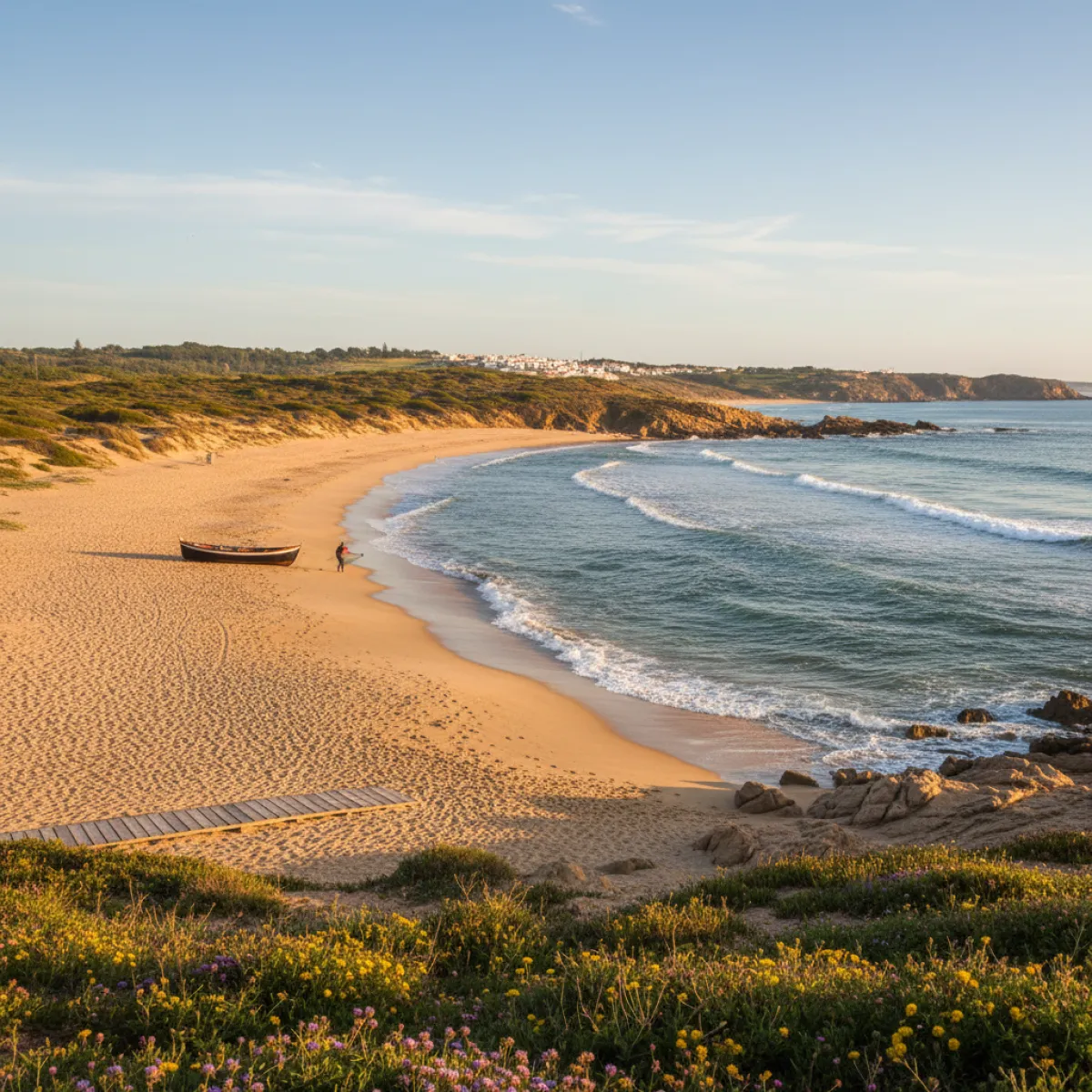
There's a reason Santiago do Cacém's beaches don't show up in viral Instagram roundups. The access roads are unpaved. Parking is limited. There are no beach clubs charging 14 euros for a cocktail. And that's precisely why you should come here.
While half of Lisbon crams onto Costa da Caparica and the Algarve turns into a theme park of beach towels, the Alentejo coast between Melides and Sines maintains a bather density that, in the middle of August, would count as "empty" at any beach south of Albufeira. But even here, there are tricks to dodge the worst of the crowds. And some beaches are significantly better than others.
Costa de Santo André Beach: The Popular One (And How to Work Around It)
Let's start with the obvious. Costa de Santo André is the best-known beach in the municipality, and honestly, it's easy to see why. It has a feature that makes it unique: on one side, the Atlantic with proper waves; on the other, the Lagoa de Santo André, a vast, warm, calm lagoon that feels like a natural swimming pool. The lagoon covers around 500 hectares and is part of the Reserva Natural das Lagoas de Santo André e da Sancha, a protected ecosystem where thousands of birds nest.
The problem? In July and August, everyone knows this. The car park near the sand fills up by 10:30am on weekends, and the stretch closest to the main access gets reasonably packed.
The fix is simple: walk. Most people plant their towel within the first 200 metres of sand. Walk 10 minutes north along the lagoon, and you'll find stretches of beach that are practically deserted. Another option: come via the lagoon side in the late afternoon, from 5pm onwards. The light is better for photos, the lagoon water is still warm from the day, and half the beachgoers have already left.
For families with small children, the lagoon margin is ideal. No currents, gradual depth, and water that's significantly warmer than the ocean. In May, June, and September, this beach functions almost like a private one, few cars, plenty of space.
Praia da Fonte do Cortiço (Areias Brancas): The Poorly Kept Secret
If Costa de Santo André is the "official" beach, Fonte do Cortiço is the beach for people who don't care about official anything. Also known as Areias Brancas, and the name doesn't lie, the sand really is strikingly white, this beach sits within the same Natural Reserve and has a maximum capacity of 400 people, according to the Portuguese Environment Agency. Four hundred. On a beach that stretches for hundreds of metres.
Access is from Vila Nova de Santo André, via an unpaved road of about 2.5 km. This is not a road for low-clearance cars driven impatiently, take your time, go slowly, and park in the area near the dunes. There's a small picnic area, but little else in terms of infrastructure. Bring everything you need: water, food, sun umbrella. There's no bar.
That stripped-back simplicity is what naturally filters out the crowds. People who come here, come on purpose. The sand is wide, framed by dunes and pine forest, and the sense of isolation is real even in August. If you're into bodyboarding or surfing, Fonte do Cortiço gets consistent swell, it's less targeted by surfers than other beaches in the area, which means more space in the water.
It holds Blue Flag status and an Accessible Beach classification, guaranteeing water quality and basic safety conditions during bathing season.
Praia do Monte Velho: For Those Who Want to Actually Disappear
Of the four ocean beaches in the municipality, Praia do Monte Velho is the wildest. No lifeguards, no beach facilities, no organised parking. It's a beach for people who know what they're doing, good for coastal walks along the cliff edge, less advisable for swimming without ocean experience.
Access is limited and poorly signposted, which keeps numbers low. If you want a coastal walk without crossing paths with another person, this is the spot. But don't come expecting comfort: it's sand, wind, and the Atlantic without a filter.
The Strategy: When to Come and How to Structure Your Days
The best period for Santiago do Cacém beaches without crowds is, without question, the first half of June and all of September. The weather is already (or still) good, temperatures around 25-28°C, but the bulk of tourists haven't arrived or have already left. In May, the water is cold (16-17°C), but the long days and empty beach make up for it if you're not easily chilled.
If August is your only option, the golden rule is to arrive early. At 8:30am, any of these beaches is practically empty. Head off for lunch at noon while others are arriving. Return at 4:30pm, when the sun is less fierce and the first cars are leaving. It's counterintuitive, but it works: peak occupancy runs between 11am and 3:30pm.
On weekdays, even in August, the difference is stark. Most visitors to Costa de Santo André come from Lisbon for the weekend. A Tuesday or Wednesday in the height of summer can feel like a September weekend.
Where to Stay: A Base for the Coast
Santiago do Cacém is about 15 km inland from the coast, which means you'll need a car. The town itself is worth your time, it has a medieval castle, Roman ruins at Miróbriga, and the kind of slow Alentejo café culture that rewards an evening stroll.
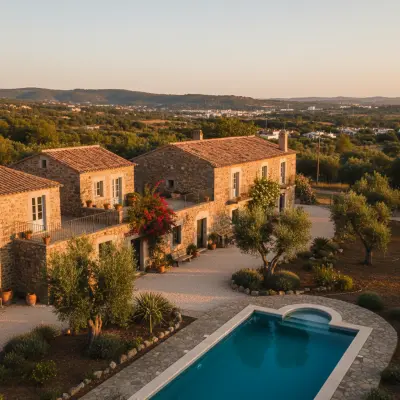
For accommodation with character, Casas da Moagem is a rural tourism option that matches the rhythm of the area, far enough from the beach for quiet nights, close enough to be on the sand in 20 minutes. It's the kind of place where you come back in the late afternoon with salt in your hair and sit on the terrace watching the sun set over the Alentejo plains.
Vila Nova de Santo André, closer to the coast, has accommodation options and a supermarket, useful for stocking up before a beach day. It's not a pretty town, let's be honest, but it's practical.
What to Do When You're Not at the Beach
One common mistake is treating Santiago do Cacém purely as a beach base. The municipality has more to offer, especially if you catch a cloudy day (it happens, even in summer, the morning fog along the Alentejo coast is notorious).
The Feira do Monte in Santiago do Cacém is an Alentejo tradition worth visiting if your dates line up, check locally for the schedule. It's the kind of event that shows you the real Alentejo, uncurated for tourists.
The ruins of Miróbriga, on the outskirts of town, are a surprisingly well-preserved Roman archaeological site with baths, a hippodrome, and a forum. It's not Pompeii, but it doesn't charge Pompeii prices either, and you'll probably have the place to yourself.
The historic centre of Santiago do Cacém itself, with the castle at the top and streets winding down to the main square, deserves an hour of wandering. There are cafés where a galão costs barely over a euro and the chicken empada was made that morning.
The Alentejo Coast in the Context of Inland Alentejo
If you're planning a longer Alentejo trip, the Santiago do Cacém coast pairs well with explorations inland. Many people do the reverse, coming from the interior to the beach, and it works perfectly. For those wanting to see the Alentejo beyond its coastline, cities like Portalegre in the Upper Alentejo are worth the detour. If you're planning that extension, our honest weekend guide to Portalegre gives you a no-nonsense itinerary, and the neighbourhood walking guide shows you the best of the city without falling into tourist traps. When it comes to eating, our guide to where locals actually eat in Portalegre will save you from mediocre meals.
Practical Summary
- Best beach for families: Costa de Santo André (lagoon side)
- Best beach for avoiding crowds: Fonte do Cortiço / Areias Brancas
- Best beach for total isolation: Monte Velho (no lifeguards, be careful)
- Best month: September (warmer water than June, fewer people than August)
- Worst time: August weekends between 11am-3:30pm
- Getting there: Car is essentially mandatory. From Lisbon, it's about 1h40 via the A2 to Santiago do Cacém
- Essentials: Water, food, sunscreen, sun umbrella (especially for Fonte do Cortiço, which has no bar)