Sabrosa: Posta, Roast Kid and Moscatel Worth the Detour
In Sabrosa nobody talks about the food, only the wine, and that is exactly the mistake. Between a proper posta à transmontana at an unpretentious bar and a chilled glass of moscatel in Favaios, this is the Sabrosa you eat, not just the one you photograph.
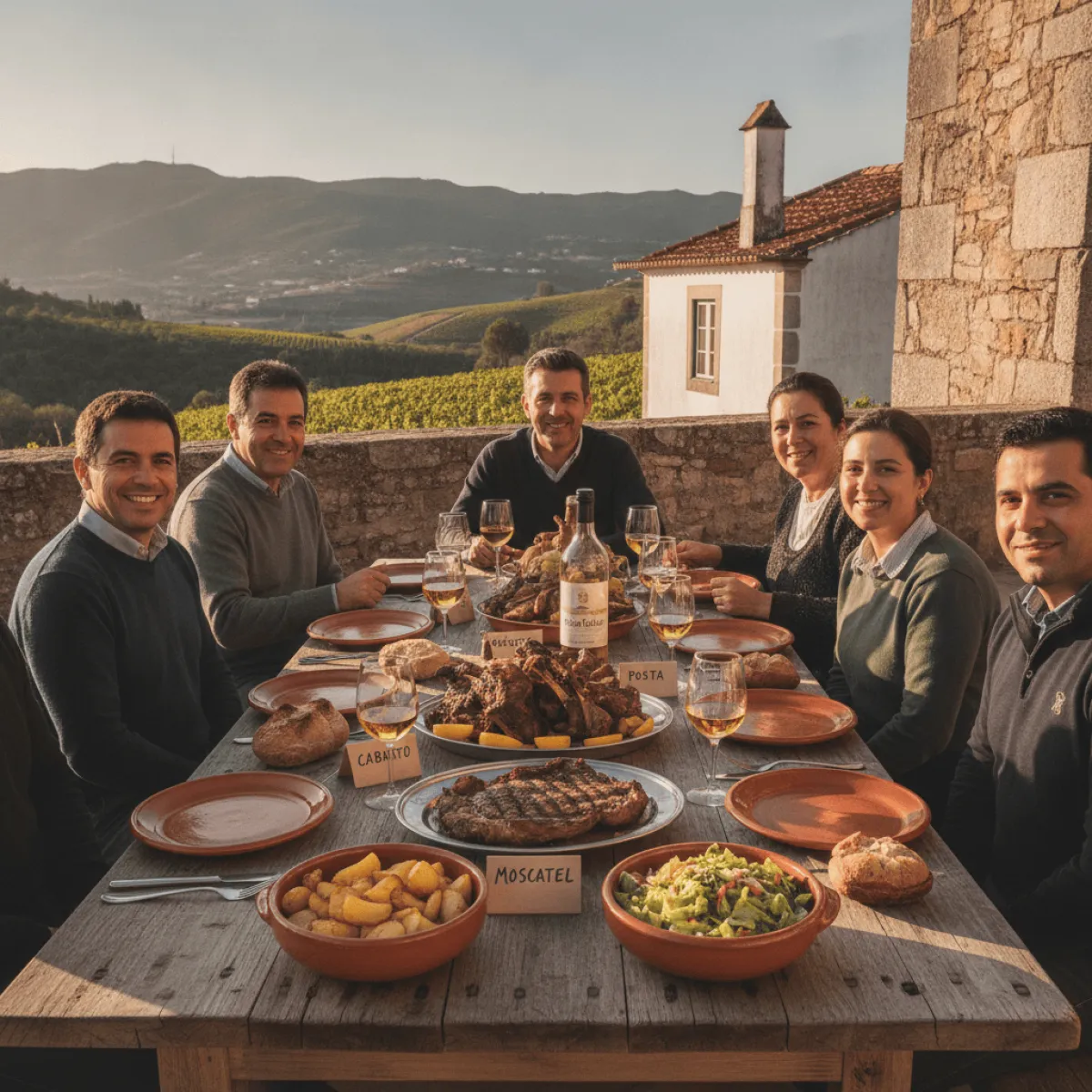
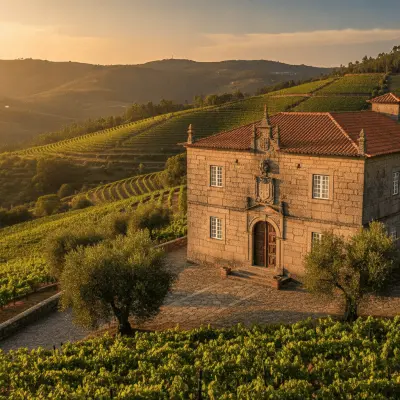
Everyone who comes to Sabrosa comes for the wine. They stay at the quintas, photograph the terraces, and leave talking about the Douro as if it were only that: vineyard as far as the eye can see. The mistake is not stopping to eat. Sabrosa is cattle country, raised on high mountain pasture, wood-fired bread baked in communal ovens, and a sweet wine most people outside Trás-os-Montes have never heard of by its proper name. The food here is not decoration for wine tourism. It is the reason people come back.
The Posta That Rules the Table
If there is time for only one meal in Sabrosa, make it posta à transmontana. It is a thick cut of veal, usually from Barrosã or Maronesa cattle, grilled over coals with coarse salt, garlic and bay leaf, served with fried or boiled potatoes. No sauces, no elaborate sides. The meat speaks for itself, because it comes from animals raised on open pasture in the surrounding hills, not from any industrial shed.
The right place to eat it is not a room with pressed tablecloths. It is a neighbourhood bar, with football on the television and the owner asking how you want the meat done. Lagoa Bar serves exactly this kind of unfussy meal, and a posta with a drink runs around 12 to 15 euros, less than half what many quinta restaurants charge for a plate that tastes worse. Order it medium, never well done: if it comes out dry, it was badly cooked, no matter how good the restaurant looks.
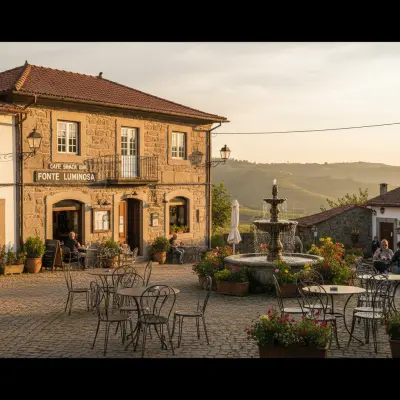
During the day, Café Snack Bar Fonte Luminosa is where you stop for a coffee and a smoked-meat sandwich before heading back out. It is not where you sit down for a proper posta, but it is where locals themselves stop between errands, and that says more about the place's authenticity than any award ever could.
Roast Kid, the Sunday Meal
If posta is the everyday dish, roast kid goat is the family one. In Trás-os-Montes, cabrito goes into the oven with white wine, garlic, paprika and bay leaf, and cooks slowly until the skin turns crisp and the meat falls off the bone. It is served with crushed potatoes and, often, with rice baked in the same roasting juices, which is, in my opinion, the best part of the dish and the one most visitors overlook.
This is not a fixed-menu item. At small tascas across the region, you order it in advance, especially at weekends, when families book tables for lunches that stretch into the afternoon. If you plan to be in Sabrosa on a Saturday or Sunday, it is worth calling a day ahead to ask if there is cabrito. The answer might be no. That is a good sign: it means the oven was not just being used for tourists.
Favaios: Where Bread and Wine Meet
About ten minutes' drive from central Sabrosa is Favaios, a parish that deserves its own place in any serious Trás-os-Montes food guide. This is where Moscatel de Favaios is made, a sweet, aromatic fortified wine from the Moscatel Galego grape, quite different from the better-known but less intense Moscatel de Setúbal. It is drunk chilled, after a meal, or simply over conversation on a summer afternoon when nobody is in a hurry.
Favaios is also bread country, baked traditionally in communal wood-fired ovens, with a thick crust and a dense crumb that stands up to a cured sheep's cheese or a slice of smoked ham. Pairing the two, moscatel and bread, is reason enough to detour from the usual red-wine Douro itinerary.
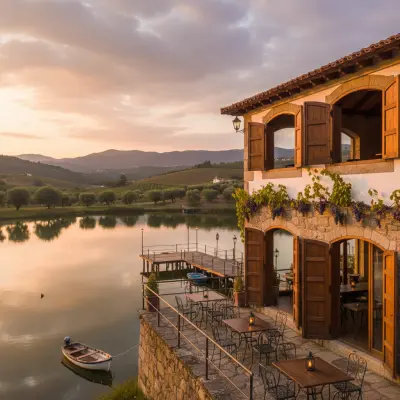
For a more serious take on this relationship between wine and land, Wine Tasting at Wine & Soul in Sabrosa is the place. It is not a generic bar-counter tasting: expect talk of schist soil, altitude, and why the wine here carries an acidity that sets it apart from other parts of the Douro. And if the day allows for more, Sabrosa Boat Trip: From Pinhão to Cais do Ferrão is the laziest and most correct way to see the terraces that produce all of it, from the water, with a chilled white and some local cheese on board. Nobody comes back from that trip talking down the Douro.
Where to Eat in Sabrosa, Practically
To keep it simple: Lagoa Bar is for dinner, the posta and a beer after a hot day. Café Snack Bar Fonte Luminosa is for morning coffee or a quick stop before heading out to the quintas. Neither has a menu in three languages or laminated photos by the door, which, honestly, is a good sign.
After eating, it is worth walking over to Casa Solar de Fernão de Magalhães. Sabrosa is the birthplace of the navigator, and the manor house that now serves as a small museum is a reminder that this town, small as it is, carries a history far beyond its size. It is not a grand or pretentious museum. It is exactly the right size for a visit after lunch, before heading back to the car.
Before You Go
Sabrosa sits about 25 minutes by car from Peso da Régua and under an hour from Vila Real, which makes it a calm base for anyone wanting to skip Pinhão's busier tourist scene without straying far from the river. To decide where to stay, depending on whether the plan is village, quinta or riverside, the guide Sabrosa: Village, Quinta, or Riverside, Where to Stay saves hours of searching. And if the plan is to use Sabrosa as a base for exploring more of the Douro over several days, Sabrosa: Your Base for the Best Douro Day Trips pulls together the itineraries that make sense from here.
Anyone visiting in spring who wants to push further north, deeper into Trás-os-Montes, will find in Torre de Moncorvo in Bloom: Spring Gardens and Parks a good excuse to keep driving after Sabrosa, stomach full, a bottle of moscatel in the boot.
In the end, what stays with you from Sabrosa is not the vineyard, beautiful as it is. It is a properly cooked posta at an unpretentious bar, a glass of chilled moscatel after dinner, and the feeling of having eaten exactly what the locals eat, with no translation for anyone.