Sabrosa's Mateus Connection: Beyond the Palace Gardens
The Palace of Mateus is not in Sabrosa, it is in Vila Real, and the confusion has lasted decades. But Sabrosa's real Mateus connection, built from old vineyards, family quintas and the birthplace of Ferdinand Magellan, is worth far more than any bottle photograph.
Everyone knows the label. That white palace with the baroque facade mirrored in a lake, printed on millions of Mateus Rosé bottles since 1942, sold in every duty-free shop on the planet. What almost nobody knows is that the Palace of Mateus is not in Sabrosa. It is in Vila Real, 15 km away. The confusion has been running for decades and Vila Real's taxi drivers have given up trying to explain.
But Sabrosa has its own Mateus connection, and it is more interesting than the palace one: this is where Ferdinand Magellan was born in 1480, in the Magalhães family house, in the parish of the same family. The municipality clings to the schist slopes of the Upper Douro, and it has the kind of landscape that makes weekend tourists on the Pinhão train crane their necks without realising what they are looking at. They are looking at Sabrosa. And they probably will not stop there, because nobody told them to.
This guide is for the ones who do want to stop. For the people tired of queuing at the São Leonardo da Galafura viewpoint and who would rather discover what is on the other side of the river. We will talk about wine, about boats, about bars where locals drink aged aguardente at eleven in the morning, and about what to eat when July heat turns the valley into a frying pan.
First, let's clear up the Mateus confusion
Mateus, the parish where the famous palace stands, belongs to the municipality of Vila Real. Mateus, the rosé wine that put Portugal on the world wine map in the 1960s, is bottled by Sogrape in Avintes, near Porto. And the Mateus family of Sabrosa? Those are a local clan, tied to the land for centuries, with no relation whatsoever to the commercial brand.
The old joke in Sabrosa is that half the tourists who arrive here are looking for the palace. The other half are lost. The truth is that Casa de Mateus in Vila Real is worth the visit, yes, but what happens in Sabrosa is more interesting for those who have already seen enough palaces in this lifetime. Here you find quintas, vineyards on terraces planted in the 17th and 18th centuries, and producers who do not need a global brand because they sell everything they make without leaving the valley.
If you really want to understand how the quinta hierarchy works in the Upper Douro, start by reading our guide on the Sabrosa estates nobody mentions. It is a good mental map before you set foot on the ground.
What to do when the palace is on the other side
Sabrosa village has around 1500 inhabitants. It is small, discreet, and has the typical late-afternoon quiet of the inland north, with men sitting in cafés arguing about football and women watering the flowerpots on their windowsills. For a first contact with the place, pick a café with a view.
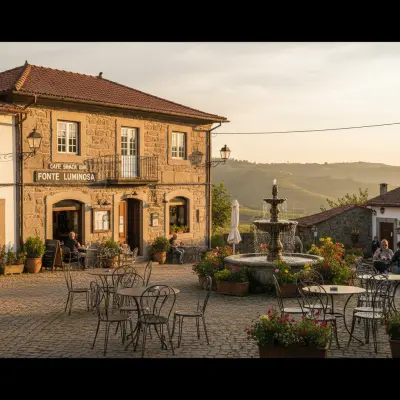
The Café Snack Bar Fonte Luminosa is the kind of spot where you figure out the village in half an hour. Order a coffee and a piece of toast, listen in on conversations about the harvest, and within minutes someone will explain that the Magalhães house is just around the corner and yes, you can see the outside for free. Do not expect chef-driven cuisine, expect honest prices and what a village can give you that is most valuable: real people.
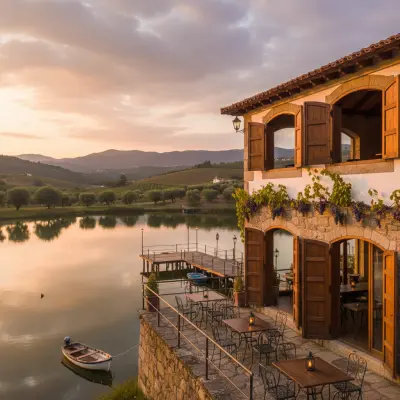
For the end of the day, Lagoa Bar is the right stop. Here you can drink a Douro wine by the glass without booking ahead or pretending you can identify 12 grape varieties in a blind tasting. We recommend the white, especially in the heat, and go after 6pm, when the valley light turns copper.
The real reason to come this far: the wine
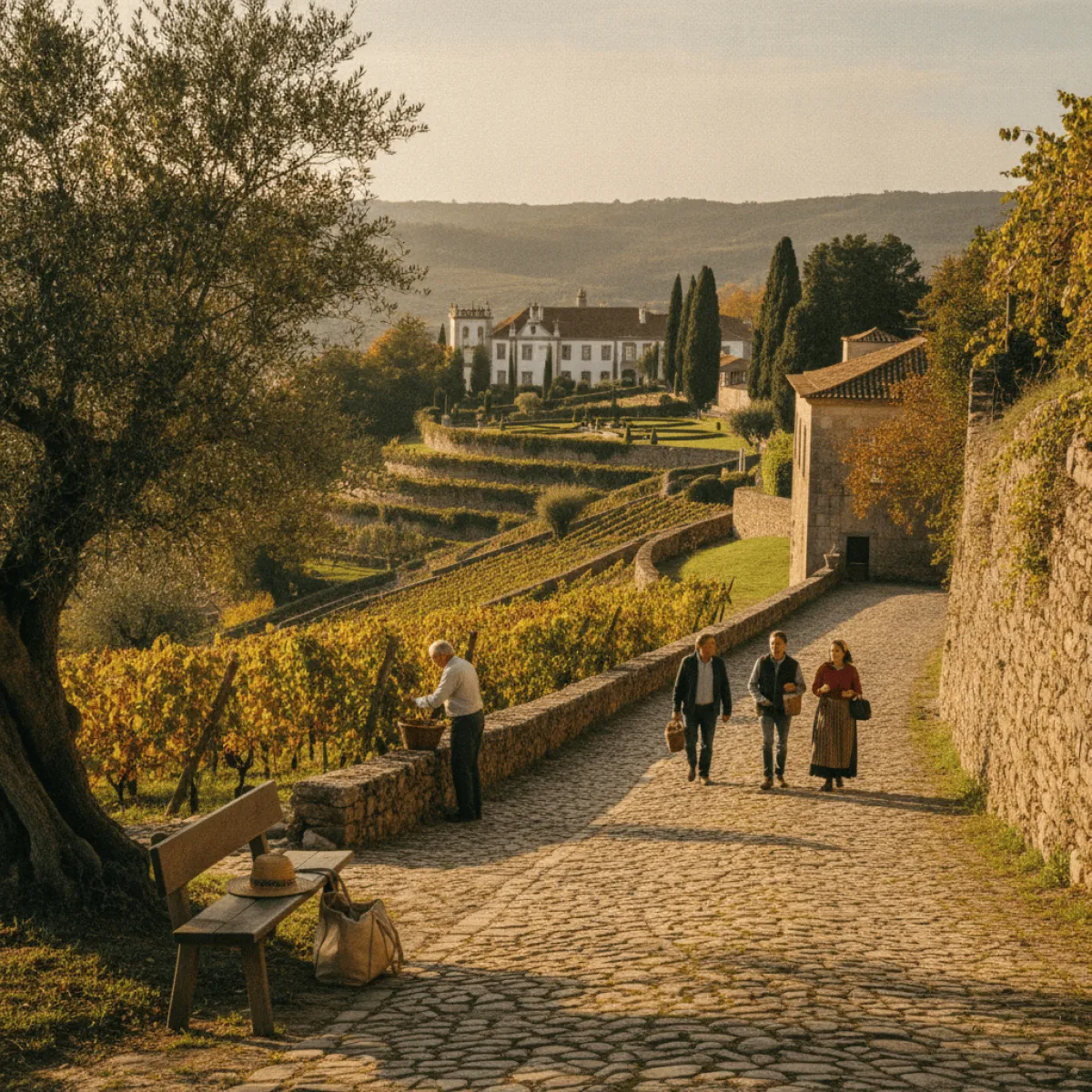
This is the serious part. Sabrosa lies within the Demarcated Douro Region, and some of the oldest vineyard parcels of the appellation are in this municipality, in parishes like Provesende, Gouvinhas and Celeirós. We are talking about vineyards 60, 80, 100 years old, planted on schist terraces so narrow they still have to be harvested by hand.
If you only have time for one tasting, take it slowly. The wine tasting at Wine & Soul in Sabrosa is the firmest recommendation in this article. Wine & Soul is the project of Sandra Tavares and Jorge Serôdio Borges, two winemakers with international CVs who decided to make small, artisan wines from old field blends (vineyards where 20 or more grape varieties are planted mixed together). Their Pintas became a cult wine. Their Guru white shows up on international lists.
Pay for the tasting, ask everything. Unlike the big houses, here there is time to talk. Go with moderate hunger, because they usually serve boards of mountain cheese and local cured meats to accompany the wines.
The three-quinta rule
People who come to the Douro for the first time tend to book five quintas in one day. It is a classic mistake. Three is the maximum. Above that, your palate stops distinguishing, the winding roads start making you queasy, and the last wine always tastes like blur.
Our practical advice:
- Start the morning with a small quinta, artisan production, ideally with the winemaker explaining in person.
- Long, light lunch: skip dessert, drink serious water between wines.
- Afternoon: one historic quinta, with an old cellar and a guided visit to the oak vats.
- End of the day: walk around the village, eat a light dinner, sleep early.
The Douro seen from the river (not the road)
There is a trick that few tourists know: the Douro looks completely different from the water. The slopes that seem big from the N-222 road become monumental when you are looking up at them from a boat. The terraces, seen from the river, reveal the true scale of the human madness it took to plant vines on schist for 300 years.
The boat trip from Pinhão to Cais do Ferrão is the right programme if you want to see Sabrosa the way the 19th-century English saw it, when they came up to fetch port wine pipes for Vila Nova de Gaia. Cais do Ferrão is discreet, quiet, and has a view that justifies half of the country's travel blogs. Go early in the morning, before 10am, if you want to escape the bigger cruise boats coming up from Régua.
Practical tip: bring a hat, bring water, and do not trust your phone signal past Régua. There is no coverage between certain bends in the river, and that is half the charm.
The calendar matters: when to come
Sabrosa changes completely depending on the season. Whoever shows up in August finds a different place from whoever shows up in February. Here is our blunt opinion:
- September: harvest. This is the Douro running at 100%. Tourist accommodation fully booked, but worth the effort. If you can find a quinta that lets you tread grapes in the lagar, even better.
- October to November: the vine leaves turn red and yellow. Visually this is the peak of the year. Fewer tourists, better lodging prices.
- June: the Santos Populares feasts. Sabrosa has its own party, with grilled sardines in the street and outdoor dancing. We have a whole guide on it, Santos Populares in Sabrosa is an honest doorway into local culture without choreography for cameras.
- March to April: spring. Everything in flower, still cool. If you like gardens, there is an interesting alternative in our guide on Torre de Moncorvo in bloom, which is relatively close and worth the detour.
- July and August: brutal heat. The valley hits 40 degrees Celsius in the shade. Schedule activities for before 11am and after 6pm. Lunch is something you do inside a cool cellar.
What to eat (and what to skip)
Sabrosa cooking is inland Trás-os-Montes cooking: lots of pork, lots of cured sausage, potatoes, cabbage, veal steak. It is not light food. It is the food of people who worked the vineyards from 7am until 1pm and need fuel for the afternoon.
What to order, without hesitation:
- Posta à transmontana: thick Barrosã veal steak, grilled over embers, with boiled potatoes and greens. Simple and perfect when done well.
- Wood-oven roast kid: especially on Sundays. Check locally whether it is on the menu that day, because it is a dish that needs to be prepared in advance.
- Regional alheira: more delicate than the Mirandela version but with character. Accepts a fried egg on top without ceremony.
- Bola de carne: a kind of puff pastry pie with a mix of meats and cured sausage. Excellent to take on a riverside picnic.
For dessert, ask for mountain cheese with pumpkin jam, or in autumn, pears poached in port. Skip the panna cottas and the identity-less mousses that keep showing up on menus trying to look more cosmopolitan than they are.
How to get there (and why to rent a car)
Sabrosa is about 1h30 from Porto via the A4 motorway, and 30 minutes from Vila Real. The historic Douro train runs to Pocinho, with a stop in Pinhão, but from there you need transport to climb up to Sabrosa village, which is about 15 km and 300 metres above the river.
Renting a car is practically mandatory if you want to see more than the village centre. The quintas are scattered, taxis are few, and Uber simply does not work here. Bringing your own car from Lisbon or Porto is the most flexible option.
Useful warning for drivers: Upper Douro roads are beautiful but they demand attention. Tight bends, steep drops, and the possibility of turning a corner and meeting a tractor pulling a 10-metre load of vines. Do not try to keep an average speed. The Douro punishes people in a hurry.
Where to sleep, frankly
Options range from luxury quinta hotels, with pools facing the river and prices over 250€ a night in peak season, to small family-run rural houses from 70 or 80€. Our take: for a first visit, it is worth spending one night at a quinta with vineyards at the door, even if it costs more. It is a different scale of experience.
If you come in June, July or September, book at least two months in advance. The Douro is becoming increasingly popular and the best houses sell out.
In summary: why come to Sabrosa
Do not come to Sabrosa looking for the Palace of Mateus. That one is in Vila Real and deserves its own visit. Come to Sabrosa for the opposite reason: because it is one of the parts of the Douro where you can still drink good wine without queues, talk to producers without strict schedules, and see landscapes without 30 phones next to you trying to frame the same shot.
This is a land for people who have already done Pinhão, already taken the photo at the Casal de Loivos viewpoint, and now want to understand what lies beneath the postcard surface. Old vines, family houses, cooking without flourishes, and the quiet memory of a boy named Ferdinand Magellan who left this place more than five centuries ago without knowing he was about to redraw the map of the world.
Drink the white. Eat the posta. Take your time. And please, stop ordering Mateus Rosé at Lagoa Bar. They have better things.