Sabrosa Boat Trip: From Pinhão to Cais do Ferrão
The pier is in Pinhão, but the best stretch of this trip is already in Sabrosa territory, going downriver toward Ferrão. Book the first morning slot: the valley is still in shadow and the river runs flat as glass.
Why catch the boat from Sabrosa
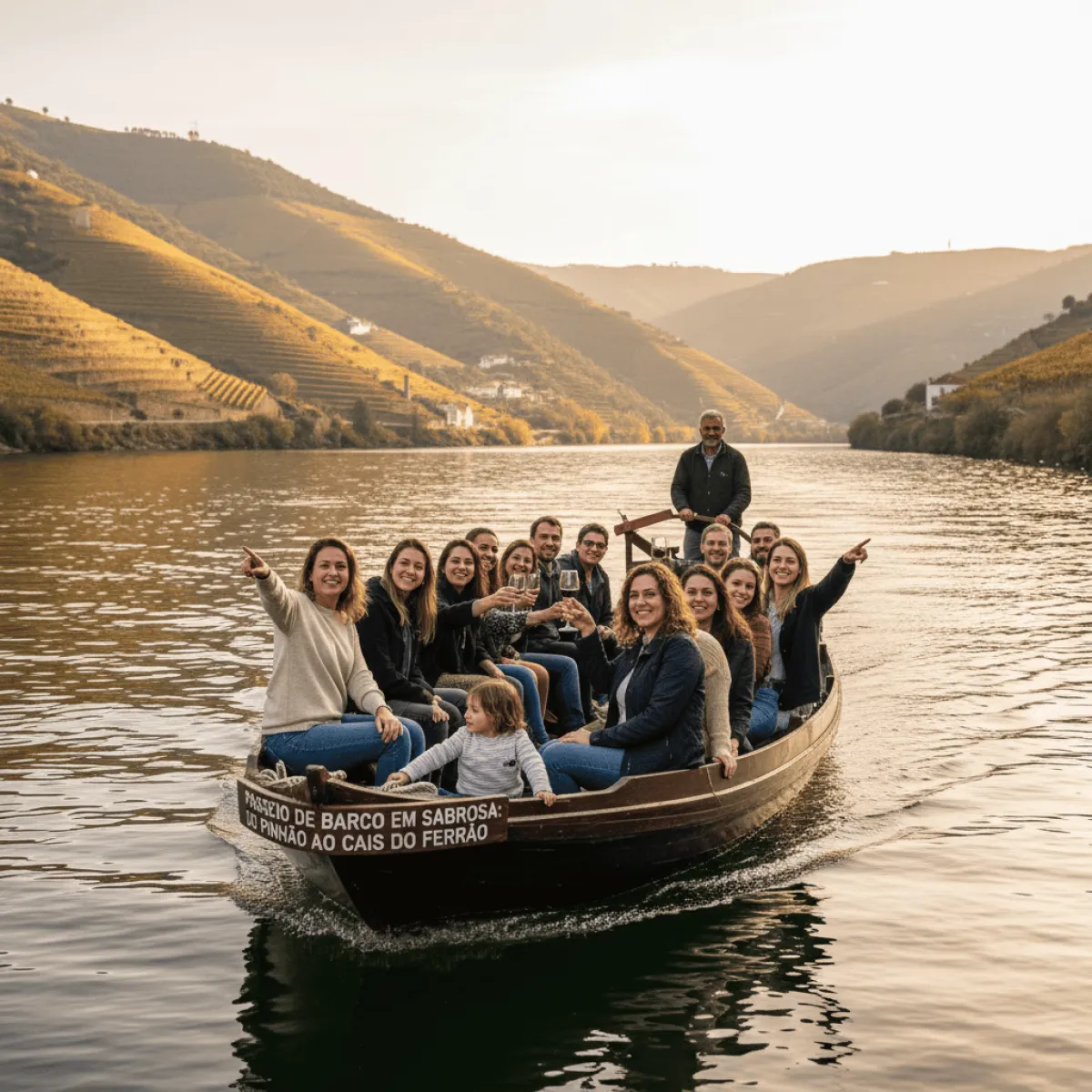
Sabrosa town sits inland, but the municipality reaches the Douro at Covas do Douro parish. To get on the river from the Sabrosa side, you pick up the boat in Pinhão, just across the bridge, and head downriver toward Cais do Ferrão, which is officially in Sabrosa territory. It is the most honest way to see the slopes you have been driving past: Carvalhas, Roêda, Aciprestes. From the road they look like postcards. From the water they look like a thousand years of stacking stone.
The operator I recommend is Anima Durius. They have been working out of Pinhão for fifteen years, with their own pier in front of the Vintage House Hotel, and every trip is private. Three people, six, twelve, depending on which boat you book. Not the cheapest option around, no, but the one worth doing if you would rather be on the river without loudspeakers and seven-language audio guides.
What the trip is like
Three boats in the fleet. Baco is a 1960s-style wooden motorboat for up to six people, perfect for couples or small families. Unbelievable is the bigger yacht, takes twelve, with proper shade on deck. Azuria is the middle option, ten seats, still intimate. I prefer Baco. The wood warms in the sun, it suits the landscape, and the engine is quiet enough that you can hear the slopes echo back.
The most popular program runs one or two hours on the water. You leave the Pinhão pier, pass under the railway bridge, and head up or down the Douro depending on wind and timing. Toward Sabrosa, you go downriver to Ferrão, around twelve kilometres. You see Quinta do Tedo at the river junction, you might catch the historic train if the timetables line up, and you grasp the scale of the terraces in a way driving never gives you.
Onboard they pour Port and table wine from the region. This is not decoration, it is part of the trip. The captain, often Paulo (the founder) or Silvia, tells you about the estates without sounding like a school excursion. Ask things. They will tell you where to eat in the villages, which wine to buy, where to be at sunset in June. The useful information tends to come during the pauses, not the explanations.
When to go and what it costs
Prices start around €47.50 per person for the one-hour-plus tours and rise with the duration and the boat. Sunset experiences run from €300 for a couple, with sparkling wine and a charcuterie board included. Confirm current rates directly on the website, because they change with season and group size.
The best time to go is the first slot of the morning. Boats leave around nine or nine-thirty, the valley is still in shadow, and the river runs flat as glass. The slanting light across the terraces is completely different from midday, which flattens everything out. After three in the afternoon, the wind picks up and the river surface helps your photographs. The worst window is between noon and two: too much sun, too little colour, no mercy in the heat.
June through September is high season. Book at least a week ahead in July and August. May and October are quieter, and the landscape is in transition, fresh green in May and turning leaves in October, which is my favourite month of all. The Douro historic train runs Saturdays from June to October, and crossing paths with it on the river is one of the most photogenic moments of the trip.
What to bring
- Hat and sunglasses. The water doubles the glare.
- Sunscreen. Reapply halfway through.
- A light jacket for the start and end of the day, even in summer. Wind picks up over water.
- Shoes with non-slip soles. The pier steps and the boat decks can be wet.
- A camera, but resist photographing everything. There is a difference between seeing the valley and shooting it.
Getting from Sabrosa to the pier
Sabrosa to Pinhão is about twelve kilometres, twenty minutes by car on the N323. The descent is steep, with tight bends, distracting views, and harvest trucks in September. Parking in Pinhão has become difficult in recent years, especially in peak months. Arrive thirty minutes before departure, or park near the train station and walk down, it is five minutes.
If you are staying in Sabrosa and would rather not drive, some hotels and quintas run transfers. Ask. Otherwise there are taxis on the village square that will take you down and back for an agreed fare. For a fuller day plan, read our guide to the lesser-known Sabrosa estates, which explains how to pair the boat trip with a tasting at one of the riverside quintas.
Before or after
If you are putting together a full day, do the boat in the morning and drive back up to Sabrosa for lunch. For a glass of something at the end of the day, Lagoa Bar is the natural stop in the village, with regional wines by the glass. For coffee the next morning, Café Snack Bar Fonte Luminosa is where the locals sit before they head back to the vineyard.
If you are in Sabrosa in June, combine the boat with the festivals: our guide to Santos Populares in Sabrosa explains which nights are worth showing up for. And if literature interests you, read about Miguel Torga's trail in Sabrosa, a walk you can do in a morning.
Booking
Reservations through the official site at animadurius.pt, or directly by phone or WhatsApp on +351 939 922 002. Email geral@animadurius.pt. Free cancellation up to 24 hours before most programs. Confirm directly with the provider before paying anything in advance.