The Literary Soul of the Douro: Tracing Miguel Torga's Footsteps in Sabrosa
Discover Sabrosa through the lens of Miguel Torga, where Souto de Moura's architecture blends with granite landscapes and the refined elegance of high-altitude Douro wines.
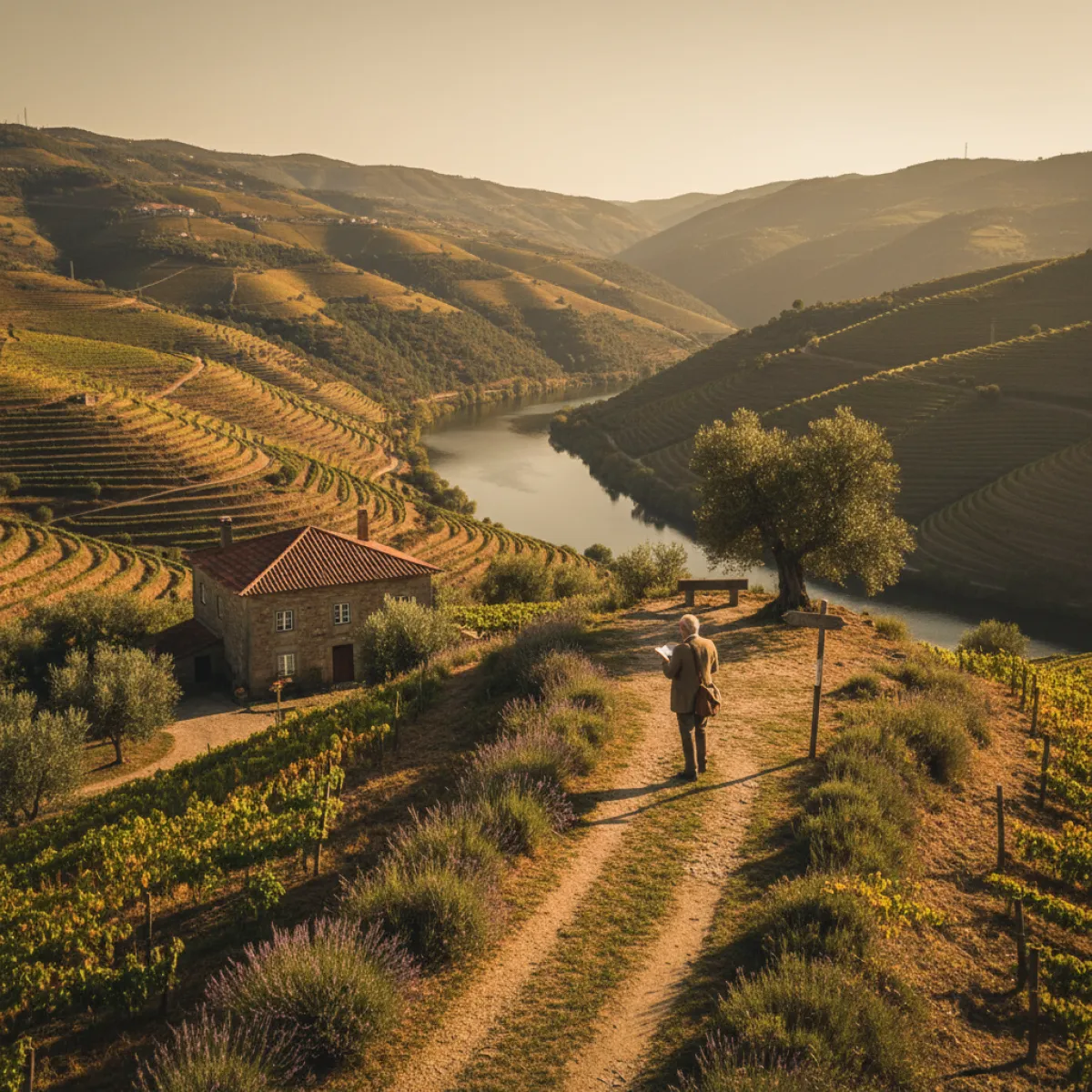
The Portal to the Wondrous Kingdom
There is a precise moment when the Douro ceases to be a postcard image and becomes a physical test. It happens when you leave the riverbanks, where the luxury of five-star hotels reflects the gentleness of the water, and begin the ascent toward Sabrosa. Here, the landscape undergoes a radical transformation. Schist gives way to granite, and the air becomes thinner, sharper. You are entering what the writer Miguel Torga called the "Reino Maravilhoso", the Wondrous Kingdom. Sabrosa is not merely a wine-producing village; it is the gravitational center of a specific Portuguese identity, where land is conquered by hand and poetry is born of sweat.
Reaching Sabrosa requires attentive driving along secondary roads that snake through the mountains. The traveler seeking the Douro's essence will find here a silence that more tourist-heavy zones have long since forfeited. It is a silence pregnant with history, where the name of Ferdinand Magellan, born in these manor houses, still echoes, but it is the shadow of Adolfo Rocha, known to the world as Miguel Torga, that truly shapes the experience. In São Martinho de Anta, just minutes from Sabrosa’s center, the writer's birthplace and the interpretative center designed by Pritzker-winner Eduardo Souto de Moura create a fascinating dialogue between vernacular austerity and contemporary modernism.
The Architecture of Silence in São Martinho de Anta
The Espaço Miguel Torga is a piece of monumental yet discreet architecture. Souto de Moura utilized local schist to create a building that appears to emerge from the ground, a geological continuation of the mountain itself. Inside, Torga’s life and work are presented without artifice. It is impossible not to feel the resonance between the writer’s words and the harshness of the surrounding landscape. Torga wrote with the same precision that viticulturists use to carve terraces; every adjective carries the weight of a dry-stone wall.
Walking through the village, one should seek out the centuries-old oak tree, the "Lameiro do Souto", where Torga frequently sat to contemplate the horizon. From this vantage point, the scale of the high-altitude Douro becomes clear. Unlike the riverfront at Pinhão, where heat is often oppressive, Sabrosa enjoys a constant breeze. This freshness translates into the region's wines, known for their vibrant acidity and mineral profile. For those who cherish serenity, this area offers an experience akin to Lamego in Winter: The Geometry of Comfort and the Silence of Granite, where isolation is a form of luxury.
Altitude Wines and the Transmontano Table
Sabrosa is home to grand estates like Quinta do Portal, but the true character of the place is found in the small family-run farms dotting the slopes. Here, the concept of "terroir" is literal. The vines, many over fifty years old, produce grapes that defy extreme climates. When planning a visit, dedicate time to a technical tasting. Disregard generic descriptions of red fruits; here, the conversation is about soil, sun exposure, and the vine's cycle. Sabrosa’s white wines, in particular, are among the Douro’s best-kept secrets, possessing an elegance that rivals international crus.
Regarding gastronomy, rigor is the standard. Cabrito Transmontano, baby goat slow-roasted in a wood-fired oven, is the dish that defines the region’s Sundays. At Quinta do Portal’s restaurant, the cooking is more sophisticated but remains tethered to local roots. Order the Maronesa veal or the artisanal charcuterie. Budget approximately €45 to €70 per person for a high-end meal including reserve wines, representing extraordinary value given the quality of the ingredients.
The Aesthetics of Resistance
To understand Sabrosa, one must read Torga's "Bichos" or "Tales from the Mountain." He viewed his countrymen as beings of almost mineral resistance. This toughness is what makes local hospitality so genuine; there is none of the commercial polish found in coastal areas, but rather an honest surrender to the visitor. It is a way of being that mirrors what we find in other parts of the northern interior, a pursuit of The Inland Coast: River Escapes and the Luxury of Stillness in Lamego, where time follows different laws than those of the coast.
The best time to visit Sabrosa is during the harvest in September when the village becomes the epicenter of a frantic, joyous activity. However, spring offers a color palette, the vibrant green of new vines against the grey granite, that is visually more dramatic. Avoid the peak of summer if you are not a fan of temperatures exceeding 35°C (95°F), although Sabrosa’s altitude (roughly 500 meters) ensures cooler, restorative nights.
A Practical Guide for the Literary Traveler
- Getting There: By car from Porto, take the A4 motorway and exit toward Sabrosa. The drive takes about 1.5 hours and is visually spectacular, especially the descent into the Pinhão valley.
- What to Order: Beyond the goat, look for Cristas de Galo, a conventual pastry from nearby Vila Real that reaches perfection here. In wines, focus on monovarietal Viosinho or Rabigato.
- Where to Stay: Quinta da Roêda is a superb option for those seeking total immersion in the vineyards, while local guesthouses in the center of Sabrosa offer a closer connection to daily village life.
As evening falls and the Douro light turns golden, stretching shadows across the terraces, the link between the earth and Torga’s voice becomes palpable. There is a certain melancholy in these mountains, a consciousness of finiteness that is deeply Portuguese. This sonic and emotional identity also manifests in nearby locations, as explored in The Resonance of Granite: Fado and the Sonic Identity of Lamego. Sabrosa is not just a destination; it is a state of mind, a lesson in how beauty is extracted from hardship.
Ending the day in Sabrosa’s main square with a glass of white Port and a handful of local almonds is an exercise in stillness. Here, away from the crowds, you realize that the Douro is not just a wine region; it is a monument to human will. Torga was right: the Douro is a geological poem. And Sabrosa is, without a doubt, its most honest verse.
