Sabrosa: Village, Quinta, or Riverside, Where to Stay
Sabrosa is not one village, it is three: a historic café-lined center, wine quintas scattered across the hills, and the river near Pinhão. Each one suits a different kind of traveler, and picking right changes the whole trip.
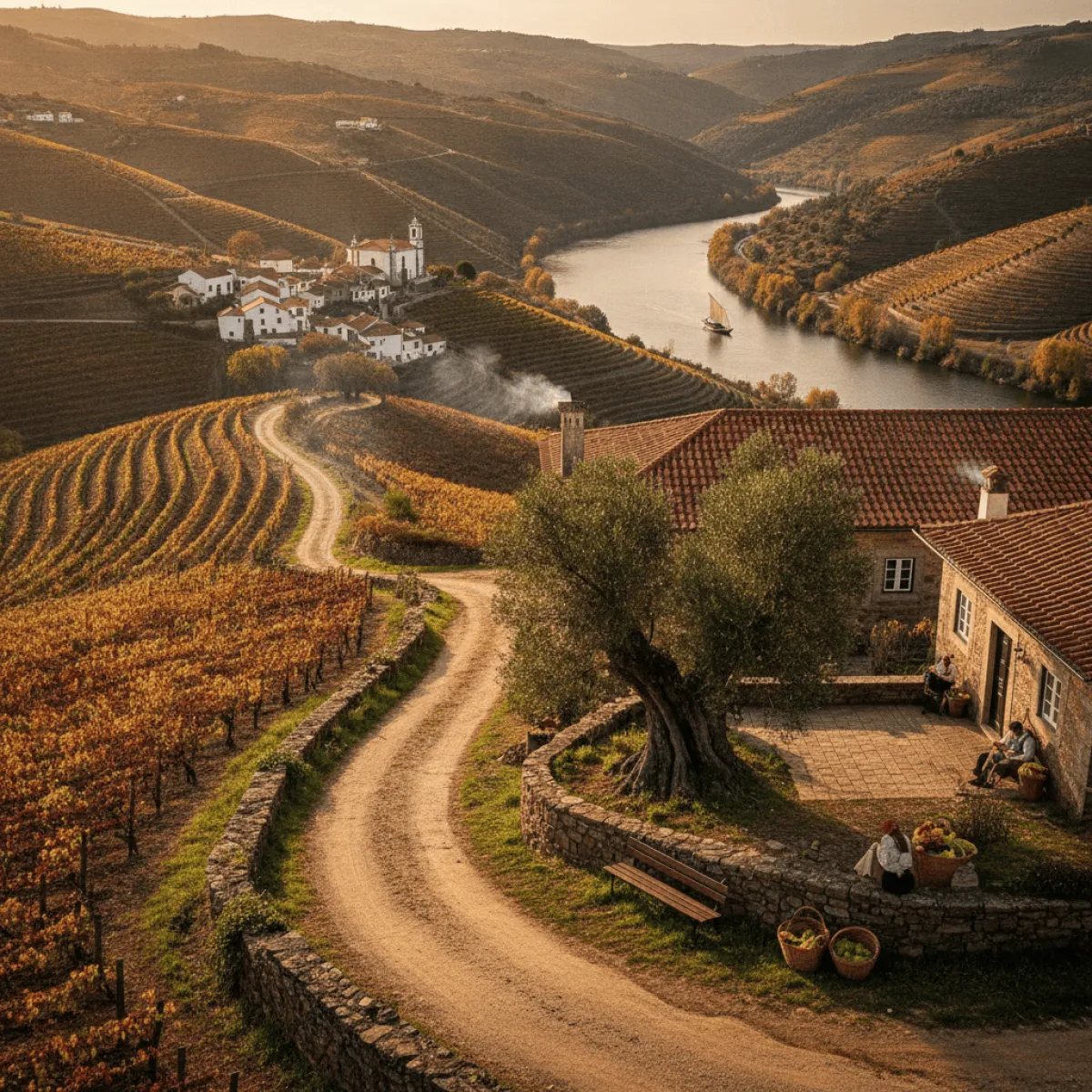
Sabrosa is not Óbidos. There are no walls to sell on postcards, no street painted a fake, camera-ready pink. It is a Douro village that has spent the last five hundred years making wine and, once in a while, explorers: Ferdinand Magellan was born here, the man who sailed around the world and died halfway through the trip. That already tells you something. Sabrosa does everything slowly, but it is not small in the ways that matter.
"Where to stay" in Sabrosa does not have one answer, because the village itself splits, in practice, into three areas with different personalities. The historic center, where life happens around the square and the cafés. The quintas scattered across the hillsides, where you sleep as close to the vineyard as to the bed. And the riverside, near Pinhão, where everything slows down one more notch. Each one suits a different kind of traveler, and choosing well matters more here than in almost anywhere else in the Douro.
The Village Center: for those who want to walk everywhere
If you like stepping out the door and reaching a café, a bar, and a monument within ten minutes on foot, stay in central Sabrosa. It is a small village with no pretensions of being a city, but with enough to fill an unhurried late afternoon.
The centerpiece is Casa Solar de Fernão de Magalhães, the house where the navigator was born, now open to visitors. It is not a large or spectacular museum, and it does not pretend to be: it is a manor house with a genuine story, and half an hour before lunch is exactly the right amount of time to give it. It works precisely because it does not try to be more than it is.
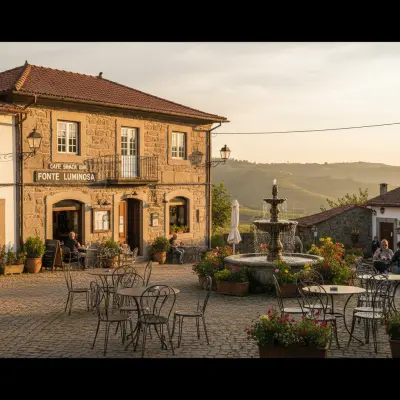
For breakfast or a mid-afternoon break, the right place is Café Snack Bar Fonte Luminosa, which does what a village café should: serves you well, does not overcharge, and does not blink if you sit for an hour with a glass of water and the newspaper. This is where you feel Sabrosa's real pulse, between retirees arguing about politics and workers grabbing an espresso before their shift.
At night the village changes gear, and the meeting point is Lagoa Bar. It is not sophisticated and does not try to be: it is the kind of bar where you have a beer after a hot day and talk about wine, football, and then wine again. Time it right and you might catch a June evening during Santos Populares, when the village shows its liveliest side, with grilled sardines and bonfires in the Trás-os-Montes tradition, as covered in the guide to Santos Populares in Sabrosa.
Staying in the center makes sense if you are traveling without a car, if you have small children who cannot handle long walks up to the vineyards, or if you simply like real village rhythm: bakery, butcher, café, repeat. It is not the most photogenic option in the Douro, but it is the most practical, and it is the one that gets you home on foot after one too many at Lagoa.
The Quintas: for those who came for the wine
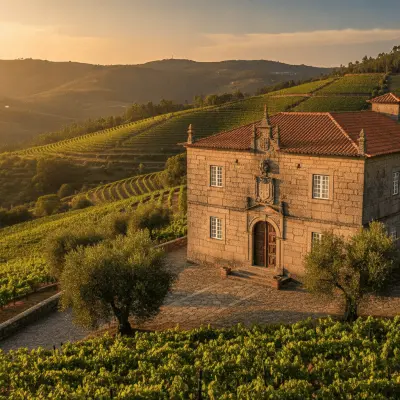
Sabrosa sits right in the heart of the Douro Demarcated Region, and that means one simple thing: the best beds around are not in the village, they are scattered across the quintas that have been making Port and Douro wine for generations. Sleeping at a quinta is a different experience from sleeping at a hotel. You wake up to the smell of wet earth instead of traffic, and breakfast often includes jam made right there in the house kitchen.
Some quintas in the region are famous, their names printed on every supermarket bottle, and others are barely known at all, which is exactly the point of the guide to the Douro estates nobody talks about: Sabrosa has small, family-run producers making serious wine without ever showing up on a single "best of the Douro" list. These are the places worth asking about a room, even informally, even if it is just a direct conversation with the producer about whether they have space for a night or two.
For anyone who wants to actually understand what they are drinking, not just drink it, the wine tasting at Wine & Soul is the most direct way in. This is not a rushed tourist tasting with five wines in fifteen minutes: it is built for people who want to understand the difference between an old-vine wine and a young one, and why that difference matters more than it sounds. Book ahead, especially between August and October, when harvest brings more visitors to the region and the quintas get busy with actual work, not just tours.
Staying at a quinta near Sabrosa is the right call if you are driving, which is nearly essential anyway since most of them sit a few kilometers from the village, along narrow roads with views that make every curve worth it. It is also the right call for couples on a quiet honeymoon and for anyone who prefers silence to fast Wi-Fi. It is, unsurprisingly, the priciest of the three options, but it usually comes with breakfast and, with a bit of luck, a bottle of house wine on arrival at no extra cost.
The Riverside: for those who want the postcard Douro
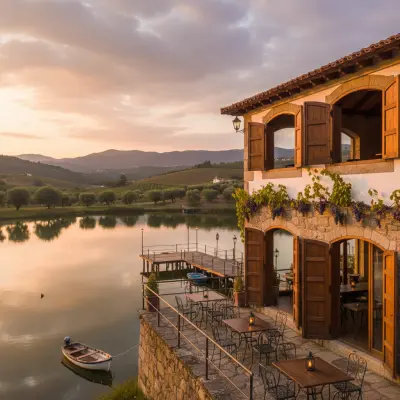
Sabrosa sits inland, but a few minutes' drive brings you down to the river, in the Pinhão area, where the Douro opens up and the terraced hillsides form the landscape used on every tourism poster, and for once, without exaggeration. Staying here means trading village life for water, and for a lot of travelers that is the best trade a Douro trip can offer.
The highlight is literally getting on the river: the boat trip from Pinhão to Cais do Ferrão shows the region from an angle the road never gives you, with the quintas climbing almost straight up from the banks. Go in the morning, before the heat sets in and before the bigger group boats fill the river. Late afternoon works too, with the light hitting the terraces at an angle, but it usually means more crowds and more noise.
This base is ideal for anyone who wants to combine Sabrosa with a wider Douro trip, rather than settling into a single village for the whole stay. It is also practical if you plan to keep moving: from here it is easy to reach other points in the region, including spring outings like the ones covered in the guide to Torre de Moncorvo in bloom, for anyone who wants to stretch the trip by another day or two and is in no rush to head home.
Stay near the river if scenery comes before everything else for you, if you are traveling as a couple or a small group chasing photos that actually deserve the effort, and if you do not mind a few extra minutes' drive back to Sabrosa whenever you want a meal or a drink in the evening.
Getting there and timing it right
Sabrosa sits roughly a hundred kilometers east of Porto, along the A4 and then national roads that start climbing and dropping through vineyards almost immediately. There is no direct train to the village itself; the nearest stations are Pinhão or Peso da Régua, both on the Douro line, one of the most scenic train rides in the country, and from there it is a short drive or taxi ride the rest of the way. Vila Real, the nearest larger town, is about half an hour away, useful if you need a pharmacy, a proper supermarket, or just steadier phone signal.
Having a car is not just convenient in Sabrosa, it is close to essential if you plan to stay at a quinta or explore the riverside. Those staying only in the village center can get by without one, as long as they are fine relying on taxis or lifts for anything beyond the village limits.
As for timing: harvest, between late August and October, is the busiest and most interesting season for anyone who wants to see the region actually working, not just posing for photos. June, with Santos Populares, brings a different kind of energy, more village than vineyard. Outside those two windows, Sabrosa is one of the few places left in the Douro where you can still decide where to stay the night before, without inflated prices or queues anywhere.
So, which one do you pick?
There is no wrong answer here, only the right questions. Ask yourself how much time you have, whether you have a car, and what you actually came here for.
- A day or two, no car, looking for village life and a bit of history: stay in the center, near Casa Solar de Fernão de Magalhães.
- You came for the wine and want to actually understand the Douro, not just drink it: find a quinta and book the tasting at Wine & Soul.
- You want the postcard Douro and do not mind a few extra minutes of driving: head down to the river and take the boat trip from Pinhão to Cais do Ferrão.
One last practical note: Sabrosa is small, and its formal lodging options are just as limited. Book weeks ahead if you are coming during harvest or in June, for Santos Populares, when the village fills up and the quintas get busy with both work and visitors at once. Outside those windows, take your time. This is a village that rewards travelers who arrive without a rush to decide where they are staying.