NOS Alive in Algés: An Honest Lisbon Festival Guide
Three days at the Passeio Marítimo de Algés, with the Tagus reflecting the sunset and Lisbon forty minutes away by train. An honest guide to doing NOS Alive right, without falling into rookie mistakes.

There's an uncomfortable truth about NOS Alive that nobody tells you when you buy the ticket in January, still euphoric over the lineup announcement: the festival starts long before you set foot in the Passeio Marítimo de Algés. It starts at 2pm, when you decide whether to catch the train at Cais do Sodré or risk an Uber along the Marginal. It starts when you choose between eating a proper meal beforehand or surrendering to the prices inside. And it starts, above all, when you realise that three days of dancing until 3am demand a strategy, not improvisation.
This guide is for people who want to do NOS Alive right. Not the idealised festival from Instagram photos, with perfect waves behind the main stage, but the real thing: the one with red dust that sticks to your legs, queues for the toilets, beer spilling into your trainers, and moments of pure grace when The Cure, Arctic Monkeys or Pearl Jam remind you why you paid 180 euros for this.
Why Algés and not anywhere else
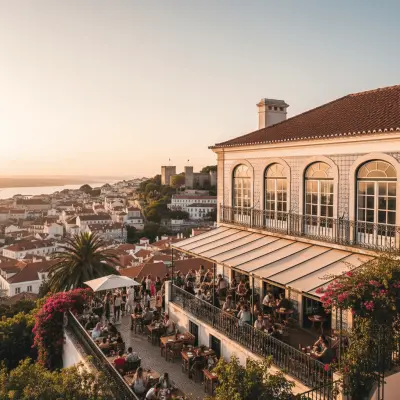
The Passeio Marítimo de Algés is probably the best-located venue of any large-scale European festival. You're fifteen minutes by train from central Lisbon, with the Tagus reflecting the sunset behind the NOS stage, and the Cristo Rei blinking across the river like a tipsy lighthouse keeper. It's not Primavera Sound in Barcelona, it doesn't have the scale of Glastonbury, but it has one thing those don't: you can sleep in a proper bed in Lisbon and be home forty minutes after the last concert ends.
That changes everything. It means you don't have to endure three straight days in a campsite. It means you can alternate festival nights with mornings at the Miradouro da Senhora do Monte nursing your hangover with a view. And it means, above all, that your festival experience is also a Lisbon experience. You don't have to choose.
When to go and how to get tickets without going broke
NOS Alive happens on the second weekend of July, Thursday through Saturday. Exact dates vary year to year but the mechanics have been the same for over a decade. Tickets go on sale in October of the previous year, in waves. The first wave, early bird, is where the real discount lives, usually twenty to thirty euros below the final price. If you're already thinking about going, buy in October. Don't wait for the full lineup. The NOS Alive lineup never disappoints.
There are three ticket types that matter:
- Day ticket: good if you only care about one specific headliner. Around 75 to 90 euros depending on day and timing.
- 3-day pass: the obvious choice for the full experience. Sits between 160 and 195 euros.
- VIP pass: gets you a raised platform with a view of the main stage, decent toilets, and your own bar. Costs roughly double. Worth it if you're in a group of four or five and can rotate who saves spots at big shows. Solo, it's overkill.
Skip the camping option. Technically there's a zone, but compared to the alternative of sleeping in an apartment in Santos or a hotel in Belém, there's no contest. Lisbon is literally right there.
How to get to Algés without throwing yourself in the Tagus
The CP train on the Cascais line is your best friend. It leaves Cais do Sodré every fifteen minutes, takes twelve minutes to reach Algés, costs under two euros. During the festival they ramp up frequency, including overnight. On the way out, there are extra trains until at least 4am. There's no better system at any festival I know.
What you should NOT do: take an Uber or Bolt during peak hours. The Marginal jams up from 5pm to 8pm, you'll spend an hour on what should be a fifteen-minute drive, and you'll arrive in a foul mood. On the way out, surge pricing skyrockets to three or four times normal. I've seen people pay fifty euros to go from Algés to Alfama. Ridiculous.
If you stay near Belém, you can walk both ways. It's about forty minutes along the riverside cycle path. The trip in, with daylight, is a stroll. The trip back, at 3am, is still safe because dozens of other people are doing the same. For cyclists, it's also worth exploring the route in our riverside cycling tour with Bike a Wish, or the all-downhill route in From Peak to Pier, which is a great way to arrive fresh at the festival if you're staying uphill.
Inside the venue: the architecture of euphoria
NOS Alive has five main stages. The NOS Stage is the giant by the river, where the headliners play. The Heineken Stage sits opposite and hosts the big-label indie acts. Sagres is the alt-rock stage. Coreto is more intimate, usually for Portuguese projects. And there's the electronic stage, the Clubbing Stage, which opens later and closes in the small hours.
Golden rule: you'll never see everything. Accept it. Pick six or seven priority sets per day and improvise the rest. Distances between stages are short, five to seven minutes walking through crowds, but trying to catch two headliners overlapping means you'll catch half of each and feel frustrated.
Another thing nobody tells you: sound at the NOS Stage is better in the middle of the field than at the front rail. Up front, sound comes from side speakers and feels lopsided. Twenty or thirty metres back, it's perfectly engineered. Exception: if you're there for the singer's charisma, sure, push to the front. But if you want to hear properly, plant yourself in the middle.
What to eat (and what to avoid) inside and outside
Food inside the venue has improved enormously in recent years. There are decent bifanas, there's a Portuguese tasca serving proper duck rice, there are vegetarian options. But the prices are festival prices: eight euros for a sandwich, three fifty for a beer. There's a trick: eat well before you go in.
My strategy: I arrive in Algés around 5pm, eat a proper meal at a neighbourhood restaurant, enter the festival at 6.30pm with a full stomach, and after that only need snacks. Easy thirty euros saved per day.
For the pre-festival meal, if you're coming from Lisbon, there's an obvious choice: stop by As Bifanas do Afonso on your way to the train. Four euros, ten minutes, and you're loaded with enough protein and salt to survive the first phase of the night. There's no better way to start three days of festival.
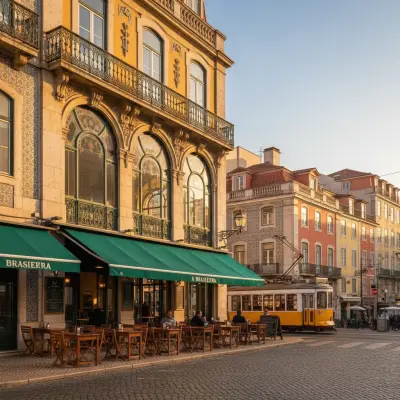
For the morning-after coffee, especially on Sunday when you're dragging yourself around the city pretending you're fine, A Brasileira in Chiado serves a decent espresso and has terrace tables where you can sit and stare at the bronze Pessoa statue as if he understood anything about your headache.
What to do between days: Lisbon as a reward
This is where NOS Alive has an edge over any festival in Europe. You have three mornings and three afternoons in Lisbon, one of the most densely interesting cities on the continent. Don't waste them sleeping.
On Friday morning, if you arrived with time to spare, I recommend the Museu Nacional de Arte Antiga. It's the most undervalued museum in Lisbon, with the most serious collection of old Portuguese painting in the country, including Nuno Gonçalves' Saint Vincent Panels. It's in Santos, near the river, which conveniently puts you halfway to Algés.
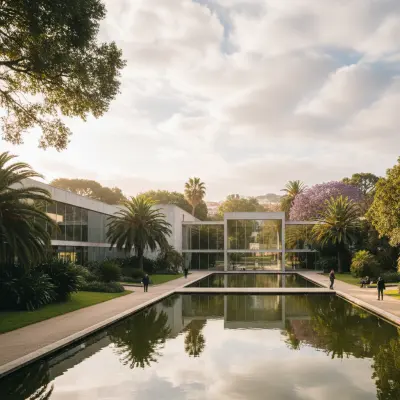
Saturday morning, if you can still open your eyes, go to the Museu Calouste Gulbenkian. The gardens alone are worth the entry fee. There's a pond, there are peacocks, there's real shade. Sit for an hour, hydrate, then go see the collection, one of the best private curatorial efforts in the world: Egyptian, Islamic, René Lalique, Rembrandt, all in a compact route.
Sunday, after the last festival day, get some real sightseeing in. If you've never been to Sintra, our Sintra neighbourhood guide gives you an alternative route to the tourist buses. If you stay in Lisbon, the local culture guide shows you the city that doesn't appear in hotel brochures.
The night after the night
The festival closes around 3am. If you've still got steam, there are two honest options. The first is to continue the festive mood in an area like Cais do Sodré, with bars open until 6am or later, especially on Rua Nova do Carvalho, the pink street.
The second, more romantic and oddly perfect for one of the three nights, is to go listen to fado. Yes, I know, it sounds contradictory to leave an Arctic Monkeys gig and head straight to a fado house, but that contrast is exactly what makes it memorable. Try O Faia on an acoustic night, with Lenita Gentil or another resident name. Fadistas usually start around 9.30pm and sessions run late, but confirm hours when you get into town. It's the kind of antidote that makes the whole weekend make sense.
Typical mistakes you'll make (I made all of them)
Not bringing sunscreen. The sun in Algés hits the venue hard until 7pm. You'll leave with a festival burn, that red line where your t-shirt neckline ended, and it'll stay with you for a week. Apply before entry, carry a stick to reapply.
Not carrying physical cash backup. The festival runs on a cashless wristband you top up online or at kiosks. The kiosk queues during the festival are torture. Load online ahead of time with a generous margin, and they refund the leftover balance.
Wearing flip-flops. Your feet will be stepped on, beer will fall on you, and the ground is uneven. Old trainers, always. The ones you're willing to throw away on Sunday night.
Ignoring water. Bringing an empty bottle and filling it at the fountains is allowed and essential. One beer per water bottle. Non-negotiable.
Is it worth it? The honest answer
NOS Alive isn't perfect. Food and drink prices are abusive. The venue gets too crowded on day two. There's always one headliner who cancels. But there are moments, and there are always two or three per edition, when the Tagus turns orange, a classic you know by heart is playing on the NOS Stage, twenty thousand people are singing with you, and you realise yes, this is what you came for. That three days of fatigue, transport and queues boil down to those eight minutes when everything aligns. And that, in Lisbon, in summer, with the river glowing, is as good as any festival in the world. If you want to extend that seasonal Portuguese experience in another register, our Easter sweets in Mafra guide shows another face of how the national calendar gets lived with equal intensity away from the big stages.