Mogadouro: The Streets Worth Walking Slowly
In a town with no chain hotels or souvenir shops, the single surviving tower of Mogadouro's castle explains everything else. Between terrace cafés, a proper posta dinner, and kayaking on the Sabor lakes, this is a walk nobody rushes.
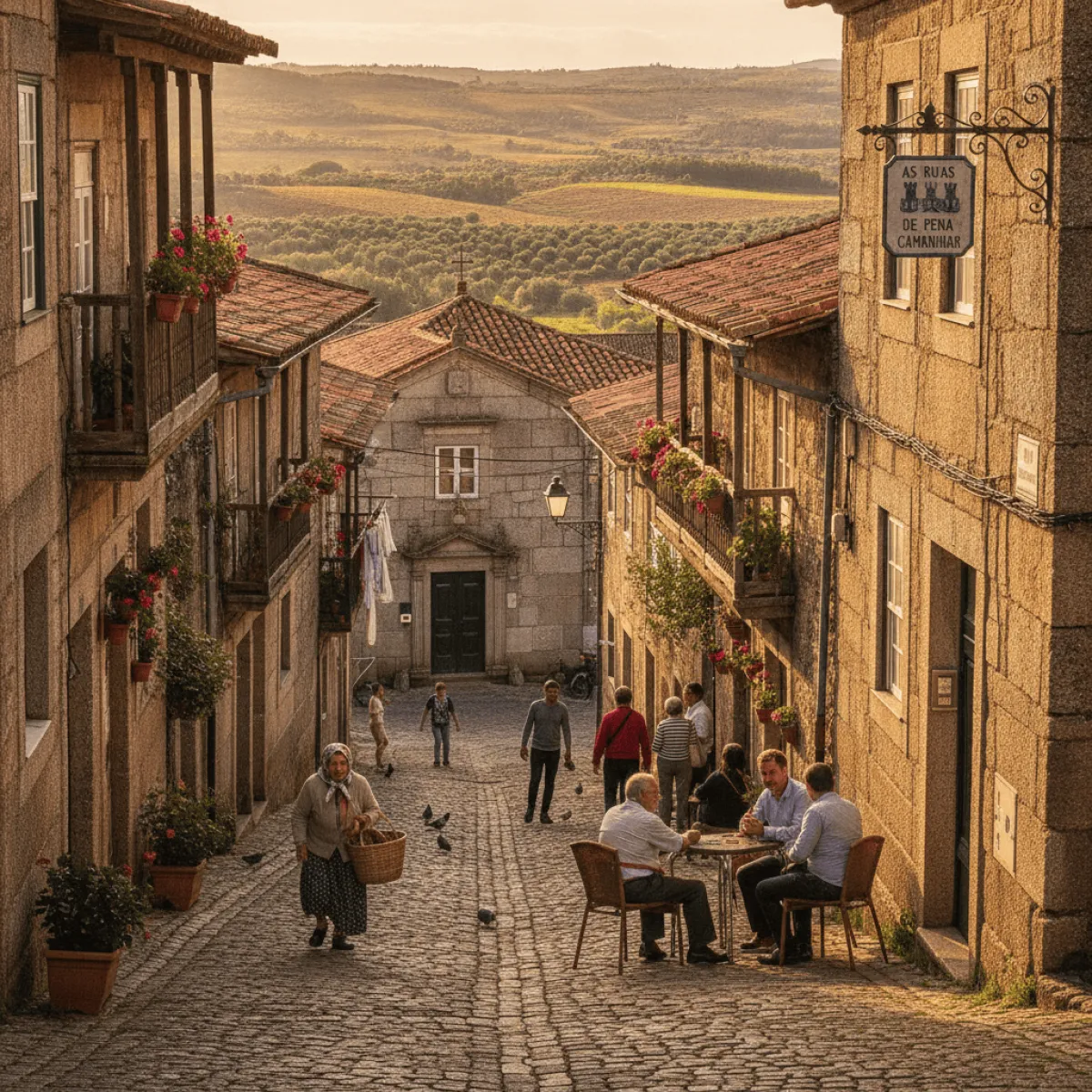
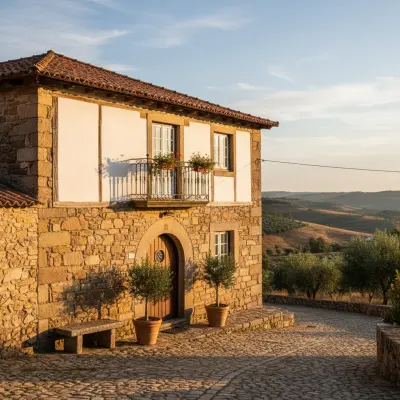
Mogadouro does not apologize for being small. The town sits on top of the Trás-os-Montes plateau, barely ten kilometers from the Spanish border, and the first thing you notice stepping out of the car is the wind: dry, constant, and in summer afternoons hot like an oven someone just switched off. There are no grand monuments here, no historic quarter designed for postcards. What there is, instead, is a handful of streets you can cover in under two hours that tell you, honestly, what it means to live on a plateau where granite runs the show and the coast is measured in hours of driving, not minutes.
The most common mistake visitors make is treating Mogadouro as a ten-minute stop on the way to somewhere else. That is a waste. The town rewards anyone who gives it a full morning, an unhurried lunch, and one evening on a terrace. The rest of the country may have bigger beaches and grander castles. Mogadouro has something else: the rare feeling of a place that doesn't explain itself to anyone, because it doesn't need to.
The Tower That Survived the Castle
Start with the obvious: Torre do Galo, the only surviving remnant of Mogadouro's medieval castle. It is not large, nothing like the scale of Bragança or Chaves, but it is the point from which the whole town makes sense: everything else grew around this defensive outpost, facing the lands of Spain. Climb the stone stairs to the top, free entry, no fixed schedule worth memorizing, just show up, and look at the horizon. On clear days, the Castilian plain unfolds without hurry. It is one of those viewpoints that doesn't know it's a viewpoint, and that's exactly what makes it work: no photogenic railing, no over-explained plaque, just stone and wind.
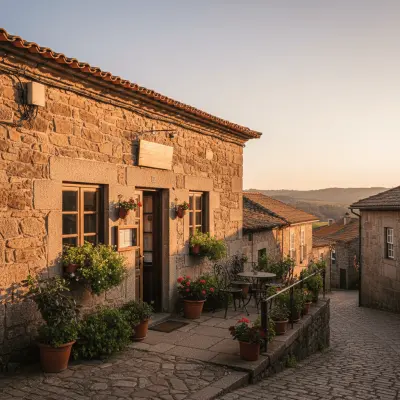
At the foot of the tower, the old houses still keep a village scale: low buildings, painted wooden doors, and a silence broken only by a distant tractor or a stork landing on a chimney. There are no souvenir shops here, no tour groups with color-coded umbrellas. There are people who actually live there, hanging laundry from the windows and nodding at whoever walks past, and you feel it on every corner.
Morning: From the Church Square to the Corner Café
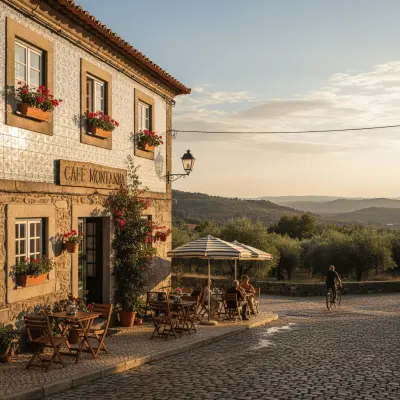
Walk down the main street toward the parish church and stop at the first café with a terrace facing east: that's where, mid-morning, the old men of the village argue about cattle prices and the state of the wheat fields with a seriousness you only earn after sixty. Café Montanha is the right stage for that scene. Order a galão and a slice of homemade cake, sit down, and don't rush: in Mogadouro, rushing is bad manners. A coffee there costs what it costs in any inland village, a fraction of a seaside terrace price, and always comes with free conversation on the side.
Use the morning, before the sun gets serious, to wander the side streets connecting the church square to the old quarter around the tower. They have no guidebook names, but they have the essentials: exposed granite facades, backyards with fig trees, and the smell of fresh bread drifting from neighborhood bakeries around eight in the morning. If you manage to wake up early enough, it's the best hour to photograph Mogadouro without a single soul on the street.
Afternoon: Sabor on the Plate
After two or three hours on foot, hunger becomes a serious matter. Bacus Bar handles that without fuss: unpretentious Trás-os-Montes cooking, the kind that knows the secret is in the ingredients, not the plating. If posta mirandesa is on the menu, order posta. If alheira is on the menu, order alheira. Everything else is noise. Expect inland prices, well below what you'd pay for the same meal in Bragança or Porto, and don't expect a rushed service: here, people eat slowly, as Trás-os-Montes tradition demands. If there's still room after the main course, take the house dessert suggestion, usually something egg-and-sugar based, as is customary in this region.
Afternoon is also a good time to look for local products typical of this corner of Trás-os-Montes: olive oil, cured goat cheese, almonds. There isn't a big daily market here, so ask at the café or the restaurant where to buy them, locals always know the right house.
Evening: Terraces That Don't Pretend to Be Anything Else
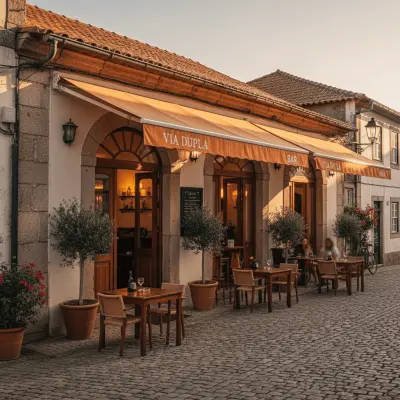
By late afternoon, the walk changes character. The same streets that belonged to retirees in the morning fill up, on weekends, with a younger crowd. Via Dupla Bar is where that happens: cold beer, music that doesn't drown out conversation, and a terrace that catches the last rays of sun before the plateau cools down suddenly, the way only inland Portugal cools down. It's not a postcard bar, it's a neighborhood bar, and that's exactly why it's worth it. Nobody minds if you stay late, and nobody minds if you decide to leave early either.
Sleeping With a View of the Plateau
Mogadouro has no chain hotels, and that's a good thing. For sleeping, there are two options that make more sense than any generic property: A Casa do Gi, for those who want to stay inside the town and wake up already able to walk to the tower, and Casa das Águas Férreas, for those who prefer a more rural retreat, with the plateau's silence as a neighbor. Neither one will show up in an international design magazine, and that unfiltered authenticity is precisely what makes the difference after a day walking granite streets.
Beyond the Walls: the Sabor and Miranda's Donkeys
Anyone who thinks Mogadouro ends at the old quarter is wrong. The town is also a gateway to two of the most interesting experiences on the Trás-os-Montes plateau. The first is aquatic, which sounds strange in such a dry region: the Sabor Lakes, formed by the dams on the Sabor river, offer calm water and a schist landscape rarely associated with Trás-os-Montes. Kayaking on the Sabor Lakes from Mogadouro is the most direct way to understand that this land has water too, and knows how to use it well. Advance booking is required, equipment is provided, and it's worth checking the exact price locally before booking, as it varies with the chosen duration.
The second takes you to Atenor, a nearby village where AEPGA, the Association for the Study and Protection of Donkey Livestock, runs a sanctuary dedicated to the Miranda donkey, a native breed at serious risk of disappearing. Visiting AEPGA's Miranda donkey sanctuary from Mogadouro is not a petting-zoo experience for tourists: it's serious conservation work, done by people who know every donkey by name. It's worth the detour, especially if you're traveling with kids who've never seen a donkey up close, or with adults who think they've seen it all.
When to Go and How to Get There
Mogadouro is about a 45-minute drive from Bragança and a little over two hours from Porto, always by road, since there's no nearby train line that serves the trip. There are no shortcuts: you need a car, or patience with the limited regional bus schedules. If you like chasing raking light, know that the Mogadouro plateau has some of the best sunsets in the region, a topic we've already covered in detail in our guide to Mogadouro's viewpoints for June, the month when the golden light lasts longer and the heat isn't unbearable yet.
Avoid July and August if you don't like dry, intense heat, typical of the Trás-os-Montes interior, with temperatures easily climbing above 35 degrees. Spring, with the fields still green before the summer drought, and early autumn, when the grape harvest brings movement to neighboring villages, are the best windows for walking without suffering. Bring a hat, bring water, and accept that nobody here apologizes for the sun.
A Plateau Is Never Just One
If this kind of high-altitude landscape convinces you, it's worth admitting that Mogadouro has distant relatives elsewhere in Trás-os-Montes. Montalegre, further north, shares the same logic of altitude, wind, and distance from the coast, and our guide to Montalegre in winter shows how that plateau light changes radically with the seasons. For those who want to go deeper into the comparison, the other side of Montalegre, beyond the well-trodden Barroso circuits, is covered in Montalegre Beyond Barroso, a route that combines castle, castro, and mountain kitchen in the same direct way Mogadouro combines tower, café, and kayak.
In the end, what stays with you after a walk through Mogadouro isn't a checklist of monuments crossed off a map. It's the concrete feeling of having understood how life works on a plateau: slow in the morning, seriously hungry at lunch, seriously thirsty in the afternoon, and a sunset at the end of the day that needs no filter to impress.