Lagos After Dark: A Wine and Petiscos Crawl
Forget the formal eight-to-ten dinner. In Lagos, eating well is about rhythm: graze slowly, drink local Negra Mole, and move on when the glass runs dry. A walkable itinerary from afternoon to night, with real stops and proper wine.
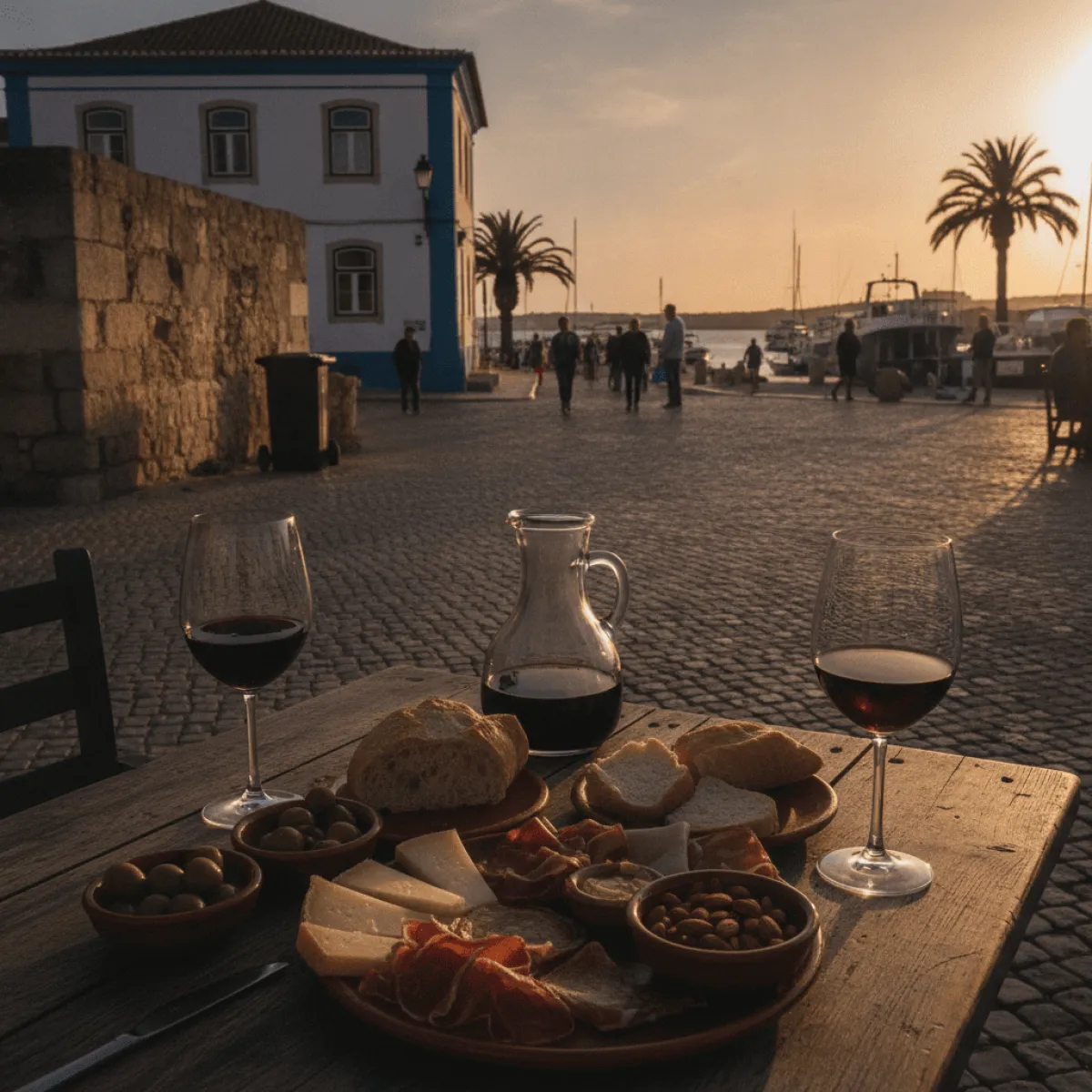
There is an hour in Lagos that the brochures ignore. It is not sunrise over Ponta da Piedade, nor the bustle of the market at nine in the morning. It is that gap between six and seven in the evening, when the heat eases off, the awnings start to shoo away the flip-flop crowd, and the people who stay are the ones who actually came to eat and drink. This is the hour of petiscos. And Lagos, despite its reputation as a beach town, knows exactly how to petiscar.
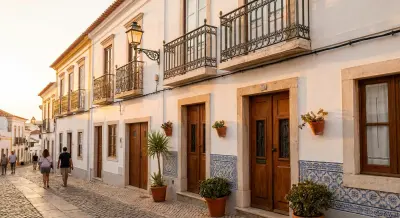
Forget the idea of a single formal dinner from eight to ten. The plan here is different: walk, stop, taste, drink a glass, move on. Petiscar is a slow, almost lazy verb, and Lagos is perfectly scaled for it. Everything inside the old walls is a few minutes on foot, along cobbled streets that turn cooler and prettier after dark. What follows is an itinerary built for an afternoon that stretches into night, with real stops, proper wine and time to actually talk.
First rule: arrive hungry, but never in a hurry
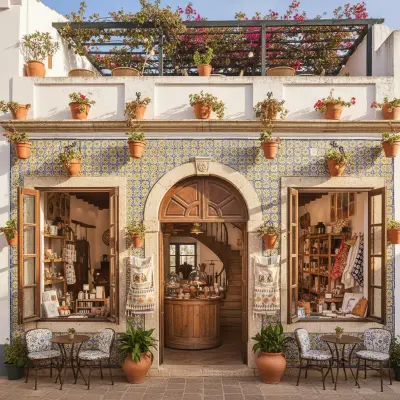
The classic mistake is to roll into Lagos starving at eight and sit down at the first place with a free table. Do the opposite. Start early, around six, and take your first steps in the historic centre, around Rua 25 de Abril and the streets that climb away from it. Before you drink anything, it is worth wandering through the traditional shops of Lagos, clustered in this web of narrow lanes. It is not just sightseeing: this is where you understand what the region actually produces. Tinned fish from Portimao, salt from Castro Marim, mountain honey, almond and fig sweets. Buy something to take home if you like, but mostly train your eye for what you will want to order later at the table.
If it is your first time in town and you want to understand why each quarter has its own gastronomic character, I would read our Lagos neighbourhood guide first. It genuinely helps to know whether you are down by the riverfront, where the fresh fish lives, or up in the walled centre, where the oldest taverns hold their ground between the souvenir shops.
Petisco number one: the proper aperitivo
My recommended starting point is Mar d'Estorias. It is one of those places that does a bit of everything: a Portuguese produce shop on the ground floor, a restaurant on the upper levels, and a rooftop terrace with a view that justifies the climb on its own. For the start of the evening, that is exactly what you want: a glass of well-chilled Algarve white, a board of regional cheeses and cured meats, and time to look down over the city as the sun drops. Do not arrive hungry enough to want full dinner here straight away. Treat it for what it is: the opening act. A petisco or two, a glass, and move on.
A word on the wine. The Algarve has been gaining ground as a wine region, and it is worth resisting the reflex to order an Alentejo or a Douro. Ask for a local white, from grapes like Arinto or Siria, or a red made from Negra Mole, the typically Algarvian grape that gives light wines perfect for the heat. If the waiter warns you it is "a bit thin", insist: low in alcohol does not mean low in interest. It is precisely the kind of wine you drink while grazing, without feeling leaden after two glasses.
The heart of the night: the petiscos table
From the shop, drop back down into the centre. This is where the itinerary earns its keep. Eating well in Lagos means ordering lots of small plates and sharing them. There is no correct order, only appetite.
What to order, without fail:
- Amejoas a Bulhao Pato. The test of any kitchen worth its salt. Clams, garlic, coriander, olive oil, white wine, and bread to mop up the sauce. If the sauce does not demand bread, the place is not doing it right.
- Carapaus alimados. A humble, brilliant petisco: boiled horse mackerel, flaked, dressed with oil, vinegar, onion and pepper. Cold, sharp, perfect with white wine.
- Polvo a lagareiro, or simply grilled octopus with smashed potatoes. The Algarve does this better than almost anywhere else in the country.
- Algarve goat's cheese, ideally the soft buttery kind, with pumpkin jam or fig compote.
- Moelas, stewed chicken gizzards, if you find them done well. It is the tavern petisco par excellence, and it separates the serious places from the tourist traps.
The golden rule: order in rounds. Three or four plates, a glass, see how the hunger is going, and order more if you want. Petiscar is not about flooding the table at once, it is about letting dinner unfold slowly. And do not rush the bill. A table of petiscos can easily run two hours without anyone pushing you out, especially outside the August peak.
Up for a glass with a view
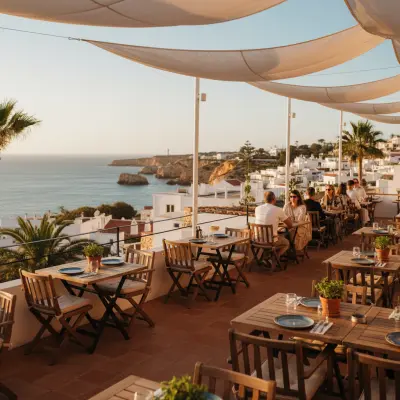
When the main hunger is settled but the night is still young, it is time to change altitude, literally. Luca's Rooftop Restaurant is the place for the second act. If you have already eaten downstairs, go up just for a glass and maybe a dessert or a lighter petisco. The advantage of a rooftop in Lagos is obvious on summer nights: the temperature drops, a breeze runs in off the sea, and the city lights up below you. Book ahead on weekends or in August, because the seats with a view fill first.
This is a good moment to switch your drink. If you have been on wine so far, try a fuller-bodied Negra Mole red, or move to an Algarve dessert wine, like a medronho liqueur, if you want to close the food chapter on something sweet and regional. Medronho, by the way, is the firewater of the Algarve hills and deserves at least a taste: strong, herbaceous, not for beginners, but absolutely local.
The nightcap: serious wine, no rush to sleep
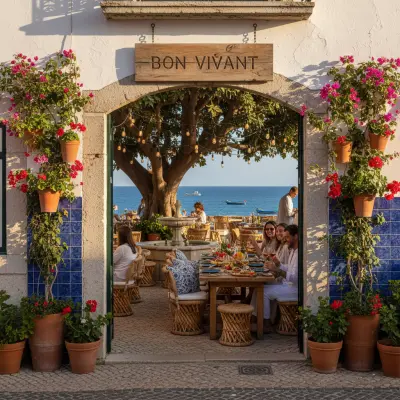
To finish, there is one spot that makes the perfect bridge between dinner and the rest of the night: Bon Vivant. It is the kind of place where you can settle in over a glass, talk late, and stretch the evening out without the racket of a nightclub. Order a final bottle to share, or a glass of something you have not tried yet. If you have stayed on Algarve whites and reds all night, this is the moment to venture out of the region: a structured Douro, a Bairrada sparkling, whatever the house pours that evening.
The charm of Lagos at this hour is that the city does not switch off all at once. The centre stays lively late, especially in summer, and the distance between any of these spots is a few minutes on foot. You can do the whole circuit without ever needing a car, which is half the battle won when you intend to drink without worrying.
How to fill the afternoon before the petiscos
An evening of wine and petiscos tastes better when you come to it with salt on your skin and genuine hunger. So my advice is to fill the afternoon with the sea. The most spectacular option is a boat trip along the caves and coast of Lagos, which takes you out to the rock formations of Ponta da Piedade, impossible to truly appreciate from land. Go late morning or early afternoon, let the sun and wind open your appetite, and get back in time for a shower before the aperitivo.
If you are travelling with kids, or simply want something with more substance, the dolphin watching trip with marine biologists is the alternative I would recommend. It is not the usual adrenaline ride: it comes with proper explanation of the species along the Algarve coast, turning an hour at sea into a small oceanography lesson. It works surprisingly well as a warm-up for a more grown-up night of food and wine, because it tires you out just enough.
What it costs, and when to go
Let's be practical. An evening of petiscos in Lagos, done slowly and with serious wine, generally lands between 35 and 60 euros per person, depending on how high you raise the bar on the glasses and how many stops you make. That is less than a fixed-menu dinner at a tourist restaurant, and infinitely more fun. Individual petiscos usually run from 6 to 14 euros each, house wines by the glass start around 3 to 5 euros, and bottles open at roughly 15 to 20. Always check locally, since prices vary from place to place and season to season.
As for the time of year: avoid the absolute August peak if you can. May, June, September and October are the best months for this city. The terraces are full but not impossible, the nights are warm, and prices have not yet gone through the roof. Reservations are rarely required for grazing, but for the rooftops and for a weekend table it is wise to call ahead. And go early. The best hour to start is exactly the late afternoon, with the light dropping, when the city takes a deep breath before dark.
To take the experience further
If this night of food and wine sparks your curiosity about Algarve food culture beyond the coast, it is worth exploring inland. Our guide on local culture in Faro shows a side of the region that survives far from the beaches, with table traditions worth the trip. And if you are travelling as a family and want to combine food with history, the honest family guide to Silves gives you a half-day escape to the castle and the convent sweets, less than half an hour from Lagos.
In the end, eating well in Lagos is not about finding the perfect restaurant. It is about rhythm. Graze slowly, drink what is local, change spots when the glass runs dry, and let the night decide how far it goes. The city handles the rest.