The Other Side of Lagos: Beyond Ponta da Piedade
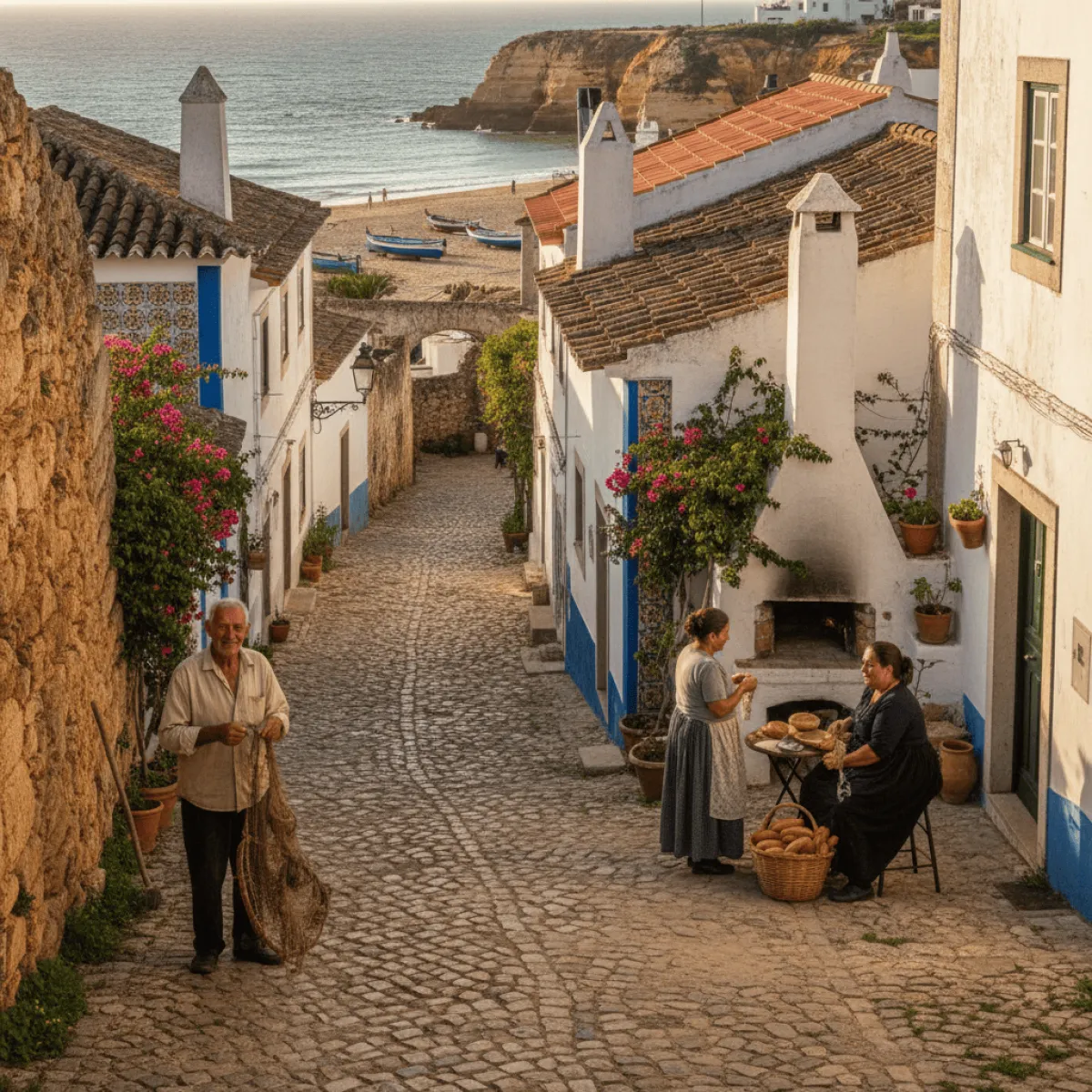
Most visitors do Lagos backwards: they go to Ponta da Piedade, take the photo, and leave convinced they have seen the city. They saw the set. The real Lagos is in the walls at dawn, the shops where the owner still knows you, and the right terrace at the end of the day.
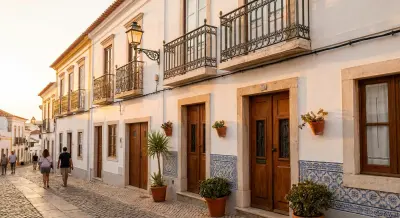
There are two Lagos. The first one wakes up around ten in the morning, when the coaches unload groups at the marina and Rua 25 de Abril fills with people photographing the same tiled sign and buying fridge magnets shaped like sardines. That Lagos is efficient, friendly, and entirely forgettable. The second Lagos wakes up earlier, speaks more quietly, and sits a three-minute walk from the first. That is the one I care about.
Let me be blunt: most visitors do Lagos backwards. They arrive, go to Ponta da Piedade, take the photo, eat dinner somewhere with a menu in five languages, and leave convinced they have seen the city. They saw the set. The city is somewhere else, in the streets where the signs have faded and the owner still knows his customers by name.
Start with what nobody photographs
The city walls are the best place to understand Lagos, and almost nobody walks them first thing in the morning. Climb up near the Forte da Ponta da Bandeira, the small seventeenth-century fort by the water, and walk along the ramparts while the sun is still low. From here you see the geographic truth of Lagos: a fishing town that learned to live off tourists but never stopped smelling of salt and freshly landed fish.
Then walk down to the Mercado dos Escravos on Praça do Infante. It is a small building, easy to miss, but it was here, in 1444, that the first public sale of enslaved Africans in Europe took place. Lagos does not hide this history, and good for it. It is a necessary counterweight to the postcard version of the city of the Discoveries. It takes twenty minutes to visit and stays with you far longer.
A few steps away is the Church of Santo António, with a gilded woodwork interior so exuberant it borders on indecent. From the outside, nothing. Inside, one of the finest baroque interiors in the Algarve. That contrast defines the real Lagos: the best is always on the inside, away from the facade.
Where locals still shop
Mass tourism has a predictable effect: it pushes everyday commerce into the side streets. That is exactly why it is worth seeking out the traditional shops of Lagos, the ones that survived the invasion of ice-cream franchises and beach-towel outlets. Haberdashers, old grocers, hardware stores that still sell things by the metre and by weight. This is not cheap nostalgia: it is where you understand what the town was before it discovered it could live off August.
If you want to do this properly, give a morning to the historic centre away from Rua 25 de Abril. Walk up Rua da Barroca, get lost in the alleys behind the church, and leave the GPS in your pocket. For a more detailed orientation by area, our Lagos neighborhood guide shows how each corner of the city has its own character, from the tight old quarter to the more open riverfront.
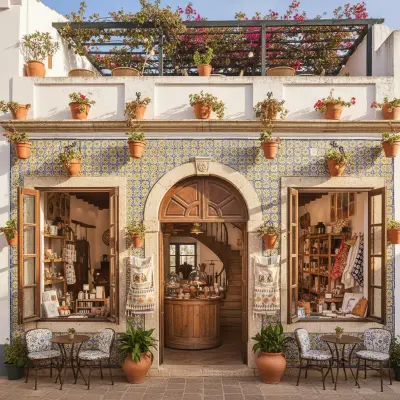
When you need a break, skip the terraces on the main square. Go instead to Mar d'Estórias, a space that combines shop, cafe, and rooftop in a restored building. It is curated, it is careful, and it sells genuine Portuguese products instead of trinkets. Climb to the terrace, order a coffee or a glass of Algarve wine, and look out over the rooftops of Lagos from an angle most visitors never find.
Eat without falling into the trap
Golden rule in Lagos: the closer to the marina and the bigger the menu, the worse the food. The restaurants with photos of the dishes and waiters calling you in from the door exist to feed people who are never coming back. You are coming back, so eat better.
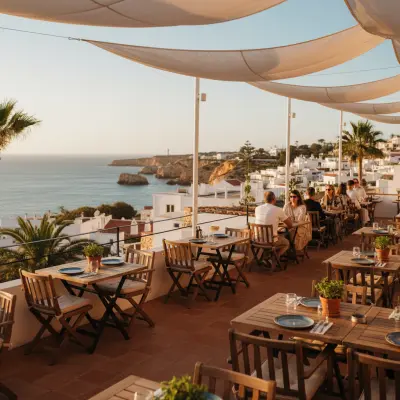
For dinner with a view, Luca's Rooftop Restaurant does what few terrace places manage: the food lives up to the setting. Book a table for sunset, climb up, and understand why it is worth paying a little more for a view that is not just a backdrop. Go hungry and unhurried.
Fish in Lagos is the obvious thing that many people get wrong. The rule is simple: order what was on the quay that morning. Grilled horse mackerel, sea bream, sea bass, octopus. Refuse complicated sauces. A good grilled Algarve fish needs salt, olive oil, and nothing else. If the menu has fifty dishes, distrust all of them.
The night that is worth it
Lagos has a reputation as the Algarve's party capital, and it is true there is a whole zone of bars where northern European youth try to forget the cold back home. That is not what I recommend. The good Lagos night is more discreet.
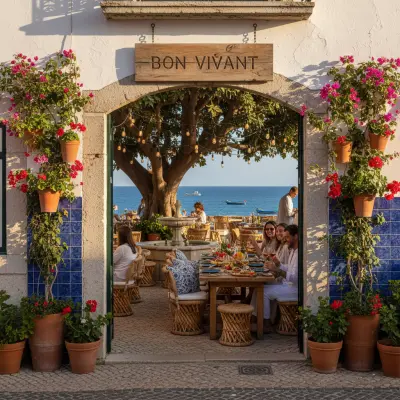
For a well-made drink in a place where you can actually hold a conversation, go to Bon Vivant. It is a bar across several floors with a rooftop terrace that, at the end of the afternoon, offers one of the best angles over the old town. Start your evening early here, while the light is still golden, before the crowd arrives. A good cocktail, a chair on the terrace, and the murmur of the streets below. That is how you drink in Lagos without needing earplugs.
The sea, but through the right door
You cannot talk about Lagos and pretend the sea does not exist. Ponta da Piedade, with its golden cliffs and caves, is genuinely spectacular. The problem is not the place, it is the way most people visit it: at three in the afternoon, in the peak heat, crammed onto a full boat.
Do the opposite. Book a boat trip along the caves and coast of Lagos first thing in the morning, when the sea is glassy and the light enters the caves instead of beating down from above. Prices vary by boat type, but a cave trip typically runs around 20 to 30 euros per person; check locally and favour the smaller boats, which reach where the big ones cannot.
And if you have a free half-morning and genuinely love the sea, there is an experience few tourists choose: dolphin watching with marine biologists. The difference from an ordinary trip is that here someone knows what they are talking about, explains the animals' behaviour, and does not chase the dolphins for the photo. It is more educational, more responsible, and frankly more memorable.
Use Lagos as a base, not a single destination
The hurried visitor's mistake is treating Lagos as an island. The town is well placed to explore an Algarve almost nobody sees between the beach months. Thirty minutes by car is Silves, the old Moorish capital with its red sandstone castle, and if you are travelling with family it is worth reading our honest family guide to Silves before loading everyone into the car.
Further east, Faro remains an unjustly ignored city, seen by most only as the airport they land at. That is a mistake. To understand the more authentic side of the region, our guide to local culture in Faro shows how the real Algarve lives far from the beach umbrellas.
How to do this right
A practical word on timing: avoid August if you can. Lagos in August is a saturated version of itself, with inflated prices and queues for everything. May, June, September, and early October offer the best balance: sea warm enough, days long, and the town still able to breathe.
On getting there and getting around: the Lagos train connects to the Algarve line and is an uncomplicated way to arrive without a car. Inside the town, forget driving. The historic centre is entirely walkable, and hunting for parking in high season is a guaranteed way to ruin your day. Leave the car at the edge of town and walk.
The summary is simple. The Lagos of the photographs lasts an afternoon. The other Lagos, the one of the walls at dawn, the shops where the owner still talks to you, the simple grilled fish and the right terrace at the end of the day, that one stays with you. Hurried visitors never find it. You, now, have no excuse.