Local Culture in Faro: Traditions and Experiences of the Authentic Algarve
Discover the cultural richness of Faro, the Algarve's capital, where centuries-old traditions blend with a vibrant arts scene. From popular festivals to gastronomy, explore the most genuine side of this southern Portuguese city.
Faro: The Cultural Heart of the Algarve
When people think of the Algarve, golden beaches and tourist resorts usually come to mind first. But Faro, the district capital, holds a deep cultural identity that reaches far beyond seaside tourism. This is a city where Moorish heritage intertwines with Portuguese tradition, creating a unique cultural tapestry in the south of the country.
Walking through Faro's Old Town is like leafing through an open-air history book. The medieval walls, built upon Roman and Arab foundations, embrace a labyrinth of cobblestone streets where every corner tells a story. The Cathedral, constructed in the 13th century on the remains of a mosque, is perhaps the most eloquent symbol of this fusion of civilizations.
Festivals and Popular Traditions
Faro's culture comes alive through its traditional festivals. The Ria Formosa Festival, celebrating the lagoon ecosystem that embraces the city, is one of the highlights of the cultural calendar. Over several days, the city fills with music, local gastronomy, and activities that honor the ancestral relationship between Faro's people and the sea.
The popular saints' festivals in June transform the old neighborhoods into an explosion of color and joy. Street parties featuring grilled sardines, fragrant basil plants, and popular marches reveal a Faro that keeps the traditions of the Algarvian people very much alive. The Festival of Nossa Senhora do Carmo in July is another landmark event, with solemn processions and traditional fairs.
Algarvian Carnival
The Carnival in nearby Loulé is the oldest and most famous in the Algarve, but Faro also celebrates the season with its own parades and festivities that reflect the irreverent and festive spirit of the region.
Gastronomy: The Soul of Faro's Culture
Faro's cuisine is an authentic expression of its culture. Flavors of the sea dominate the table, with dishes that have become true local institutions:
- Seafood cataplana, the Algarve's iconic dish, cooked in a traditional copper clam-shaped pot
- Conquilhas à algarvia, clams sautéed with garlic, coriander, and olive oil
- Xarém with clams, a cornmeal porridge typical of the region, served with shellfish
- Dom Rodrigo and morgado, convent sweets made from almonds, eggs, and egg threads
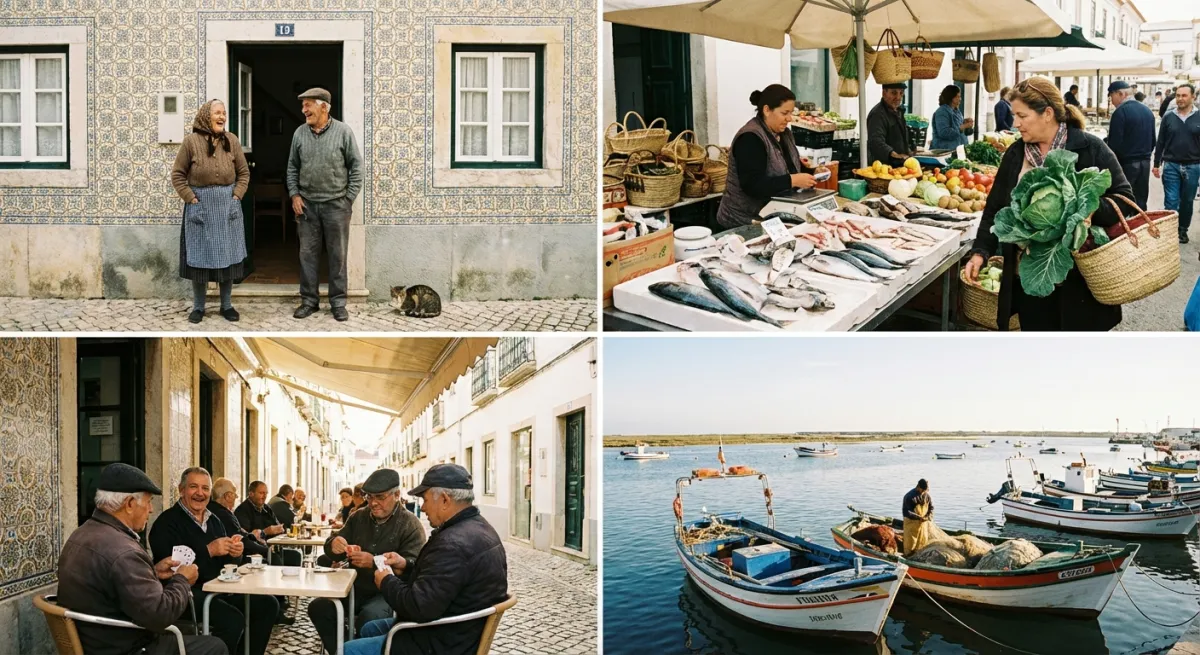
The municipal markets are the best place to feel the city's gastronomic pulse. The recently renovated Faro Municipal Market is a meeting point where fishermen, farmers, and locals keep the tradition of neighborhood commerce alive.
Art and Cultural Expression
Faro has been steadily establishing itself as the cultural hub of southern Portugal. The Teatro Lethes, one of the oldest theaters in Portugal and housed in a former Jesuit college, regularly stages theater, music, and dance performances. The more modern Teatro das Figuras complements the cultural offering with a diverse program throughout the year.
The local art scene is surprisingly rich. Independent galleries, artist studios, and urban art spaces dot the city, particularly in the downtown area. Street art has gained significant presence in recent years, with murals transforming neglected facades into open-air canvases that tell stories of local life and history.
Museums and Heritage
The Faro Municipal Museum, housed in the former Convent of Nossa Senhora da Assunção, holds a collection spanning the region's history from prehistory to the present day. The Chapel of Bones at the Carmo Church is one of the city's most visited and striking monuments, a solemn reminder of life's transience, constructed entirely from the bones of Carmelite monks.
The Ria Formosa as Cultural Identity
No discussion of Faro's culture would be complete without mentioning the Ria Formosa. This natural park has shaped the way of life of local communities for centuries. Artisanal fishing, shellfish harvesting, and salt production are activities that still define the identity of many of Faro's residents today. The barrier islands, such as Ilha Deserta and Ilha de Faro, are spaces where nature and culture meet in a precious balance.
Faro is ultimately a city that rewards those who seek to look beyond the surface. Its local culture is a treasure made of layers, Roman, Arab, medieval, and contemporary, waiting to be discovered by curious and attentive travelers willing to explore the authentic Algarve.
