Lagos by the Calendar: The Festivals Worth Planning Around
Carnival is in February, the best weather is in May and October, and the unmissable party is Banho 29, when at midnight on August 28 the whole town walks into the sea. An honest Lagos calendar to dodge the queues and catch the right festivals.
There are two versions of Lagos. There is the Lagos sold in brochures, with Ponta da Piedade at sunset and eight-euro beers on Rua 25 de Abril in August. And there is the Lagos that appears when the town decides to celebrate on its own terms, without asking tourism for permission. The second one is far more interesting, and it almost always happens on dates nobody circles on the calendar before arriving.
The problem is simple: most people come to Lagos in July and August, pay triple for everything, and miss precisely the festivals that justify getting to know this town beyond the sea caves. This guide organizes the Lagos year around what actually matters, with the stubbornness of someone who would rather spend a rainy Carnival night out than fight for towel space on an August beach.
February and March: a Carnival that doesn't pretend to be Rio
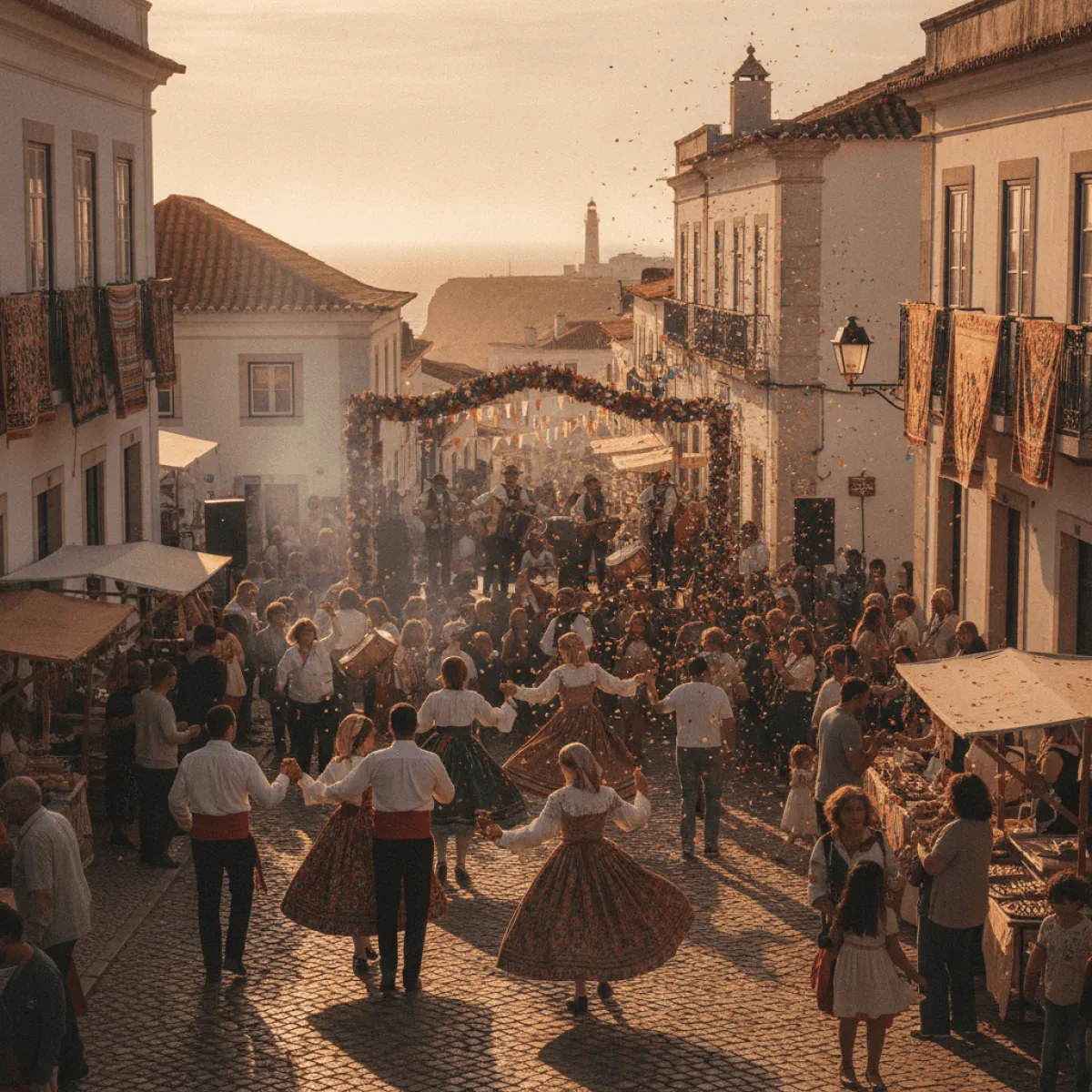
Let's start at the beginning of the festive calendar. The Lagos Carnival has neither the megalomania of Loulé nor the fame of Torres Vedras, and that is exactly why it survives with some dignity. It is a neighborhood Carnival, with floats built by local clubs, schools and groups who all know each other, usually parading along Avenida dos Descobrimentos and through the old town streets.
Go on Sunday or Shrove Tuesday, in the late afternoon, when the light drops and families spill into the street. Kids come in costume, percussion bands play, and the tone is more local satire than televised spectacle. It's cold, it often rains, and that's part of it. To understand who's who in the town's associations and how the old town is laid out, it's worth reading our Lagos neighborhood guide first, because Carnival is essentially the neighborhoods taking to the street.
Confirm the dates locally each year, since they shift with Easter, but expect late February or early March. Entry is free. After the parade, the old town fills up and the bars heave.
Spring: the season tourists ignore (and shouldn't)
Between March and May, Lagos is at its best. The terraces reopen, the sea becomes swimmable for the brave, and prices haven't gone mad yet. It's the best time to do the things that turn into queues in August.
The boat trip along the caves and coast of Lagos in May is a completely different experience from August: fewer boats, calmer morning sea, and cleaner light for photographing Ponta da Piedade. Do it early, before 10am, before the afternoon wind. For the same reason, spring is peak dolphin season: the dolphin watching trip with marine biologists stands a better chance of success when the sea is flat and the pods sit higher in the water. It's not a theme park, these are wild animals, so nobody can promise you anything, but spring plays in your favor.
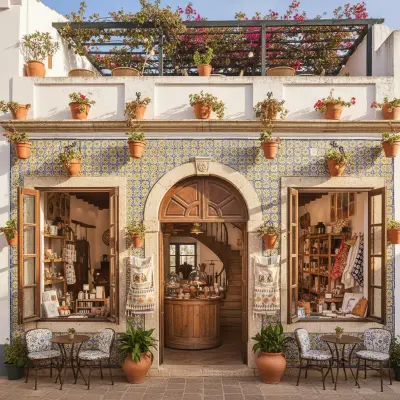
If spring hands you a rainy day, and it almost always hands you at least one, that's the day to step into the traditional shops of Lagos with time on your hands. It's not the same thing doing it sweating in August dodging the sun; it's another thing entirely on a cool April morning, conversation unhurried, buying tinned fish and ceramics from people who actually know them.
June: the Santos Populares, Algarve style
June brings the Santos Populares, and here honesty is in order: the Santo António and São João street parties in Lagos don't have the scale of Lisbon or Porto. But they have grilled sardines in the street, basil plants, dancing, and the enormous advantage of not being in the middle of a million people. The whole old town smells of sardines and roasted peppers, and the local clubs set up stalls with cheap wine by the glass.
It's also the month the town starts firing up its engine for summer. To understand this more communal side of the Algarve, the one so often buried under tourism, I recommend reading our essay on local culture in Faro and the authentic Algarve: much of what it describes applies to Lagos too, because the Santos Populares are precisely the moment the region remembers it exists beyond the beaches.
Where to end a June night
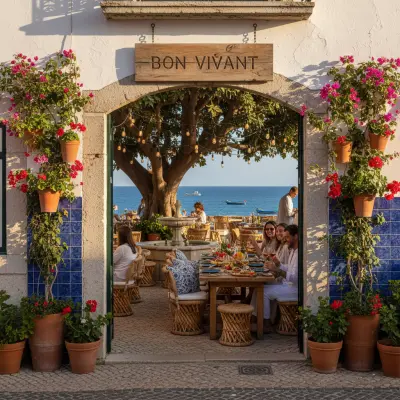
After the sardines, the natural move is downhill for a drink. Bon Vivant is the old-town nightlife classic, with several floors and a terrace, and on party nights it fills early. If you prefer something calmer and more conversational, Mar d'Estórias works as shop, café and bar all at once, and its terrace is one of the most civilized spots in town for a glass of Algarve wine without music shouting over you.
August: Banho 29, the best party in Lagos
If there is one single date to mark on the calendar, this is it. On the night of August 28 into 29, Lagos celebrates Banho 29, an old tradition tied to the beheading of Saint John in which, at midnight, the town heads down to Meia Praia and the riverfront to bathe in the sea. Tradition says the bath heals and protects you for the whole year.
In practice, it's a night when the entire town, locals and visitors alike, goes to the water's edge. There are stalls, music, people sitting on the sand until dawn, and midnight with crowds walking into the water fully clothed. It isn't a festival designed for tourists, it's a festival that has happened for generations and to which tourists have happily been invited. Go, bring a towel, don't expect much organization, and let the night carry you.
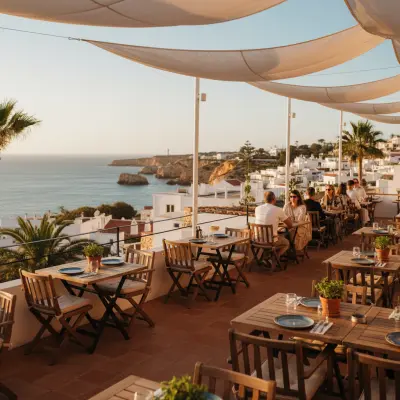
Before the bath, dinner with a view makes complete sense. Luca's Rooftop Restaurant gives you Lagos from above and is a good launch point for a night that will end wet and laughing. Book well ahead around August 29, because the town is full and the best terraces sell out.
Summer: the Discoveries Festival and an uncomfortable memory
Lagos has a complicated, fascinating relationship with its past. Caravels set sail from here, and one of Europe's first slave markets operated here too, now a memorial in the old square. The Discoveries Festival, usually held in summer along the riverfront, is a historical reenactment with a period market, artisans, early music and staged scenes.
It's fun for families and well done from a staging point of view, but it's best approached with a critical eye. The most honest part of Lagos is precisely the part that doesn't romanticize this history, and visiting the memorial and the old Slave Market is as much a part of understanding the town as the festival itself. Confirm dates and programming locally, since they vary year to year and it doesn't always happen.
Lagos with kids in summer
If you're traveling with children, the Discoveries Festival is a good day out, and the reenactment usually goes down well. To extend the family program to other parts of the Algarve without falling into the usual traps, our honest family guide to Silves is the obvious companion: Silves is half an hour away and has a castle, a river and real shade, which in peak August you'll be grateful for.
Autumn: the secret season
September and October are, in my blunt opinion, the best time to visit Lagos. The sea is still warm from summer, the crowds have gone, prices drop, and the town breathes at its own pace again. The big festivals are over, but this is when everyday Lagos is at its finest: market in the morning, lunch without a queue, late afternoon on the cliffs without elbows in your ribs.
It's also the best time to repeat the cave boat trip with a calm sea and golden light, or to finally browse the old-town shops unhurried. October has clear-sky days that feel like a gift. Take them.
December: Christmas and New Year by the river
Christmas in Lagos is understated, and that's what makes it lovely. The old town fills with lights, there's a Christmas market by the riverfront in some years, and the town takes on the air of a small village that vanishes completely in August. It's the time to buy gifts that mean something at the traditional shops rather than at some shopping centre.
New Year's Eve usually brings fireworks over the marina and the river, with crowds gathered along the riverfront. It doesn't have the megalomania of other cities, but it has the advantage that you can actually walk around and see the sea at the same time. Eat early, find a spot facing the water, and stay put.
How to play the calendar to your advantage
The lesson is simple and unpopular: the best festivals in Lagos don't coincide with high season. Carnival is in February, Banho 29 is at the end of August once the worst crush has passed, and the best weather is in May, September and October. If you can, avoid July and the first half of August, when you pay more to enjoy less.
- Carnival: February or March, free, go in the late afternoon.
- Santos Populares: June, sardines in the street, end the night at Bon Vivant or Mar d'Estórias.
- Banho 29: night of August 28 into 29, the unmissable one, dine first at Luca's.
- Discoveries Festival: summer, confirm dates, good with kids.
- Christmas and New Year: December, low-key and crowd-free, down by the river.
Always confirm exact dates with Lagos town hall or the tourist office before you travel, because the calendars change from one year to the next. But the principle holds: come when the town celebrates for itself and not for you, and bring a towel in late August. You're going to need it.