Guimarães with Kids: The Honest Family Guide
Guimarães is not a theme park: it is a UNESCO city, a castle with seven towers, and a cable car that can rescue your afternoon. The honest guide to visiting with kids, without empty promises or 2:30pm meltdowns.
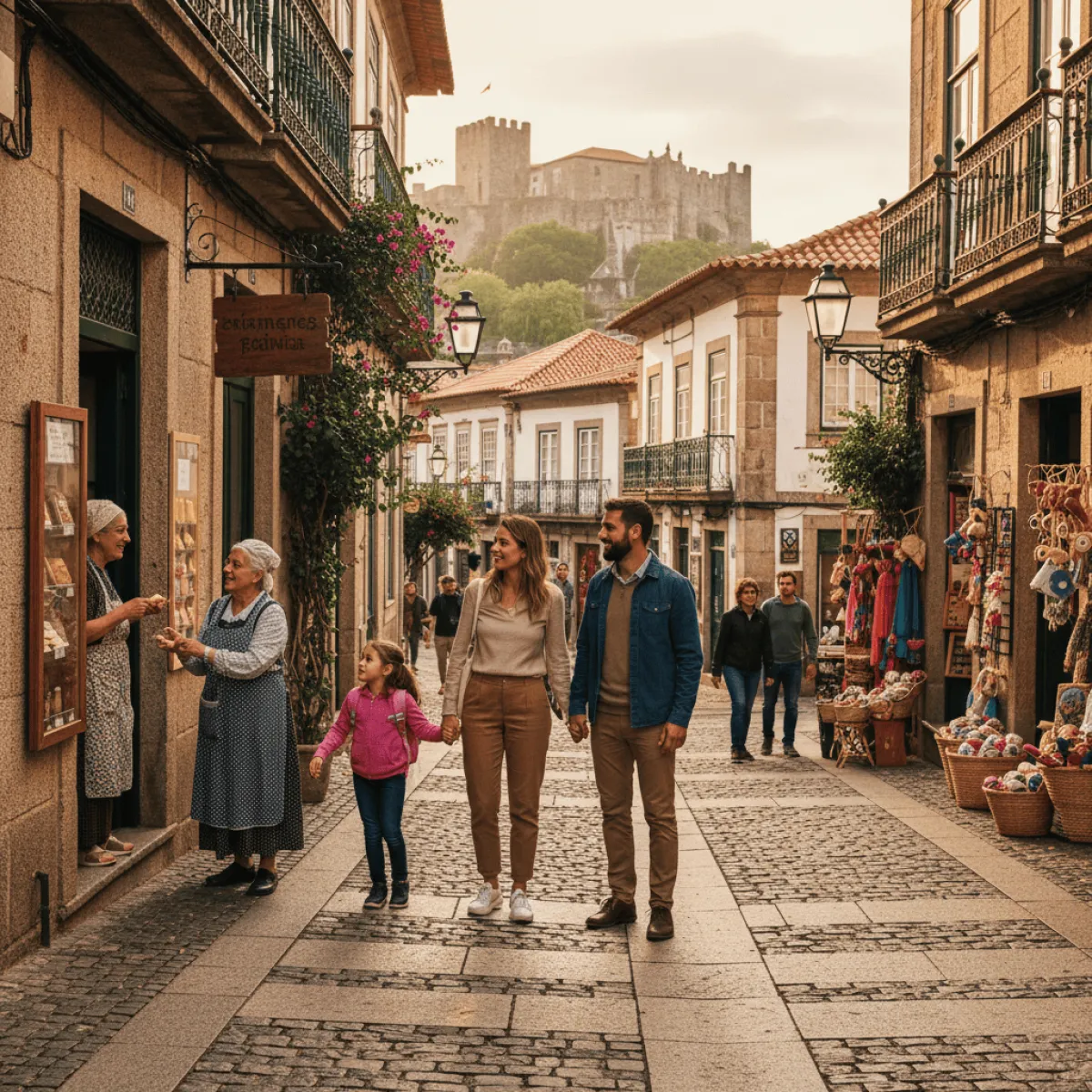
Let's get this straight before we start: Guimarães is not a theme park. There is no giant aquarium, no roller coaster, no mascot hugging kids at the gate. What it has is a small, walkable city, a real castle where a country was born, and medieval streets where children can run without anyone caring. For some parents, that is worth more than any amusement park. For others, by the third "can we go home" before lunch, it will feel like punishment. This guide is for the first group, and tries to convert the second.
I have been bringing children here since they were babies in backpacks. They are now six and nine, and they know who Afonso Henriques was, though their version involves dragons. After a dozen visits, I have learned that Guimarães with kids works if you respect three simple rules: start early, walk a little at a time, and never, ever promise an ice cream you cannot deliver.
The 9am rule: arrive before the buses
The historic centre of Guimarães has been a UNESCO World Heritage Site since 2001, which means two things: it is beautiful, and it is crawling with tour buses from 10:30am onward. If you arrive at Largo da Oliveira with kids at 9am, you will have the city almost to yourself. The cobblestones are clean, the café terraces are setting up, and there is space for a five-year-old to ride an imaginary motorcycle through Praça de São Tiago without colliding with anyone.
Start with breakfast at a pastelaria in the centre, sitting down, no rush. Order toasted sandwiches, fresh juice, and, if the hour allows, a slice of toucinho do céu to share. The kids will eye it suspiciously. Insist. They will ask for more.
From there, the plan is simple: go up to the castle while legs are fresh, come down to the centre in time for lunch, nap or pool in the afternoon, and have dinner early. Don't try to do more. Guimarães rewards people who slow down.
The castle: how to sell history to someone who only wants dragons
The Castle of Guimarães is, for adults, the place where Portugal was born in 1128. For a six-year-old, it is a fortress with seven towers and walls you can climb, arrow slits you can peer through, and imaginary boiling oil you can pour on enemies below. Work with what you have.
The ticket costs a few euros and children under twelve usually enter for free, but check locally because prices change. Allow a full hour. There are walls to walk, narrow staircases the kids love, and views over the city that shut them up for a few seconds, which already counts as victory.
A few metres away is the Paço dos Duques de Bragança, a fifteenth-century palace restored in the 1940s with that Salazar-era enthusiasm that is now debated, but, let's face it, it has armour. It has tapestries of battles. It has a vast kitchen with tall chimneys. For a kid, it is Hogwarts without spells. Combine the ticket with the castle and the Chapel of São Miguel, and it is cheaper.
Practical tip: bring water, keep a snack in the backpack, and use the toilet before going in. Bathroom infrastructure inside twelfth-century monuments is exactly what you would expect.
The Penha cable car: the best investment of the day
If there is one thing that makes Guimarães work with kids, it is the Penha cable car. It climbs four hundred metres in seven minutes up to the Sanctuary of Penha, with views that are hard to describe and harder to film. For the kids, it is an attraction in itself. For the parents, it is the most civilised way to reach a huge pine forest where you can finally let a child loose.
The return ticket runs around six to eight euros for adults, less for children, and operates depending on the season, usually from 10am to 6pm or 7pm. Check before driving up to the lower station, especially in winter and on windy days when it can be closed.
Up at the top there are short trails, dramatic boulders for supervised climbing, the sanctuary, a picnic area, and simple cafés. Bring a blanket, sandwiches, and fruit. Stay two hours. The kids will sleep in the car all the way home, I promise.
Where to have lunch without a tantrum (theirs, or yours)
Lunching with kids in Guimarães is easy if you accept two truths: nobody is going to want rojões, and the patience of centre restaurants is not infinite. The solutions fall into three categories:
- Traditional tascas, where waiters genuinely like children and where you can order a portion of fries with eggs and a half-portion of bacalhau à Braga for the whole table. Look around Largo do Toural or Rua de Santa Maria. Lunch for a family of four rarely tops sixty euros.
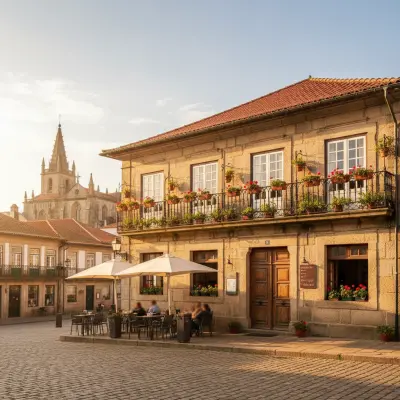
- Terraces at Largo da Oliveira, more expensive, more touristy, but with a view of the church and space for a child to get up three times. Pay the scenery premium without guilt.
- Outside the centre, in areas like Mesão Frio or the road up to Penha, where there are grills with big terraces, charcoal chicken, and a playground next door. It is what every family needs on a Sunday.
One tip: order the couvert with moderation. Kids fill up on bread and olives and then don't touch the main course.
The tricky afternoon: what to do when the castle is done
This is when many parents fail. 2:30pm in Guimarães with a tired child is dangerous territory. You have three honest options.
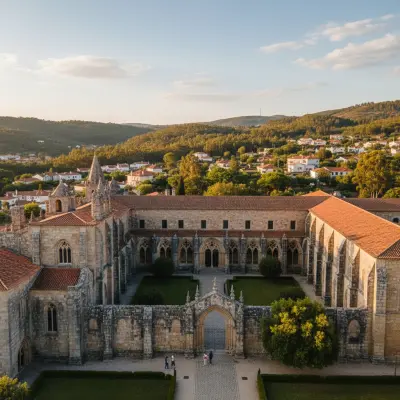
First: head back to the hotel for a nap. No shame. Guimarães is not going anywhere. If you booked the Hotel de Guimarães, you are a five-minute walk from the centre with the right level of comfort for a family. If you went all in and chose the Pousada Mosteiro de Guimarães, in the former Santa Marinha da Costa monastery, you are in the most beautiful spot in the city for a nap with a view, though you will need a taxi to get up there. The Hotel da Oliveira, in the heart of the historic centre, is practical but rooms can be tight for four people, so check the room type before booking.
Second: visit the Museu Alberto Sampaio. It is installed in the old cloister of the Colegiada and holds medieval goldsmith work, paintings, and the tunic King João I reportedly wore at Aljubarrota. For an adult, it is magnificent. For a curious eight-year-old, it is a solid half hour if you narrate as you walk. For a four-year-old, forget it.
Third, and my favourite: Parque da Cidade. It has a pond with ducks, a decent playground, space to run, and one advantage few places offer: it asks nothing cultural of the child. It is just a park. Parents sit on a bench, scroll their phones without guilt, and nobody melts down.
Dinner and the rooftop secret
For dinner, the advice is the same as lunch: early. In Guimarães, 7:30pm is early. 8pm is normal. 9pm with tired kids is the recipe for disaster. Book a table, even at small places. The city is busier than it looks.
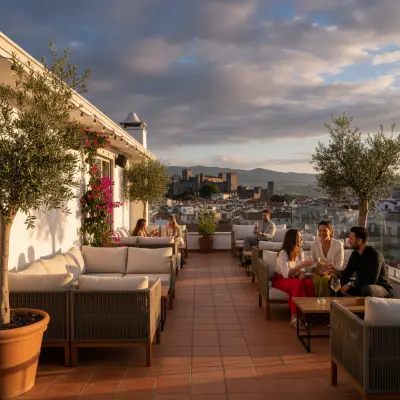
For a night without kids, or with older ones who can sit through a drink, it is worth going up to the Rooftop Bar at Eurostars Santa Luzia at sunset. The view over the city, with the castle lit up on one side and the mountains in the distance, is the best panorama Guimarães offers. Cocktails are not cheap, but you pay for the setting. With small children, do this before dinner, stay thirty minutes, and head down to eat.
What if you stay more than a day?
A weekend in Guimarães with kids works better than a single day. The second day lets you breathe, sleep properly, and do things that don't fit on the first.
If your kids are over eight, it is worth spending a morning at Casa de Sezim, a vinho verde estate a few kilometres from the city. Parents taste wine, kids roam the property, see the vineyards, and there are almost always dogs and chickens. Tastings need to be booked in advance.
For the second day, consider a short escape. Braga is twenty-five minutes away by car and has a completely different energy: a young city with one of the country's largest universities, which works very well with teenagers. To prepare, read our guide to Braga. If you happen to be visiting around Easter, Holy Week in Braga is one of the most impressive on the Iberian Peninsula, though it requires a fair amount of explaining about processions and penitents.
If you are based in Porto and Guimarães is a day trip, or if you want more ideas for the region, our guide to the best day trips from Porto has options tested with families.
What not to do
A few things I see parents try that almost never work:
- Visit everything in one day. Castle, Palace, Museu Alberto Sampaio, Penha, Citânia de Briteiros. Possible in theory. In practice, by late afternoon nobody can take it any more and the trip turns into a string of arguments.
- Michelin restaurants with small children. Guimarães has good fine dining. Don't take it to someone still throwing fries. Pay the babysitter, go slowly.
- Climb up to the castle in peak summer heat. 2pm in August is a furnace. Do it at 9am or 5pm.
- Promise things you can't deliver. Don't say "later we'll ride the cable car" without checking it's running. The betrayal is recorded forever.
Honest costs for a weekend
A family of four, for a two-night weekend in Guimarães, outside high season, is looking at something like:
- Mid-range three or four-star hotel in the centre: one hundred and twenty to two hundred euros a night.
- Meals: eighty to one hundred and fifty euros a day, depending on where you have lunch and dinner.
- Combined tickets for Castle, Palace and Museu Alberto Sampaio: fifteen to twenty euros for adults, free or token for children.
- Cable car return: twenty to twenty-five euros for the family.
- Coffees, ice creams, water, assorted snacks: thirty euros a day, minimum, let's be realistic.
All in, count on seven hundred to one thousand euros for the weekend without major excess. If you do Casa de Sezim or a special restaurant, add to the bill.
For travellers coming from abroad
If you are visiting from outside the country and planning a longer trip through northern Portugal, Guimarães is an excellent second stop after Porto. Half an hour by train, with a central station that serves the city. You don't need a car if you stay in the centre. For more ambitious experiences, like a whale watching trip in the Azores, you will need to plan separately, but it is worth filing for a future trip: few things compete with the effect of a blue whale on the horizon for a child.
Conclusion, without big words
Guimarães with kids is not an adrenaline trip. It is a trip of slow discovery, where the castle becomes an imaginary fortress, the cable car becomes a moderate roller coaster, and the ice cream at Largo da Oliveira becomes the final reward. If you accept the rhythm of the city and adjust your expectations to what it is and not to what you wish it were, you will leave with photos that matter and with kids who, ten years from now, will still remember the day they climbed the walls where, according to their dad, Portugal was born.
And that, let's be honest, is not bad for a weekend.