Whale Watching in Ponta Delgada: The Blue Whale Peak Season
As mid-March arrives in Ponta Delgada, the Atlantic becomes a prime stage for the blue whale migration. We joined Futurismo to find out why this narrow spring window is the absolute pinnacle of marine life in the Azores.
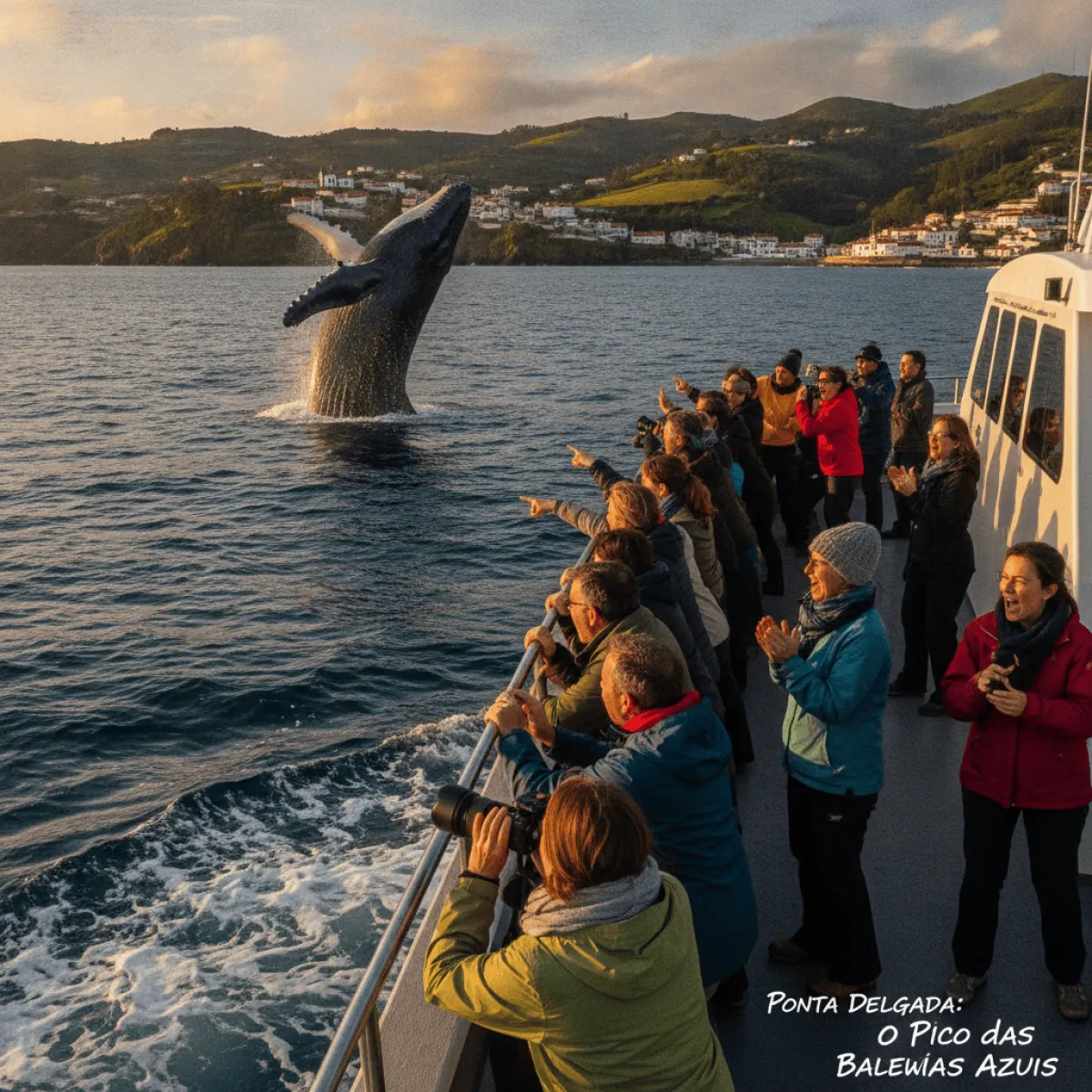
The Atlantic Awakening: March in the Azores
As of March 12, 2026, the sea breeze in Ponta Delgada carries a specific charge. If you’ve spent the last few days immersed in the medieval weight of the mainland, perhaps following A Guide to Guimarães, the transition to the vast, volatile Atlantic is a jolt to the system. We are currently at the very beginning of the peak season for baleen whales. This is the moment when the giants of the deep, Blue Whales, Fin Whales, and Sei Whales, begin their epic migration through the nutrient-dense waters surrounding São Miguel island.
While the Azores offer year-round sightings of resident Sperm Whales, the spring window (March to May) is the only time you can witness the sheer scale of the Blue Whale. It’s an experience that feels less like a tourist activity and more like a privilege. The ocean is waking up, and the diversity of marine life is at its annual zenith.
Futurismo: The Expert Choice in Ponta Delgada
In a field where everyone claims to be the best, Futurismo Azores Whale Watching stands out for their commitment to marine biology and ethical standards. Based in the Portas do Mar marina in Ponta Delgada, they operate a sophisticated network of spotters and scientists. Before you even step onto the boat, you’re given a thorough briefing. This isn’t just about safety; it’s about understanding the complex ecosystem you’re about to enter.
The secret weapon here is the "Vigia" system. These land-based lookouts, perched on coastal cliffs, use high-powered binoculars to scan the horizon for the tell-tale "blow" of a whale. They communicate directly with the skippers, ensuring that boats don't waste time wandering aimlessly. It’s a centuries-old technique evolved from hunting to conservation, and it works with surgical precision. Futurismo offers a choice between the stability of large catamarans and the adrenaline-fueled proximity of RIB (Rigid Inflatable Boat) speedboats. My advice? Take the RIB for the connection to the water, but the catamaran for photography.
Encountering the Blue Whale
The moment the engines cut and you’re left bobbing in the Atlantic swell is when the magic happens. In March, you’re looking for a spout of water that can reach nearly 30 feet in height. When a Blue Whale surfaces, the first thing that strikes you isn’t its length, though 100 feet is hard to fathom, but its color. Beneath the surface, the animal glows with a luminous, electric blue that seems to defy the laws of natural lighting.
Hearing the massive exhalation of a 150-ton creature in the middle of the ocean is a sound that stays with you. Futurismo’s biologists are excellent at identifying individual whales by their dorsal fins and fluke patterns. During the peak season, you might also see Fin Whales, the "greyhounds of the sea", known for their streamlined profiles and incredible speed. The respect for the animals is paramount; the 50-meter distance rule is strictly enforced, and you’ll never see a Futurismo boat crowding or chasing a pod.
Resident Species and Spring Visitors
While the migratory giants are the main draw this month, the resident Sperm Whales are always part of the show. They are the true locals of the Azorean trenches. You’re also likely to be intercepted by hundreds of dolphins. In March, Common Dolphins and Bottlenose Dolphins are particularly active, often leaping alongside the boats for miles. If you’ve recently walked the granite streets of The Granite Foundation of Portugal’s history, this liquid landscape provides the ultimate architectural contrast.
Insider Tips: How to Master Your Marine Adventure
The morning session is undoubtedly better, there are usually fewer people, and the morning light on the water is significantly better for spotting the turquoise glow of a Blue Whale's body. Also, sea conditions tend to be calmer before the afternoon winds pick up. If you're prone to seasickness, don't leave it to chance. Take your medication at least an hour before departure; the Atlantic swell is legendary for its rolling power.
Clothing is critical. Even if it feels like a warm spring day in Ponta Delgada, the wind chill on a moving boat in the open ocean is intense. Dress in layers. A high-quality waterproof windbreaker is your best friend. Most importantly, bring a pair of binoculars if you have them, while the boats get close, seeing the detail of the whale’s skin and the barnacles on its back through lenses is a game-changer.
Booking and Practicalities
- Provider Name: Futurismo Azores Whale Watching
- Pricing: Approximately €65.00 for adults, €32.50 for children (confirm current rates on their site).
- Duration: 3 hours of ocean time.
- Meeting Point: Futurismo activity center, Portas do Mar, Ponta Delgada, São Miguel.
- Website: www.futurismo.pt
- Contact: +351 296 284 414 | info@futurismo.pt
Final Thoughts: From History to the Deep Blue
For those who have already conquered the historical landmarks mentioned in Guimarães: A Proper Guide to Portugal's Original City, the Azores represent the final frontier of the Portuguese experience. The contrast between the ancient granite of the north and the volcanic, deep-blue energy of the Atlantic is what makes this country so endlessly fascinating. Seeing a whale in the wild is a humbling experience that puts everything else into perspective, don't miss the March window.