Guimarães: A Proper Guide to Portugal's Original City
Guimarães is more than Portugal's birthplace, it's a living city where medieval walls and university students share the same squares without ceremony. From the rojões at Solar do Arco to the Penha cable car, from artisan knife workshops to the Festas Gualterianas, this is the guide for those ready to go beyond the inscription on the wall.
First Things First: What Guimarães Actually Is
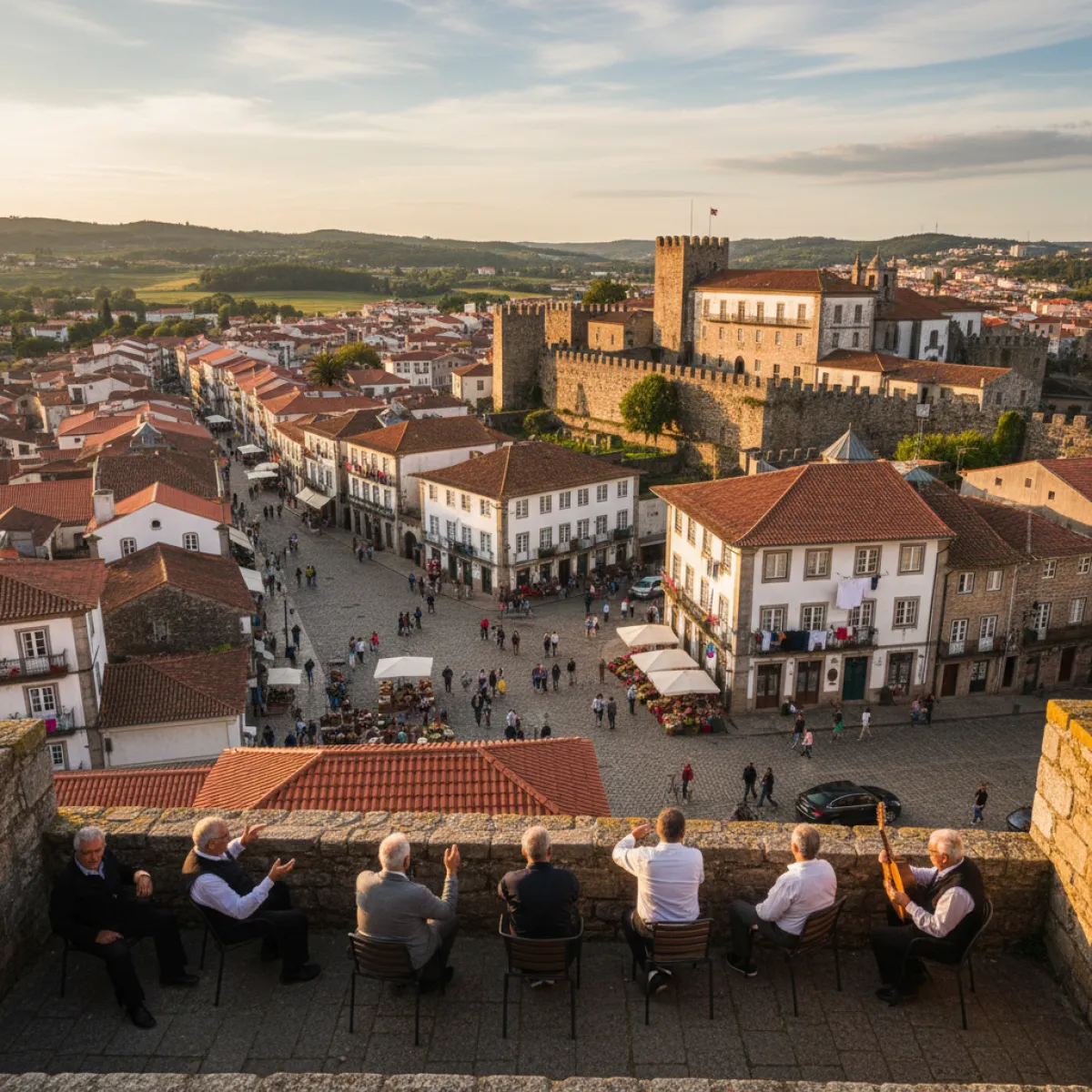
Every Portuguese schoolchild knows the line: "Aqui nasceu Portugal", Portugal was born here. It's carved into a medieval wall near the castle, and for once, the grand claim isn't entirely hyperbole. This is the city where Afonso Henriques, the first king of Portugal, was born (or likely was) in the early twelfth century, where the Battle of São Mamede in 1128 set the stage for an independent kingdom, and where an entire national identity found its earliest footing. But Guimarães doesn't trade exclusively on origin stories. It's a working city of 55,000 people, a UNESCO World Heritage Site since 2001, a European Capital of Culture alumnus (2012), and, most importantly, a place where history and daily life coexist without awkwardness. For a comprehensive overview, our guide to Guimarães covers the essentials. What follows goes deeper.
Getting There and Getting Oriented
From Porto, Guimarães is a 50-minute train ride on the urban Minho line, departing from São Bento or Campanhã stations. Tickets cost around €3.50 each way. If you're based in Porto and considering northern Portugal without the commitment of a rental car, Guimarães is one of the best day trips you can make from the city. By car, the A7 motorway gets you there in 40 minutes. Park at the Espaço Guimarães shopping centre (free for the first two hours) and walk ten minutes into the old town. Once inside the historic centre, put your phone away, the medieval street plan has its own logic, and discovering it on foot is half the point.
The historic core is walkable in a morning but worth two or three days of your time. The monumental zone, castle, ducal palace, and the churches clustered around them, sits on the hill to the north. The Toural and Largo da Oliveira form the living centre, where daily commerce happens against a backdrop of granite façades and wrought-iron balconies. To the south, the Platform of Arts and Creativity and the University of Minho campus give the city a contemporary pulse that balances all that medieval weight.
What to See (And How to See It)
The Castle and the Sacred Hill
The Castle of Guimarães needs no introduction, but it deserves context. Built in the tenth century on the orders of Countess Mumadona Dias, this is where Portugal's founding mythology is rooted. The visit is quick, thirty minutes will do, but climb the keep for the view over the city and the Ave valley. Admission is €2. Avoid visiting between 11 a.m. and 2 p.m. in summer: the granite radiates heat and the experience suffers considerably.
Next door, the Palace of the Dukes of Braganza is a more complicated proposition. Heavily restored, or arguably reinvented, during the Salazar era in the 1940s, what you see today is as much a twentieth-century interpretation as a medieval palace. That said, the Pastrana Tapestries, depicting Portuguese conquests in North Africa, are genuinely extraordinary. Give them time. A combined ticket with the castle costs €6.
Largo da Oliveira and the Alberto Sampaio Museum
If Guimarães has a gravitational centre, this is it. The Padrão do Salado, a small fourteenth-century Gothic monument celebrating victory at the Battle of Salado, stands before the collegiate church, which in turn conceals a Romanesque-Gothic cloister housing the Alberto Sampaio Museum. The museum is underrated and superb: chain mail and a coat of arms attributed to King João I, a silver triptych from the Battle of Aljubarrota, and a collection of sacred goldsmithing that rivals anything Lisbon can offer. Admission is €3. Closed Mondays.
The Platform of Arts and Creativity
Opened in 2012 as part of the European Capital of Culture programme, this cultural centre by Pitágoras Architects occupies the former municipal market. This is where Guimarães demonstrates it isn't living solely in the past. The temporary contemporary art exhibitions are consistently strong, and the building itself, concrete, corten steel, and natural light, is a statement of intent. Entry is usually free. Check the programme before visiting; the design workshops and artist residencies attract international names.
Penha and the Cable Car
The Penha cable car is one of those uncomplicated pleasures that can justify a trip. In ten minutes, you rise from the rooftops of the old town to a natural park at 400 metres altitude, where wind-sculpted granite boulders create an almost lunar landscape. A return ticket costs €7.50. At the top, well-marked hiking trails wind through the park, a 1947 sanctuary divides aesthetic opinion, and a restaurant compensates for average cooking with remarkable views. Bring a jacket even in summer, the temperature difference is real.
Where to Eat
The Meal That Defines the City
Guimarães is rojões territory. If the word means nothing to you, prepare yourself: chunks of pork fried in their own fat, served with chestnuts and tripe rolled in cornflour. Alongside, papas de sarrabulho, a thick porridge of pork blood seasoned with cumin and cloves. This is not cuisine for the faint-hearted, but it is honest food, deeply rooted in Minho's rural traditions.
For the definitive version, Solar do Arco on Rua de Santa Maria serves both dishes with appropriate dignity, linen tablecloths, attentive service, portions that challenge human anatomy. Expect €15-20 per person for a full meal with house vinho verde. Reserve for Saturday lunch: the dining room fills with local families, which is always a reliable indicator.
Contemporary Cooking
A Cozinha, on Rua Dom João I, is the modern counterpoint. Chef Tiago Bonito works with local producers and presents tasting menus that reinterpret Minho cuisine without betraying it. The shorter menu (five courses) costs approximately €45 and changes seasonally. Order the Soalheiro Alvarinho, produced in Melgaço, it's one of Portugal's finest white wines and pairs perfectly with northern cooking.
Coffee and Pauses
Café Milenário on Largo do Toural is an institution, not for its coffee, which is perfectly competent and nothing more, but for the theatre of it. At ten on a weekday morning, you'll find retirees debating politics, students gazing at phones, and businessmen closing deals over espressos. It's applied sociology with sugar. A coffee and a pastel de Guimarães (the local riff on pastel de Tentúgal, filled with egg custard and pumpkin) costs under €3.
For something with more edge, Mumadona, a café-shop on Rua de Santa Maria, serves specialty coffee alongside a curated selection of regional products that double as useful souvenirs. Take home the Douro olive oil and the artisanal quince paste.
Where to Stay
The Pousada de Guimarães, set in the former Augustinian convent halfway up Penha hill, is the obvious choice if your budget allows. Rooms run €120 to €200 per night depending on season, and the views over the city at sunset are the kind of experience that justifies the rate. Breakfast is generous and includes regional cured meats, serra cheese, and homemade preserves.
For something more intimate, Casa de Sezim, a fourteenth-century manor house on the outskirts, offers rooms between €80 and €120. The gardens are magnificent and the family who runs it produces vinho verde on the property, ask to visit the wine cellar. It's the kind of experience chain hotels simply cannot replicate.
On a budget, Hotel Toural on the square of the same name has functional rooms from €55 and an unbeatable location. Don't expect design-magazine interiors, but the cleanliness is impeccable and the staff are genuinely helpful.
Beyond the Obvious
Rua de Santa Maria
This is the oldest street in Guimarães and probably the most beautiful. It connects the Convent of Santa Clara to Largo da Oliveira, and every building has a story, from granite houses with iron balconies to the convent that now serves as City Hall. Walk slowly. Notice the details: the door knockers, the coats of arms, the gargoyles that most people don't look up far enough to see.
The Workshops
Guimarães has an artisanal tradition that survives through sheer stubbornness. In the old town, you can still find cutlers working by hand, Guimarães knives are famous throughout Portugal, and embroiderers keeping alive the tradition of bordados de Guimarães, recognised as Intangible Cultural Heritage. Look for the workshop of Sr. Ferreira on Rua Val de Donas, where you can watch the process of making handcrafted pocket knives. This isn't a tourist attraction; it's a man practising his trade. Respect his space and his time.
Vitória de Guimarães
If you're in town on a match weekend, go to the Estádio D. Afonso Henriques to watch Vitória play. The club is the emotional heart of the city, and the atmosphere in the ground, with the "Conquistadores" in the stands, is among the most intense in Portuguese football. Tickets cost €10 to €25 and are easily bought on the day. After the final whistle, the city hums with a particular energy; it's the best time for dinner in the centre.
Combining Guimarães With the North
Guimarães pairs naturally with Braga, which is a 25-minute drive away. The two cities are frequently compared, Braga the devout, Guimarães the warrior, but the truth is they complement each other well. A three-day Minho itinerary based in Porto can comfortably include both.
If you have more time, the Ave valley between Guimarães and Vizela offers converted industrial landscapes and thermal springs that foreign visitors seldom discover. Caldas das Taipas, eight kilometres from Guimarães, has thermal waters at 30°C and a silence that seems impossible this close to a city.
When to Go
The Festas Gualterianas, on the first weekend of August, are the high point of the calendar. The Marcha Gualteriana, a historical procession with hundreds of costumed participants, is genuinely impressive, and the city fills with infectious joy. Book accommodation months in advance; the city sells out completely.
Outside festival time, May and June are ideal: long days, mild temperatures (18-24°C), and the city without summer crowds. The Minho winter is damp and cold, but it has its merits, the city feels more intimate, the restaurants cosier, and papas de sarrabulho makes considerably more sense when it's raining outside.
Budget
- Budget (€50-70/day): Hostel or guesthouse, meals at traditional tascas, admission to main monuments.
- Comfortable (€100-150/day): Central hotel, one meal at an author-cuisine restaurant, cable car, and room for artisanal shopping.
- Premium (€200+/day): Pousada or manor house, tasting menu, and the freedom of not checking prices.
A Final Note
Guimarães doesn't try to impress. It doesn't need to. The city that witnessed the birth of a nation has a quiet confidence you can feel in its streets, its restaurants, in the way people greet each other. This isn't a place you "conquer" in a single visit, it's a city you come to understand slowly, layer by layer, stone by stone. Give it the time it deserves.
