Elvas in Festival Mode: The Local Calendar, Decoded
Elvas has festivals all year, but nobody writes the calendar down because locals assume everyone already knows. Here are the months worth coming for, the ones worth avoiding, and the one fado night that justifies the price without hesitation.
Elvas has a marketing problem. UNESCO classified the walls in 2012, the buses from Spain dump visitors who stay ninety minutes, and most leave convinced they have seen the town. They have not. They have seen stone. The town only shows up when there is a festival, and there is a festival more often than people think, scattered across a calendar that nobody writes down anywhere because everyone here assumes everyone here already knows.
This article is for those who do not know. For those who want to understand why, in July, the Praça da República smells of burnt rosemary, why, in January, you find old men singing fado at three in the afternoon in a café on Rua de Olivença, and why coming to Elvas in August without booking accommodation six months ahead is a quick way to end up sleeping in Badajoz by accident.
January and February: the city nobody sees
Winter in Elvas is the best time to visit and the worst time to write about. There are no large festivals. There is, instead, what locals call the invisible calendar: Reis singing on 6 January, with groups going door to door in the historic centre, and Carnival rehearsals that start almost immediately after and fill local clubs that for the rest of the year serve as games rooms.
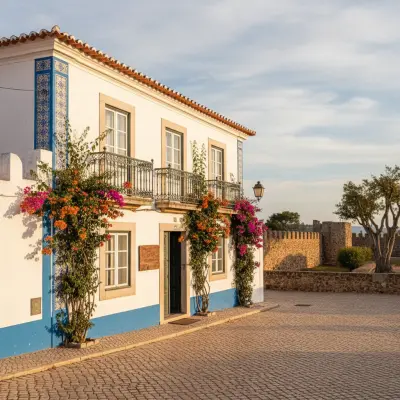
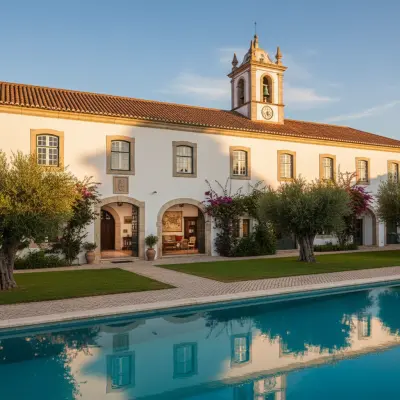
If you come now, sleep outside the walls. The Vila Galé Collection Elvas, set in a former convent at the entrance of the city, has winter rates that are half the summer ones and a breakfast featuring Nisa cheese and regional cured meats that justifies waking up early. For a more intimate experience, Alojamento Escola do Fado in Vila Fernando, a few minutes from the city, is where the musicians sleep when there are fado nights, and in January you can book a week ahead. In summer, forget it.
Easter: the procession that is not in the brochures
Holy Week in Elvas does not have the spectacle of Braga or Seville, and that is precisely the point. On Good Friday, a procession of the Senhor dos Passos leaves the Cathedral and crosses the historic centre in absolute silence, carrying lit torches. There is no amplified music, no commentary, no queue of tourists with raised phones. There are old women in black, the sound of shoes on the cobbles, and the smell of melted wax that lingers in your clothes for days afterwards.
Go. But go with time. Park outside the walls (the lot near the Amoreira Aqueduct is the most practical, and most months it does not charge at night, though check locally) and walk. The procession starts around 9pm, but the town starts to change rhythm at 6pm. Have dinner before, keep in mind that many restaurants close early that night, and never, ever order a beer on the street while the procession passes. It is not forbidden. It is just something one does not do.
May: the big festivals start
May is when Elvas officially starts leaving the house. The Festas do Senhor Jesus da Piedade, in September, are the biggest of the year, but it is in May that the first producer fairs appear: cheeses from the border, olive oils from the Caia valley, honey from the surrounding hills. The Feira de São Mateus, depending on the year, brings horses, sheep bell vendors, and stalls of conventual sweets in quantities that justify coming just for that.
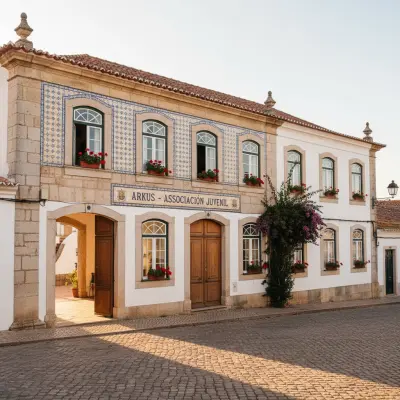
It is also in May that regular fado nights begin. The Alentejo is not the natural territory of fado, and listening to fado in Elvas therefore has a very particular strangeness. Here, the dominant singing is cante alentejano, polyphonic, male, unaccompanied. Fado, with its Portuguese guitar and its Lisbon lyricism, almost sounds like contraband. And yet it works, especially in small spaces. The Arkus Youth Association programmes nights where young local fadistas sing alongside musicians with forty years of stage time, and the result is less touristic and rougher than any fado house in Alfama.
June: popular saints, Alentejo style
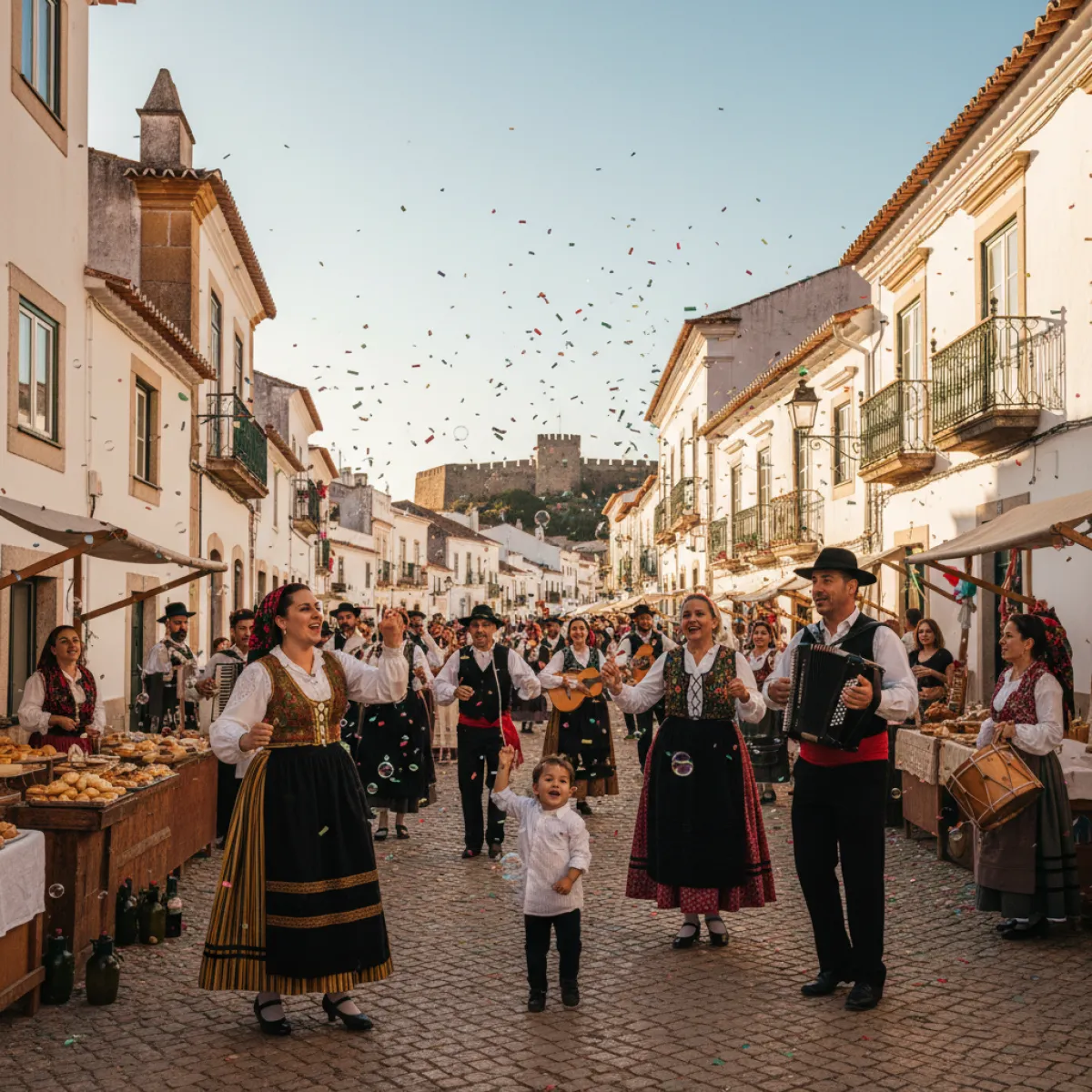
Forget the grilled sardine and the basil pot. The popular saints festivals in Elvas are a different beast. Neighbourhood gatherings with traditional Alentejan songs, house wine in plastic cups, and people dancing until three in the morning with nobody filming. Santo António (12 to 13 June) and São João (23 to 24 June) are marked by bonfires in private courtyards reached only by invitation, and by public dances in the rural villages around the city.
The heat is starting to bite. Begin to plan your hours like the locals: early breakfast, heavy lunch around 1pm, siesta between 3pm and 6pm (yes, even the shops shut), evening walk, late dinner. Anyone trying to visit Elvas in summer between 2pm and 5pm will spend three hours sweating in empty streets and concluding that the town is a disappointment. It is not. It is just sleeping.
July: peak heat and the start of side trips
By July, Elvas is officially in summer mode. The terraces of the Praça da República run until 1am, there are concerts at the Forte da Graça on selected weekends, and the smaller festivals that give the town its character begin to appear. Do not expect international names. Expect fado, expect cante, expect brass bands, expect local DJs in courtyards.
It is also in July that exploring the wider region starts to make sense. Elvas and Portalegre, though both Alentejan, are almost opposites. Elvas is border, military, bastioned, plain. Portalegre is mountain, wool, cooler air, slower pace. An hour and a half by car, easy to combine into a cross weekend. In that case it is worth following the guide to a Portalegre weekend without the tourist traps, which skips the predictable stops. To get to know the town on foot, there is also a walking itinerary through the neighbourhoods that are actually worth the steps, and at the table, a list of where Portalegre locals actually eat solves the hardest problem of any small town: where to have lunch without falling into the tourist menu trap.
August: the month to avoid (or to embrace with strategy)
August in Elvas is the confirmation that the town exists. Emigrants come back, Portuguese from Lisbon and Porto discover there is an inland border that is not just Caia, and Spaniards from Badajoz arrive in waves on Saturdays to have lunch and shop. Prices go up, restaurants fill, and trying to get a seat on a Praça da República terrace without a reservation around 9pm is an exercise in patience or frustration.
Strategy: either surrender to the chaos and join in, or step aside. To join in, go to any village arraial (Vila Boim, São Brás dos Matos, Barbacena), where the atmosphere is genuine and prices still make sense. To step aside, book a night at a night of fado and tradition at the old school of Vila Fernando, which restores a school building from the Estado Novo era and turns it, by evening, into a space of music, shared tables and conversation. It is one of the few experiences in Elvas that justifies the price without hesitation, and the only one I recommend without reservation for those who are only here for one night.
September: the big festival
The Festas do Senhor Jesus da Piedade are, without question, the biggest event on the Elvas calendar. They take place in September, usually the last week, and last nine days. There is a religious procession, a livestock fair, food stalls, popular Portuguese music concerts on a main stage, and fireworks closing each night with an intensity that justifies booking accommodation in town, because nobody wants to drive back to Spain at 1am with the A6 jammed.
Practical warnings. The food stalls serve food made on the spot, in Alentejan portions (read: huge), at prices that are still reasonable. Look for the ones with more local elders eating, and ignore the ones that look cleaner. The cleaner ones serve frozen food. The chaotic ones, with plastic tablecloths and one waitress for twenty tables, serve migas, lamb stew and sericaia that justify the trip.
October and November: harvest and slaughter
October brings the wine harvest and November brings the pig slaughter. There is no official festival for either, but in both months there are opportunities to take part in things that almost nowhere else in the country still happen with the regularity with which they happen here. Some farms around Elvas (Vale de Caia, Olivença, Barbacena) open to the public on selected weekends, and the system almost always works through direct contact, phone, asking someone who knows someone. Do not Google it.
If you stay in town, November is when the brass bands restart rehearsals for São Martinho (11 November), and when, in the local taverns, the first roast chestnuts in repurposed olive oil tins begin to appear. Alentejan chestnut is not the best Portuguese chestnut. That credit goes to Trás-os-Montes. But eaten standing up, at the door of a tavern, with a glass of house red at 1.50 euros, it is one of those minor experiences that leaves the most memory.
December: the beautiful silence
Christmas in Elvas is discreet. There are lights on the Praça da República, a small Christmas market that lasts only a few days, and Midnight Mass at the Cathedral on 24 December, which is worth attending for reasons that have little to do with faith and a lot to do with the acoustics of a seventeenth-century church packed with people in silence. On 31 December, forget the big parties. New Year's Eve in Elvas is a home affair, and anyone trying to find a rave ends up drinking sparkling wine on a terrace with five other people and a couple of lost Spaniards.
Where to sleep, by month
- November to March: Vila Galé Collection Elvas at winter rates, or rural tourism around with heating (check locally).
- April to June: Alojamento Escola do Fado in Vila Fernando makes sense, especially if you are coming for music nights.
- July to September: book at least two months ahead, and consider staying outside the city, in Vila Boim or Campo Maior, and driving in.
- October: the best value of the year, with weather still mild and the city quiet.
What to eat and what to ignore
A few rules worth keeping. First: order migas alentejanas, lamb ensopado, sericaia with Elvas plum (the real one, not the imported version), and Nisa cheese. Second: ignore any menu in four languages. Third: the real Elvas plum has DOP certification, is sold in small boxes in shops in the historic centre, and costs what it costs because it takes two days to make. Fourth: the regional wine is red, robust, and does not need to be expensive to be good. Five euros a bottle, in most taverns, is honest quality.
The festival calendar of Elvas is, in the end, an instruction manual for not mistaking the town for its walls. The walls are always there. The town only shows up when there is a festival. And there is a festival all year round, you just have to know where to look, and be willing to turn up at an arraial in a village that does not appear on the maps, not knowing who is there, and find, three hours later, that you are dancing with an eighty-two-year-old man who was a stonemason all his life and who knows by heart the lyrics of forty Alentejan folk songs. That is what you come for.