Day Trips from Peso da Régua: Where to Actually Go
Régua is a base, not a destination. Train east to Pinhão, car north to Sabrosa, and three restaurants waiting for you at dinner. Here's the honest guide to day trips that actually earn the detour.
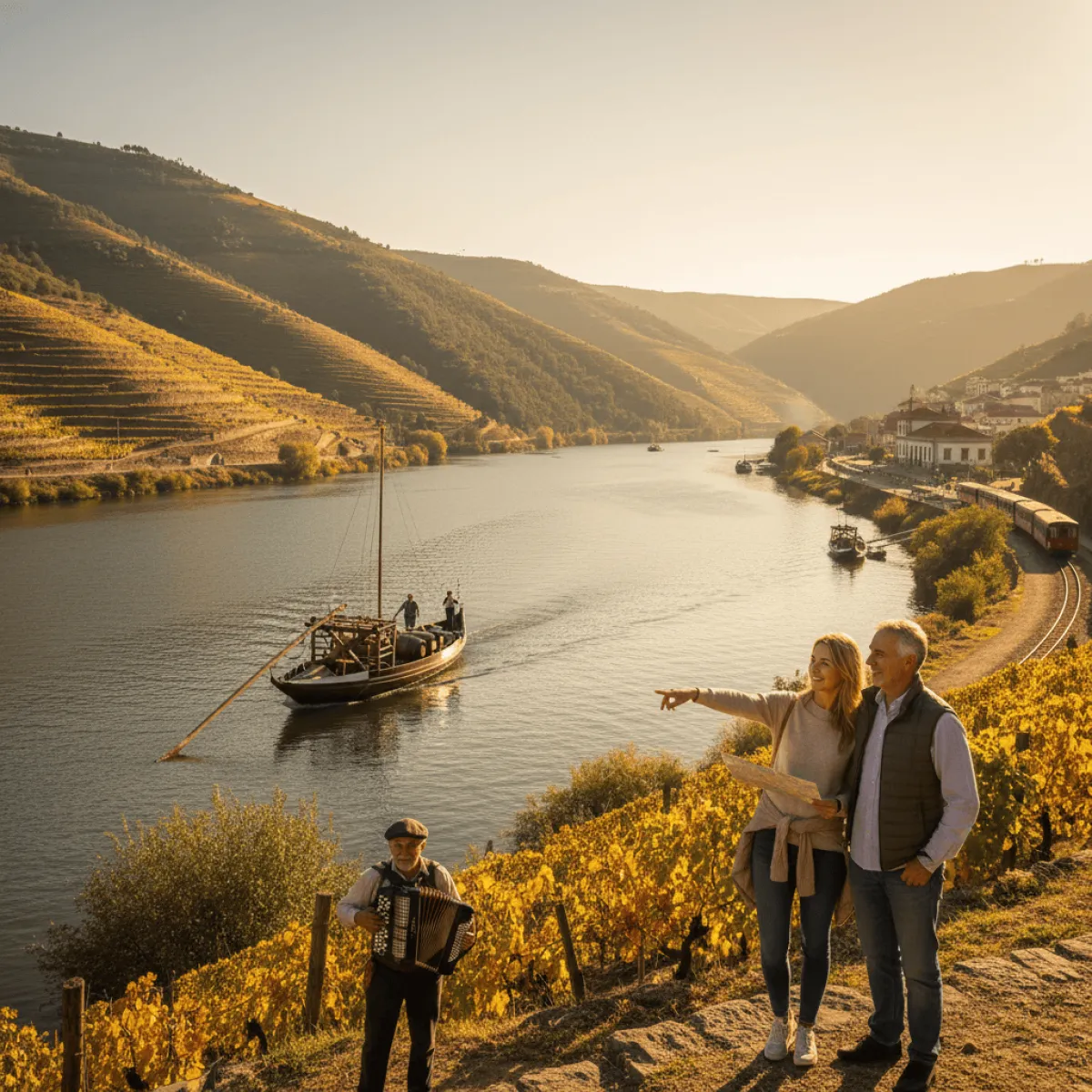
Peso da Régua is a base camp, not a destination. Spend three days here and you'll figure it out fast: the town has the right museum (the Douro Museum), the right train station (the Linha do Douro that follows the river east to Tua and beyond), and the right restaurants for when you stagger back in after dark. But what makes Régua the best base in the Douro is what surrounds it, within a 60-kilometre radius, reachable by train, car or boat. This guide is for travellers who've worked that out and want to plan four or five day trips without falling into the coach-tour trap with included buffet lunches.
Fair warning: if you're after a minute-by-minute itinerary, this isn't it. CP train schedules change with the season, the wine estates adjust their visiting hours around harvest, and the N222 and N108 roads are slow by design (hairpins, viewpoints, tractors). Always assume the journey will take longer than the map suggests.
The golden rule: train east, car north
The Douro railway follows the river. Obvious, perhaps, but this single fact organises every Régua itinerary. Heading east (Pinhão, Tua, Pocinho), the train always beats the car: the N222 is beautiful but demands full concentration, while the train hugs the riverbank. Heading north (Sabrosa, Vila Real, Murça) or south (Lamego, Tarouca), you'll need a car, a local bus or a taxi. Internalise this and you'll save hours of planning.
A Régua-Pinhão ticket costs just over 3 euros and the ride takes about 25 minutes. Buy it on board if the queue at the ticket office looks rough, or at the Régua station counter (which keeps standard business hours, contrary to what many travel blogs claim). On summer weekends, sit on the right going out, on the left coming back. It's not about aesthetics: it's about the river.
Pinhão: the classic, and how to skip the crowds
Pinhão is the Douro's postcard. The station is famous for its tile panels showing the region's history, and it's heaving between 11am and 4pm. The fix is simple: catch the first morning train (around 8 or 9am depending on the season) and you'll arrive before the coaches do. You get two hours of complete calm on the quay, low raking light, and no river-cruise touts hassling you about a sunset trip.
What to do in Pinhão for a day: climb up to the Casal de Loivos viewpoint, about 6 km from the village (taxi costs 10-12 euros, but agree the return ride in advance). This is the Douro angle that turns up in every coffee-table book, and rightly so. Then come down, eat a light lunch near the station, and use the afternoon to visit a quinta on foot. You don't need to join a formal tour: several nearby estates accept walk-in visits outside harvest season.
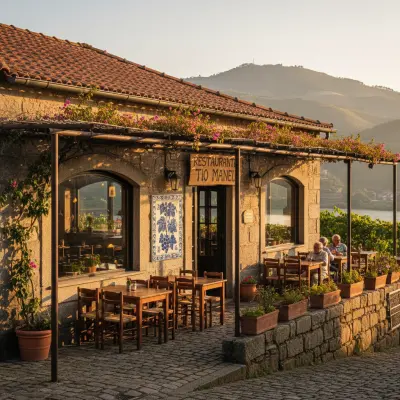
Head back to Régua for dinner. Book ahead at Castas e Pratos, which occupies the old railway warehouse next to the station. This is the place for a serious wine list and contemporary cooking that hasn't forgotten where it is. For something less polished and more honest, Restaurante Tio Manel is the safe bet, with daily specials that shift according to what came in from the market.
Lamego: the Padre Lopo cake and that staircase
Lamego sits 13 km from Régua, on the other side of the river, and not including it is the most common visitor mistake. Five minutes across the bridge and you're in a different world: an episcopal city, a 12th-century cathedral, a surprisingly good museum (the Museu de Lamego holds a collection of Vasco Fernandes paintings that justifies the trip on its own), and the famous staircase up to the Santuário dos Remédios, more than 600 steps of granite and blue tile.
How to get there: Rodonorte buses leave several times daily from Régua, take 20 minutes, and cost around 3 euros. A taxi is 15-18 euros. If you drive, park in the old town near the cathedral and walk up to the Remédios. The climb is brutal but it's part of the deal. If you can't manage it, there's a side road up to the top.
What to eat in Lamego: bola de Lamego (a filled pastry with cured ham, chouriço or salt cod) in one of the cafés in the centre, plus sparkling wine. Yes, sparkling. Lamego is one of Portugal's méthode classique capitals, with tastings at several cellars in the area (Murganheira is 15 km away in Ucanha and worth the detour). For a proper lunch, small restaurants in the old town serve roast kid on Sundays. Ask at the tourist office: the list shifts with the season.
Sabrosa and the quintas nobody talks about
If Pinhão is the obvious choice, Sabrosa is the precision strike for travellers who've already done the boat trip. Real climbing, narrow roads, schist terrain rolling to the horizon, and family estates that welcome visitors with the calm of people who don't actually need your business. We wrote about this at length in Sabrosa: The Douro Estates Nobody Talks About, and the recommendation is straightforward: rent a car for a day (40-50 euros), drive up to Sabrosa, eat lunch in the village, and return via the mountain road.
Travel time: 45 minutes from Régua, but factor in stops at viewpoints. Route: N322 to Pinhão, then N323 climbing up. It twists. If you get motion sick, bring a tablet.
June is particularly good for Sabrosa, and not just for the scenery. The Santos Populares festivities in Sabrosa are an uncoreographed version of the Lisbon street parties: actual neighbourhood gatherings with sardines on the grill and locals dancing. If you're in Régua on the 12th, 13th or 23rd of June, the detour to Sabrosa isn't up for debate.
Vila Real and Mateus: the palace, but pick the right hour
Vila Real is 25 km north of Régua on the A24. It's the district capital, a university town, and the Mateus palace is on its outskirts. Yes, the one on the rosé bottle. The gardens are seriously well laid out (a centenary cedar, box-hedge mazes, ornamental lake) and the interior tour of the palace is honest and unpretentious. Tickets are around 14 euros, but check locally.
Unpopular advice: don't go in July or August at lunchtime. The coaches from Porto offload groups between 11am and 2pm, and the palace is small. Go early in the morning (it opens at 9am) or late afternoon and you'll have the place virtually to yourself.
In Vila Real itself, lunch in the old town around Avenida Carvalho Araújo. There are real old-school tascas. For something more ambitious back in Régua, head straight to Tasca da Quinta, which does well-executed Douro cooking without turning the house upside down.
Torre de Moncorvo: the long detour that earns it
Torre de Moncorvo is two hours from Régua, and let's be upfront about that. This is not a day trip for someone who arrived the night before. But if you're staying five or six days in Régua and want to understand the Upper Douro (the bit beyond Pocinho, drier and wilder), Moncorvo is the right stop. A walled town, a parish church with notable retables, and almond blossom in February and March that turns the slopes white.
In spring and early summer, it's worth pairing this with the gardens and parks described in our Torre de Moncorvo in Bloom guide. How to get there: train from Régua to Pocinho (1h30), then a taxi or local bus to Moncorvo (another 15 minutes). Or by car, A4 then IP2, about 2 hours. If you drive, build in stops: Foz Côa and the archaeological park are roughly halfway, and the rock engravings are UNESCO-listed.
The boat: slow, expensive, and unavoidable
Douro cruises depart from Régua, Pinhão and Folgosa. There are half-day trips (around 30 euros), full-day cruises with lunch (60-90 euros), and multi-day options as far as Pocinho or Vega de Terrón in Spain. Let's be direct: the boat is the least efficient way to see the Douro, and at the same time the most beautiful. You move slowly, you eat slowly, you stop at the Carrapatelo and Bagaúste locks and watch the engineering at work.
Our opinion: if you're in Régua to escape your job, do the half-day cruise to Pinhão and come back by train. In three hours you've seen the river both ways. The full-day cruises with on-board lunch are an itinerary trap: you pay a lot for an average meal and lose the entire afternoon stuck at a table.
The wine experiences: timing is everything
Don't come to the Douro in August expecting to see the harvest. Don't come in February expecting vines in leaf. Spring (April to June) is the forgotten season, and the best one for many visitors: temperatures between 15 and 22 degrees, vines coming back to life, restaurants still uncrowded.
For travellers in Régua during spring, we'd point you without hesitation to Spring in Peso da Régua: The Vineyard Budbreak at Quinta do Vallado, which shows the moment vines come back to life. It's a quiet spectacle, no Instagram payoff, but it changes the way you relate to the wine you drink at dinner. Pair it with the Spring Wine Tasting in Peso da Régua, which organises visits to three or four very different estates (a small family producer, a historic house, a young project).
Back to base: dinner sorted
There's a practical advantage to staying in Régua that few guides mention: the town has three above-average restaurants within a 10-minute walk of each other. After a day in Lamego, Sabrosa or Vila Real, you don't need to hunt for dinner. We've already named Castas e Pratos (ambitious, long wine list, reserve ahead), Tio Manel (classic, no fuss, fair prices) and Tasca da Quinta (regional cooking done properly, relaxed atmosphere). Rotate the three across your stay and you'll have three different dinners without repeating a dish.
Five final rules for using Régua as a base
- Check CP train schedules on the day of travel. The Douro line has occasional closures for engineering work, especially between Tua and Pocinho.
- Rent a car only on the days you actually need one. Régua has a small Europcar branch, but for more distant trips (Sabrosa, Murça, Moncorvo) a car is essential.
- Avoid Pinhão between 11am and 4pm on any summer day. Go before or after.
- Book quinta visits 48 hours ahead off-season, a week ahead in September and October.
- Pack for a 10-degree daily swing. Douro mornings are cold even in July, afternoons can hit 38.
Régua doesn't have the glamour of Porto or the folklore of Lisbon. It has something else: it's the exact point where the Douro stops being a river and starts being a region. Travellers who grasp this organise their stay around the trains and the rental cars, and use the evenings for the local restaurants. The rest, the slopes, the wine and the bend in the river, does the work for you. Safe travels.