Spring in Peso da Régua: The Vineyard Budbreak at Quinta do Vallado
Skip the harvest crowds and witness the Douro's 'budbreak' at Quinta do Vallado. Experience the moment the vines wake up in a burst of electric green across the steep schist terraces of Peso da Régua.
The Quiet Rebirth of the Baixo Corgo
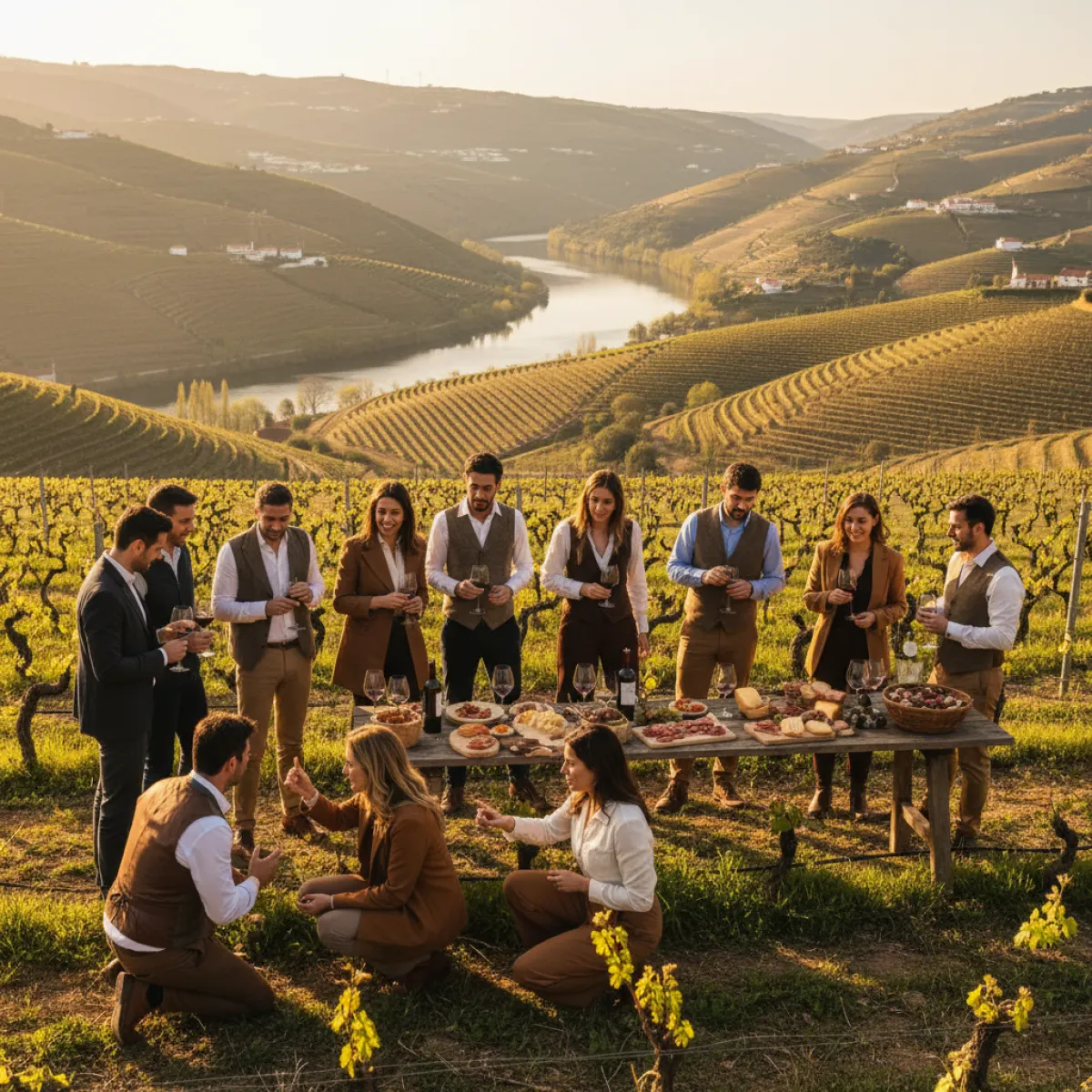
Forget the dusty frenzy of the September harvest. If you truly want to know the Douro, come when it wakes up. Between late March and mid-April, the Douro Valley undergoes its most critical and, paradoxically, its most ignored moment: the budbreak, known locally as abrolhamento. In Peso da Régua, the commercial heart of this demarcated region, the landscape transitions from the austere brown of the schist to an electric green that looks almost artificial against the deep blue sky.
Visiting Quinta do Vallado during this window isn't just a wine tour; it’s a lesson in botany and patience. Budbreak is the awakening of the vine's buds, the moment when the sap begins to flow and the first green shoots break through the rough bark. It is a spectacle of detail. If you arrive early enough in the season, you might still catch the "weeping" of the vine, the droplets of sap falling from the winter pruning cuts, signaling that the earth has finally warmed up.
Quinta do Vallado: Tradition and Concrete in Vilarinho dos Freires
Located just a few minutes from the center of Régua, on the banks of the Corgo River, Quinta do Vallado is one of the most respected names in the Douro. Founded in 1716, it once belonged to the legendary Dona Antónia Adelaide Ferreira, "La Ferreirinha", and remains in the hands of her descendants. What makes this estate the ideal place to observe the vine's cycle is the balance between heritage and modernism. While the old vines (some over 100 years old) show an irregular budbreak full of character, the new plots, planted with rigorous geometry, offer a clear view of nature's raw power.
As you walk through the slopes, notice the difference between the grape varieties. Touriga Nacional is often among the first to wake up, while others wait for longer, warmer days. The visual contrast is absolute. If you've read up on The Architecture of Port: Understanding the Douro's Lodges in Peso da Régua, you will appreciate Vallado’s contemporary winery even more. Designed by Francisco Vieira de Campos and built from concrete and schist slate, the structure seems to emerge directly from the mountain, respecting the natural slope where the grapes grow.
The Experience: Step-by-Step Through Schist and Cellar
The guided tour invariably begins outdoors. This is where your guide, equipped with knowledge that goes far beyond simple marketing, explains why the Douro is an agricultural miracle. The schist soil, which looks dead during winter, retains the spring sun's heat, driving the growth of the leaves. During the walk, I recommend getting close to the vines. Look for the "cotton", the tiny white fibers that protect the new shoots from the morning chill. It is a phase of extreme fragility; a late frost at this stage can ruin the entire year’s harvest.
After the hike, the tour moves to the state-of-the-art winery. Vallado uses a gravity-fed system, which means less pumping and more respect for the fruit's integrity. We pass the stainless steel vats and enter the barrel room, where the scent of French oak and aging wine is intoxicating. Even without the roar of the harvest machinery, the silence of the cellar is active; this is where the wine finds its backbone.
The Tasting: From Fresh Rosé to Field Blend Reserves
The tasting takes place in a glass-walled room overlooking the valley. For a complete spring experience, opt for the Monovarietal Tasting (€50). It allows you to isolate the characteristics of each grape variety you just saw waking up outside. Vallado’s Touriga Nacional is a must, with its floral notes of violet that seem to echo the fresh country air.
If you prefer something more accessible, the standard tasting (€35) provides an excellent introduction to the house portfolio, including their Port wines, which remain the region's pillar. Insider tip: don’t leave without trying their Extra Virgin Olive Oil; it’s produced from the olive trees that border the vineyard plots, a traditional practice to diversify the ecosystem.
Practical Tips for the Traveler
- When to go: The peak of budbreak in Régua occurs between the last week of March and the first two weeks of April. The weather can be unpredictable, so bring layers.
- What to wear: Forget flat-soled shoes. Vallado’s slopes are steep, and the schist can be slippery when damp. Hiking boots or sneakers with good grip are essential.
- How to get there: Take the train from Porto (Douro Line) to Régua station, then a 5-minute taxi. If driving, the A4 gets you there in 90 minutes, but the N108 is far more scenic.
- Booking: Mandatory. Quinta do Vallado is popular year-round, even outside the peak season.
Is it worth it?
Many visitors feel disappointed if they don't see heavy clusters of grapes hanging from the branches. This is a mistake of perspective. Seeing the budbreak is witnessing the Douro's intent. It is a moment of hope and absolute quiet before the summer tourist invasion. The air is crisper, the colors are sharper, and the producers themselves are more relaxed, having the time to talk about the land rather than being focused on the frantic logistics of grape reception. It is, without a doubt, the most honest version of this region.