Peso da Régua on Pennies: Douro Without Going Broke
The industry says the Douro is expensive. It's lying. Twenty euros a day, lunch included, gets you a full weekend in Peso da Régua, wine tasting and all. Here's the map, with addresses, prices and the honest breakdown.
There's a lazy idea floating around the travel guides: the Douro is expensive. That you need to drop 180 euros on a Vintage Port tasting with river views, sleep in a converted estate with an infinity pool, and go home feeling like the Port you drank was worth its weight in gold. It's a lie. Or rather, it's a half-truth that serves the industry but doesn't serve the people who live here, nor the people who arrive with a backpack and some common sense. Peso da Régua, the administrative capital of Port wine since the Marquis of Pombal demarcated the region in 1756, can absolutely be done on twenty euros a day, lunch included, if you know where to step.
This isn't an exercise in masochism or performative poverty. It's something else: it's understanding that the genuine version of Régua, the one where stevedores still greet each other on Avenida Marginal and the bakery opens before the sun hits the terraced vines across the river, is also the cheapest version. Money doesn't correlate with authenticity. If anything, it correlates inversely.
The twenty-euro rule: how it works
The math is simple enough to quote and dishonest enough to be useful: breakfast at a neighbourhood pastelaria for 2 to 3 euros (galão and a toasted sandwich, or bread and butter with coffee), lunch with prato do dia, soup, drink and coffee for 8 to 12 euros, and the rest set aside for an afternoon wine tasting, an evening drink, or a packet of Maria biscuits to bridge the gap to dinner. Twenty euros isn't luxury, but it isn't hunger either. It's the real daily life of plenty of people here, and it works just fine for a traveller willing to walk and skip the Uber.
First principle: Régua is a walking city. It has the footprint of a Porto neighbourhood, and everything that matters, from the train station to the Museu do Douro, along the Marginal and through the central tabernas, fits within an 800-metre radius. Anyone arriving by train (the Linha do Douro from Porto-São Bento, somewhere between 10 and 14 euros round trip depending on the time) lands literally 200 metres from the river. If you drive, there's free parking along the riverfront outside peak months and cheap paid lots the rest of the year (roughly 0.50 to 1 euro per hour, but check locally).
Where to eat without crying over the bill
Lunch is the most important financial meal of the day. It's where you win or lose the budget war. The classic Portuguese rule, valid in any town built on actual work, applies here in full: eat where the workers eat, at the hour they eat (between 12:30 and 1:30), and order the prato do dia.
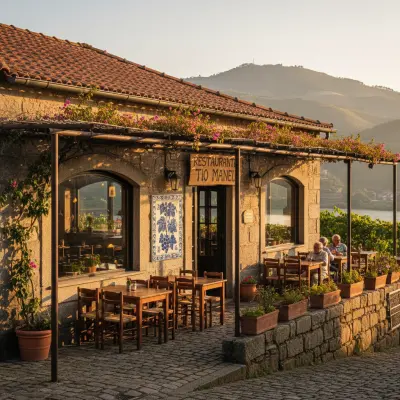
Restaurante Tio Manel is the correct cliché of this story. A cliché because everyone recommends it. Correct because it's genuinely good and genuinely cheap, with a traditional Douro kitchen that does cabrito, polvo à lagareiro and arroz de cabidela without inventing anything and without needing to. The atmosphere is what you'd expect: paper tablecloth over fabric tablecloth, a bottle of house red that appears without being requested, loud conversation. For a midday lunch with main, drink and coffee, you're looking at 10 to 14 euros. À la carte dinner climbs a bit. The strategy is obvious.
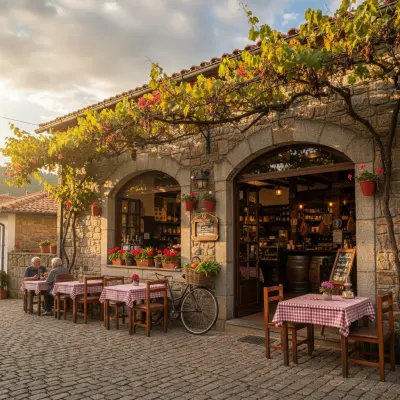
Tasca da Quinta plays a different register with the same honesty: tasca in the literal sense, smaller, more focused on petiscos, ideal for a glass of Douro red at the end of the afternoon with a board of regional cheeses and cured meats. It's not necessarily the cheapest option per full meal, but it's the smartest option to stretch an evening. Two glasses of red, a sharing board and half an hour eavesdropping on the bar conversation costs less than a cocktail in Porto and is worth ten times more.
About Castas e Pratos, let's be honest: it's not the budget option. Installed in the old station warehouses, with a beautiful dining room and a wine list that reads like an auction catalogue, it's the place to celebrate something, not the place for the third day of a trip with debit cards on the verge of tears. But there's a strategy: the lunch menu, when available, tends to be substantially more accessible than à la carte dinner, and the room fills with natural light in the late morning. Go once, on the last day, to close the trip with the wine it deserves. The rest of the time, stick to the Tasca and to Tio Manel.
Bakeries, grocers and the art of the picnic
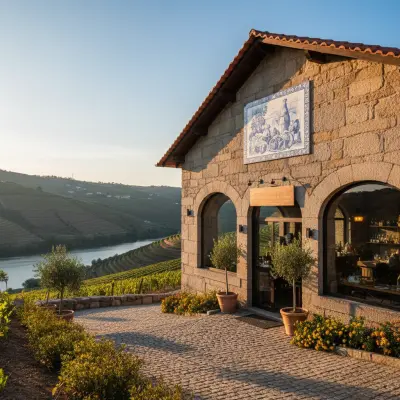
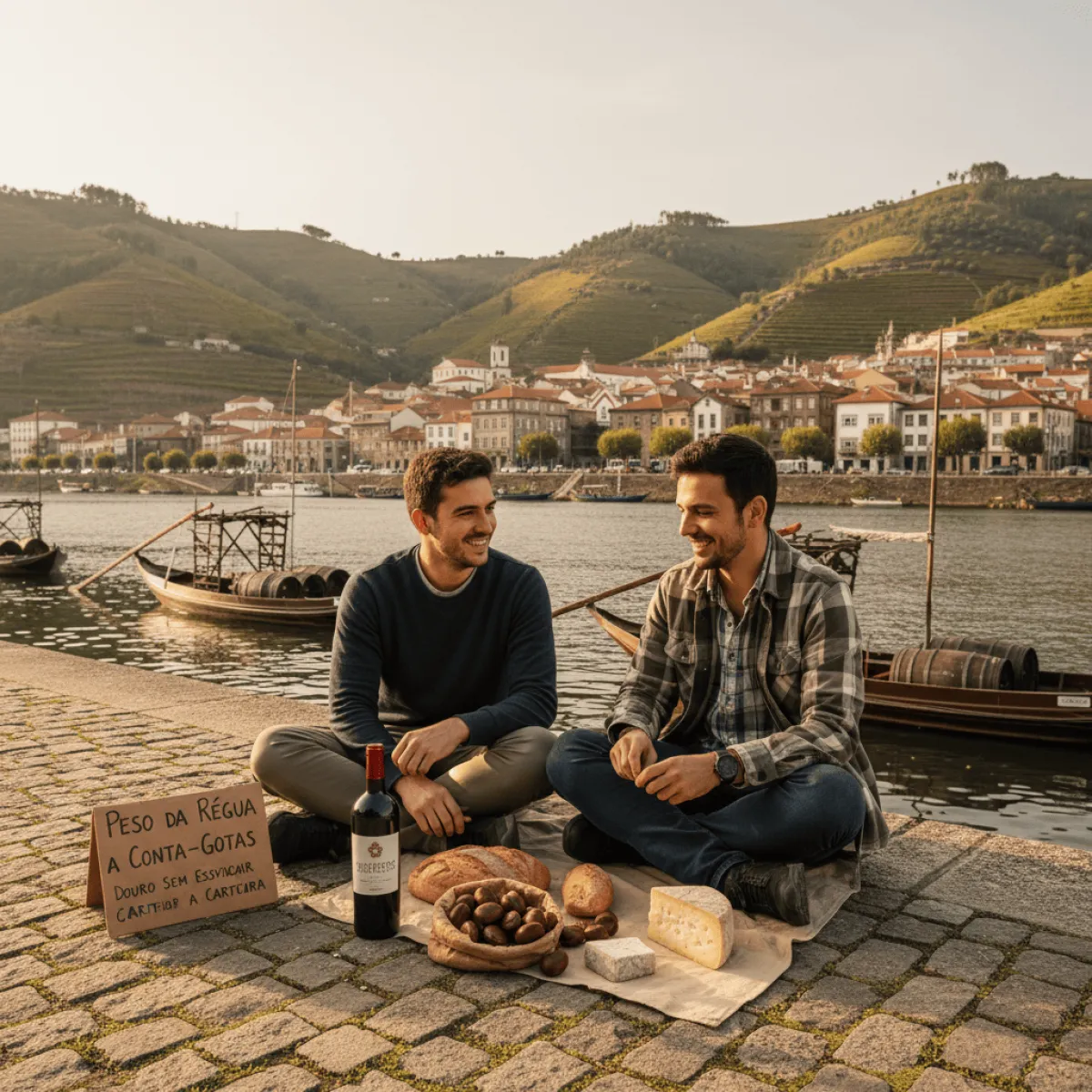
Second principle of the tight budget: not every meal has to be in a restaurant. Régua has neighbourhood bakeries selling rye bread, Douro corn broa and sweet pastries at prices that would embarrass any larger city. A fresh loaf costs between 1 and 2 euros and lasts two days. Combine that with mountain cheese (buy from a butcher or local grocer, not a chain supermarket) and a small chouriço, and you have the perfect lunch to eat sitting on a bench along Avenida Marginal, with the Douro in front of you and Quinta do Vallado visible on the opposite bank.
The Municipal Market, when fully operating, is the place for fruit, vegetables, cheeses and cured meats at producer prices. Go early in the morning, before ten, when the smallholders from the opposite bank are still unloading. A cherry from Fundão in June, an orange from Vale do Vouga, a peach from Alfândega: three euros of fruit, and snack time is sorted for two days.
Port wine without paying someone else's bill
This is where most visitors lose the budget war. They arrive in Régua, they see the signs for the historic estates, and they drop 50 to 80 euros on a premium tasting that, let's be honest, is technically flawless but emotionally identical to any other one in Porto. The money buys the view and the marketing.
The alternative: book a spring wine tasting in Peso da Régua, which takes advantage of low season and puts you in direct contact with smaller producers, typically between 15 and 30 euros depending on the estate and number of wines. For that price, you taste four to six wines, you listen to someone who actually knows what they're talking about (not a memorised script), and you actually learn something about native grape varieties, lagar vinification, and the difference between a Ruby, a Tawny and a Colheita. Book ahead, because the small estates have limited capacity.
For anyone visiting in March or April, there's another thing worth the detour: spring in Peso da Régua, with the vineyard budbreak at Quinta do Vallado. It's the moment in the year when the terraced vines turn green again after winter, and walking the paths on the opposite bank at that time of year is one of those things that costs zero euros and stays with you. Cross the Metallic Bridge on foot, climb the dirt tracks, and within an hour you're surrounded by vine and silence.
What to do all day without spending anything
The Museu do Douro has an affordable ticket (around 6 euros, with discounts for students and seniors, check locally) and earns the visit through its historical framing of Port wine since the Marquis of Pombal. It's one of the few paid things I recommend without hesitation. But there's plenty that costs zero.
- Walk Avenida da Marginal end to end at sunset, when the sun catches the opposite bank and the river turns copper.
- Cross the Metallic Bridge and climb through the terraced vines. Access is free, the paths are public, you just need decent shoes.
- Get to the São Leonardo de Galafura viewpoint. Yes, it's 12 kilometres out and ideally needs a car, but if you can hitch or rent a bike, it's arguably the best panoramic view of the UNESCO-classified wine Douro. And it's free.
- Take the historic Douro train to Pinhão for the day and back. Not pricey, and the route along the Linha do Douro is a journey in itself.
- Sit in a café on the main square with a 1.20 euro galão and read a book for two hours. Nobody throws you out. It's the cheapest economy on earth.
Cheap excursions: going further without renting a car
Régua has the geographic advantage of being both a railway and river hub. From here, on little money, you can reach several places that earn the trip. In June especially, it's worth heading to Sabrosa for the Santos Populares in Sabrosa, in the deep Douro. The popular feasts of Saint Anthony, Saint John and Saint Peter are free, with sardines at 3 euros, bifanas at 2.50, wine on the parish council's tab, and an authenticity the city festivals have long lost. You need a bus or a hitch, but the logistical effort pays off.
For anyone wanting to understand the productive Douro away from the monument-estates, Sabrosa is worth a detour in another register: the guide on the Douro estates nobody talks about in Sabrosa explains where the small producers selling direct are, no middlemen, and where a quality bottle of Douro red costs between 8 and 15 euros, not the 40 you see at airport wine shops.
Further east, in May, there's another day trip you can do for very little: the guide on Torre de Moncorvo in bloom, with the spring gardens and parks explains how the almond and cherry blossoms in this corner of Trás-os-Montes put on a free botanical show, in municipal parks and along secondary roads, with no ticket required.
Sleeping cheap: the uncomfortable truth
This is the hard part. Régua doesn't have much in the way of hostels or genuinely cheap guesthouses. Most accommodation is in converted estates, with prices starting at 80 to 150 euros a night. For a tight budget, you have three strategies.
First: come on a day trip from Porto. Morning train, full day in Régua, evening train back. Solves the accommodation problem, although it costs you the evening in the city, which has its charm.
Second: hunt for family-run pensões in the centre of town, generally between 40 and 60 euros a night for simple rooms. They're not always on the digital platforms, so it's worth calling the Câmara or the Tourist Office directly and asking for contacts.
Third: sleep in Régua on weekdays and outside September and October (harvest season, when prices spike). May, June, November are good value months: vines growing, comfortable temperature, and estates with vacancies and discounts.
The 80-euro weekend
To make it concrete: a two-day, one-night weekend in Régua, starting from Porto, comes in at around 80 to 100 euros per person all in. Train (15 euros), one night in a simple room (40 euros), two lunches at Tio Manel or equivalent (24 euros), breakfasts and snacks from a bakery (8 euros), one economical wine tasting (15 euros), and there's still room for a glass at Tasca da Quinta in the late afternoon. It's not luxury. It's a real trip, real food, real landscape. And this is what the Douro always was, before it became a postcard.
The tourist who needs to pay 200 euros a night to feel the Douro is buying the wrong version of the story. The right version costs less, speaks louder, and has more wine in it.