Day Trips from Guimarães: An Honest Map of the North
Guimarães is a good base, possibly the best in the Minho. But the real pleasure is leaving in the morning: Braga in 35 minutes by train, Casa de Sezim eight kilometres away, Amarante for roast kid, Barcelos for the Thursday market. An honest map, no frills.
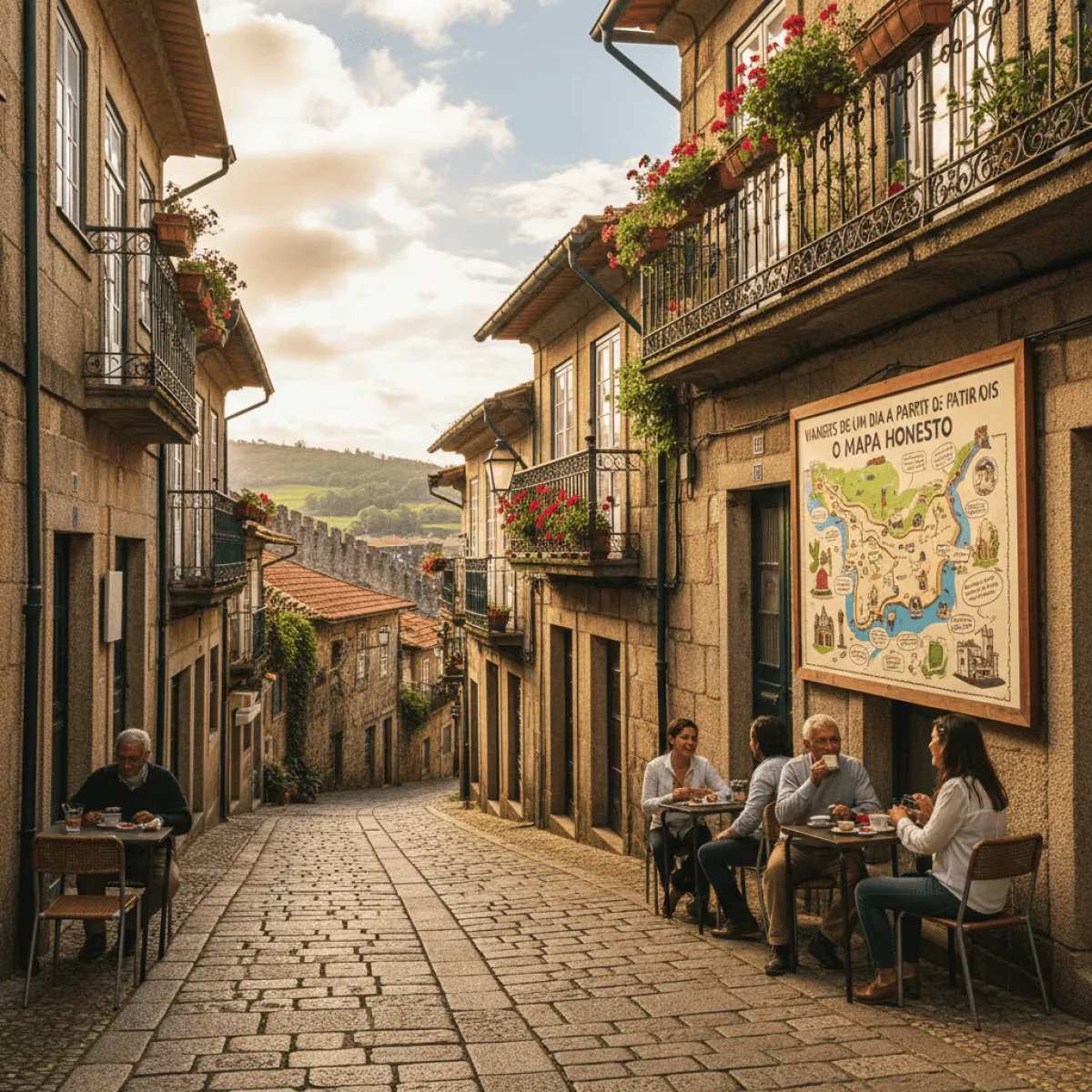
There is a lazy idea repeated in most Guimarães guidebooks: that the cradle city is enough on its own. Three days in the historic centre, three dinners at Largo da Oliveira, one climb to the Castle, and you are done. You are not. Guimarães is a good base, possibly the best in the Minho for travellers who do not want to sleep in the chaos of Porto, but the real pleasure is in leaving in the morning and coming back at dusk with dust on your shoes.
The geography helps. From the CP station on Avenida D. Afonso Henriques, urban trains run to Braga, Porto and Trofa roughly every hour. The A11 motorway gets you to Barcelos in forty minutes. The A7 opens the way to Cabeceiras de Basto and the more rural heart of the Minho. With a car, by mid-afternoon you can be in the Gerês mountains eating roast kid with the sierra at your back.
This is the guide I would give a friend who asked me over breakfast at the Hotel da Oliveira, map open, coffee going cold: go here, skip that, catch this train. No frills.
Braga: twenty minutes by train, another century
I start with Braga because it is the trip everyone gets wrong. They take the eleven o'clock train, reach the Sé, take the photo, eat badly on a tourist terrace on Avenida Central, and head back at four convinced they have seen Braga. They have seen nothing.
The urban train from Guimarães to Braga takes about 35 minutes with a change at Lousado, though there are direct connections at peak hours. Return ticket under five euros. Check the timetable on the day, because CP loves to rearrange the weekends without warning.
What I would do: arrive before nine, walk up from the station to the Arcada, sit at Café Vianna and order a cimbalino with a slice of bola de Berlim. Then the Sé, but enter through the side naves, not the front door choked with tour groups. Lunch, no hesitation, at a tasca near the Sé Velha for bacalhau à Braga or rojões à minhota. Reserve the afternoon for the Santa Bárbara gardens and the climb to Bom Jesus on the hydraulic funicular, an 1882 machine still running on water counterweights.
For deeper context, read the Braga guide we wrote for travellers who want more than the cathedral. And if you are travelling during Lent, the city transforms for Holy Week, with night processions worth the journey on their own.
What to skip
Avenida da Liberdade at the end of the day, packed with tourists hunting for a restaurant. Pizzerias with photos on the door. And anywhere selling francesinha in Braga: it is a Porto dish, not Minho, and Braga always gets it wrong.
Porto: the obvious trip, done right
From Largo do Toural to São Bento Station, about an hour and fifteen by urban train. Ticket around 3,55 euros. It is the most obvious day trip and the most underestimated, because most visitors to Guimarães go to Porto for the cliches: Ribeira, Livraria Lello, francesinha at Café Santiago. You can do better.
My one-day Porto starts from the principle that the historic centre works best on foot and before eleven. Leave Guimarães at half past seven, reach São Bento around nine, and head first to Mercado do Bolhão, reopened in 2022 after years of renovation. Coffee with a pastel de nata at Confeitaria do Bolhão, a chat with the fishmonger, then down Rua de Santa Catarina to the cathedral.
Lunch without tourists: Cervejaria Gazela for a cachorrinho especial and a draft beer, or a tasca in Bonfim serving tripas à moda do Porto on Tuesday or Wednesday. Afternoon at the Palácio de Cristal gardens, which nobody visits, with views over the Douro and iron chairs for tired feet.
For the full route, with stops well off the obvious circuit, we wrote a separate piece on the best day trips from Porto, equally useful for those doing this route in reverse.
Casa de Sezim: vinho verde without leaving the county
This is not really a trip, it is a short escape. Casa de Sezim sits eight kilometres from the centre of Guimarães, in Nespereira, and is one of the oldest Vinho Verde estates in the country: the Mello Sampaio family has been producing wine here since the fourteenth century. The baroque manor, with its French painted-paper-covered facade, is reason enough for the visit.
The best format is the mid-morning guided tasting: arrive at ten, taste three or four house wines, and lunch at the manor table if a group is arranged. Reserve in advance, because it is a family property, not a visitor centre with continuous opening hours.
I gathered the practical details, the seasonality, and what to expect from the tasting in a dedicated article on wine tourism at Casa de Sezim, which I recommend reading before you book.
Amarante: bridge, river Tâmega, convent sweets
Forty minutes by car on the A7, or about an hour on a Rede Expressos bus. Amarante is the town everyone drives through to reach the Douro, and almost nobody stops. That is a mistake.
The historic centre organises itself around the São Gonçalo bridge and the namesake church, sixteenth century, where the matchmaking saint is buried. Women still touch the tomb hoping for a husband, and men pretend not to. Cross the bridge and you find cafés with terraces over the Tâmega that are among the most beautiful spots in the north for lunch with the sound of water as background.
What to eat: roast kid on Sundays, lamprey from January to April if you are brave, and the convent sweets, papos de anjo and brisas do Tâmega, sold at Confeitaria da Ponte or Confeitaria Kopke, both a minute from the centre. Do not buy from street vendors. It is almost always factory-made.
Combining with the Douro
With a car and energy, extend the trip to Mesão Frio or Régua. Another 45 minutes east and you are in the heart of the Douro wine region. But do not attempt Pinhão in a single day from Guimarães. It exhausts you, and the Douro asks that you sleep there.
Barcelos: Thursday market, rooster and more
I will confess that Barcelos took time to win me over. The Thursday Market at Largo de Santa Maria is among the oldest in Portugal and the sole reason most tourists visit. Pottery, basketry, clothing, fresh fish, cheese, all in the same square since the fifteenth century. But Barcelos is more than the market.
By car: 35 minutes on the A11. Urban train: about 50 minutes with a change at Nine. Ticket around four euros each way.
Go on a Thursday morning, of course, but do not leave right after lunch. The Igreja Matriz has baroque tiles that deserve time, and the Museu de Olaria, near the Paço dos Condes, is one of the best-curated regional museums in the country. Lunch: arroz de pica no chão, free-range chicken cooked in its own blood. Not for delicate stomachs. If you prefer the conventional, grilled Barrosã veal at any tasca near the Torre da Porta Nova.
Citânia de Briteiros: the Iron Age fifteen minutes away
This is the trip nobody takes and everyone should. Citânia de Briteiros, in the neighbouring parish of São Salvador, sits 15 kilometres from the centre. It is a Luso-Roman hill fort from the second century BC to the first AD, excavated by the archaeologist Martins Sarmento in the nineteenth century. What remains: circular stone houses, paved streets, bathhouses, a partial reconstruction of a dwelling. You walk in the open air, mountains all around, and on most days you are completely alone.
25 minutes by car on the N101. Public transport is harder: TUG buses serve Briteiros but with reduced weekend schedules. Check locally. Entry ticket around three euros. Bring water, closed shoes, and ideally a full morning.
Combining with the Martins Sarmento Museum
The archaeological finds from the Citânia are displayed at the Museu Martins Sarmento, right in the centre of Guimarães near Largo do Toural. It makes sense to see the museum first and the site after, so you understand what you are looking at. The Pedra Formosa, with ritual inscriptions, is in the museum.
Viana do Castelo: the sea one hour away
If Braga is the obligatory trip, Viana is the reward. Roughly an hour and ten minutes by car, or train with a transfer at Porto that makes the journey too long for one day. So this is a trip that asks for a car.
What I recommend: arrive mid-morning, park near Praça da República, climb to the Santa Luzia sanctuary (funicular or car, the view is one of the most beautiful on the Atlantic coast), descend and have lunch on fish in the historic centre, ideally grilled sardines if summer or fish caldeirada in winter. Spend the afternoon at Cabedelo beach, across the river Lima, with the north wind and dunes stretching to the horizon.
Where to sleep well in Guimarães as a base
A frank word on the base. Guimarães has three options I recommend without hesitation, each for a different traveller.
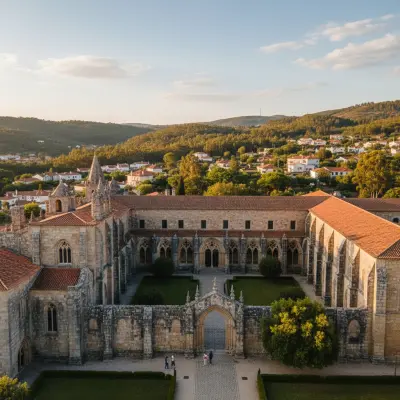
- For the traveller who wants historic luxury and silence, the Pousada Mosteiro de Guimarães, set inside the former Santa Marinha monastery, is the obvious choice. It sits outside the centre but with easy transfer.
- For those who prefer to wake up at Largo da Oliveira and head down for breakfast, the Hotel da Oliveira has the best location in the historic centre.
- For travellers who want contemporary comfort and spacious rooms, the Hotel de Guimarães is the sensible choice, near Toural square.
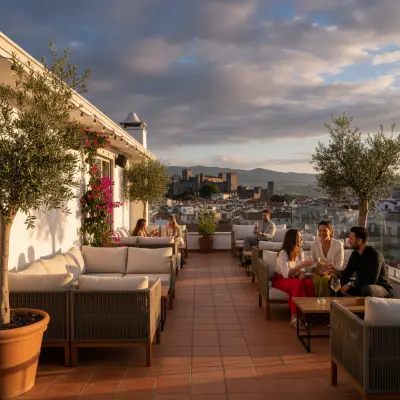
At the end of the day, after any of these trips, the best place for a drink is the Rooftop Bar at the Eurostars Santa Luzia, with views of the Castle and the rooftops of the historic centre. Go at sunset, order a decent gin and tonic, and try not to talk to anyone for half an hour. It is the most civilised way to close a day of movement.
The trip nobody considers: the Azores
No, it is not a day trip. But there is a direct TAP flight from Porto to Ponta Delgada, and in just over two hours you are in another archipelago. For travellers staying more than a week in Guimarães who want an unexpected interlude, two or three days in São Miguel is worth considering. The whale watching in Ponta Delgada during the blue whale peak season is the kind of experience that reconfigures what a trip to northern Portugal can mean.
Quick calendar
Do not go everywhere in the same week. Pick three, slowly.
- Thursday: Barcelos for the market, back by late afternoon.
- Friday or Saturday: Braga early morning, Bom Jesus in the afternoon.
- Sunday: Amarante for roast kid and the Tâmega.
- Any weekday: Citânia de Briteiros first thing, Casa de Sezim mid-morning, lunch back in Guimarães.
- A day with more time: Porto, no rush.
The rest, leave for the next visit. Guimarães rewards you for coming back.