Covilhã in the Rain: Indoor Plans That Actually Work
Covilhã was Portugal's Manchester for a century, which means huge stone buildings, wool museums and counter-cafés that laugh at the weather. A rainy day here isn't a backup plan: it's probably the best day to understand the city.
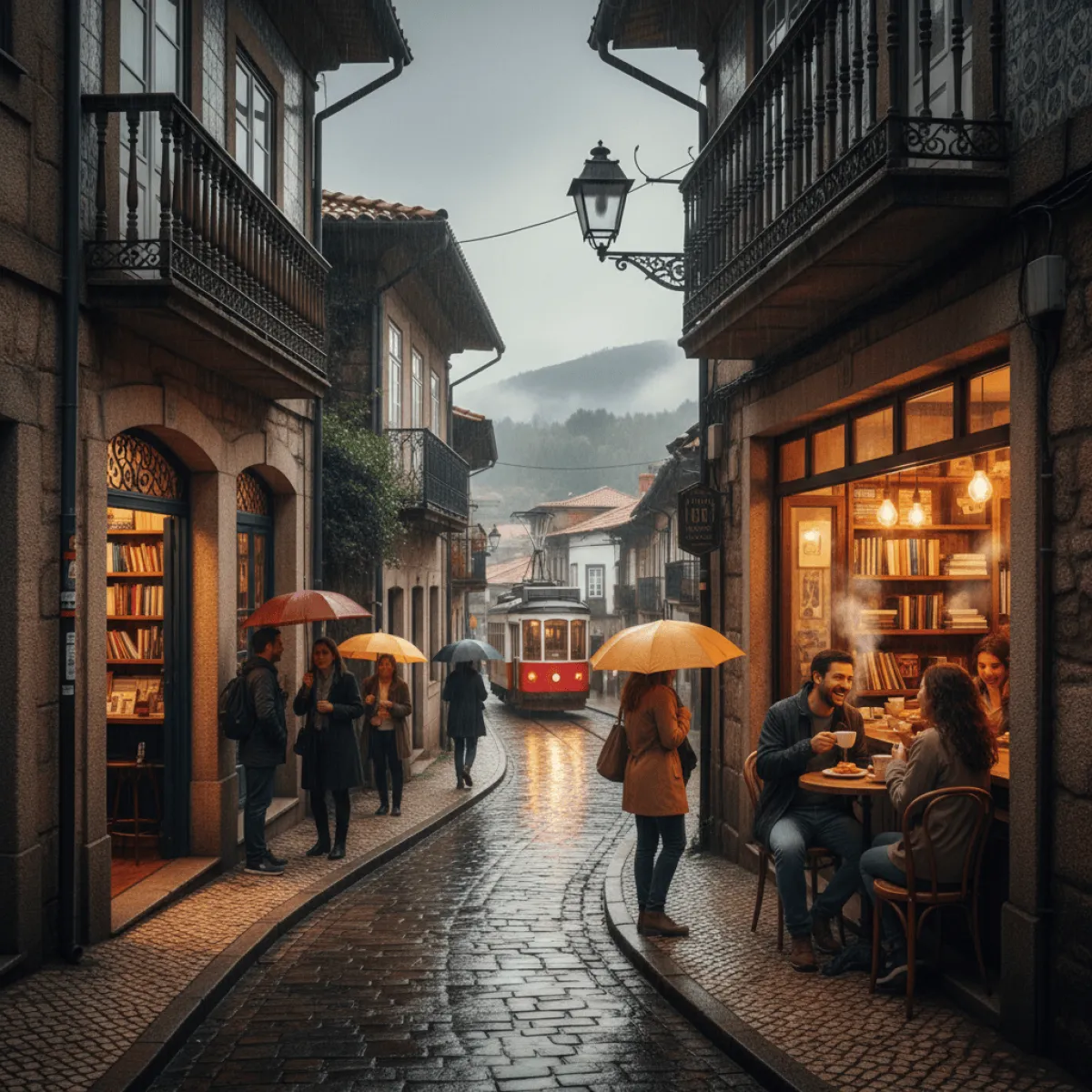
The first thing you learn about Covilhã is that the rain here doesn't ask permission. It climbs the slope, slides down the stepped streets, slaps the granite facades, and if you don't have a plan, it can turn a mountain weekend into an afternoon staring at the hotel ceiling. The good news: Covilhã is one of the best Portuguese cities for a wet day. Partly because of its industrial past, partly because life here has always happened indoors, between marble-counter cafés, repurposed wool factories and tiled-up taverns where the soup never stops.
This isn't a kill-the-time guide. It's a guide to using the rain, which in the Serra da Estrela is practically a season in its own right. Between October and April, expect at least half a day of sideways rain, the kind that gets in under the umbrella. Instead of running from it, build the day around it.
Breakfast with a view of the rain
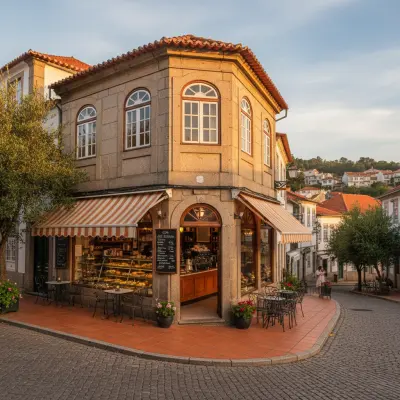
Start where Covilhanenses start: at the counter. The city still has a working counter-café culture, and on a wet morning that's where the conversation lives. Café Primor is the classic option, that mix of neighbourhood pastry shop and meeting point for everyone, the lady going to mass, the guy coming off the night shift at the hospital. Order a galão escuro (a long milky coffee) and a regional pastry. Ask if they have tigelada beirã, an egg-and-cinnamon dessert from this region that shows up by the season.
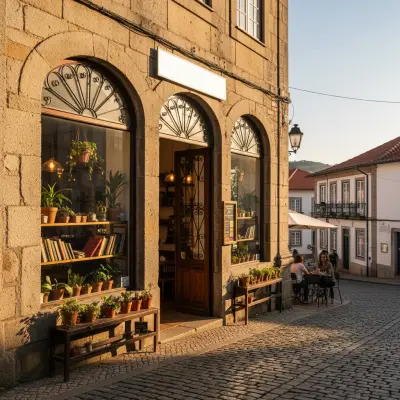
If you want something quieter, with a table where you can open a newspaper and stay an hour, cross over to Café Saudade. It's the kind of place where the rain on the windows is part of the furniture. Decent toast, fresh croissants, and tea that's actually drinkable, which in inland Portugal is not a given. On a rainy morning, take the corner table near the bookshelf and stay.
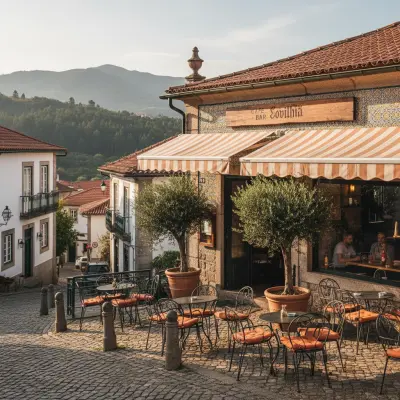
If you're a late riser jumping straight to a long brunch, Café Bar Covilhã Jardim sorts you out. Covered terrace, proper sandwiches above the local average, and the practical bonus of being next to the public garden, which means you can stretch your legs between showers without getting drenched.
Mid-morning: Covilhã, the wool city
Here's the trick to a rainy day in Covilhã: this city was, for a century, the Portuguese Manchester. It had more than twenty wool factories at full tilt, dressed the Portuguese army, and exported textiles across Europe. That past left huge stone buildings with tall vertical windows, now repurposed into museums, university residences and cultural spaces. When it pours, they're unbeatable.
The obvious starting point is Covilhã's Wool Museum, housed in the old Real Fábrica de Panos next to the University of Beira Interior. Block out two hours. The permanent exhibition takes you from the 19th-century dyeing rooms, with the original tanks still set in the floor, up through the 20th-century carding and spinning machines. There are well-made panels on workers' lives, the workers' neighbourhoods, the strikes, the factory hierarchy. It's one of those museums that understands industrial history only works when you tell people's stories. Check opening hours on the website before you go, they shift with the season.
If you want to go further and you have a full morning, the Wool and Walls guided tour pairs industrial heritage with the street art that now covers the city's walls and gables. Covilhã has one of the largest large-scale mural collections in inland Portugal, thanks to the WOOL festival, and visiting it in the rain is less absurd than it sounds. Many murals sit in narrow streets and the grey light pushes the saturated colours forward. Wear rubber-soled shoes and prepare to climb.
Lunch, in a coat that's still dripping
Lunch in Covilhã on a rainy day is serious business. The city is steep, the streets have brutal gradients, and nobody minds if you walk in with a wet jacket. Look for a tasca with the soup of the day chalked on a board, a hand-written menu, and that warm wave of broth that hits you when you push the door. Order bean and cabbage soup, or a canja, and then posta na pedra (steak grilled on a hot stone) or roast kid if it's available. The Serra da Estrela cheeses from this area, still buttery if the season has been kind, are a meal-ender that justifies coming here in October or November on its own.
A pragmatic note: many smaller restaurants close between 3pm and 7pm, and on a wet day it's tempting to stretch lunch out. Do it. Order a coffee and a medronho or ginja liqueur, watch the drops slide down the glass, and let the afternoon open up at its own pace.
Afternoon plan A: the proper culture run
If you want to use the rain for a full city afternoon, there's a combination that almost always works. Covilhã has urban lifts and a funicular that connect the historic centre to the lower town, and using them on a wet day is part local trick, part attraction. You see the city in cross-section without arriving at the hotel completely soaked.
Visit the Sé Catedral, climb to the Praça do Município, peek into the museum of art and culture. Step into a bookshop, a second-hand bookseller, a small gallery. Have a craft beer mid-afternoon at one of the local breweries that have opened in recent years, partly because of the university crowd, partly because the region has a growing producer scene. If you pass a cheese shop offering tastings, go in. On a rainy day, anything that involves sitting still in a chair, eating or drinking, counts as a win.
Afternoon plan B: the one nobody mentions
If the rain really sets in, there's an alternative most people don't consider: swap Covilhã for thirty minutes of car and go to Fundão. Yes, on a rainy day. It works. The shopping streets are mostly covered, the pastry shops have decent tigeladas and papos de anjo, and the café life talks to Covilhã's. If you hit the right time of year, you can cross-reference what we wrote in our Fundão cherry blossom guide. In March and April the region flips between rain and sun, and the orchards take on an almost unreal look on heavy-sky days.
Another option, if you want to use the rainy day as an excuse to see another part of the Beira region: the Schist Villages day trip. In the rain, with smoke rising from chimneys and the dark stone darker still, these villages work better than under a punishing August sun. Take a car with decent tyres, warm boots, and plan to eat in a small tavern, slowly.
For those who refuse to stay indoors: the serra in the rain, done right
There is a kind of traveller who hears "it's raining" and thinks "good, the mountain will be empty". If that's you, the Serra da Estrela in the rain can be a strong experience. But you need to know what you're doing. Our Manteigas and the Snow Wells guide gives a good sense of how to approach the serra outside the summer cliché. In the rain, shorten the route, pick safe surfaces, and have a plan B that ends indoors next to a fireplace.
One warning: in the Serra da Estrela, what falls as rain in town often falls as wet snow above 1,500 metres. Check IPMA (Portugal's weather service) before you head up. If the road to Torre has restrictions, don't push your luck. The mountain will still be there tomorrow.
Late afternoon: the cake ritual
There's a moment, around 5:30pm, when a rainy afternoon demands a pastry. It's almost compulsory. Go back to Café Primor or Café Saudade, choose a pastel de feijão, a honey cake, or, in season, a slice of chestnut cake. Order a double coffee. Look at the window. This is the Covilhã that loves itself most, and you find it best when the weather forces you to slow down.
Where to stay to make the most of a rainy day
I won't recommend specific hotels without confirming they're still good, but here's a principle. In Covilhã, on a rainy day, pick lodging in the upper centre, near Praça do Município or the cathedral. You'll save yourself dozens of minutes of walking on slick stone and you can pop back to change clothes between activities. Hotels at the edges of the city save you money but cost you in logistics. If you're travelling as a couple and want the day to feel special, pay a bit more for a place with a view of the serra, even knowing half the time you'll only see cloud. When the cloud opens, it pays for itself.
The practical summary for a rainy day in Covilhã
- Morning at the counter of one of the classic centre cafés, with a galão and regional pastry.
- Two hours at the Wool Museum, including time in the 19th-century dyeing rooms.
- A long tasca lunch: soup, hot meat dish, Serra da Estrela cheese to finish.
- Afternoon between museums, bookshops and the urban lifts, or a getaway to Fundão or the Schist Villages.
- Late afternoon with pastry and a double coffee. If you still have energy, a late dinner in the university quarter.
Covilhã doesn't need sun to be interesting. In fact, some of us would argue the city is better understood when the sky closes in and the stone darkens, when the repurposed factories take on that cinematic look, and when the cafés fill up with people shaking out their coats at the door. Come in November, bring a waterproof, and give the rain a chance.