Covilhã Has No Beach: Where to Swim and Escape Crowds
Covilhã has no beach, sits at 600 metres of altitude, and that is exactly why you should come here in August. An honest guide to the Zêzere river pools, the cafés that open at seven, and the art of escaping the coastal crowds.
Let us deal with this in the first paragraph: Covilhã has no beach. The town sits at 600 metres of altitude, leaning against the Serra da Estrela, and the Atlantic is nearly two hours away on the A23. If Google sent you here looking for white sand and sunset mojitos, Google lied. You can close this article, or you can keep reading, because the whole reason Covilhã is worth visiting in July and August is precisely that it has no coastline, while the Algarve breaks occupancy records and Comporta charges thirty euros for a sandwich.
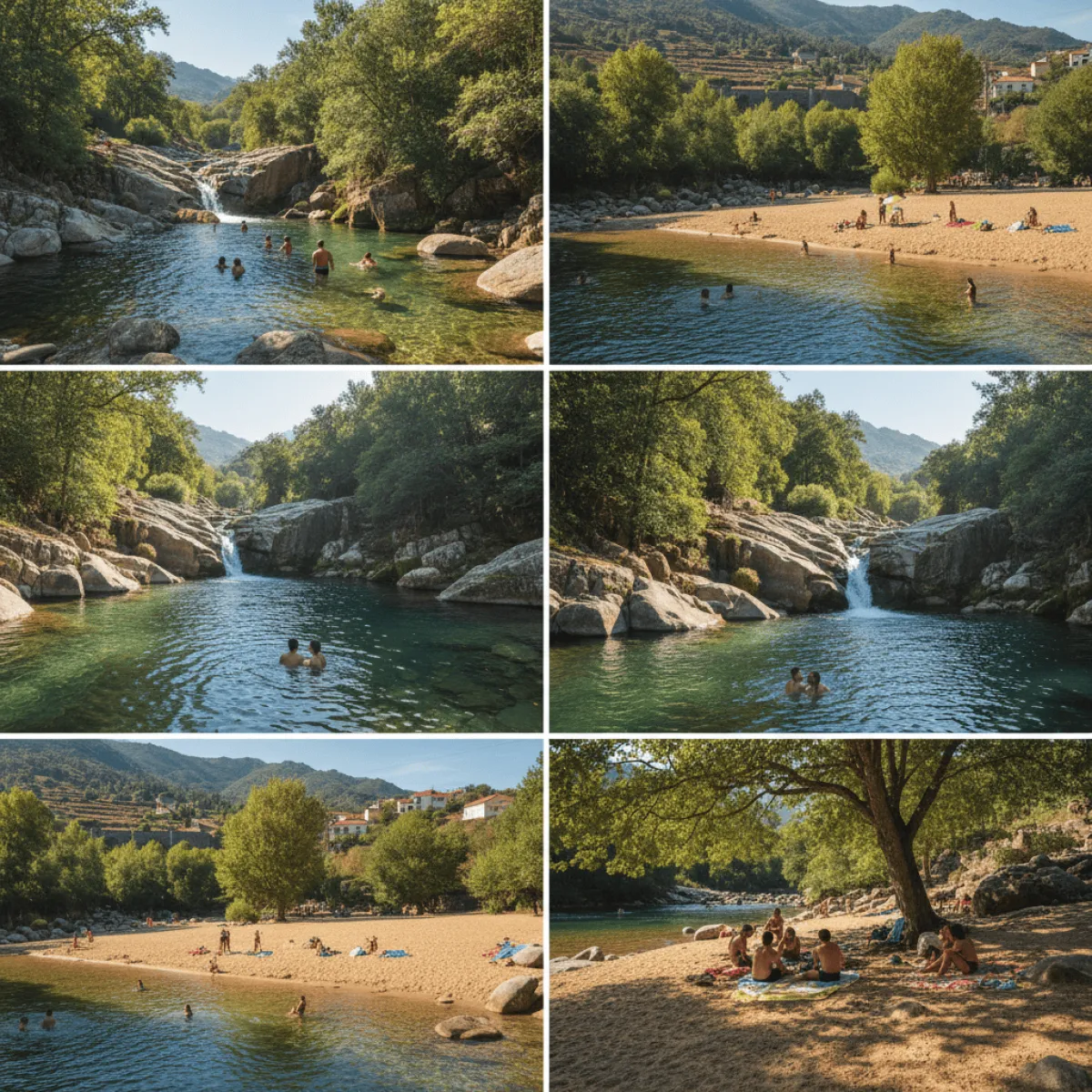
Anyone who grew up in the Beira region knows that the word praia stretches. There are sand beaches, yes, but there are also river beaches, those bends in the water where the current runs cold even when the air hits 35 degrees in the shade and where the background noise is poplar leaves rattling, not a Bluetooth speaker playing reggaeton. Covilhã is the perfect base camp for this parallel-universe Portuguese summer. You sleep in town, you have lunch at a café with a valley view, and in the afternoon you point the car at a riverbed.
Before You Leave: the Breakfast That Sets the Day
A day of river swimming starts, like any decent day, with caffeine and sugar. Covilhã has three places worth your first twenty minutes of the day, each serving a different function.
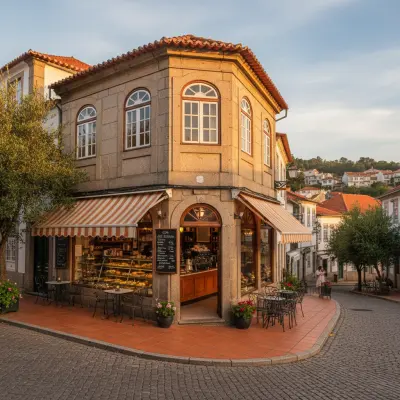
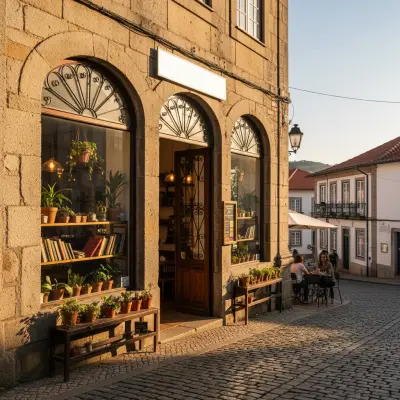
If you are driving early to grab a riverside spot before the families arrive with coolers, start at Café Primor. It is the kind of pastry shop where the woman behind the counter knows the man in the hat wants a double galão and half a torrada before he opens his mouth. Fresh bread, bolos de arroz still warm, a full breakfast for under four euros. It is not Instagrammable. That is exactly why it is good.
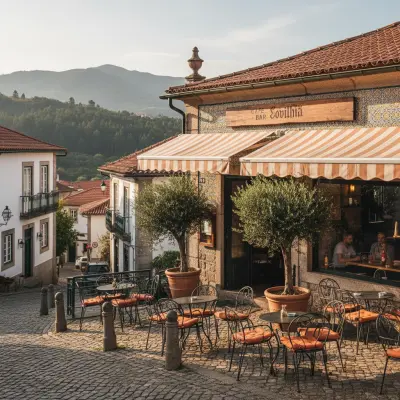
If you prefer to linger, sit in the sun and pretend you are on holiday before you officially are, head to Café Saudade. The name says it all. It is one of those spaces that manages to be simultaneously nostalgic and modern without sliding into kitsch, and where you can order pennyroyal tea while rereading the day's itinerary.
For anyone staying in the centre and walking to the park before slinging on a backpack, Café Bar Covilhã Jardim is the obvious pick. Small, with a terrace facing the greenery, and a mixed clientele of UBI students and pensioners arguing about local politics. Pay for the coffee, ask for a glass of tap water (Covilhã water is good, no reason to spend money on bottles), and go.
The River Beaches: Where to Go and What to Expect
The geography helps. Covilhã sits half an hour from the best river beaches in the region, all on the Zêzere river basin or its tributaries. Golden rule: arrive early. In July and August, any decent praia fluvial is full by eleven in the morning. Whoever shows up at noon parks a kilometre away and trudges across a dust field with chairs under one arm. Do not be that person.
Valhelhas
Praia Fluvial de Valhelhas is the most famous in the area, for good reason. It sits in a wide natural pool of the Zêzere, with a small dam creating water deep enough for proper swimming. It carries Blue Flag status, has lifeguards in summer, and a snack bar where you can have a prego and a small beer without highway robbery prices. The catch? Weekends in August are unbearable. Go on a Tuesday morning and it becomes another place entirely. The water hovers around 18 degrees in high summer, which is fun and healthy for fifteen seconds and then requires character.
Loriga
More towards Seia, but perfectly reachable from Covilhã, Praia Fluvial de Loriga has a natural pool with a waterfall feeding it. It is among the most photographed in the Serra, which means the secret is out. But if you arrive before nine thirty in the morning, the sun is still hitting the rock face on the far side and you have a real chance of swimming alone for half an hour. Pair it with lunch in the village centre, where small tasquinhas serve roast kid at prices that look misprinted from the last century.
The Small Ones, Unmarked
Locals do not go to Valhelhas in August. They go to bends in the river that have no signpost, no bar, no lifeguard, places you find through stubbornness or invitation. I am not going to tell you where, because half the joy is the search, and because writing in print that there is a deep pool three kilometres from such-and-such junction is the fastest way to ensure it gets crowded within two summers. Ask at the local café terrace. If they take a liking to you, someone will sketch a route on a napkin.
When the Heat Gets Serious: the Altitude Alternative
There are days when the Cova da Beira boils. When the pharmacy thermometer in Praça do Município reads 38, forgetting the valley and going up is the only sensible move. The mountain runs five to eight degrees cooler, and the high-plateau streams have the kind of transparency you rarely see south of the Coimbra latitude.
The guide Manteigas: Hiking the Serra da Estrela Snow Wells Trail gives you the structure for a full day on a serious route, with technical stops at places where you can dunk your feet in water that was solid ice three months earlier. Manteigas is half an hour from Covilhã along the glacial valley road, and the detour pays off on any hot day.
If you prefer to combine mountain with material culture, do something else: go south, towards the schist villages. The route Covilhã to the Schist Villages: A One-Day Road Trip proposes a loop through villages with river pools far less crowded than the main Zêzere. Janeiro de Cima, Álvaro, Pedrógão Pequeno: each has its own pool, its own waterfall, its own shady corner. And almost nobody gets there in July, because most tourists still think the Serra ends at Torre.
Plan B in Full: When You Have Had Enough Water
There are people for whom a river is a river and a sea is a sea and the two should never mix. Fair enough. For those people, Covilhã offers something else: an urban summer without the urban summer madness, in the sense that you can spend days in town without bumping into the chaos of the coastal capitals.
The industrial Covilhã of the nineteenth-century wool mills is everywhere, even when invisible. The factories closed, were converted, were demolished, were painted over. The experience Wool and Walls: A Guided Tour of Covilhã's Industrial Heritage and Mural Art reads this dual city, with the giant murals from the WOOL project serving as the key to interpret what is left of the chimneys.
Whoever wants the indoor version, air-conditioned and with a closed narrative, goes to Covilhã's Wool Museum: Where Looms Tell the Story. It is one of the best-curated industrial museums in the country, installed in a former factory and an old royal dyeing house from the days of the Marquis of Pombal. Block off two hours. On 35-degree afternoons, the cool of the stone rooms is reason enough to walk in.
Eating Well Without Crowds
The other upside of no beach: no restaurants trying to push three hundred covers a night. You eat slowly, you pay Beira Interior prices, and you talk to whoever is cooking. Covilhã has no Michelin stars, and that is an advantage. The small restaurants on the streets climbing up to the Jardim Público serve lamb stew and carqueja rice at prices that still make sense. Ask if mountain goat is on. Refuse to eat trout that claims to be from the river but is, in all likelihood, from an industrial fish farm.
For dinner, the rule is simple: if the menu has photographs, run. If the menu is handwritten in barely legible chalk, sit down. Bean soup, Serra cheese (the real one, not the industrial imitation), and a glass of red from the Cova da Beira. Total: about fifteen euros. Olives, bread and tuna paste will appear on the table as couvert. Pay for them without complaining; that is how the system works in Portugal and that is how it pays the people in the kitchen.
If You Have an Extra Day
For anyone staying three or four nights in Covilhã, the detour to Fundão is worth it, especially if your trip falls in late March or early April. The guide The Ephemeral Bloom: A Guide to Seeing Cherry Blossoms in Fundão handles that specific moment, but even outside cherry-blossom season Fundão has a modern municipal swimming pool, decent restaurants and a historic centre prettier than most people expect.
Logistics Without Drama
By car, Covilhã is two and a half hours from Lisbon on the A23 and two hours fifteen from Porto via A25 and A23. By train, there are daily services from Lisbon to Covilhã station, but the last leg of the journey is the classic Beira Baixa: slow and with stops that were not on the timetable. If you arrive by train, plan to need a rental car to reach the river beaches. There is no useful bus service to Valhelhas in August.
Sleeping: Covilhã has enough hotels, without excess. Hotels in the centre run between 60 and 100 euros per night in high season, which by 2026 Portuguese standards is practically a bargain. Rural houses on the outskirts come cheaper and throw in mountain views. Book ahead for August weekends, especially if there is a religious festival in some nearby parish. There is always one.
What to bring: swimsuit, towel, water shoes (river stones cut), mosquito repellent for the end of the day, and a sweater for the way back. Even in August, after eight in the evening the temperature drops, and anyone returning from the mountain in shorts and a t-shirt regrets it between the car and the hotel door.
You will not need industrial factor 50 sunscreen, but bring something reasonable. The altitude tricks you. Two hours at the riverside without care and you come out the colour of a salmon fillet.
To Sum Up
Covilhã is the exact opposite of a seaside town, which is precisely why it works as a summer base for anyone with a horror of beach changing rooms. You come here to swim in water that hurts your feet, eat real cheese, read a book in the shade of a chestnut tree, and discover that Portuguese summer can be something other than crowded towels and 25-euro daily parking. The mountain is here all year. The seven to ten million tourists who pick the Algarve in August are not. Do the maths.