Aveiro Beyond the Canals: The Side Nobody Sees
Everyone knows the moliceiros and ovos moles. But the Aveiro worth discovering is on the other side of the canal: the Beira Mar fishing quarter, the working salt pans, a real fish market, and the São Jacinto nature reserve. Two days change everything.
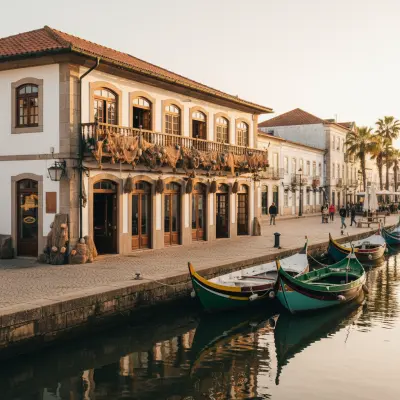
Let's be honest: most people who visit Aveiro do exactly the same thing. Moliceiro boat ride, ovos moles, a selfie at Costa Nova's striped houses, a forgettable lunch, and back in the car. There's nothing wrong with any of that. The moliceiros are genuinely charming, ovos moles are delicious, and Costa Nova is as photogenic as advertised. But if that's your entire Aveiro experience, you've seen the postcard and missed the city.
I made the same mistake for years. Aveiro was a two-hour stop on the way to Porto or Coimbra. Then a local friend took me on a proper tour, starting on the other side of the central canal. And I realised the Aveiro I knew was, at best, a third of what was there.
Beira Mar: the neighbourhood that actually breathes
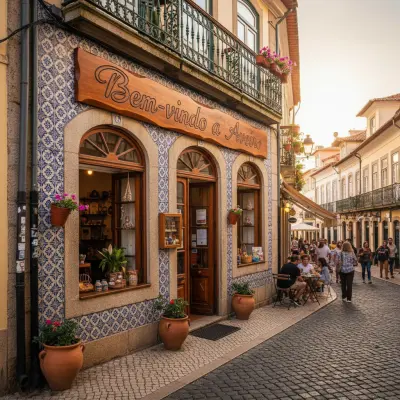
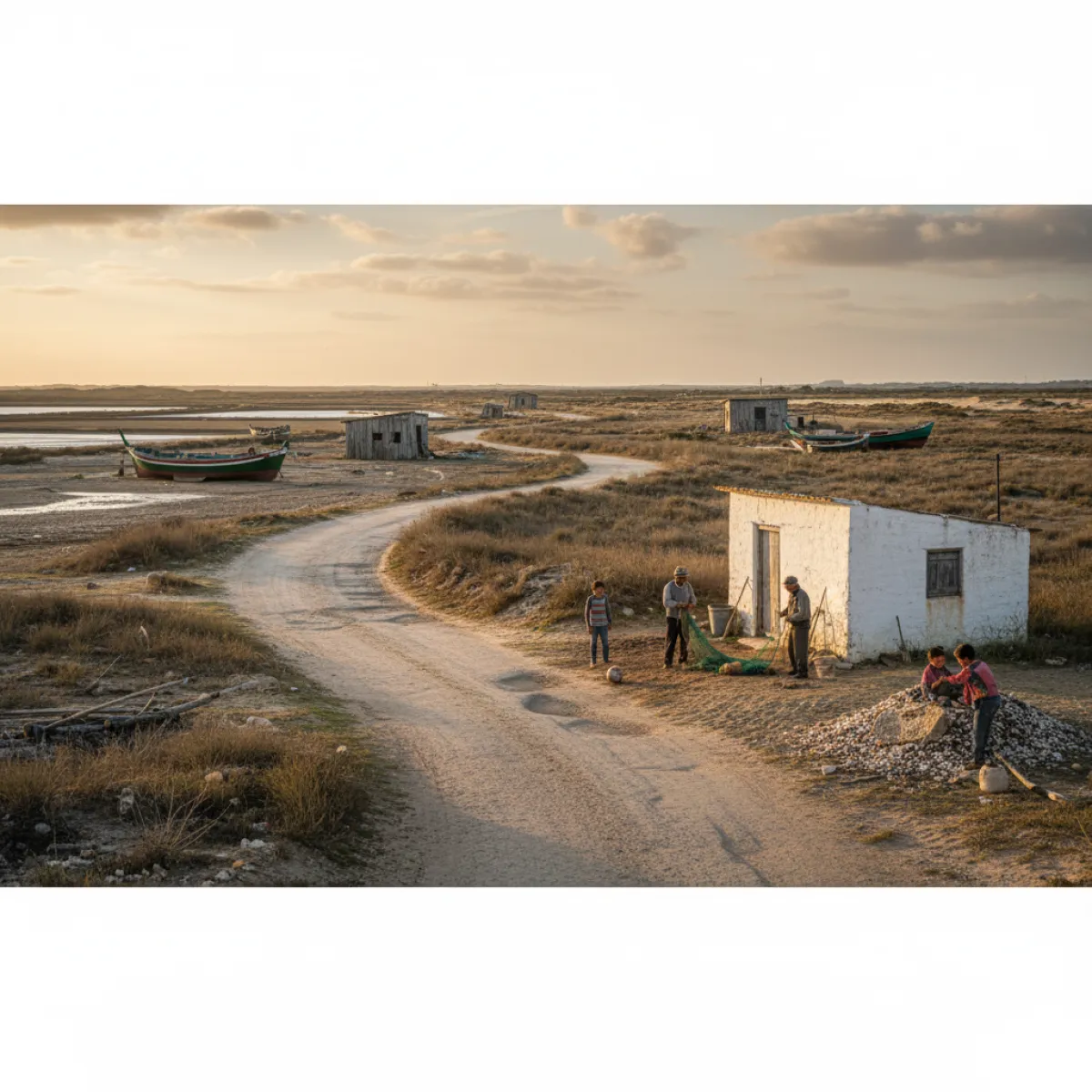
Everyone passes through the Beira Mar district on the way to somewhere else. Few stop. And that's precisely what makes it worth your time. This former fishing neighbourhood, squeezed between the Canal de São Roque and the salt pans, has a completely different feel from the tourist centre. The houses are lower, more colourful, and many still have fishing nets drying in the yards.
This is where Aveiro's Art Nouveau heritage gets interesting. Not in the museum buildings downtown, but in residential facades, in tiles on houses where people still live. An Art Nouveau walking tour through Beira Mar is probably the best way to catch these details, because on your own you'll walk past half of them. Local guides know every facade, every story, every decorative flourish that the hurried visitor misses.
If you'd rather go solo, go early. At 8am, Rua João Mendonça has half a dozen people drinking coffee at the counter. The smell of fresh bread mixes with the salt air from the ria. At that hour, the neighbourhood belongs to the residents.
The salt pans: the show nobody watches
Aveiro's salt pans are one of Portuguese tourism's great absurdities. They're right there, in the middle of the city, and most visitors glide past them on a moliceiro without even registering what they are. Between June and September, when salt production is active, the scene is remarkable: white mounds of flor de sal against the pink water of the evaporation ponds, with salt workers starting before dawn to beat the heat.
Aveiro salt is serious business. The flor de sal here competes with Guérande's in France and costs a fraction of the price. Buy directly at the warehouses near the salt pans, not at the souvenir shops in the centre. The price difference is considerable, and the product is identical.
If you're lucky, you'll find a salt worker willing to explain the process. It's hard labour, weather-dependent, and increasingly squeezed on margins. These salt pans predate Portugal as a nation, and their survival is not guaranteed.
The fish market and the lunch worth the trip
Aveiro's Mercado do Peixe is not a tourist market. There's no food court, no craft beer stall, no Instagram-friendly decor. There are fish stalls, women shouting prices, and a floor that's permanently wet. It's a real market. Go in the morning, before 11am, when the day's catch arrives.
The area around the market is where locals eat lunch. Forget the restaurants along the central canal, where menus in three languages are the first warning sign. Here, daily specials cost less, portions are bigger, and the fish is fresher. Look for caldeirada or fried eels. Aveiro's ria eels are a singular product: fatter and more flavourful than anywhere else. If a restaurant has eels on the menu, it's almost always the right call.
Praia da Barra: more than the lighthouse
Everyone knows the Barra lighthouse, the tallest on mainland Portugal. Fewer people know that Praia da Barra is one of the best surf spots between Lisbon and Porto. Wave consistency is impressive, and the beach is wide enough that it never feels crowded, even in August.
If you've never surfed, Aveiro is an excellent place to start. Surf lessons at Praia da Barra offer ideal beginner conditions: regular but non-intimidating waves, water that's bearable in summer (this is Portugal, let's be realistic), and instructors used to teaching from scratch.
The bus from Aveiro to Barra takes about 30 minutes and is cheap. In summer, frequency increases. By car, it's 10 minutes. No excuses.
The other side: São Jacinto and the nature reserve
And then there's São Jacinto. To get there, you catch a ferry at Forte da Barra, a short crossing that changes everything. São Jacinto is a peninsula between the ria and the ocean, home to a nature reserve that's one of the Centro region's genuine surprises.
The Reserva Natural das Dunas de São Jacinto is a two-to-three-hour walk along wooden boardwalks through dunes, pine forests, and surprising biodiversity. It's the total opposite of central Aveiro: silence, nature, and the feeling of being somewhere mass tourism hasn't found yet. Bring water, sunscreen, and binoculars if you're into birdwatching.
The ferry runs on a limited schedule, so check locally before you go. And there are no notable restaurants in São Jacinto, so eat in Aveiro before or after.
Where to stay to see this Aveiro
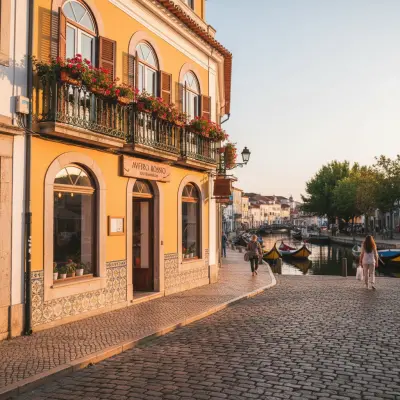
Location makes all the difference. Stay in the tourist centre and you'll naturally gravitate toward the same streets and the same restaurants. My suggestion: stay near the Canal de São Roque or the Beira Mar district.
Cais do Pescador is exactly what it sounds like: accommodation by the old fishing dock, with the ria at your door. It's the kind of place where you wake up to the sound of water and step straight into the neighbourhood, without crossing the tourist zone. If you prefer something more central but with character, Aveiro Rossio Bed & Breakfast sits by Praça do Rossio, which is the real heart of the city, not the moliceiro canal.
The regional picture
Aveiro makes far more sense as part of a broader Centro region trip. If you're planning a week in the heart of Portugal, Aveiro deserves two days, not two hours. Combine it with Coimbra, where street art is reshaping the Alta district, and you've got a Centro itinerary that goes well beyond the obvious.
The truth is that Aveiro suffers the same fate as many mid-sized Portuguese cities: it gets reduced to one or two clichés, visited superficially, and dismissed. The moliceiros and ovos moles are the introduction, but what's behind them is worth far more. The salt pans, the fishing neighbourhood, the market, the São Jacinto reserve, the surf at Barra. Aveiro is a city of water, and water has many sides.
Take your time. Stay at least one night. And if possible, skip the moliceiro. Or at least, save it for last.