Aveiro's Coast: Where to Surf, Learn, or Just Watch
Aveiro's coast has consistent waves, fewer crowds than Peniche, and grilled fish ten minutes from the beach. From Praia da Barra to wild São Jacinto, this is the guide for surf, sea, and zero pretension.
Most people come to Aveiro for the canals and the pastel-coloured moliceiro boats. Fair enough. But if you stay in the centre, you miss half the story. Ten minutes by car from the Ria, the Atlantic breaks hard at Praia da Barra and Costa Nova, and what you get is one of Portugal's most underrated surf coasts. It's not Ericeira, it's not Peniche. That's exactly the point.
Praia da Barra: where it starts
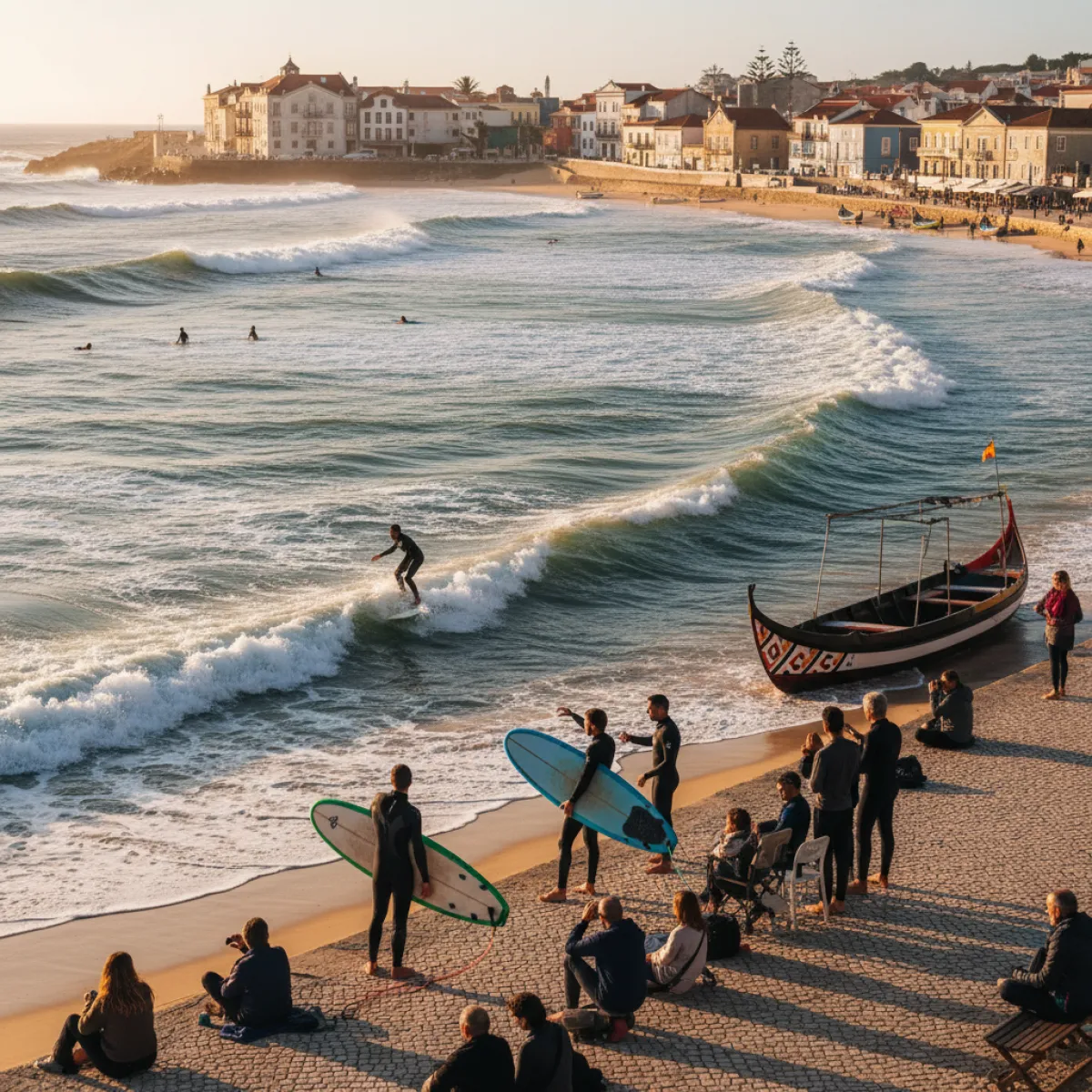
Praia da Barra is an exposed beach break with lefts and rights scattered across a wide stretch of sand. The north jetty channels the swell and, when a west swell meets an offshore east wind, clean walls form that work best around low tide. In winter, things get serious: overhead waves, strong rips, respect required. In summer, the swell drops and the water warms enough to make it ideal for beginners.
If you've never stood on a board, Barra is a solid place to start. Offshore Surf School operates right on the beach with group lessons and multi-day packages. Riactiva, closer to Costa Nova, offers surf alongside windsurf, kitesurf, SUP and kayak. Our expert guide to surf lessons at Praia da Barra covers everything from your first pop-up to actually riding a wave.
For those who'd rather stay dry, Barra has its own show. The Farol da Barra is the tallest lighthouse in Portugal: 62 metres, 271 stone steps plus 20 metal ones to the top. It opens on Wednesdays from 2pm to 5pm, and the view justifies the shaking legs. You can see the entire coastline, the jetty, the break, and spot exactly where surfers are catching the best sets.
Costa Nova: the stripes, the fish, the waves
Costa Nova sits just south of Barra and has its own character. The striped wooden houses are the obligatory postcard shot, but what matters is on the beach. The break here is consistent year-round, with the best northwest swell arriving between September and April. It's slightly less crowded than Barra, which for intermediate surfers is a blessing.
After a session, Costa Nova delivers what Peniche doesn't always manage: properly grilled fish. The restaurants along the main road live off whatever comes in through the Ria. Sole, sea bass, eels. I won't name specific restaurants I can't vouch for, but the rule is simple: if there's charcoal smoke coming out, sit down.
São Jacinto: for those who want it wild
On the other side of the Ria, reachable by ferry from Forte da Barra, São Jacinto is a different animal entirely. The electric ferry Salicórnia (yes, Portugal's first fully electric car ferry) gets you across in minutes, carrying passengers and vehicles. Praia de São Jacinto has a Blue Flag and a stretch of sand that, outside August, is practically empty.
This isn't an organised surf spot. No schools, no beach bars with cocktails. What you get is the Reserva Natural das Dunas de São Jacinto: 700 hectares of dunes, pine forests and freshwater lagoons that attract migratory birds. There are four colour-coded trails, ranging from 40 minutes to 3 hours. If you want ocean without crowds and nature without a filter, São Jacinto is the answer.
Surfing here is possible but wild. Unpredictable currents, no lifeguards, no safety net. Only for those who know what they're doing. For everyone else, it's perfect for walking the beach, listening to the Atlantic, and realising Aveiro has a coastline that goes far beyond the canals.
Where to stay near the coast
Location matters. If the plan is early morning surf, sleeping in central Aveiro and driving to Barra works (it's 10 minutes), but waking up to the smell of salt is a different experience.
Cais do Pescador puts you right by the Ria, a rental with character. If you'd rather be in the heart of the city and do everything on foot, Aveiro Rossio Bed & Breakfast is steps from the Rossio and the moliceiros. For something else in the centre, Welcome In Aveiro is another solid pick.
The advantage of staying in town is that swapping a wetsuit for a canal-side stroll takes no time at all. And after a day of waves, an Art Nouveau and Beira Mar walking tour shows you an Aveiro completely different from the one you saw at the beach.
When to go and what to bring
For serious surf, September to April. The swell is more consistent, the waves cleaner, the beaches emptier. Winter brings strong swells (December has the highest consistency), but you'll need a 4/3mm wetsuit and some experience.
For learning, June to September. Smaller swell, warmer water, and the schools are running at full capacity. A 3/2mm wetsuit will do. Group lessons tend to run around 30 to 40 euros per session, but check locally as prices vary by school and season.
For just watching, any time of year works. In winter, seeing surfers take on two-metre waves at Barra is a free show. Bring a jacket.
The bigger picture
Aveiro is part of a stretch of central Portugal that deserves more than a day trip. If you're planning a longer journey, our week-long itinerary through the heart of the country has suggestions for combining Aveiro with other destinations in the region. And if surf isn't your only interest, Coimbra is an hour away with a street art scene worth exploring.
What makes Aveiro's coast special isn't one thing. It's the combination: consistent waves without the southern crowds, a proper city ten minutes away, grilled fish that needs no sauce, and a ria that turns sunset into something unreasonably beautiful. It's not the next Ericeira. It's something else. And that's the reason to go.