Amarante: Melon, Figs and the August Fruit Trail
In August, Amarante is bought by the kilo: melons tested with a knuckle knock, figs picked straight off garden walls, and a route through Confeitaria da Ponte, Pobre Tolo and the bars along the Tâmega worth more than any postcard.
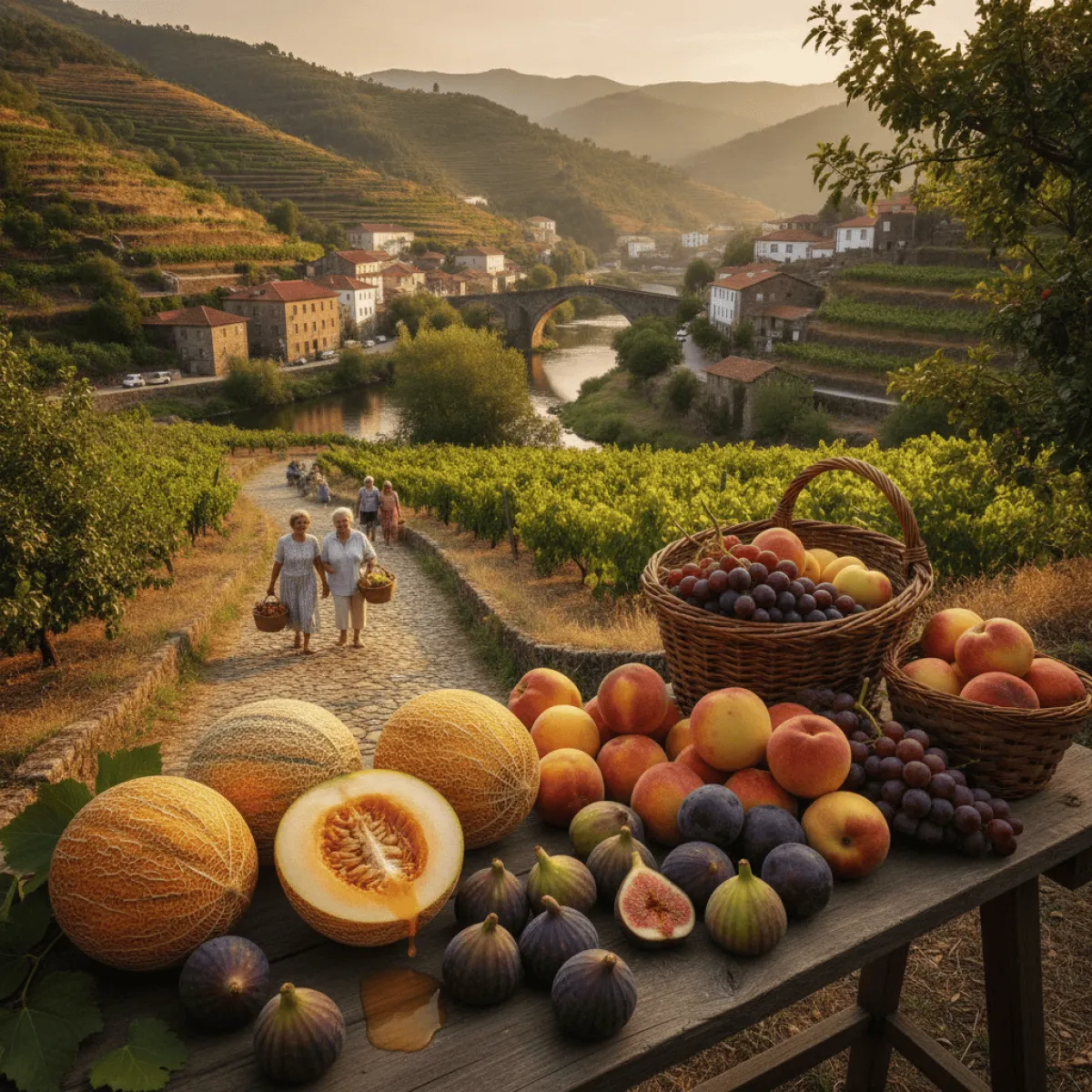
August in Amarante starts with the smell of melon splitting open at noon, when the heat finally breaks through the skin and the flesh releases that sweet, sticky perfume that clings to the hands of the fruit sellers near the Ponte de São Gonçalo. It is the season when the small farms of the Tâmega valley send boxes of figs still warm from the sun into town, melons that weigh more than they look like they should, and peaches nobody manages to eat without staining their shirt. This is not the Amarante of the postcards, with the convent and the bridge as a backdrop for photographs. This is the Amarante you buy by the kilo and eat standing up, sticky handed, on a bench in the shade.
The melon you buy in the morning and eat by night
Anyone who arrives early finds the fruit stalls opening near the municipal market, melons stacked like round stones, many grown along the banks of the Tâmega, where the alluvial soil produces a sweet, fleshy melon quite different from the dry-farmed melons of the south. The local rule is simple: knock on the melon with your knuckles and listen for a hollow sound. If it sounds full, it is not ready. If it sounds hollow, it is time. Nobody here buys a melon without testing it this way, and a fruit seller will laugh politely at anyone who does not know how.
Figs are less predictable. They come in several waves through summer, but August is when they peak, after the fig tree has already given its first fruit back in June and now empties out everything it has. The best ones are not on the stalls, they are on the trees hanging over garden walls, and more than once someone will hand over a fistful just because. Take it. This is Tâmega valley hospitality working exactly as it always has, without ceremony.
Confeitaria da Ponte: where conventual sweets meet fresh fruit
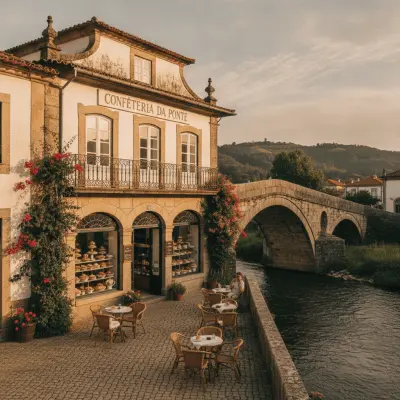
Amarante is a city built on conventual sweets, shaped by the nuns of the old Santa Clara convent into forms that always draw a poorly hidden smile from first time visitors. But in the August heat, the traditional conventual sweet sits too heavy, and that is where Confeitaria da Ponte gets the balance right: a short coffee, one small egg and sugar sweet, and then a slice of melon or a plate of halved figs to cut through the excess sugar. It is this combination, not the sweet alone, that makes sense in Amarante's heat. Sit on the terrace facing the bridge, order the coffee strong, and let the itinerant fruit seller who passes nearby finish your breakfast with melon sliced on the spot. It costs very little, and it is probably the most honest meal you will have in the city.
Pobre Tolo: the lunch that follows the season
For lunch, the bet is Pobre Tolo, a restaurant that does not stand on ceremony with its menu and adjusts what it serves to whatever came in from the market. In August, that means seasonal fruit shows up not only in dessert but also alongside savoury dishes, following a simple logic: if the melon is good right now, use it right now. Do not expect a fixed printed menu, expect a verbal rundown of what is available today, which is always a good sign in a small place. It is also one of the few spots in town where it is worth asking the waiter directly what came from the market that morning, because the answer changes daily.
What to order
- Fresh seasonal fruit for dessert, whenever available, instead of the heavier conventual sweet at lunch
- A simple main course, letting the seasonal sides take the spotlight
- Water, well chilled. In August, the heat in the Tâmega valley does not let up
Night belongs to the bars by the river
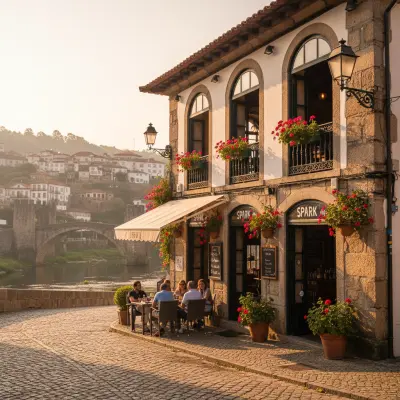
As the afternoon heat starts to break, Amarante's life shifts to the banks of the Tâmega. Spark Bar is the right call for anyone wanting a fresh summer fruit cocktail served right by the water, with the Ponte de São Gonçalo lit up in the background. It is not big city polish, it is a relaxed terrace where melon and passion fruit turn up in tall glasses and nobody minds if conversation runs late. For a different view, higher and more open over the river and town, Torre Jardim Bar earns its place through the framing alone, especially at sunset, when the light hits the granite of the riverside houses and everything turns a near orange tone.
The move is simple: start at Spark Bar for the fruit cocktail and the closeness to the water, then head up to Torre Jardim Bar for late afternoon and the view. Both make sense on the same night, and the walk between them is short enough to do on foot.
Moving through the orchards: bike and boat
For anyone who wants to see where all this fruit actually comes from, not just eat it, the Tâmega Ecopista bike tour with Amarante Trilhos is worth considering. The old railway line, now converted into a cycle path, runs alongside the river and passes exactly through the small farms that supply the town's market. In August, early in the morning before the heat sets in, you can cycle past melon fields and fig trees just metres from the path, a context that changes how you look at the fruit you later buy in town.
For those who prefer water to pedalling, the traditional boat experience on the Tâmega offers a slower, almost lazy look at the same territory. Seen from the river, the town takes on a different scale, and August heat is always easier to handle from the surface of the water than from the stone streets above it.
Getting there and what it costs
Amarante sits roughly 45 to 50 minutes by car from Porto via the A4, making it a perfectly reasonable day trip for anyone based in the coastal city, especially when paired with other stops in the north, as suggested in the guide to the best day trips from Porto. There is no active direct rail line to Amarante at the moment, so a car or intercity bus is the more practical option.
Cost wise, this is one of the cheapest food trips you can do in northern Portugal. A whole melon bought straight from the grower costs a few euros, a fistful of figs almost nothing, and a full meal at Pobre Tolo, dessert included, runs well below what an equivalent meal would cost in Porto. Fruit cocktails at Spark Bar and Torre Jardim Bar sit at normal terrace bar prices, no surprises there.
When to go
The first half of August tends to be peak supply, before the extreme heat starts to stress the trees and drag down fruit quality in the back half of the month. Go early in the morning to buy fruit, at lunchtime for Pobre Tolo, and save the afternoon and evening for the bars by the river. It adds up to a full day built around one simple idea: in August, the best way to get to know Amarante is through what it grows and cooks, not just through the stones of its bridge.
For anyone wanting to stretch the trip further north, it is worth looking at what is happening around Braga, where there is always a reason for a second stop, whether through the guide to Braga or, out of season, the guide to Holy Week in Braga. But that is for another day. In August, the commitment is to melon, figs and the Tâmega river, and Amarante, for once, needs nothing else to justify the trip.