Eating Amarante: Regional Dishes Worth the Drive North
In Amarante, the bôla de carne is worth the drive, the São Gonçalo pastries start conversations, and red vinho verde is the surprise nobody expects. A practical guide to eating well in the Tâmega valley.
Amarante has an image problem. Most visitors swing by for a photo of the São Gonçalo bridge, buy a phallic-shaped pastry, giggle, and leave. That's a mistake. This town in the Tâmega valley has one of the most compelling food traditions in northern Portugal, and almost nobody gives it proper attention.
We're not talking about reinvented tasting menus or chefs with Instagram followings. We're talking about recipes passed down through generations, built on local ingredients and a stubborn refusal to fix what isn't broken. If you're planning a day trip from Porto, Amarante should be at the top of your list, and the reason is the food.
São Gonçalo Sweets: Yes, They're That Shape
Let's get this out of the way. Amarante's convent sweets are phallic. The bolinhos de São Gonçalo, palitas, lérias: all shaped with a symbolism rooted in pagan fertility traditions, later absorbed into the festivities of the town's patron saint, the matchmaker São Gonçalo. During the São Gonçalo festival in June, people exchange these pastries as romantic gestures. It's tradition, not shock value.
What matters is that they're remarkably good. The base is the classic northern Portuguese convent recipe: egg yolks, sugar, almond. Every pastry shop in the old town makes its own version, and the differences are subtle but real. The dough might be denser or lighter, the filling sweeter or more restrained. Look for the confeitarias along Rua 31 de Janeiro: they tend to keep the most faithful recipes.
Don't just buy one to taste. Take a box home. They cost a few euros and make the best edible souvenir you'll find in the North.
Fogaças: Sweet Bread With a Pedigree
Amarante's fogaça is not the same as the fogaça from Santa Maria da Feira. Here we're talking about a dense sweet bread, scented with cinnamon and anise, with a slightly crisp crust and a moist interior that feels more like cake than bread. Originally made as offerings during religious festivals, the Amarante fogaça has centuries of history behind it.
It's the kind of thing you eat at breakfast with a strong coffee, or in the afternoon with a glass of local red vinho verde. You'll find them in almost every bakery in town, but the best come from those still using traditional ovens. Ask the locals: they know which bakery is the right one that month. Preferences shift, loyalties run deep, and everyone has a strong opinion.
Bôla de Carne: The Dish That Justifies the Drive
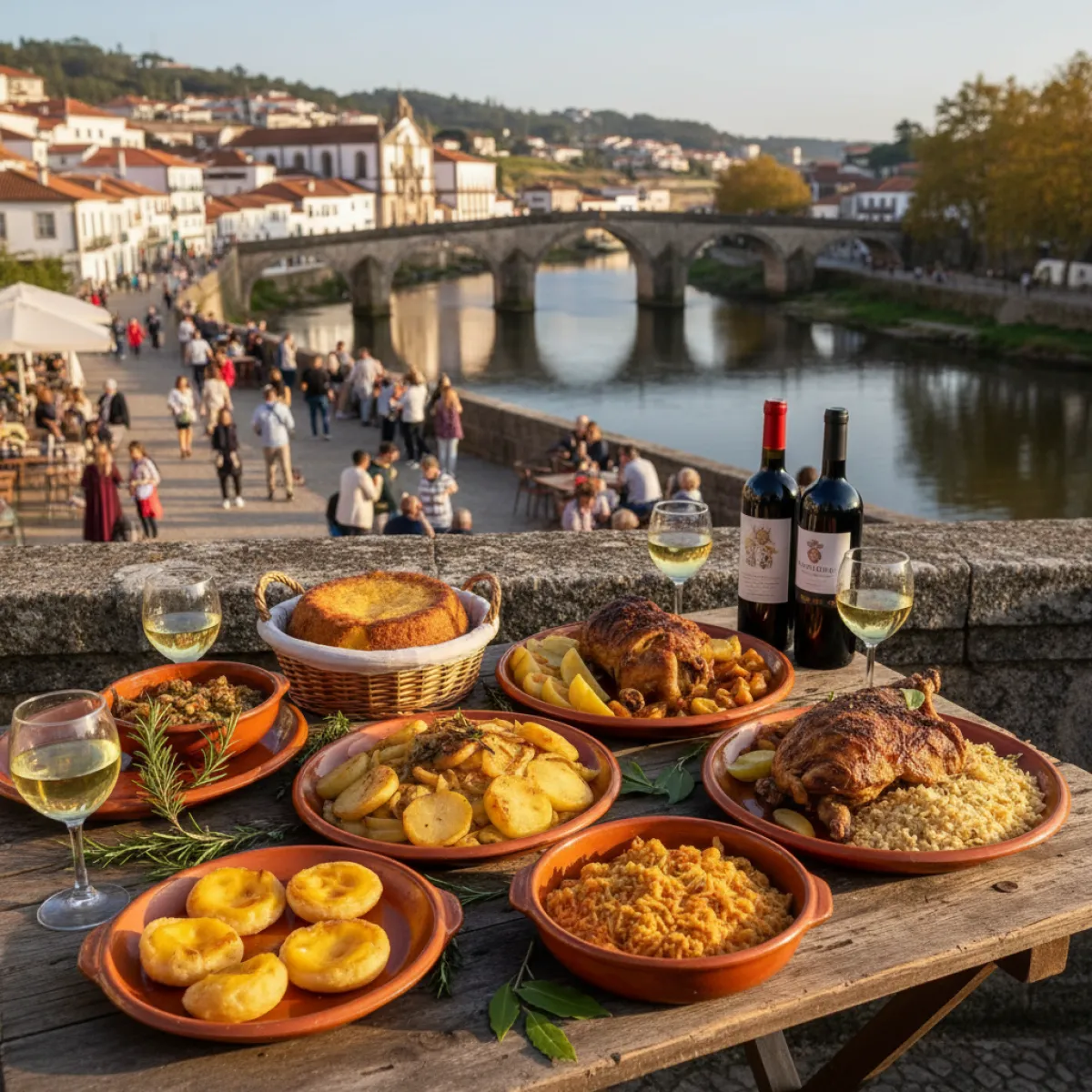
If I had to choose one single dish to define Amarante, it would be the bôla de carne. Don't confuse it with some service-station pastry or generic meat pie. Amarante's bôla is a serious construction: bread dough wrapped around layers of veal or pork marinated with cumin, bay leaf, and wine. It bakes slowly, and the result is something between a stuffed bread and a roast.
Some people say the best bôla is eaten the next day, cold, when the flavors have settled and the dough has absorbed all the meat juices. Personally, I prefer it warm, just out of the oven, when the crust cracks and the inside still steams. Try it both ways and decide for yourself.
You'll find bôla de carne at virtually any local restaurant. At Pobre Tolo, which is a solid reference for well-executed regional cooking, it's worth asking if they have it available. This is the kind of place where the menu respects tradition without repeating itself, and when the bôla appears, it's done properly.
Arroz de Cabidela and Other Northern Classics
Amarante shares with the rest of the North a passion for hearty, intensely flavored dishes that make no apology for the amount of food on your plate. Arroz de cabidela, rice cooked with chicken blood and vinegar, is one of them. It's not for the squeamish, but it's honest and flavorful in a way that surprises first-timers.
Then there's roast kid, omnipresent at Easter but available year-round at many restaurants. The secret is simplicity: garlic, salt, olive oil, potatoes on the side. Nothing else. When the kid is good and the oven is hot, you don't need sauces or tricks.
Tripe, of course, is everywhere. We're in the North. But if you want tripe, go to Porto. In Amarante, focus on what's from here.
Red Vinho Verde: The Worst-Kept Secret
Most tourists know white vinho verde. Fresh, slightly fizzy, perfect for summer. But red vinho verde is another story, and Amarante is one of the best areas to discover it.
It's a wine with more body than the white, with a lively acidity and light tannins. It pairs perfectly with the region's hearty cooking: the bôla de carne, the roast kid, the grilled meats. Many restaurants in Amarante serve wines from local Tâmega valley producers that you won't easily find elsewhere. Ask your server for recommendations. They usually take pride in the local wines and will suggest things that don't show up on tourist-oriented lists.
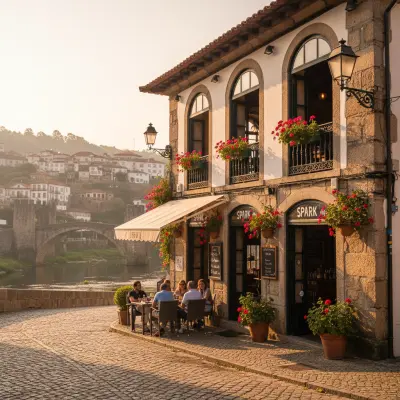
If you want to keep exploring after dinner, Spark Bar is a good bet for a livelier night out in the center. For something more relaxed, with a terrace and a view, Torre Jardim Bar works well for a late-afternoon drink when the light over the river is at its best.
What to Do Between Meals
Amarante isn't a place where you just eat and leave. There's a river, there's history, there's landscape. Between lunch and dinner, I recommend one of two things.
First option: cycle the Tâmega Ecopista. It's a flat route along the old railway line, beside the river, ideal for burning off the bôla de carne and building an appetite for dinner. Second option: a boat trip on the Tâmega, which gives you a different perspective of the town and the valley. Both are ways to understand why Amarante exists where it does: the river defines everything.
Getting There and How Long to Stay
From Porto, it's about 60 kilometers via the A4 motorway. An hour by car, maybe a bit more if you hit traffic leaving the city. Rodonorte runs regular buses, but a car gives you more freedom to explore the surroundings.
One day is enough to eat well and see the essentials. But two days allow a more human pace: lunch without rushing, a riverside walk, dinner somewhere different, pastries in the morning with no agenda. If you're exploring the North, Amarante pairs well with a stop in Braga, which is less than an hour away.
The Essentials
- Eat the bôla de carne warm, not cold from a counter. Order it at a restaurant that makes it fresh.
- Take São Gonçalo sweets home. They're cheap, unique, and everyone will ask about the shape.
- Drink red vinho verde, not white. It's the right match for the local food.
- Make lunch your main meal. Local restaurants tend to be at their best at midday.
- Don't try to do Amarante in two hours. Give it at least a full afternoon.
Amarante doesn't need grand adjectives to sell itself. The food speaks for itself, the river is right there, and the town has that rare balance between tradition and real life that makes northern Portugal so rewarding to explore. Go hungry. That's the only advice that truly matters.