Santana: A Walking Route Among Madeira's Triangular Roofs
In Santana, on Madeira's rain-soaked north coast, nearly 1,880mm of annual rainfall shaped the island's famous triangular thatched houses. A walking route through town, from the parish church to the Núcleo de Casas Típicas, with levadas and good beds along the way.
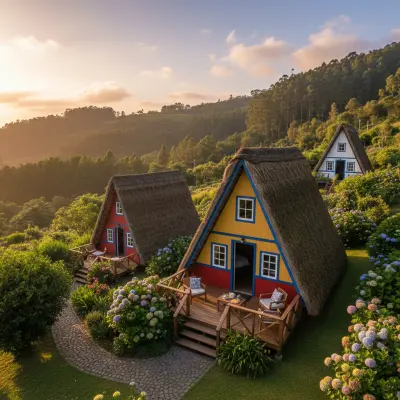
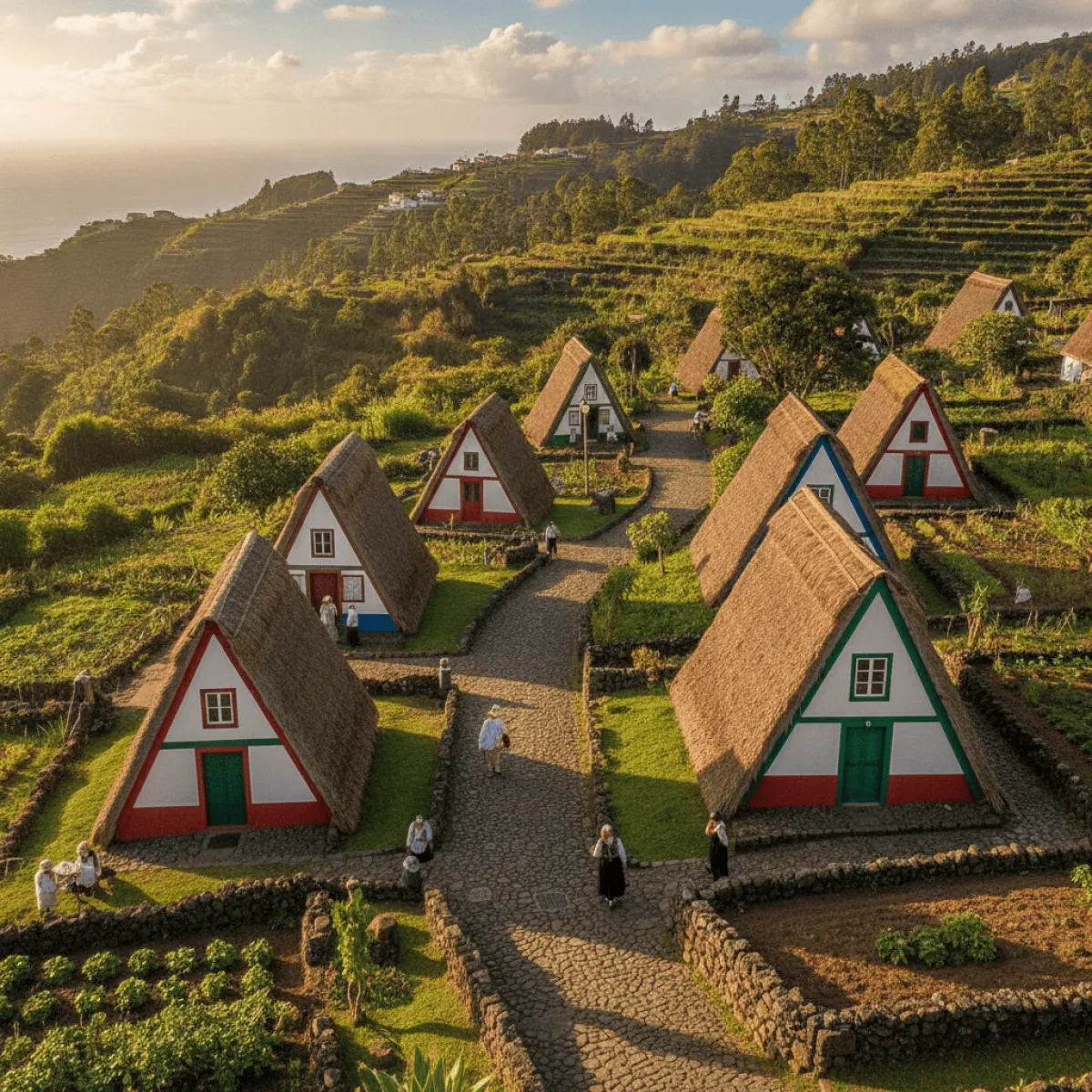
At 509 metres above sea level on Madeira's north coast, it rains here like almost nowhere else on the island: roughly 1,880 millimetres a year, spread across a near-constant dampness that feeds the laurisilva forest crowding the hills around town. That rain, more than any aesthetic ambition, is what shaped Santana's architecture. The traditional houses, small, about four metres by seven, have steep triangular thatched roofs that slope almost to the ground, whitewashed walls, and doors and windows painted red with blue trim. The pitch of the roof isn't decoration. It sheds water before it has a chance to soak in. The attic stored grain, the ground floor split into kitchen and bedroom. This is architecture born of survival that happened to end up photogenic.
This isn't an old town in the sense that Évora or Óbidos are old towns, with walls and a medieval street plan. Santana is something else: a mountain village where heritage is measured in rooflines rather than grand facades. Which is exactly why it rewards walking slowly, on foot, with enough time to understand why these houses became the most reproduced image of Madeira on every postcard rack on the island.
The Route: From the Church to the Theme Park
Fontanário de Santa Ana and the Parish Church
Start at the Igreja Paroquial de Santana, the parish church in the town centre. Right next to it sits the Fontanário de Santa Ana, a fountain classified as a Monument of Local Value since 2000, inaugurated on 1 June 1955 by Portugal's then-President. It's not a grand monument, but it's the kind of detail that tells you how a small town treats its heritage: carefully, without fuss. Give it two minutes before moving on.
The Núcleo de Casas Típicas
A short walk away, next to the Câmara Municipal (town hall), is the Núcleo de Casas Típicas de Santana, a cluster of thatched houses converted to sell local crafts and produce. Entry is free, and the place works as a kind of public living room for the town: this is where the real scale of these houses hits you, much smaller than any photo suggests. Don't expect a formal museum. Expect open doors, locals selling bread, honey liqueur and embroidery, and a dozen houses lined up that look like they were drawn by a child with a very steady hand.
Parque Temático da Madeira
If you've got another hour, it's worth detouring to the Parque Temático da Madeira on the edge of town. Open since 2004 and spread across more than seven hectares, it has oversized replicas of the thatched houses, multimedia pavilions on the island's history, and a small lake. It's more polished, more tourist-facing than the town centre, and ticketed separately (check current pricing locally), but the photos next to the giant houses are, without irony, some of the most shared images out of Madeira. Treat it as dessert, not the main course.
Sleeping Among the Thatched Roofs
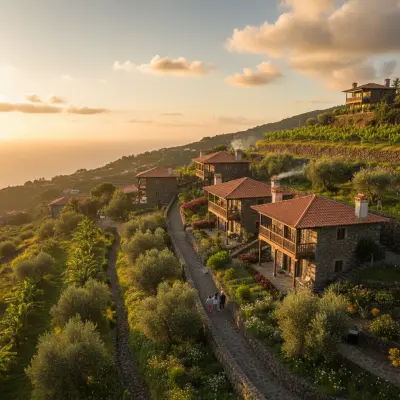
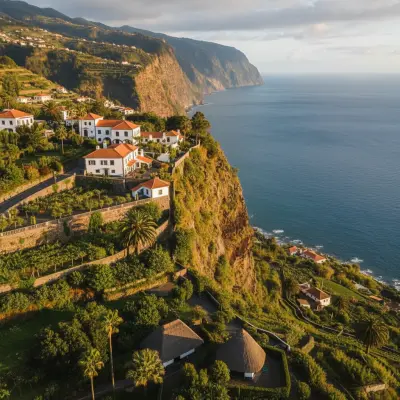
Santana isn't only a day-trip stop. Staying overnight changes the experience: once the tour buses pull out in the late afternoon, the town belongs to whoever is sleeping there. Quinta do Furão is the best-known option, a hotel on the north cliffs with its own vineyard and unobstructed Atlantic views. For something more rustic and easier on the budget, Ilha & Montanha - Turismo Rural offers a rural-tourism stay among fields and grazing cattle, a few minutes from the centre.
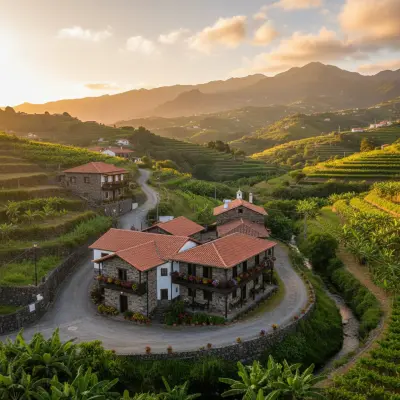
There are two more options with standalone cottages: Aldeamento Turístico Casas de Campo do Pomar, which echoes the logic of the traditional houses at a small scale but with modern comfort, and Santana in Nature Bed & Breakfast, smaller and more personal, for travellers who'd rather deal directly with the owners than with hotel front-desk logistics.
Beyond the Rooftops: Levadas in the Forest
Santana also happens to be the gateway to some of Madeira's best levada walks, and it would be a waste to come all this way just to look at rooflines. The Levada do Caldeirão Verde Walk in Santana: Field Guide takes you through one of the island's most striking trails, through hand-carved tunnels and UNESCO-listed laurisilva forest. For a slower pace, more focused on the landscape than the exercise, the Herb Walk on Levada do Rei: Santana's Forest Medicine is a guided walk built around the forest's medicinal plants, a different way to understand why this corner of the island is so wet, so green, and so different from the rest of Madeira.
Getting There and When to Go
By car from Funchal, count on roughly 40 to 45 minutes via the VE1/ER101 expressway. By bus, SIGA's line 103 connects the Teleférico terminal in Funchal to Santana, departing every four hours, taking around 1 hour 20 minutes, for a few euros. It's not fast, but the road itself, with its successive views over the north coast, is half the reason to take it.
Go in the morning if you can. The thatched houses look their best with low, side-on light, and before the mid-morning tour buses arrive. Bring a rain jacket regardless of the season: the same rain that gave these houses their shape can show up without warning, even in high summer.
If Santana is one stop on a longer Madeira itinerary, it's worth planning around it. Coming from Funchal, pair the day with a look at the island's essential levada walks in April, and if you're heading down to the south coast, don't leave the island without stopping in Câmara de Lobos to eat grilled sardines the right way. Travelling in June, there's also a dedicated guide to Funchal in June, between tuna, levadas and festival nights, useful for stitching Santana into a longer multi-day route.
What Stays With You
Santana isn't trying to be sophisticated. There's no architect's flourish here, no baroque facade waiting for the right camera angle. What there is, instead, is a stubbornly practical solution for living under nearly two metres of rain a year that happened to turn out beautiful. Walk the town slowly, stop at the Fontanário, step into the little houses at the Núcleo, then head up to a levada to see exactly where all that water comes from. It's a short route. It's not one you forget quickly.