Melgaço: The Geometry of Granite and the Silence of the Frontier
Melgaço is the granite sentinel of the Alto Minho, where a medieval castle and an unexpected Cinema Museum guard the memories of the frontier. Discover the sobriety of this historic town, from world-class Alvarinho wines to the heroic solitude of Castro Laboreiro.
The Frontier Spirit: Where Portugal Begins
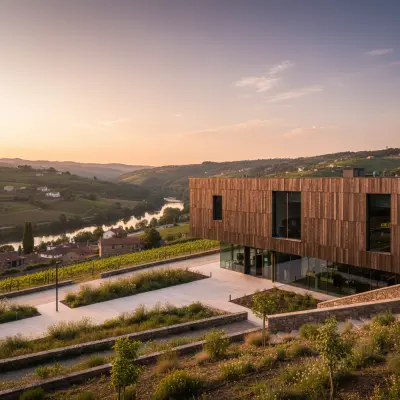
There is a particular rigor in the air of Melgaço. It is not merely the drop in temperature as one ascends the Alto Minho, but a historical density emanating from the granitic slopes and the deep course of the Minho River. Here, geography imposes a sovereignty that time has failed to dilute. Melgaço is not a destination of passage; it is the final point of an inquiry that begins much further south, where Portuguese identity sheds its adornments to reveal its most resilient bone structure. In this border town, luxury is found not in excess, but in the precision of stone, the purity of Alvarinho wine, and a stillness that only borderlands can sustain.
Walking through the streets of the historical center, one realizes that every corner was designed for vigilance. The proximity to Galicia shaped an architecture of resistance. Unlike the more bucolic environment found when following the slow rhythm of Ponte de Lima: a family guide to Portugal’s oldest village, Melgaço maintains an elegant tension, a verticality that constantly reminds us of its role as a sentinel. It is a place of silences populated by memories of smugglers, kings, and a rural aristocracy that knew how to cultivate the land with the same tenacity used to raise its walls.
The Stone Sentinel: The Castle and Military Memory
The Castle of Melgaço, built by order of King Afonso Henriques in the 12th century, is the axis around which the town breathes. The Keep (Torre de Menagem), now converted into a museum center, offers a lesson in military architecture that avoids any attempt at excessive romanticization. It is a functional, austere structure, whose granite walls seem to absorb the summer sun's heat only to release it slowly during the cool Minho nights. Climbing to the top of the tower is an exercise in humility; from there, the view over the Minho valley and the Galician mountains reveals the scale of the isolation that defined this region for centuries.
For the contemporary traveler, a visit to the Keep (entry around €2) is essential not just for the view, but for the archaeological collection detailing daily life within the ramparts. It is here that one understands that Melgaço was, for a long time, a world unto itself. History tells us that during the siege of 1388, it was the town's women who led the resistance, a detail that still reflects the resolute character of the local people today. Descending to the Misericórdia Church or the Mother Church (Santa Maria da Porta), one's gaze should linger on the Romanesque capitals, where local fauna and flora were immortalized in stone by anonymous hands, with an expressiveness that rivals the sophistication found in other regional arts, such as the living craft of Minho: a deep dive into the pottery of Barcelos.
A Parisian Gaze on the Frontier: The Cinema Museum
Perhaps Melgaço’s greatest cultural anachronism, and certainly its most sophisticated, is the Museu do Cinema de Melgaço (Jean-Loup Passek). Housed in a building that once served as a fiscal guard barracks, this museum is the testament to an unlikely passion. Jean-Loup Passek, who was the director of the cinema department at the Centre Pompidou in Paris and founder of the La Rochelle Film Festival, fell in love with Melgaço so deeply that he chose to donate his vast personal collection here.
Entering this space is to be transported from the Minho mountains to the early days of the magic lantern and pre-cinema. The collection is of international museum quality, featuring rare posters, historic projection machines, and objects that narrate the evolution of the moving image. There is something profoundly poetic about one of Europe’s most important cinematic archives being kept in a town where time seems to move slower. The museum demands a slow visit; it is not a place for a quick Instagram check-in, but for an immersion in the archaeology of the gaze. Entry is affordable (€3), and the curation manages to balance technical erudition with a visual narrative that fascinates even those less initiated in the seventh art.
The Altar of Alvarinho and Terroir Gastronomy
One cannot speak of Melgaço without mentioning the Alvarinho grape. The Solar do Alvarinho, set in a historic building, acts as an embassy for the local wine. Here, tasting is taken seriously. Forget the idea of light, carbonated green wine; Melgaço’s Alvarinho is structured, complex, and capable of aging with a dignity that surprises even experienced tasters. It is a wine that carries the mineralism of the granitic soil and the freshness of the Atlantic breezes that manage to penetrate deep into the valley.
At the table, Melgaço demands an appetite. The mountain goat (cabrito do monte), roasted in a wood-fired oven, is the dish that defines the region. The meat is tender, fed on the aromatic herbs of the surrounding mountains, and should be accompanied by roasted potatoes and 'arroz de miúdos'. If your visit coincides with the winter months, the lamprey from the Minho River becomes the center of attention, a polarizing, ancient, and visceral flavor. For an authentic experience, seek out the family-run 'tasquinhas' in the town center or venture to the outskirts to find 'O Adro' restaurant in Paderne. A full lunch for two, with quality wine, should range between €50 and €80, a price reflecting the exceptional quality of the ingredients.
The Heroic Solitude of Castro Laboreiro
About 25 kilometers from Melgaço, ascending roads that wind through the Serra da Peneda, lies Castro Laboreiro. If Melgaço is the sentinel, Castro Laboreiro is the refuge. This historical village is famous for its transhumance system, where populations moved between 'inverneiras' (protected lower valleys) and 'brandas' (high summer pastures). Although this nomadism is in decline, the architecture of the Romanesque and medieval bridges, such as the Ponte Velha or Ponte Nova, remains intact.
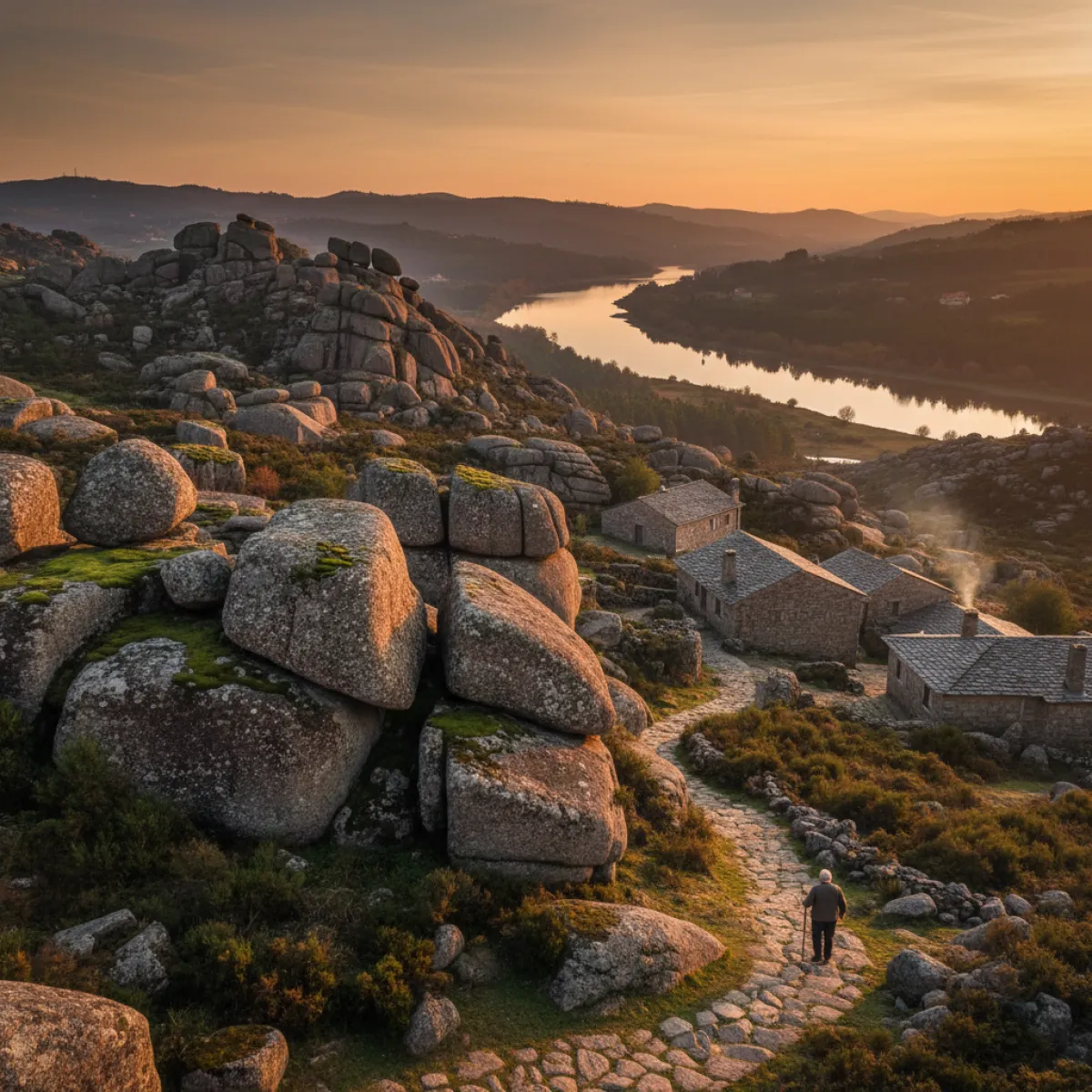
The Castle of Castro Laboreiro, situated at 1033 meters above sea level, is one of Portugal’s most evocative ruins. Access requires a 15-to-20-minute hike up a steep trail, but the reward is absolute isolation. Here, the wind tells stories of resistance against Leonese and Castilian forces, and the silhouette of the walls merges so seamlessly with the boulders that it is difficult to distinguish man's work from nature's. It is a landscape that, as described in the fog and the feast: why Ponte de Lima is Portugal’s most evocative winter escape, gains a metaphysical dimension during the misty months, transforming into a scene of austere and melancholy beauty.
Paderne and Monastic Silence
Before leaving Melgaço, a stop at the Paderne Convent is mandatory. The Romanesque church, with its richly carved portal, is one of the purest examples of this style in Northern Portugal. The silence surrounding the complex is interrupted only by the rustling of leaves and the nearby flow of water. It is the ideal place to reflect on the scale of time in this region. In Paderne, one realizes that Melgaço has preserved the essential: the connection to the land, the respect for stone, and the awareness that true modernity lies in the preservation of memory. It is a destination for those seeking substance over spectacle, and history over fiction.