The Living Craft of Minho: A Deep Dive into the Pottery of Barcelos
A deep dive into the pottery traditions of Barcelos, from its iconic Thursday market to the private studios of master artisans. Experience the soul of Minho through its most storied craft.
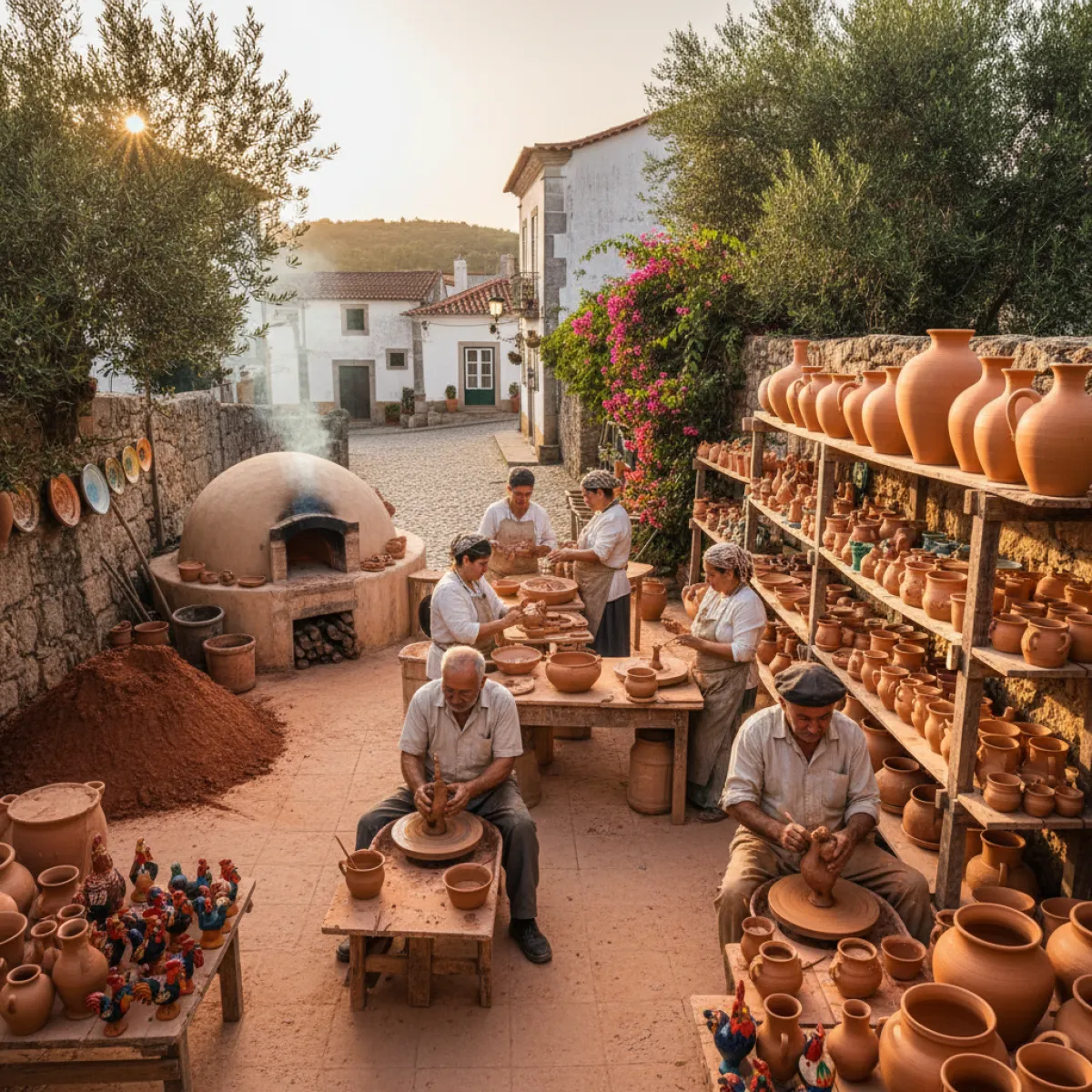
The Weight of Earth in Campo da República
Every Thursday, before the sun burns through the mist rising from the Cávado River, the Campo da República in Barcelos undergoes a transformation. It is not merely a market; it is a living organism, a choreography of generations transporting clay from the surrounding villages to the city's heart. Here, ceramics are not just domestic ornaments but a political, social, and spiritual language. What the visitor encounters at the Feira de Barcelos is the result of an absolute symbiosis between man and territory, a clay-rich soil that, for centuries, dictated the economy and identity of this Minho region.
To understand Barcelos, one must move away from simplistic tourist iconography. The famous rooster, though omnipresent, is just the surface of a much denser tradition: the Figurado. This craft, recognized by UNESCO, is distinguished by its narrative nature. Each piece, whether a musician, a peasant, or a diabolical figure, tells a story about rural life, religious superstition, or social critique. Walking through the stalls, one realizes that Barcelos pottery is, above all, a mirror of the idiosyncrasies of Minho.
The Rosa Ramalho Revolution and Folk Surrealism
The history of contemporary Barcelos ceramics cannot be written without mentioning Rosa Ramalho. It was she who elevated the utilitarian to the artistic, transforming clay into an expression of folk surrealism that captured the attention of intellectuals and collectors in the mid-20th century. Ramalho didn't just mold dolls; she molded nightmares and dreams, mixing the sacred with the profane in a way that challenged the conservative aesthetics of the time. Today, her legacy lives on through the hands of artisans like Júlia Côta or the Mistério family, who keep alive that fantastic and grotesque vein that makes Barcelos figurado unique in the world.
Visiting the workshops in Galegos Santa Maria or Galegos São Martinho is to witness this process in its purest state. The smell of damp clay and the heat from wood-fired kilns create an atmosphere of a medieval workshop, yet the themes remain surprisingly current. There is a rawness in the touch, a deliberate imperfection that gives these pieces a humanity that industrial production can never replicate. It is this material honesty that defines the contemporary luxury of Barcelos: the ownership of an object that carries the fingerprint of its creator.
Complementary Geographies: From the Cávado to the Lima
Barcelos does not exist in isolation. Its identity is shaped by its neighborhood and its contrasts. While here the earth is shaped by hands, a few kilometers away, the landscape becomes more aristocratic and contemplative. It is an interesting exercise to contrast the kinetic energy of the Barcelos market with the slow rhythm of Ponte de Lima, where stone architecture and plane-tree avenues suggest a necessary pause. If Barcelos is the hand that works, Ponte de Lima is the eye that rests.
This transition between the artisanal and the bucolic is what makes Minho a region of infinite layers. For those seeking the essence of this area in winter, the scenery changes, becoming more introspective. It is the ideal time to seek the warmth of fireplaces and the heavy gastronomy that characterizes the north. We highly recommend reading about the fog and the feast to understand how the weather shapes not only ceramic production in Barcelos but also the hospitality rituals that define the entire Lima and Cávado valleys.
Practical Guide: Where Clay Meets the Palate
The Barcelos experience is incomplete without proper attention to what is placed on the table. The Arroz de Pica no Chão (a traditional chicken blood rice) is the city's ultimate institution. Forget modern interpretations; look for restaurants where time seems to have stood still.
- Where to eat: The restaurant Bagoeira is the inevitable meeting point on Thursdays, but for a more authentic and quiet experience, look for Gallo d'Ouro.
- What to order: Besides the Arroz de Pica no Chão, the Rojões à Moda do Minho (marinated pork) are mandatory. To accompany, the local vinho verde, served in white ceramic bowls (malgas), is the logical choice.
- When to go: Thursday morning is non-negotiable. Arrive by 08:30 to see the market at its peak, before the tour buses arrive.
- Budget: A quality full meal costs between €25 and €35 per person. Figurado pieces range from €10 (small pieces by new apprentices) to €500 (signed works by established masters).
The Preservation of Technique
The manufacturing process of Barcelos figurado follows rigorous steps that have changed little in centuries. First, the preparation of the clay paste, which must have the correct plasticity. Then comes the manual modeling, the potter's wheel is rarely used for the figurado. After natural drying in the shade to prevent cracks, the pieces go into the kiln. The final touch is the painting, often done with vibrant primary colors, or the "mela" technique, which gives a deep, glassy glaze to the pieces.
This technical rigor is what ensures that Barcelos pottery is not just a souvenir, but a cultural investment. By purchasing a piece, the traveler is financing the continuity of a school of aesthetic thought that survived dictatorship, industrialization, and globalization. It is an act of cultural resistance disguised as commerce.
Conclusion: A Sensorial Minho
Barcelos demands a sensorial surrender. It is the noise of the traders, the rough texture of unglazed ceramic, and the metallic taste of vinho verde. It is a city that doesn't worry about being pretty for a postcard; it is functional, rugged, and deeply authentic. When leaving the city with a piece of clay in your luggage, you are not just taking a decorative object. You are taking a slice of Minho earth, shaped by the determination of a people who refuse to let the dialogue between hands and mud die.
