Estremoz: Where Locals Actually Eat, No Tourist Menus
Forget the tourist restaurants. The real Estremoz food guide starts at the Saturday market, runs through migas and black pork, and always ends with a sericaia that wobbles on the spoon.
There are two Estremoz. One is the town of gleaming marble, the castle on the hill, the clay figurines that made the UNESCO list and now fill every souvenir shop window. That Estremoz is in the brochures. The other one starts at seven on a Saturday morning, when vans reverse into the Rossio Marquês de Pombal and unload crates of cabbages, cloth-wrapped cheeses and jars of honey. That is the one that matters if you want to eat properly.
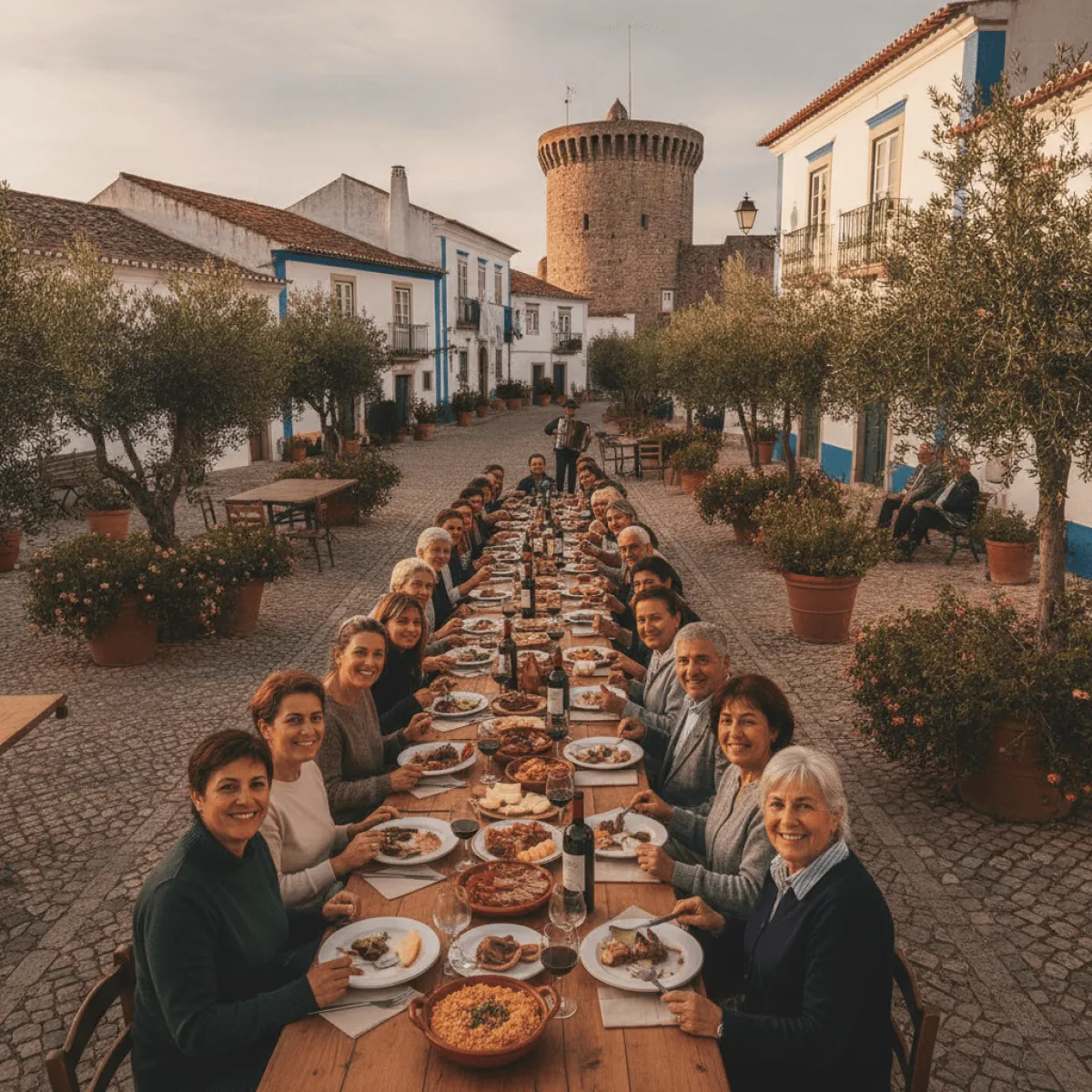
Let me be blunt: Estremoz is not a fine-dining town and it does not need to be. It is a town of tascas, of dense Alentejo bread that can carry an entire meal, of sericaia served in a clay dish with a single plum sitting in the middle. The food here is honest, forceful and cheap. The trick is not finding some secret address. It is knowing what to order and understanding why Alentejo people eat the way they do.
Start at the market, always
The Saturday market in the Rossio is, without exaggeration, one of the best in the country. It is not a tourist attraction in disguise: it is where the people of Estremoz and the surrounding villages do their weekly shopping. Get there early, around nine, before the heat and before the best cheeses vanish. You will find cured sheep's cheese, some of it so buttery you can eat it with a spoon, black pork sausages, olives cured a dozen ways, and the thick-crusted Alentejo bread that underpins half the local cooking.
Look for ameixa d'Elvas, the crystallised greengage plum from the neighbouring town that is sericaia's best friend. And do not leave without trying queijadas de Estremoz, small sweet curd-cheese tarts you eat standing up, still warm, as you wander between the stalls. They cost cents. They are better than anything you will find in an airport bakery.
If you come on a weekday and the Rossio is empty and quiet, do not despair. The town has old grocers and butchers where acorn-fed black pork is sold the way it should be. But Saturday is the day. Build your trip around it.
What to order in an Alentejo tasca
Sit down in a tasca in the lower town, the kind with paper tablecloths and a television flickering in the corner, and the first thing they will put on the table is the couvert: bread, olives, cheese, maybe a pork-fat spread. It is not free, but it is cheap, and in Estremoz it is almost always worth it. The Alentejo olive oil that comes with it is fruity and nearly peppery. Dip the bread.
The soups that are meals
Açorda alentejana is the dish that best explains this cooking. It is bread, garlic, coriander, olive oil and boiling water, with a poached egg on top. It sounds like poverty food because that is exactly what it was, but made by the right hands it is one of the most comforting things you will taste. Sopa de cação, dogfish in a coriander and vinegar broth, is more robust and divides people: you either love it or find it too intense. I love it.
The meat, the pork, the lamb
Carne de porco à alentejana, pork with clams, is the improbable surf-and-turf marriage everyone knows, and it is done well here. But if you want to eat like a local, order migas. Bread or potato migas, with pork ribs or fried pork, is the Sunday dish, the celebration dish, the one that fills you up. In season, around Easter and spring, there is ensopado de borrego, lamb stew served over slices of bread that soak up the broth. It is hard to find out of season, so if you see it on the menu, get it.
The region's quiet luxury is black Alentejo pork, raised free in the montado eating acorns. Braised cheeks, the presa, grilled secretos: any cut is leagues ahead of the industrial pork we are used to. Wash it down with an Alentejo red, full-bodied and generous, that costs half what it would in Lisbon.
The dessert that defines the town
If you eat only one thing in Estremoz, make it the sericaia. It is a custard of eggs, milk, sugar, flour and cinnamon, baked until it cracks across the surface, and served warm in a clay dish with an ameixa d'Elvas plum beside it. The texture sits somewhere between flan and crème pâtissière, but lighter, more airy. The cinnamon is generous. It is not a subtle dessert and thank goodness for that.
Almost every tasca and restaurant has it, but the quality varies wildly. A good sericaia wobbles when you spoon it and has those dark cinnamon cracks across the top. A bad one is dry and stiff. Ask if it is made in house. If it is, order two.
How to plan a full day of eating
The best day in Estremoz goes like this: arrive on a Saturday morning, park outside the centre because the Rossio is closed for the market, and spend the first hour eating queijadas and tasting cheeses across the stalls. Around midday, climb up to the upper town, see the castle and the keep, and come back down hungry.
Lunch is the main meal in the Alentejo, not dinner. The tascas fill up between half past twelve and two, and many shut the kitchen early in the evening or do not open for dinner at all outside peak season. Plan to eat seriously at lunch. A full lunch, with couvert, a main, dessert and a glass of wine, rarely tops 15 to 20 euros a head in a traditional tasca. Always confirm hours locally, because many places close on Mondays.
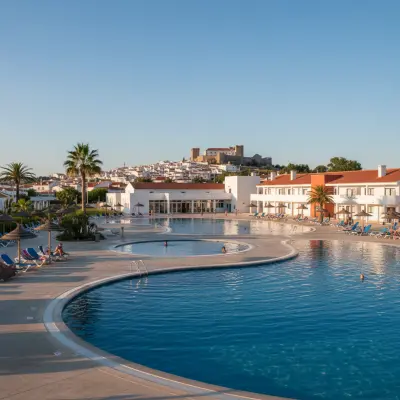
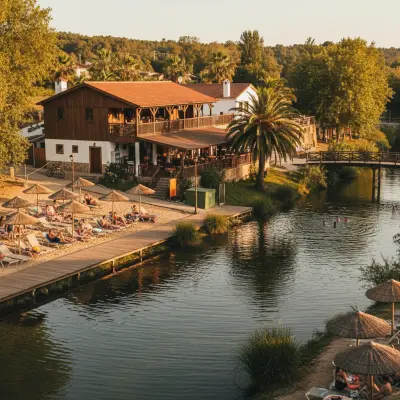
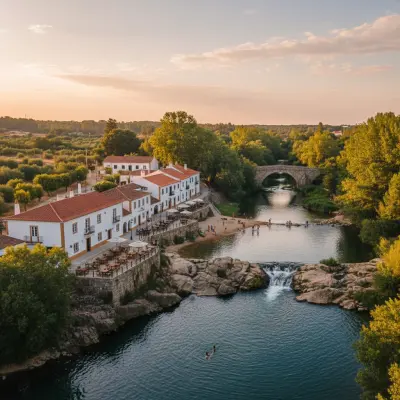
In the afternoon, with the Alentejo summer heat bearing down, there is salvation. The Estremoz municipal pools complex is where local families spend July and August afternoons, and it is the most honest way to cool off after a heavy meal. If you prefer fresh water and a wilder setting, the short detour to the Fronteira river beach or the Azenhas d'El Rei river beach is worth it, two spots where you swim in a river ringed by holm oaks and picnic on the cheese and bread you bought that morning. It is the best way to turn your market haul into lunch.
Working up an appetite
The Alentejo eats well because, traditionally, it worked hard in the fields. We no longer do, but there are ways to earn the sericaia. The landscape around Estremoz, with its vineyards, olive groves and montado stretching to the horizon, is made for cycling. The experience of cycling the Alentejo by bike with Portugal Bike takes you along back roads between villages where the pace is set by the seasons, and leaves you in urgent need of a plate of migas at the end. Set off early, before the heat, and save lunch as the reward.
Is it worth extending the trip?
Estremoz sits at the heart of the marble triangle, close to Borba and Vila Viçosa, and a comfortable distance from Portalegre to the north, up against the Serra de São Mamede. If you have more than a day, Portalegre's table is a natural extension of this eating trip: read our guide on where locals actually eat in Portalegre before you go, because mountain cooking is different from the cooking of the plains, more tied to game and chestnuts.
For anyone wanting a full weekend, our guide to Portalegre without the tourist traps helps you plan, and if you like discovering a town on foot, the walk through the Portalegre neighbourhoods worth the walk shows that there too you eat better away from the main square. The rule is always the same: step away from the obvious, follow the smell of fresh bread, and never refuse a homemade sericaia.
The summary, no waffle
- Go to the Saturday market in the Rossio, early. It is the best food experience in town and it is free.
- Eat lunch as your main meal. Tascas close early at night.
- Order migas, black pork and, in season, lamb ensopado.
- Sericaia with ameixa d'Elvas is non-negotiable. Ask if it is homemade.
- Budget 15 to 20 euros a head for a full tasca lunch with wine.
- Many places close on Mondays. Always check locally.
Estremoz will not impress you with decor or elaborate plating. It will impress you with an overflowing plate of migas, a buttery cheese bought from the producer who made it, and a sericaia that trembles when your spoon goes in. This is food made by people who have known what they are doing for generations. Eat slowly, drink the local red, and let the afternoon drain away by the pool or the river. That is how it is done in the Alentejo.