Garrano Horses in Arcos de Valdevez: Peneda Hills Hike
A 7.6 km guided hike with Portugal Green Walks, meeting in Arcos de Valdevez and starting in the village of Lombadinha. Wild Garrano horses on open pasture, real wolf traps, picnic lunch included. From €175 per person in groups of six or more.
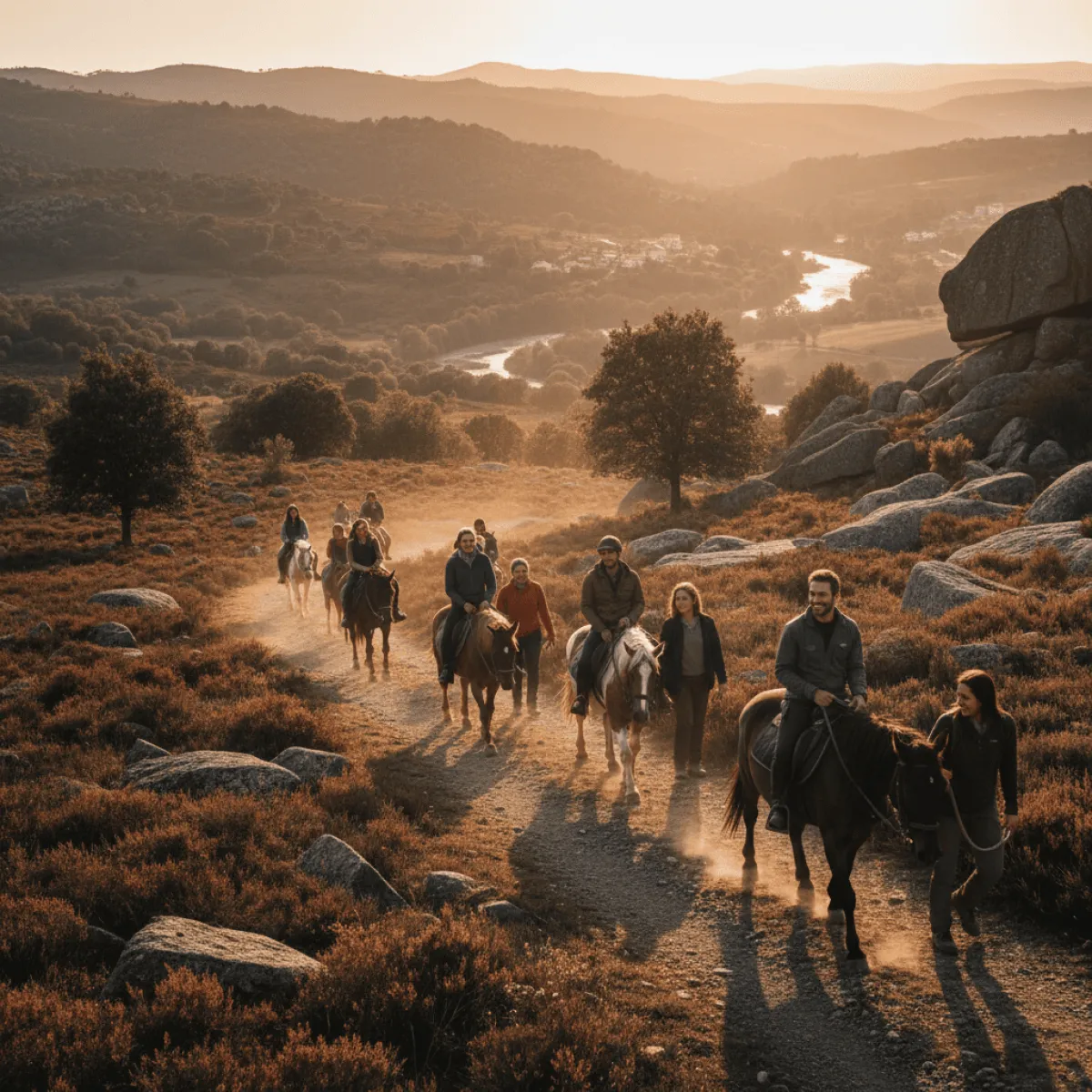
Garranos aren't postcard ponies. They're small, thick-maned wild horses that live in herds across the Peneda highlands the same way they have for thousands of years, mostly indifferent to whoever walks past. Spotting a group grazing on the slopes above Lombadinha, with the wind funneling up the Vez valley, is one of those things you only get if you put yourself where they are. Which is exactly what this hike does.
Portugal Green Walks, based in Ponte de Lima, runs a guided day hike called the Peneda-Gerês Mountain Village and Wolf Trap Hiking Trail that meets in Arcos de Valdevez. It isn't the cheapest option in the area, but it's one of the few that combines, in a single day, Garranos, wolf traps, Cachena long-horn cattle, and a working shepherding village. If you want to see the horses without renting a car or decoding rough trails on your own, it makes sense.
What the day actually looks like
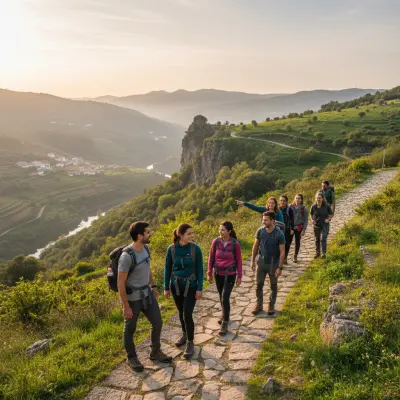
You meet your guide at 9 am in Arcos de Valdevez. From there it's a 30-minute transfer up to Lombadinha, a small village in the foothills of the Soajo range where community grazing (vezeira) still operates. The walk starts there: 7.6 km from Lombadinha to Bustelinhos, with around 345 m of cumulative ascent and 229 m of descent. About three hours of walking, plus stops, plus the picnic lunch included in the price.
The whole tour runs seven hours, meeting point to drop-off. Pricing scales with group size: €285 per person for 2-3 people, €220 for 4-5, and €175 for 6 or more. That includes an English-speaking guide, return transport, picnic lunch with drinks, and the Mezio Park Gate entrance. If there are only two of you, ask whether you can join an existing booking. The price drops sharply with numbers.
Where the horses turn up
The stretch between the two villages crosses open pasture where Garranos move freely, usually in small bands led by a stallion. There's no schedule, no fence, no guarantee. But the odds are good: these horses live on these slopes year-round, and the trail cuts straight through the kind of grass they prefer. Two things to know. First, they don't approach people. They'll let you photograph from 30 or 40 metres, but if you walk in, they walk off. Second, if there are foals, the adults get tense. Wolves still live in this range and the herd's instincts are tuned to that.
The best window is mid-morning, when they're still grazing in exposed areas. By noon they retreat into the oak scrub. That's why the hike starts early: it covers the prime spotting ground before lunch and finishes the descent once the heat sets in.
The wolf traps are the surprise
The trail name flags wolf trap and this isn't a tourist prop. Between Lombadinha and Bustelinhos there are real fojos, stone funnel structures shepherds used to corral live wolves without any mechanical trap, just topography and patience. Most are partly ruined, but you can read them. For me, this was the most unexpected part of the day. Standing inside one, with no signage and no reconstruction, you understand what it actually meant to live up here when the wolf was a livestock problem rather than a conservation poster.
What to bring
- Hiking boots with proper grip. The path mixes loose stone, granite slabs, and packed earth. Trail runners are the minimum.
- Hat, sunglasses, sunscreen. Most of the route has no shade. In July and August this is non-negotiable.
- A windproof shell even in summer. You're around 800 m elevation and Peneda weather flips fast.
- 1.5 litres of water per person. The guide carries extra, but better to have your own.
- Compact binoculars if you have them. Makes a real difference for the horses.
- A camera with decent zoom. Phone cameras don't reach 30 metres.
When to go and how to book
The trail runs year-round. May and June are the sweet spot: pastures are green, there are young foals trailing the herds, and temperatures still let you walk comfortably in sun. September and October also work well, with the bonus of softer light. January and February can bring ice on the upper sections, and the guide may reroute on the day. August is doable but hot, and the horses spend more time in cover.
Bookings go through the enquiry form on the Portugal Green Walks website, or directly by email to contact@portugalgreenwalks.com. The company office is at Trav. Dr. Manuel Pereira de Melo, 34, 4990-115 Ponte de Lima. Two-person minimum for departure. Confirm pricing and conditions directly with the provider before booking travel.
What to combine it with
Arcos de Valdevez deserves at least an overnight, and if you're doing this walk you'll want a couple of nights. The next day, head up to hike the Sistelo terraces, a completely different kind of landscape but equally striking. For rural heritage, the granary and medieval bridges circuit easily fills a morning, and the Romanesque churches route is the right call for a rainy afternoon.
On a tighter budget, the Arcos on a budget guide covers free river beaches and walking trails that cross some of the same scenery. In the evening, Retro Bar Galerias is where the town shows up for a beer before dinner. For dinner itself, any decent tasca in town will have mountain kid goat: it grazed on the slopes you just walked.
Is it worth it?
Yes, with one condition. You need to accept you might not see Garranos. The odds are good but the range is large and the herd decides. What you do get for sure: the landscape, the wolf traps, Lombadinha with its still-working shepherds, and a clear sense in one day of how the community grazing system keeps the Garranos around. The horses are the bonus. The rest is the reason to come.