The Sistelo Terraces: Hiking the 'Little Tibet' of Portugal
Discover the monumental scale of the Sistelo terraces, a masterpiece of vernacular engineering in Arcos de Valdevez. A comprehensive guide to hiking the Ecovia do Vez, heritage preservation, and the intense flavors of Cachena beef.
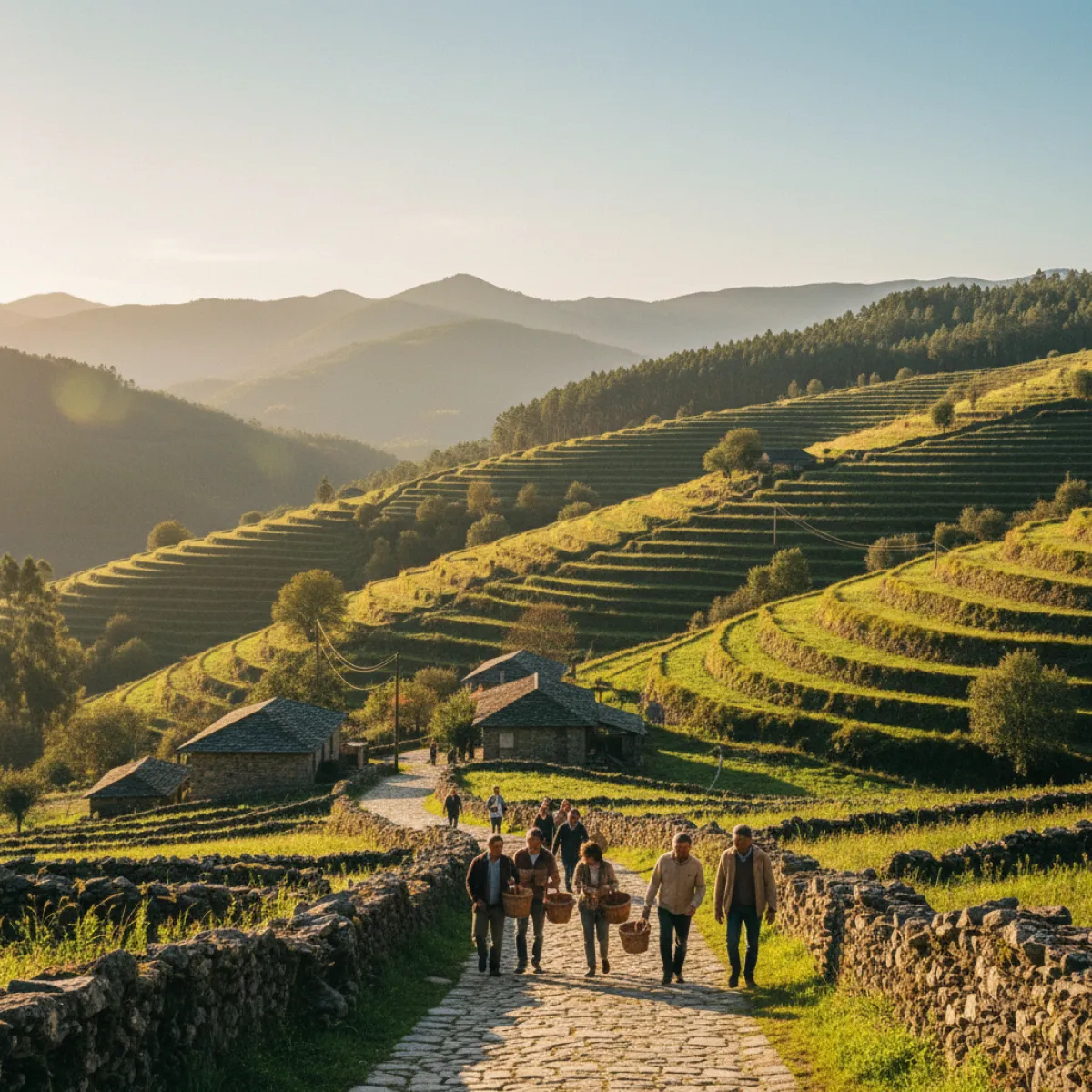
The Vertical Geometry of the Alto Minho
There is a specific moment when driving from Arcos de Valdevez toward the village of Sistelo where the landscape shifts from rural to monumental. This is not the carved stone monumentality of a cathedral, but a human intervention in the mountain that took centuries to sculpt. The famous terraces, which earned the region the moniker of 'Portugal’s Little Tibet,' are the result of an ancestral necessity for survival: creating flat surfaces where the steep slopes of the Peneda-Gerês National Park seemed to forbid life.
Walking here requires an eye for vernacular engineering. Unlike other regions where agriculture has industrialized, Sistelo remains faithful to the logic of the smallholding and the granite block. Every step of this verdant staircase was lifted by hand, stone upon stone, to support the cultivation of corn and pasture for the hardy Cachena cattle. It is a landscape that demands physical effort to be fully understood, far from the comfort of roadside viewpoints. For those who have already explored the northern craft traditions and appreciated the pottery of Barcelos, the transition to the granitic grit of Sistelo reveals the duality of the Minho, on one side, artisanal delicacy; on the other, the raw resistance of the mountain.
The Ecovia do Vez: The Way of the Waters
For the serious hiker, the Ecovia do Vez offers one of the purest experiences in Portugal. Stretching approximately 32 kilometers and divided into stages, it is the final section connecting the village of Vilela to Sistelo that holds the true magic. The trail snakes along the banks of the River Vez, one of the least polluted in Europe, where crystal-clear water runs over granite pebbles. It is a route of low technical difficulty but immense sensory richness. The sound of water is the constant soundtrack, interrupted only by the distant chime of a cowbell or the cry of a bird of prey.
The Romanesque and medieval bridges crossing the river, such as the Vilela Bridge, act as temporal gateways. They connect not just the banks, but centuries of history where the paths of Santiago de Compostela crossed those of the transhumant shepherds. Walking these trails, one realizes that the Minho is a region of passage and connection, a sentiment shared by the slow pace of Ponte de Lima, which invites travelers to a family guide to Portugal’s oldest village.
The Monumental Village of Sistelo: From Manor House to Granary
Sistelo is not just a village; it is a piece of public land art. The Paço de Sistelo, a 19th-century mansion with the air of a fairy-tale castle, provides the first visual impact upon arrival. It was built by the 1st Viscount of Sistelo, a successful emigrant to Brazil, but the village's true treasure lies in the granite of its 'espigueiros.' These elevated granaries, crowned with crosses, line up at the top of the village like silent guardians of the corn harvests, a crop that transformed the local economy and diet after its introduction in the 16th century.
Unlike the heavy winter moisture often encountered when exploring the fog and the feast of Ponte de Lima, Sistelo, perched high on its mountain, enjoys a singular luminosity. In autumn, the terraces are painted in shades of brown and gold, creating a dramatic contrast with the blue-grey granite of the houses. The silence here is profound, broken only by the wind rushing through the valley.
Mountain Gastronomy: Cachena Beef and Arcos Wine
After hours of hiking the trails of Arcos de Valdevez, the reward arrives at the table. The absolute protagonist is Cachena beef. These cattle, small in stature with lyre-shaped horns, are unique specimens adapted to the harshness of the mountain. Their meat has an intense, almost mineral flavor, with very little fat, a result of a diet based on high-altitude pastures. Order the 'Posta de Cachena,' grilled with coarse salt and served with 'arroz de feijão tarreste' (a local bean rice) and garden greens.
To accompany it, the wine from the Arcos de Valdevez region, part of the Monção and Melgaço sub-region, offers the perfect counterpoint. The local Alvarinho, with its vibrant acidity and fruity notes, cleanses the palate and elevates the meal to a level of excellence that rivals great European gastronomic destinations. It is authentic cooking, without artifice, reflecting the soul of those who work the land.
Planning and Logistics: When and How to Go
The best time to visit Sistelo is between late April and early June, when the vegetation is at its verdant peak and temperatures are mild for hiking. Alternatively, October offers an unparalleled palette of autumnal colors. Access to Sistelo is best achieved by car from Arcos de Valdevez, a journey of about 20 kilometers along winding mountain roads that offer breathtaking views.
In terms of budget, the region is surprisingly accessible. A full meal of Cachena beef at a local restaurant costs between 20 to 30 euros per person. Rural tourism accommodation in restored granite houses ranges from 80 to 120 euros per night. Good hiking boots with strong grip are highly recommended, as the stones on the paths can be slippery, especially after rain.
Preservation and Sustainability
Classified as a National Monument and a UNESCO Biosphere Reserve, the territory of Sistelo faces the challenge of managing growing tourist interest without losing its identity. It is crucial that visitors adopt a stance of total respect: do not stray from the marked trails, do not interfere with the herds, and above all, value the work of the few inhabitants who still keep the terraces active. Without the hands that till the earth, this 'Little Tibet' would cease to exist, lost to the invasive forest.
Sistelo is, ultimately, a testament to human resilience. It is a place that forces us to slow down, to look up, and to recognize that the most enduring beauty is that which results from a harmonious dialogue between man and nature. This is the Minho at its most pure and challenging.
