Torre de Moncorvo: Guided Visit to São Francisco Convent
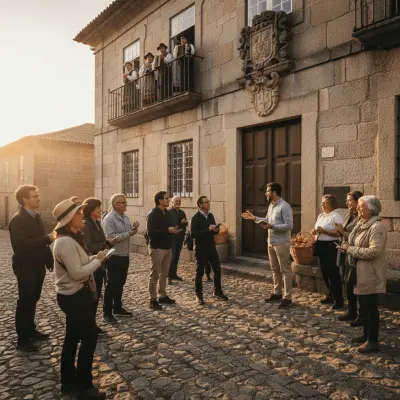
Booking-only guided visit to the São Francisco Convent in Torre de Moncorvo, run by the municipal tourism office. Minimum 5 people, departure from Rua dos Sapateiros 15, and the best moment is the mid-morning pause in the cloister.
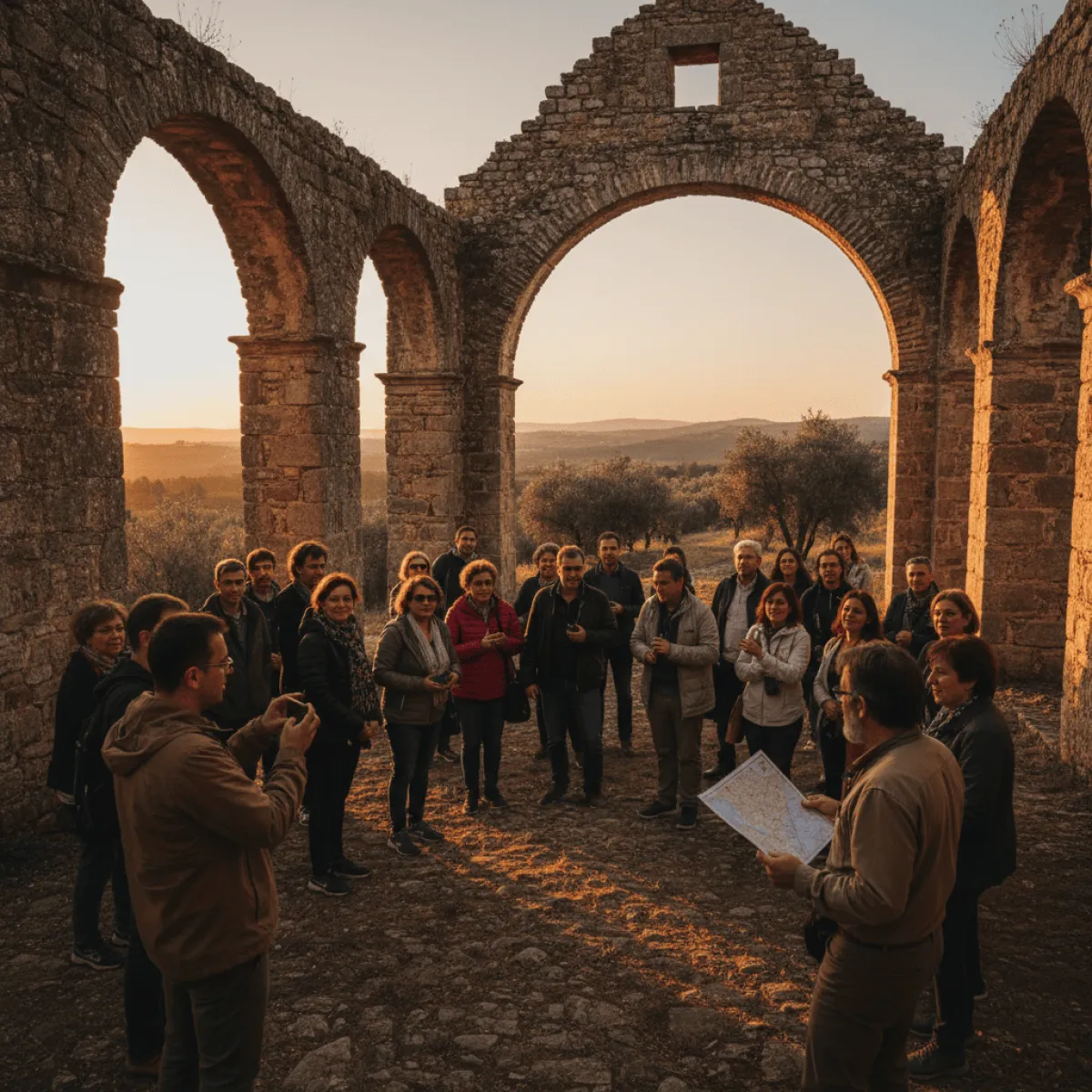
This is not the kind of experience you find advertised on a billboard. The Convento de São Francisco in Torre de Moncorvo has been here for centuries, tucked behind its own stone walls a few minutes from the historic centre, and the only way to get inside is by booking ahead with the municipal tourism office. That, in fact, is the best part: you arrive without crowds, with a guide who knows the history line by line, and for ninety minutes you have the rare sense of walking through a place that has not yet been packaged for mass tourism.
Who runs it, and how to book
The visit is coordinated by the Loja Interativa de Turismo (LIT) of Torre de Moncorvo, run by the municipal council. You book there, you start there, and it is the only official channel that combines the São Francisco Convent, the Basílica Menor de Nossa Senhora da Assunção and the Igreja da Misericórdia de Moncorvo into a single guided circuit. There is no online checkout with instant confirmation, which puts a lot of people off. It should not.
- Provider: Loja Interativa de Turismo (LIT), Torre de Moncorvo
- Address and meeting point: Rua dos Sapateiros, 15, Torre de Moncorvo
- Phone: +351 279 252 289
- Email: turismo@torredemoncorvo.pt
- Website: https://www.cm-moncorvo.pt/pages/1048
- Office hours: daily, 09:30 to 18:00
- Guided tours: Tuesday to Sunday, mornings (10:00-13:00) and afternoons (14:00-17:00)
- Price: not published online. Confirm directly with the provider when you book.
- Minimum group: 5 people. If you are fewer, ask whether there is an open group on your chosen day, they often slot you in.
Book at least 48 hours ahead. Easter weekends, the May bank holiday, and the late February/early March almond blossom window fill up fast.
What you actually see at the convent
The building is a Franciscan Capuchin convent of late-medieval origin, reworked in the 17th and 18th centuries. It now belongs to the Fundação Francisco António Meireles, which helps explain why it is in better shape than most rural convents in the region. The plan is irregularly rectangular, with a single-nave church, an entrance galilé, and the cloistered convent developing to the left around a square cloister.
What gets me every time I come back is the contrast between the outside, austere, plain cut stone with a lobed oculus, and the chapel-mor inside, with its gilded carved altarpiece and high choir. The guide opens the church first, walks the group across the choir, and only then leads everyone into the cloister. The order matters: you begin with the solemn, then descend into the friars' daily routine through the refectory, the kitchen, the chapter house and the dormitory.
The best moment
It happens in the cloister, mid-morning, when the sun lights up the eastern stone. The guide usually pauses there and lets people wander on their own, and it is in those five minutes that you feel the rhythm of the house. It beats any narration.
The rest of the circuit
The convent is rarely visited on its own. The office chains it together with the Basílica Menor (the former Igreja Matriz, raised to Minor Basilica by Pope Francis in January 2022) and, depending on availability, the Misericórdia Church, the Sacred Art Museum and the Iron and Moncorvo Region Museum. The full loop takes around 2 to 3 hours if you do not rush, and that is the version worth doing.
If you absolutely have to skip something, do not skip the Basilica. The Renaissance portico and clock tower are the town's signature, and the 18th century altarpieces inside justify the classification as a National Monument since 1922.
What to wear, what to bring
- Flat, closed shoes. The cloister has uneven flagstones and there are tall steps up to the high choir. Trainers do the job.
- A light jacket, even in July. The convent stays at 15-17ºC with the doors closed, and the Basilica is colder still.
- Covered shoulders. These are active places of worship. No one will turn you away in a tank top, but it is the right call.
- A water bottle. There are no vending machines inside the monuments.
- Camera, no flash. The gilded altarpiece in the chapel-mor is photogenic, but flash is forbidden.
Getting to Torre de Moncorvo
The town sits in the Douro Superior, in the Bragança district, about 2h30 from Porto via the A4 and A24 motorways. Driving is the most practical option, with free parking near both the Basilica and the tourism office. If you come by train to Pocinho (the Douro line), you will need to arrange a taxi transfer for the 25 km climb up the Reboredo hills.
When to go, when to avoid
I would recommend the 10:00 morning slot between October and May. The light coming through the church oculus is better in the morning, and the convent is far more pleasant outside the summer months. February and March add the bonus of almond blossom around the town, which is a good excuse to extend the trip, see our March guide to Torre de Moncorvo or the spring road trip with almond blossoms.
Skip Sunday mornings unless you want to overlap with mass at the Basilica, the loop still works but you will have to fit the larger church in at another time. And avoid August afternoons, 38ºC on the main square is a sacrifice without a payoff.
Where to eat afterwards
The circuit usually wraps up around 12:30. Book a table in the historic centre for an unhurried Trás-os-Montes lunch, the natural follow-on to the morning. Our guide to inland Trás-os-Montes cooking in Torre de Moncorvo points to the houses still making butelo with pork rinds and roast kid in wood-fired ovens, no shortcuts.
The verdict
This is a slow, curious experience, not one designed for an Instagram stamp. In return it gives you one of those rare interior Portuguese convents where the full monastic skeleton is still legible, from refectory to dormitory, with a guide who can tell what is original and what was rebuilt. If you are coming to the Douro Superior and have any feeling for religious history, book 48 hours ahead and give it your full morning. You will not leave indifferent.