Mértola Islamic Heritage Walk: Mosque-Church and River Quarter
A two-hour guided walk led by the Museu de Mértola team connecting the Islamic Art Centre, the Mosque-Church with its original mihrab and the Alcáçova overlooking the Guadiana. It costs €2 per person and must be booked 48 hours ahead through the Tourist Office.
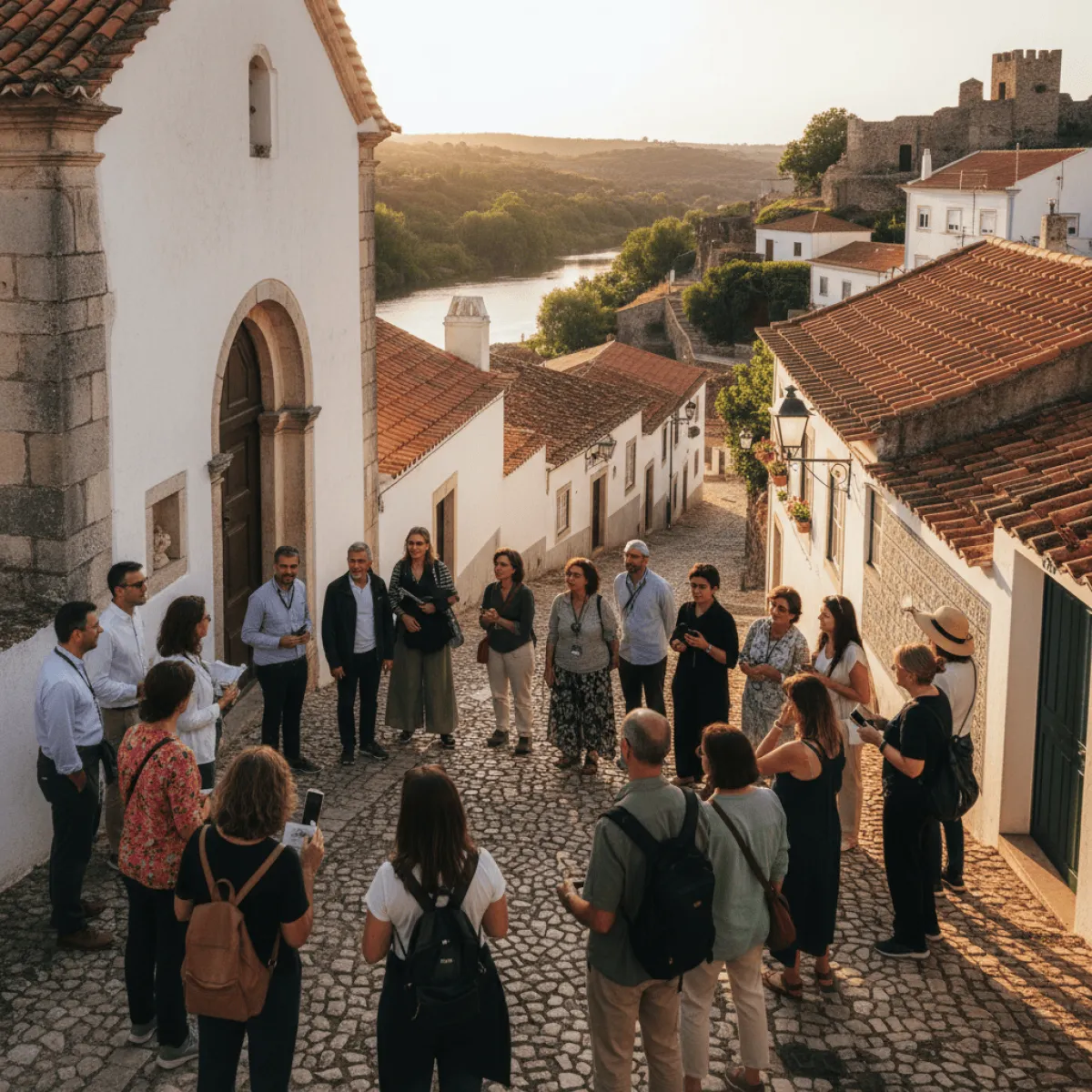
There are two ways to visit Mértola. One is to climb the hill on your own, glance at the signs, peek into the parish church for two minutes and move on. The other is to book a guided tour with the Museu de Mértola and finally understand why this village in the Baixo Alentejo is the most important site for Islamic archaeology in Portugal. Pick the second one. The difference is not small.
The Museu de Mértola is not a single building: it is a network of fourteen sites scattered around the village, run in partnership with the Campo Arqueológico de Mértola, which has been excavating here since 1978. Guided walks start at the Tourist Office on Rua da Igreja and connect the dots that explain why Mértola, once Roman Mirtilis and later Islamic Martulah, was an active river port until the Guadiana stopped being navigable.
What the tour includes
The full route takes around two hours and covers the Islamic Art Centre, the Mosque-Church (Igreja Matriz), the Alcáçova inside the castle walls (with the Keep), and, depending on the version, the Weaving Workshop and the Paleo-Christian Basilica. For groups of ten or more, the Museum offers a flat rate of €6 per person that includes entry to all sites. For individual visitors, most sites are free, and the Keep and Islamic Art Centre cost €2 each. Guided tours themselves are €2 per person and must be booked in advance.
Islamic Art Centre
This is where most tours start, and it should. The collection is the most important of its kind in the Iberian Peninsula: around two thousand pieces, of which roughly 150 are on display. The highlights are the 11th to 13th century ceramics with cuerda seca and green-and-manganese decoration, and a funerary stela with Kufic inscription that alone justifies the trip. Do not leave without seeing the visible storage room, where archaeologists from the Campo Arqueológico show material still under study.
The Mosque-Church
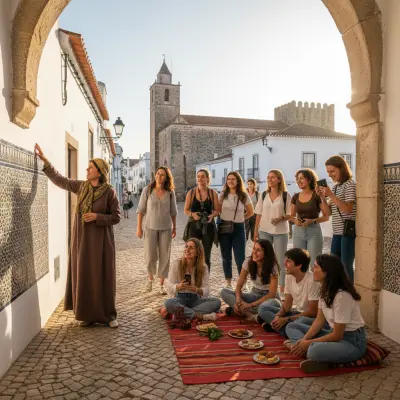
The centrepiece of the walk. It is the only medieval mosque in Portugal that survived almost intact in its structure, even after being Christianised in the 16th century with the opening of Manueline portals. The guide will show you the original mihrab on the south wall, facing Mecca, preserved beneath later decoration, the twelve columns that divide the space into five naves, and the capitals with plant motifs that mix Visigothic and Islamic tradition. It is one of those buildings where five minutes with a guide are worth more than an hour reading panels.
Alcáçova and the River Quarter
From the Mosque you climb up to the Alcáçova, the Islamic quarter excavated inside the castle walls. Here you see the urban grid of Martulah: narrow streets, courtyard houses, water channels, communal ovens. Going up the Keep is optional and the 53 steps are worth it for the view over the Guadiana and the São Francisco convent on the other bank. Coming back down to the River Quarter, near the Porta do Sol, you grasp the full stratification of the village: lords on top, port and warehouses and fishermen below.
The best time
Go early, at opening, 9:00 am. Two reasons. First, the light: the Mosque-Church has narrow windows and few artificial lights, and the morning light coming through the south door is the only one that decently lights the columns. Second, the heat: between June and September, doing this walk after 11:00 am is a mistake. The climb to the Alcáçova is all open sky and white stone, and temperatures easily push past 35°C.
If you come in winter, things change. Mornings on the Guadiana have thick fog until 10:00 am and the village floats above it. Book for 10:30 am in that case, and leave time for a coffee with a view before the tour. The best spots for that are listed in this guide to cafés above the Guadiana.
How to book
Guided tours are booked through the Mértola Tourist Office, weekdays from 9:00 am to 12:30 pm and from 2:00 pm to 5:30 pm. The phone number is +351 286 610 100 or +351 286 610 109, and the email is turismo@cm-mertola.pt. The official museum website is museudemertola.pt and the municipal tourism site is visitmertola.pt. Book at least 48 hours ahead, especially if you want a tour in English, French or Spanish, because multilingual guides are not always available.
Practical tips
- Footwear: closed shoes with rubber soles. The cobbles in the historic centre are uneven and the climb to the Alcáçova has slippery sections in wet weather.
- Clothing: the Mosque-Church is cool even in August, but the Alcáçova is fully exposed. Light layer in your bag and hat is mandatory in summer.
- Water: there are no drinking fountains along the indoor route. Bring a bottle, especially from May to September.
- Reduced mobility: the Mosque-Church is accessible, but the Alcáçova and Keep are not. The Museum can adapt the route on request.
- Photography: allowed without flash at all sites. Tripods only with prior permission.
What to do afterwards
The tour ends around 11:00 or 11:30 am. Walk down to the Roman quay and have lunch by the river, in one of the restaurants facing the convent. In the afternoon, if your legs hold up, combine the visit with a walk through the village outside the museum circuit, or head down to the river for one of the Guadiana river beaches.
If it is fado night, book a table at Espaço Casa Amarela. And if you stay more than a day, this day trips guide has ideas for the surroundings that no leaflet recommends.
Is it worth it?
It is. Mértola is the only village in Portugal where, in a single two-hour walk, you can see Romans, Visigoths, Muslims, medieval Christians and the memory of the river port the Guadiana once carried. Without a guide, you see 30%. With a Museum guide, you see the rest. And at €2, it is, frankly, the best cultural deal in the Alentejo.