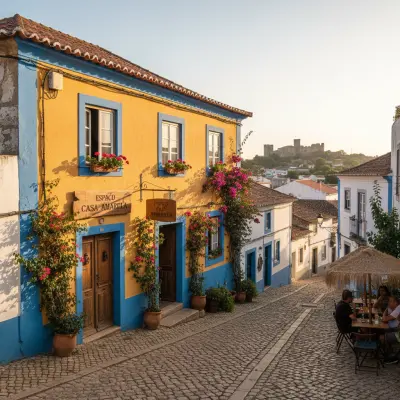
Mértola's River Beaches: Swim the Guadiana Crowd-Free
Mértola's river beaches along the Guadiana stay uncrowded even in August. The trick is arriving before 10am, when the river is yours alone, the castle looming above, and not a beach towel in sight.
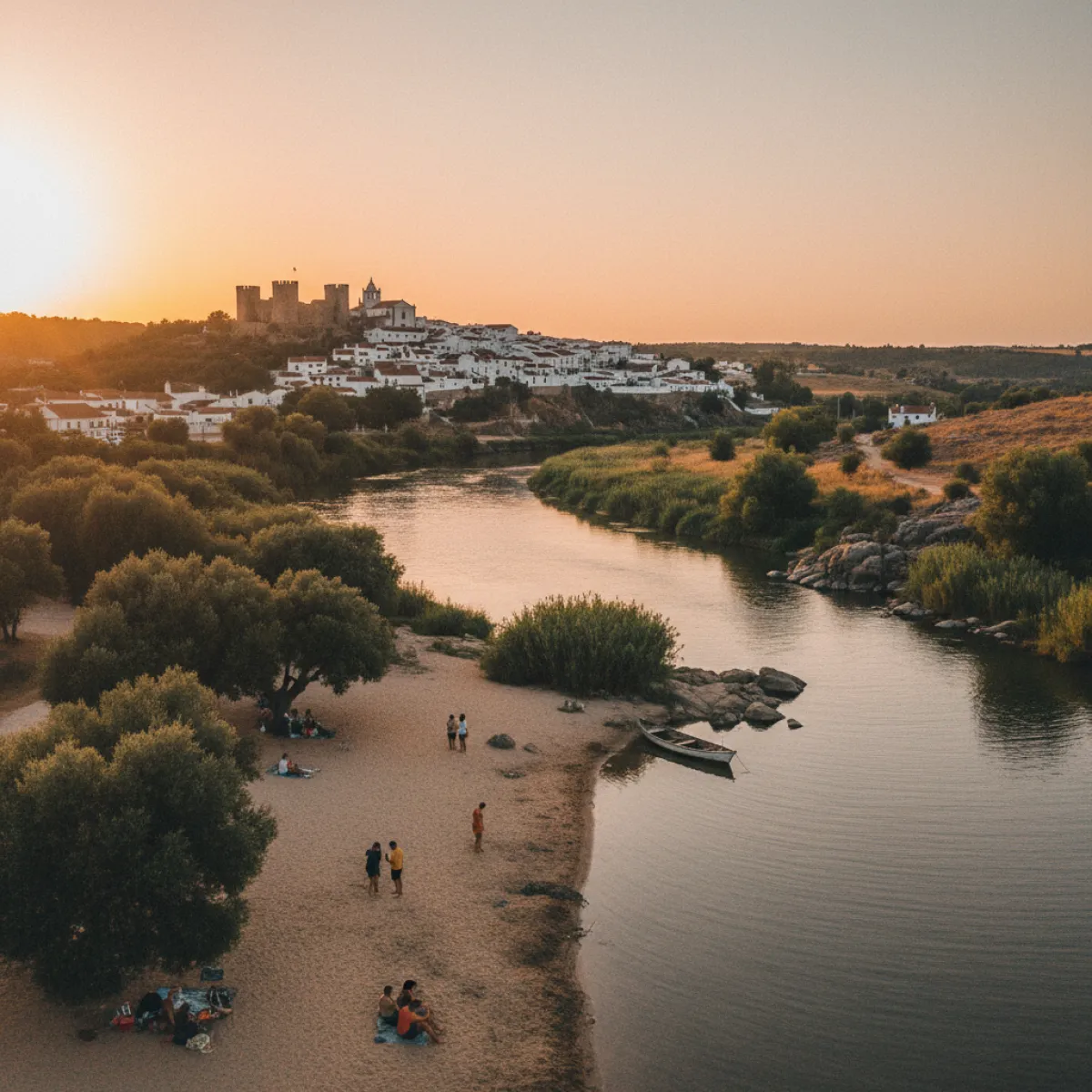
Let's get one thing straight: Mértola doesn't have beaches in the way you're probably imagining. No boardwalks, no beach bars, no sunlounger rentals. What Mértola has, and what most people driving past on the A2 will never know, are river beaches along the Guadiana that remain genuinely uncrowded, even at the height of summer. If you're tired of fighting for sand space on the Algarve coast, this is your alternative.
Why the Guadiana beats the Atlantic
The Guadiana River in Mértola is wide, slow-moving in stretches, and significantly warmer than the Atlantic. That last point matters more than you'd think, while the ocean in southern Portugal hovers around 18-20°C even in August, the Guadiana can reach bath-like temperatures. It's a different kind of swimming, more relaxed, more languid. The landscape around you is dry Alentejo, rolling hills, cork oaks, the medieval castle perched above the river. No umbrellas blocking your view, no hawkers selling sunglasses.
The main river beach in Mértola sits right below the old town, a short walk from the historic centre. You can see the castle and the main church from the water. The riverbed is mostly sandy with some rocky patches, and the current is generally mild. There are no permanent lifeguards, use common sense, especially with children. But on a July morning, you'll find local families splashing around while tourists are still two hours south, stuck in Algarve traffic.
The golden rule: early or late
Avoiding crowds in Mértola is almost embarrassingly easy. Most day-trippers arrive from the coast around midday and leave before dinner. If you're at the river by 8am, you'll have the Guadiana essentially to yourself. If you prefer the evening, show up after 5pm, the light is better anyway, the heat is finally relenting, and the sunset reflecting off the water with the castle walls above is the kind of scene that actually deserves the photographs.
Stay until dark. Mértola after six on a summer evening transforms, the cafés along Rua da Igreja fill up, the air cools, and the town finally exhales. Bring a blanket, something to drink, and nowhere to be.
Beyond the town beach: Pulo do Lobo
About 20 kilometres north of Mértola, inside the Guadiana Valley Natural Park, sits Pulo do Lobo, the largest waterfall in southern Portugal. Almost nobody visits, even in peak season. The last stretch is on a dirt road, which naturally filters out the casual visitor. The river here is wilder, with faster currents, and it's not really a swimming spot, but it's an essential stop if you want to understand the scale of this landscape.
Some people swim in the calmer pools downstream from the waterfall, but exercise real caution. There are zero facilities, no café, no toilets, no mobile signal in some spots. It's just you, the river, and the griffon vultures circling overhead.
Minas de São Domingos: the detour worth making
About 15 kilometres east of Mértola, the old mining village of Minas de São Domingos offers another river beach option, this one at a small reservoir the locals frequent on summer weekends. It's more organised than the wild riverside spots: some shade, space to lay out a towel, a café within walking distance.
But the real draw is the abandoned mine complex itself. Shuttered in 1966, the industrial ruins and the almost Martian landscape of red-tinged pools (coloured by iron and copper runoff) are unlike anything else in the Alentejo. Do not swim in those pools, the water is acidic and contaminated. But walk through the ruins. It's one of the strangest and most photogenic spots in southern Portugal.
Eating after the river
Mértola's food scene is small but honest. A handful of restaurants in the centre serve proper Alentejo cooking, migas with pork, lamb stew, local goat cheese. Prices are deep-Alentejo affordable, roughly €10-15 for a full meal with wine. Don't look for innovation or fusion; look for food that tastes like the place it comes from.
For something different after a day on the water, Espaço Casa Amarela is worth your time, an intimate space for fado and conversation that feels nothing like the tourist-oriented fado houses in Lisbon. It's smaller, rawer, and the kind of place that only exists in towns where people still have time for music.
Getting there and staying
Mértola is about two and a half hours from Lisbon via the A2, or ninety minutes from Faro. You need a car, public transport to Mértola is essentially non-existent, which is precisely what keeps the crowds away. If you're coming from the Algarve, the inland road is slower but far more scenic.
Accommodation options are limited: a few places in the centre and some rural tourism properties nearby. Book ahead in August, availability is tight, and in years when the Islamic Festival of Mértola takes place (every two years), everything within a 50-kilometre radius sells out. Check locally for dates and availability.
The wider Alentejo interior
Mértola works best as part of a longer trip through the interior Alentejo. With three or four days, combine it with Serpa, Beja, and, heading further north, Portalegre, another underrated town with serious character. Some visitors plan a weekend in Portalegre specifically to avoid the tourist trap circuit, and end up coming back the following season. The logic is the same as Mértola: fewer people, more substance, prices that don't punish you for eating out.
If Portalegre catches your interest, the town rewards walking through its neighbourhoods on foot, it's a place you understand better from the streets than from any guidebook. And when hunger strikes, the only food guide that matters is the one that shows you where locals actually eat.
What to bring (and what to leave behind)
For a day at Mértola's river beaches, pack industrial quantities of sunscreen, the Alentejo sun is genuinely fierce. Bring more water than you think you need, shoes you can get wet for river entry, and food. Don't count on finding shops or cafés near the more remote spots. A hat isn't a suggestion, it's a requirement.
What to leave behind: expectations of a resort beach. The Guadiana is beautiful on its own terms, earth-toned banks, Mediterranean scrubland, the quiet. If you want comfort, go to the Algarve. If you want peace, you're in the right place.
When to go
June and September are the sweet spots. June is warm enough for comfortable swimming but pre-peak-season, so crowds are minimal. September still delivers long, hot days with fewer visitors and lower accommodation prices. July and August are the obvious choices, but prepare for serious heat, 40°C-plus is not the exception, it's the norm.
Avoid midday in July and August. It's not uncomfortable, it's dangerous. Do as the Alentejanos do: river in the early morning, siesta through the afternoon, river again in the evening. This rhythm isn't laziness, it's intelligent survival.
Mértola won't show up on any magazine's "best beach destinations" list. That is precisely the point.