Mértola on Foot: Where Every Hill Tells a Story
Mértola compresses centuries of Islamic, Roman, and medieval history into a town you can walk in a day, but that deserves two. From the steep lanes by the castle to the Guadiana riverbank, a guide to exploring the Alentejo's museum town at the right pace.
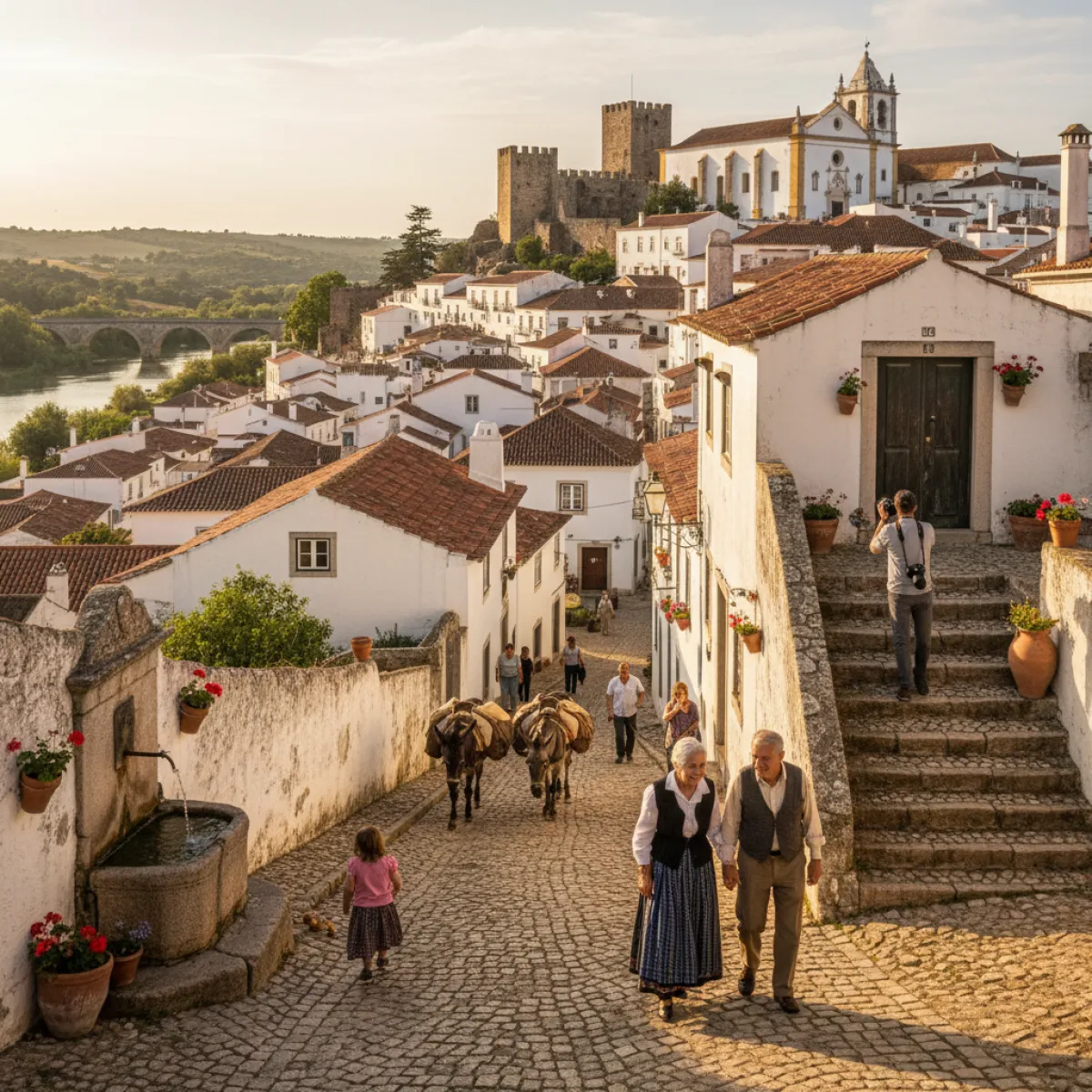
Mértola is not a place you drive through. The streets are too narrow, the hills too steep, and the whole logic of the town, a medieval fortress perched above the Guadiana River, demands that you walk. It's only on foot that you understand how a place with fewer than three thousand residents can pack so much into so little space.
I first arrived in Mértola on an October late afternoon, the sun hitting the walls at a low angle and the river below barely moving. The temperature was still around 25°C, the Lower Alentejo doesn't let go of summer easily. That's exactly what makes autumn and spring the ideal seasons for walking here. In summer, when 40°C crushes the schist, the experience shifts from exploration to survival.
The Historic Center: Inside the Walls
The natural starting point is the castle. Not because it's the most obvious attraction, it is, but because from up there you can read the entire geography of Mértola at once. The Guadiana makes a wide curve, the white houses descend the slope in uneven steps, and you immediately understand that this town was designed to be defended, not to be comfortable.
The Castelo de Mértola is small, direct, no frills. The keep has a view that justifies the climb, but what really matters is what surrounds it. The Alcáçova, the archaeological site next to the castle, is one of the most revealing excavations in southern Portugal. Roman, Visigothic, and Islamic occupation, all in the same spot, literally layered on top of each other. You don't need to be an archaeology enthusiast to be impressed; you just need eyes.
Walking down from the castle toward the Igreja Matriz, you enter the densest part of town. The Igreja Matriz of Mértola is, in fact, a former mosque, and it shows. The mihrab is still there, facing Mecca, and the four horseshoe arches are unmistakable. It's one of the best-preserved on the Iberian Peninsula, and the fact that it sits quietly in the middle of an Alentejo town is the kind of thing that makes you rethink what you know about this region.
The streets around the church are the heart of the historic center. Narrow, unevenly paved, with whitewashed houses that look like they were placed by hand. There's hardly any commerce, a shop or two, a café serving what might be the cheapest coffee in the Alentejo (you can still find it at 70 cents in some places). The quiet is the point. Early in the morning, before visitors arrive, you hear little more than birds and someone sweeping their doorstep.
Down to the River: The Ribeira Quarter
From the upper town, you descend, and I mean properly descend, to the riverside area. The Guadiana riverbank in Mértola has a walkway that follows the water, and in the late afternoon it fills with locals who come simply to be there. No cocktail bars, no Lisbon-priced terraces. Just benches, the shade of a few trees, and the river.
Down here you'll find the Torre do Rio, a medieval defensive tower by the water. More interesting than the tower itself is the route to get there, which forces you down alleyways with views over the Guadiana that no official viewpoint can replicate. Those accidental compositions, an open window, a stone arch framing the river, are what make Mértola photogenic without trying.
The riverside area is where to look for food. The options aren't vast, but the Alentejo cooking here has its particularities. Lamb stew is king, as in most of the Lower Alentejo. Wild asparagus migas, when in season (spring), is one of those dishes that only exists here and that nobody bothers to replicate in Lisbon. If you spot dogfish soup with coriander on a menu, order it without hesitation.
The Museum Town: Scattered Collections
Mértola calls itself a "Vila Museu", a museum town, and unlike what you might expect, it's not empty marketing. The concept is simple and clever: instead of concentrating everything in one building, museum spaces are scattered across town. The Weaving Workshop, the Roman House, the Islamic Collection, each occupies a different building, and visiting them all is, in practice, a walking tour of the entire town.
The Islamic Art collection is probably the most impressive. The Islamic ceramics found in Mértola form one of the largest collections on the Iberian Peninsula, and the space, clean, well-lit, no excess, does justice to the pieces. There's a combined ticket for all museum spaces (check the price locally, but it's around €5) that's worth it if you have time for at least three or four.
The route between museums takes you through parts of town you wouldn't otherwise visit. That's the intelligence of the model: it forces you to walk, to get slightly lost, to find a corner or a viewpoint that wasn't in the plan.
Beyond the Walls: What's Around
If the town itself can be walked in half a day, the surroundings ask for more time. Mina de São Domingos, about 15 km away, is a decommissioned copper and pyrite mine that has turned into an almost lunar landscape. Acidic waters have created a reddish lagoon, abandoned industrial structures rust in the sun, and the mining village next door has a small but honest museum about the miners' lives. It's not pretty in the conventional sense, it's fascinating.
Closer in, the Parque Natural do Vale do Guadiana offers walking trails along the river. The trail to Pulo do Lobo, a gorge where the Guadiana narrows and drops in a cascade, is the best known and, rightly, the most spectacular. It's about 7 km from Mértola (one way), so drive to the trailhead or plan the day carefully. Bring water. Seriously, bring water.
Music and Living Culture
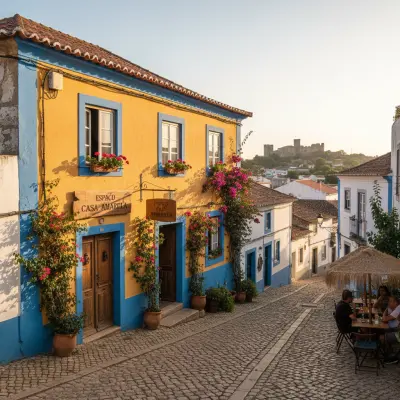
Mértola isn't just stone and history. Espaço Casa Amarela is one of those places that only exist in small towns where someone decided that culture doesn't need a grand stage. Fado, live music, cultural events, in a space that keeps a human scale and is worth seeking out when you're in town.
The Islamic Festival of Mértola, held every two years (check dates locally), transforms the town for a few days. Artisans, musicians, food from North Africa and the Middle East, it's the kind of event that makes sense in a place with this history, and it draws people from across the country.
Practical Information
Mértola is far from everything. From Lisbon it's about three hours by car, from Faro just over two. There's no train, and buses are scarce and slow. A car is essentially mandatory, unless you have a lot of time and a lot of patience.
For accommodation, options within town are limited but they exist. Rural tourism houses in the surrounding area tend to offer better value than staying in the center. Book ahead in summer and during the Islamic Festival.
The best time to visit is March to May and September to November. June is still tolerable. July and August are for people who genuinely enjoy heat.
A note on footwear: wear shoes with grip. Mértola's streets are old cobblestones, often polished smooth by use, and the descents to the river are steep. Flip-flops are a recipe for spending your weekend in the Beja emergency room.
If you like the idea of exploring an Alentejo town on foot, the Upper Alentejo has its own rewards. Our guide to Portalegre on foot covers the neighborhoods worth the walk in another town with real character. And for anyone looking to extend the trip, check out our weekend guide to Portalegre, no tourist traps, and the guide to where locals actually eat in Portalegre, because in the Alentejo, the table is always part of the journey.
Mértola doesn't need more than a full day to walk. But it deserves two. Not because there's so much to see, there is, but because the pace of the place asks you to slow down. Sit on the low wall by the castle in the late afternoon, watch the sun change the color of the Guadiana, and realize that there are towns in Portugal that still work at a human scale. Mértola is one of them.