Mértola's Crafts: What's Worth Bringing Home
In Mértola, handwoven blankets cost between €80 and €200, and they're worth every cent. In an Alentejo full of generic souvenirs, this museum-village above the Guadiana still produces craft with a thousand years of Islamic influence. Here's what's actually worth bringing home.
There's a difference between a souvenir and a memory you can hold. The souvenir is the fridge magnet from the shop next to the castle, made in China, with a generic image of the Alentejo that could be anywhere between Évora and the Spanish border. The memory you can hold is something else entirely. It's an object with a story, made by hands that know the clay, the wool, or the copper of the place it comes from. In Mértola, if you know where to look, you can still find the latter.
A Town That Still Makes Things
Mértola has a relationship with craft that few Portuguese towns have maintained. This isn't folkcraft preserved under glass for tourist consumption, it's real production, with artisans working daily, many of them trained in a tradition that connects the Alentejo to North Africa. That's not a coincidence. Mértola's Islamic heritage, visible in the mosque-church and the collection at the Islamic Art Museum, shaped local aesthetics for centuries. When you look at a geometric pattern on a ceramic plate or the design of a handwoven rug, you're seeing the result of a cultural conversation that started in the eighth century.
The town operates as an open-air museum, the "museum village" concept isn't just marketing, it's how Mértola organised itself to preserve and display what it has. But the most interesting things aren't behind glass. They're in the workshops.
Weaving: The Blanket Worth Buying
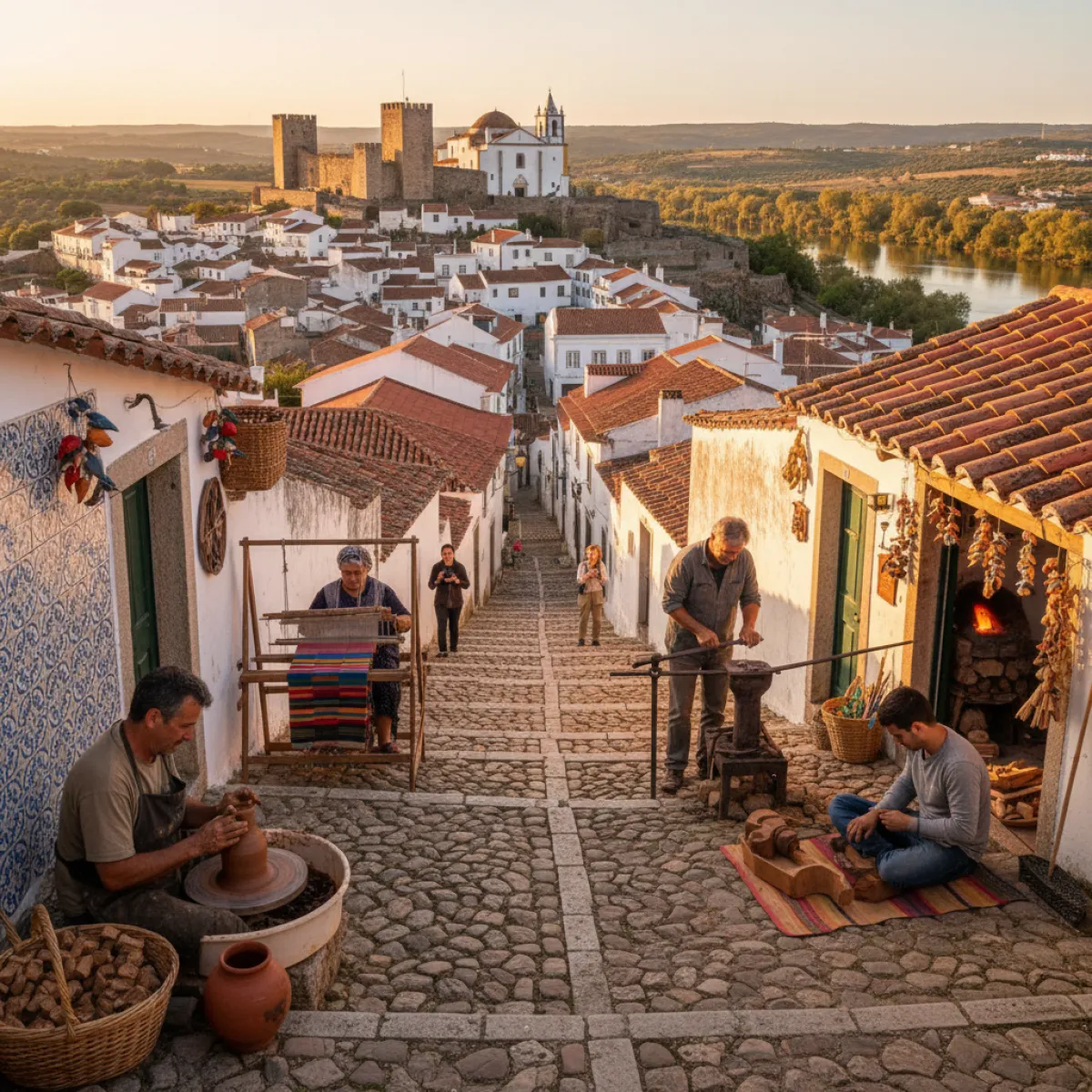
If you're bringing one thing home from Mértola, make it an Alentejo blanket. The Oficina de Tecelagem de Mértola, the town's weaving workshop, is where to go. It operates as part of the Archaeological Field project and produces blankets, rugs, and other textiles on manual looms, using wool from regional sheep. These aren't cheap, a quality blanket runs between €80 and €200 depending on size and pattern complexity, but they're objects that last decades. The wool is dense, the patterns are geometric, and the colours come largely from natural dyes.
What sets Mértola's weaving apart from other regions is precisely the Islamic influence on the patterns. The geometric motifs and colour combinations, ochres, deep reds, dark blues, aren't the same as what you'd find in blankets from Minho or Trás-os-Montes. They're more austere, more graphic, and frankly better looking in a contemporary living room. If you think artisan craft means rustic decoration, a Mértola blanket will change your mind.
Stop by the workshop and ask to see the process. The looms are large, noisy, and fascinating. If you're lucky, you'll catch one of the weavers at work and understand within minutes why a handmade blanket costs what it does. Check opening hours locally before visiting, the space operates during business hours but isn't always open to drop-ins without an appointment.
Ceramics and Pottery: Buyer Beware
Here's where honesty matters. The ceramics on sale in many Alentejo craft shops, including in Mértola, aren't always locally made. There are beautiful pieces that come from Estremoz, São Pedro do Corval, or even from outside Portugal. Nothing wrong with that, as long as you know what you're buying. If you want ceramics from Mértola, ask directly whether the piece was made locally and by whom.
Mértola's ceramic tradition is linked to the red clay of the Guadiana and the forms documented in the Islamic Art Museum, jugs, plates, and tiles with geometric motifs of Islamic influence. Some local ceramicists produce contemporary pieces inspired by this collection, and those are the ones worth seeking out. They tell a specific story from a specific place, unlike the generic hand-painted plate you can find in any Portuguese town.
A good piece of local pottery, a decorative plate or jug, runs between €15 and €60. The more elaborate pieces, with patterns inspired by the Islamic collection, sit at the higher end. Look in the shops within the walled town, they tend to have stronger connections to local producers.
Copper and Metalwork: Tradition You Can Actually Use
Copperwork is another Alentejo tradition that Mértola keeps alive. The cataplanas and copper pots sold in the Alentejo aren't decoration, they're real cooking utensils that, properly maintained, get passed down through generations. A hand-hammered copper cataplana is probably the most useful object you can bring home from Portugal, provided you're willing to carry it in your luggage.
In Mértola, you'll find copper pieces in several shops in the historic centre. Prices vary, a cataplana can range from €40 to over €100 depending on size and finish. The rule is simple: if it's too light and too shiny, it's probably factory-made. Hand-hammered copper has weight, irregularities, and a colour that darkens with use.
What to Skip
I'll be direct: don't buy cork products stamped with images of Barcelos roosters or Lisbon trams. Mértola is 250 kilometres from Lisbon and has nothing to do with Barcelos. Those objects exist in every tourist shop in the country and say nothing about the place where you bought them. Same goes for industrial tiles sold as "handmade" and packaged food products with no indication of origin.
If you want edible local products, look for honey and cheese. Alentejo honey, especially rosemary honey, is excellent and costs between €5 and €12 per jar depending on the producer. Regional sheep's cheese, firm, cured, with personality, is another good candidate, though transporting it requires some logistical planning if you're flying.
Espaço Casa Amarela and Living Culture
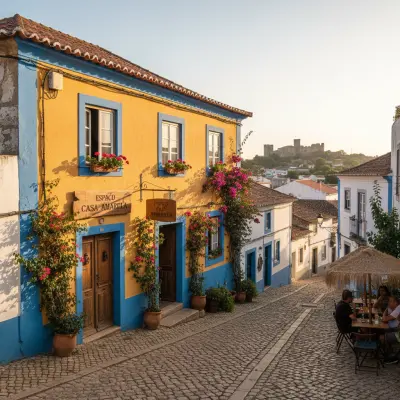
To understand Mértola beyond its crafts, visit Espaço Casa Amarela. It's one of those places that blends culture, music, and community in a way that only happens in small towns where everyone knows each other. It's also a good reminder that Mértola isn't a static museum, there are people here creating new things, reinterpreting traditions, and keeping the town alive outside peak season.
The truth is, the best souvenir from Mértola might not be an object at all. It might be the memory of a conversation with an artisan who explains why the pattern on the blanket she's weaving has existed for a thousand years. But if you need an object, choose well. Choose something made here, by someone from here, with material from here.
Before You Go: The Essentials
Mértola is in the interior Alentejo, roughly three hours from Lisbon by car. There's no train, the nearest practical station is Beja. A car is all but essential unless you have time and patience for the limited regional bus schedules.
The town is small and walkable in under two hours. The historic centre sits within the walls, on a hill above the Guadiana River. In summer, prepare for serious heat, we're talking regular 40°C days. The best times to visit are spring and early autumn, when temperatures are human and the light over the river is particularly good in the late afternoon.
For accommodation, there are options in and near town, but supply is limited, book ahead, especially in high season or during the Islamic Festival, which happens every two years and transforms the town for several days.
If you're planning a longer trip through the interior Alentejo, consider pairing Mértola with a stop in the Alto Alentejo. Portalegre, without the tourist traps, is another Alentejo town with a strong craft tradition, Portalegre tapestry is world-renowned, and deserves at least a weekend. Comparing the two craft traditions is revealing: where Mértola looks toward the Mediterranean and North Africa, Portalegre looks toward Europe and the Gobelins tradition. Two different worlds within the same region.
For those who like exploring on foot, Portalegre's walkable neighbourhoods are a solid starting point. And if you're there at lunchtime, don't worry, Portalegre's local food scene is generous and honest, with locals who know exactly where to eat well.
As for Mértola, bring the blanket, leave the fridge magnet. Future you will be grateful.